

Snake Plant Symbolism: Protection, Spiritual Meaning, and Good Luck explores how this popular houseplant represents protection, resilience, and spiritual growth.
Also known as Sansevieria or mother-in-law’s tongue, the snake plant features striking upright leaves and sword-like foliage that add natural beauty to modern homes. Its hardy nature, decorative greenery, and air-purifying qualities make it a favorite for bedrooms, offices, and other indoor spaces. Beyond its practical benefits, snake plant symbolism connects with cultural traditions, folklore, and spiritual beliefs across different cultures.
The snake plant’s spiritual meaning is often associated with protection, good luck, strength, resilience, and positive energy. Its upright leaves symbolize focus, determination, and inner strength. In feng shui, some people place snake plants near doorways to represent protection and encourage positive energy. Vastu Shastra also influences how some people arrange plants in their homes.
Although these spiritual associations vary across traditions, the snake plant remains a meaningful symbol of balance, prosperity, and natural resilience. In my view, its strongest message is simple: stay strong, protect your peace, and keep growing through life’s challenges.
Quick Answer
In the United States, snake plants usually symbolize protection, resilience, good luck, and positive energy. Snake Plant Symbolism: Protection, Spiritual Meaning, and Good Luck is strongly connected to modern wellness culture, especially in homes and workplaces. In broader traditions, the plant may also represent purification, endurance, and spiritual boundaries.
TL;DR
• Snake plants often symbolize protection and resilience.
• Many Americans associate them with positive energy and luck.
• Their sharp leaves inspired spiritual protection meanings.
• The plant’s hardiness represents survival and inner strength.
• Feng shui traditions connect snake plants with prosperity.
• Modern decor trends boosted their symbolic popularity.
Overview of Snake Plant Symbolism
Snake plants are known for their tall, upright leaves with pointed tips. Most varieties feature deep green coloring with lighter stripes or yellow edges. Because of their shape, they naturally stand out in homes and public spaces.
In the USA, the plant’s appearance strongly affects its symbolism. The upward-growing leaves often represent focus, growth, and personal discipline. Meanwhile, the sharp edges create associations with protection and boundaries.
Why the Plant Looks Symbolic
The plant’s structure feels strong and intentional. Unlike soft or trailing plants, snake plants grow vertically and maintain a firm shape. Because of this, people often see them as symbols of emotional strength.
• Upright leaves suggest growth and determination.
• Sharp tips symbolize defense and awareness.
• Green coloring connects with healing and renewal.
• Yellow edges may symbolize prosperity and optimism.
• Dense growth reflects stability and grounding.
Common Names and Their Influence
Snake plants are also called “mother-in-law’s tongue.” This nickname shaped some older symbolic interpretations, especially jokes about sharp speech or strong opinions. However, modern symbolism usually focuses on resilience and energy protection instead.
Today, many Americans prefer the name “snake plant” because it sounds more natural and modern. The snake imagery also adds mystery and spiritual depth.
Historical Background of the Snake Plant
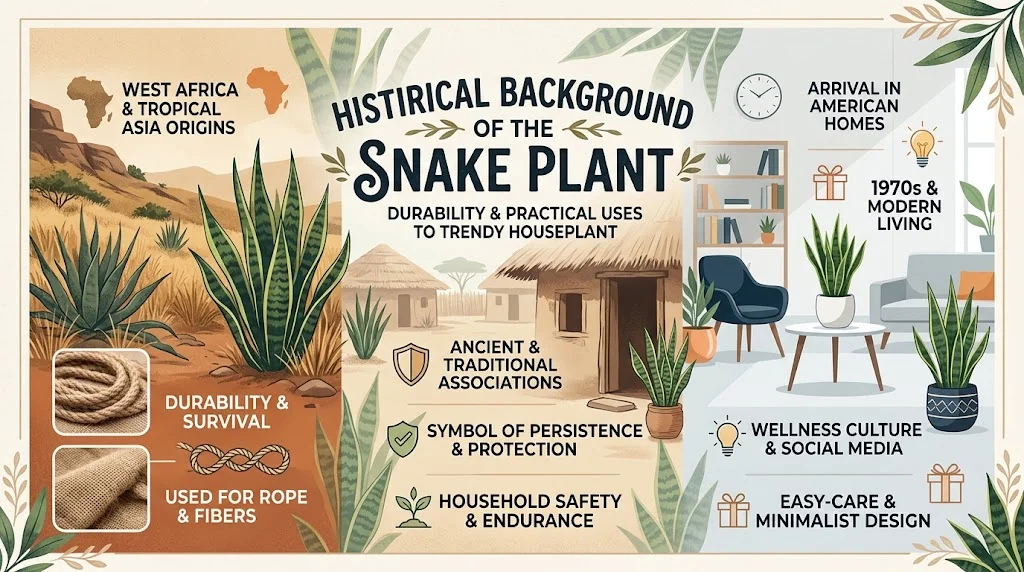
Snake plants originally came from parts of West Africa and tropical regions of Asia. People valued them for their durability and practical uses long before they became trendy houseplants in the United States.
Historically, the plant’s fibers were used for rope and woven materials. Because the plant survived harsh climates, communities often viewed it as dependable and enduring.
Ancient and Traditional Associations
While snake plants were not sacred symbols in the same way as lotus flowers or olive branches, they still carried practical symbolic value. Their survival abilities inspired ideas about persistence and protection.
In some African traditions, strong plants were linked to household safety and continuity. Plants that survived dry conditions often symbolized endurance during hardship.
Arrival in American Homes
Snake plants became popular in the United States during the twentieth century. Their low-maintenance nature made them attractive for urban homes and offices.
During the 1970s indoor plant boom, snake plants became symbols of modern living. Then, wellness culture and social media revived their popularity in the 2010s and 2020s.
• Easy-care plant for busy lifestyles.
• Popular in minimalist interior design.
• Associated with clean and calm spaces.
• Frequently gifted during new beginnings.
• Seen as a practical but meaningful plant.
Snake Plant Meaning in American Culture
In the USA, snake plants often symbolize personal protection and emotional resilience. Many people place them near doors, desks, or windows to create a sense of safety and calm.
American interpretations usually combine practical and spiritual ideas. Even people who do not believe in spiritual energy may still see the plant as emotionally comforting.
Symbol of Protection
The sharp, sword-like leaves inspired protective meanings. Some people believe the plant blocks negative energy or emotional stress within a home.
Because of this, snake plants are common in meditation rooms and wellness spaces. They visually create a feeling of strength and order.
Symbol of Strength and Survival
Snake plants survive neglect better than many houseplants. They tolerate low light and irregular watering. As a result, Americans often connect them with perseverance.
People may gift snake plants during difficult life changes, including:
• Moving into a new home.
• Starting a new job.
• Recovering from emotional hardship.
• Beginning college or adulthood.
• Rebuilding after personal setbacks.
Spiritual Meaning of Snake Plants
Spiritual interpretations of snake plants grew rapidly during the wellness movement of the 2020s. Today, many people believe these plants help create emotional balance and energetic protection.
Although these ideas vary, the plant’s strong appearance supports many spiritual interpretations. The upward leaves seem focused and disciplined, which reinforces ideas of spiritual clarity.
Energy Cleansing and Boundaries
Some spiritual traditions suggest snake plants absorb negativity from indoor environments. Others believe they help create healthy emotional boundaries.
In American wellness culture, the plant is often linked with:
• Emotional grounding.
• Calm mental energy.
• Protective spiritual space.
• Reduced emotional chaos.
• Stability during stress.
Connection to Air and Breath
Snake plants are famous for surviving indoors and improving air quality perception. Because of this, many people symbolically connect them with cleansing and renewal.
Even though scientific discussions about air purification are sometimes exaggerated online, the symbolism remains powerful. Clean air naturally connects with ideas of healing and peace.
Snake Plant Symbolism in Feng Shui
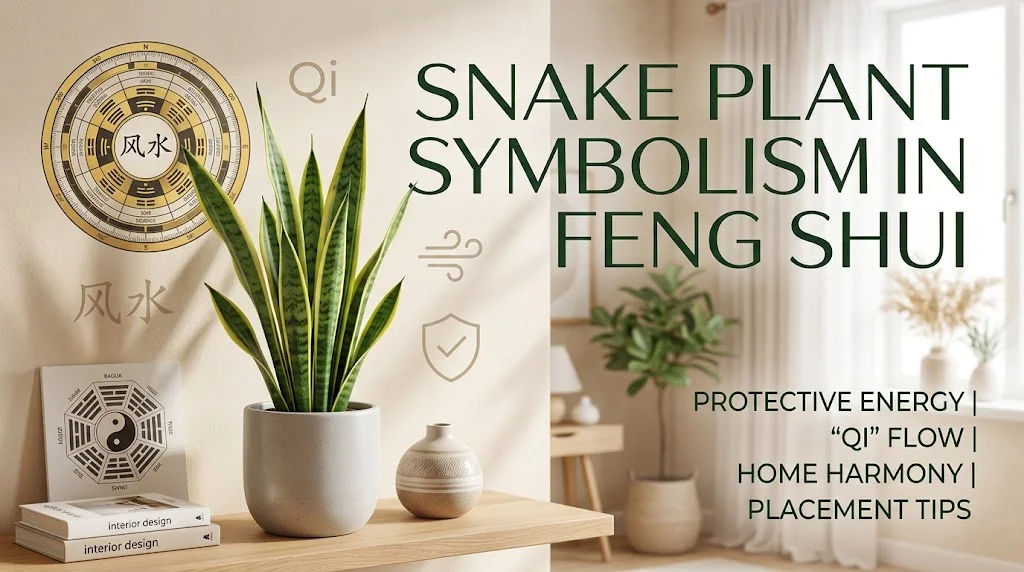
Feng shui strongly influenced modern snake plant symbolism in the United States. Many Americans first encountered the plant’s spiritual meanings through feng shui-inspired decor advice online.
However, feng shui interpretations can vary. Some practitioners view the pointed leaves as protective, while others believe sharp shapes may create intense energy if poorly placed.
Positive Feng Shui Associations
Snake plants are often connected with prosperity, discipline, and protection when placed carefully in a home.
| Placement | Meaning in the USA | Common Associations | Notes |
| Entryway | Protection | Blocking negativity | Popular in apartments |
| Home office | Focus | Productivity and discipline | Common remote-work decor |
| Living room | Calm energy | Stability and balance | Often paired with neutral decor |
| Bedroom | Quiet resilience | Rest and emotional peace | Placement opinions vary |
| Near windows | Growth | Renewal and vitality | Linked to natural light |
Why Placement Matters
In feng shui traditions, placement changes symbolic meaning. Americans often adapt these ideas casually rather than following strict traditional rules.
Today, many people simply use snake plants to create calm and organized spaces. The symbolic feeling matters more than perfect tradition.
Snake Plants and Good Luck Beliefs
Many Americans consider snake plants lucky gifts. This belief became especially popular through social media and modern plant culture.
Because the plant survives easily, it symbolizes lasting success. A thriving snake plant may represent stability, patience, and steady progress.
Why People Associate Them With Luck
Good luck symbolism usually comes from survival and growth. Plants that remain healthy despite challenges naturally become symbols of endurance and positive outcomes.
• Represents lasting personal growth.
• Symbolizes financial steadiness.
• Connected with peaceful homes.
• Seen as lucky for new beginnings.
• Popular housewarming gift choice.
Lucky Plant Traditions in the USA
Snake plants now appear beside money trees, bamboo plants, and peace lilies in American wellness culture. Together, these plants symbolize harmony and abundance.
However, snake plants stand out because their symbolism feels protective rather than soft or delicate.
Emotional and Psychological Symbolism
Plants often affect emotions through shape, color, and atmosphere. Snake plants create a strong visual impression, which shapes their psychological symbolism.
Unlike flowing vines or bright flowers, snake plants appear steady and controlled. This makes them emotionally reassuring for many people.
Feelings Commonly Linked to Snake Plants
People often describe snake plants as calming but strong. Their appearance suggests quiet confidence rather than dramatic beauty.
• Emotional stability during stressful times.
• Quiet confidence and self-control.
• Personal independence and resilience.
• Protection from emotional exhaustion.
• Calm focus in work environments.
Symbol of Personal Growth
Because snake plants grow slowly but steadily, they often symbolize long-term development. Many people connect them with patience and discipline instead of fast success.
This symbolism especially appeals to younger Americans focused on wellness, healing, and intentional living.
Snake Plant Symbolism in Home Decor and Social Media
Snake plants became highly visible during the indoor plant trend of the late 2010s and early 2020s. Their clean lines fit perfectly with modern American interior design.
Today, the plant often symbolizes more than decoration. It reflects identity, lifestyle, and emotional values.
Why Designers Love Snake Plants
The plant works well in small apartments and minimalist spaces. Its shape adds structure without creating visual clutter.
• Fits modern and bohemian decor styles.
• Suggests calm and organized living.
• Adds natural texture indoors.
• Pairs well with neutral color palettes.
• Reflects wellness-focused lifestyles.
Social Media Symbolism
Online, snake plants often appear in posts about healing, productivity, and peaceful homes. Influencers frequently pair them with candles, journals, and meditation spaces.
Because of this, the plant now symbolizes intentional living for many younger Americans.
Snake Plant Tattoos and Personal Identity
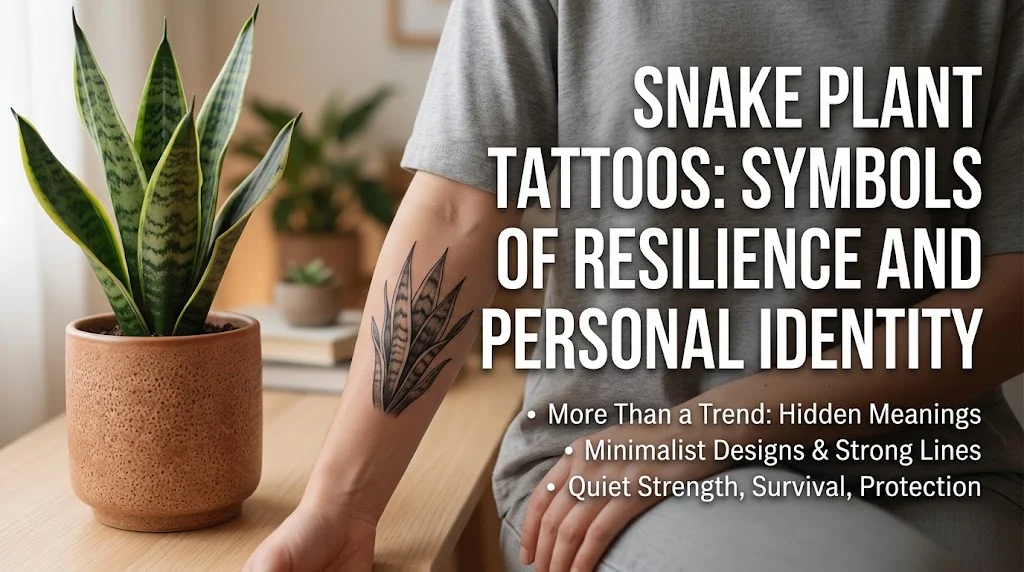
Snake plant tattoos remain less common than flower tattoos, but their popularity has slowly grown. People usually choose them for personal meanings rather than fashion alone.
The plant’s sharp shape creates clean tattoo designs with modern visual appeal.
Common Tattoo Meanings
Snake plant tattoos often represent emotional resilience or protection. Some people choose them after surviving difficult experiences.
• Survival after hardship.
• Emotional independence.
• Spiritual protection and grounding.
• Quiet personal strength.
• Growth through difficult periods.
Minimalist Symbolism
Many snake plant tattoos use thin black lines and simple shading. This minimalist style matches the plant’s modern symbolism in American culture.
Instead of dramatic symbolism, these tattoos often express calm endurance.
Cross-Cultural Meanings of Snake Plants
Snake plant symbolism changes across cultures and spiritual traditions. However, themes of endurance and protection appear repeatedly.
Because the plant grows in difficult conditions, many cultures naturally connect it with survival and adaptability.
African Cultural Associations
In parts of Africa, snake plants historically had practical and symbolic importance. Their fibers supported everyday life, which connected the plant with usefulness and continuity.
Plants that survived harsh climates also represented persistence and family stability.
Asian Spiritual Interpretations
Modern Asian-inspired spiritual practices, especially feng shui, influenced American views of snake plants. These traditions often emphasize balance, energy flow, and environmental harmony.
However, interpretations differ widely between practitioners and regions.
read more: Symbolism in A Raisin in the Sun: Themes & Meanings
Misunderstandings and Controversies
Most snake plant symbolism is positive, but misunderstandings still exist. Online discussions sometimes exaggerate spiritual claims or present conflicting information.
In addition, some people wrongly assume all spiritual plant meanings come from ancient traditions. In reality, many modern interpretations developed recently through wellness culture and social media.
Conflicting Spiritual Advice
Some traditions praise snake plants as protective. Others warn that sharp leaves create aggressive energy in certain rooms.
These differences reflect evolving interpretations rather than clear universal rules.
Internet Myths and Exaggeration
Online posts sometimes claim snake plants completely purify indoor air or remove all negative energy. These statements are usually symbolic or exaggerated.
Still, many people genuinely enjoy the emotional comfort the plant provides.
How Snake Plant Symbolism Has Changed Over Time
Snake plant symbolism changed significantly over the last century. Earlier meanings focused mostly on practicality and survival.
Today, the plant carries emotional, aesthetic, and spiritual symbolism in American culture.
Older Interpretations
Historically, the plant represented usefulness and endurance more than spirituality. People valued it because it survived harsh conditions.
Its symbolism remained relatively simple for many years.
Modern Revival
The modern wellness movement transformed snake plant symbolism. Social media helped turn ordinary houseplants into emotional and spiritual symbols.
Today, snake plants may symbolize:
• Mindful living and simplicity.
• Emotional healing and boundaries.
• Personal growth and resilience.
• Calm modern lifestyles.
• Spiritual protection and grounding.
FAQs About Snake Plant Symbolism
What does a snake plant symbolize?
A snake plant commonly symbolizes protection, resilience, strength, and good luck. Its upright leaves represent determination, growth, and the ability to overcome challenges.
What is the spiritual meaning of a snake plant?
The snake plant spiritual meaning is often linked to spiritual protection, positive energy, inner strength, and personal growth. These interpretations vary across cultures and spiritual traditions.
Does a snake plant bring good luck?
In some traditions, snake plants are associated with good luck, prosperity, and positive energy. Many people keep them indoors as symbols of protection and good fortune.
Where should I place a snake plant for protection?
Some people following feng shui place snake plants near entrances or doorways to symbolize protection. You can also keep one in a living room or office for greenery and decoration.
What does a snake plant mean in feng shui?
In feng shui, the snake plant’s upright, pointed leaves are sometimes associated with protective energy, strength, and positive energy. Its placement depends on personal preferences and the principles you follow.
Is a snake plant a symbol of positive energy?
Yes, many people associate snake plants with positive energy, balance, resilience, and harmony. Their hardy nature can also serve as a reminder to stay strong during difficult times.
Conclusion
Snake Plant Symbolism: Protection, Spiritual Meaning, and Good Luck highlights the deeper meaning behind this popular indoor plant. Its upright leaves and hardy nature represent strength, resilience, protection, and personal growth. Across different cultural and spiritual traditions, snake plants may also symbolize good luck, prosperity, and positive energy. Whether you place one in your home or office, a snake plant adds natural beauty while serving as a meaningful reminder to protect your peace and keep growing.

Evelyn Thomas is the voice behind SoulMeanings.com, sharing thoughtful articles on spirituality, dream interpretation, symbolism, and self-discovery to inspire meaningful living.