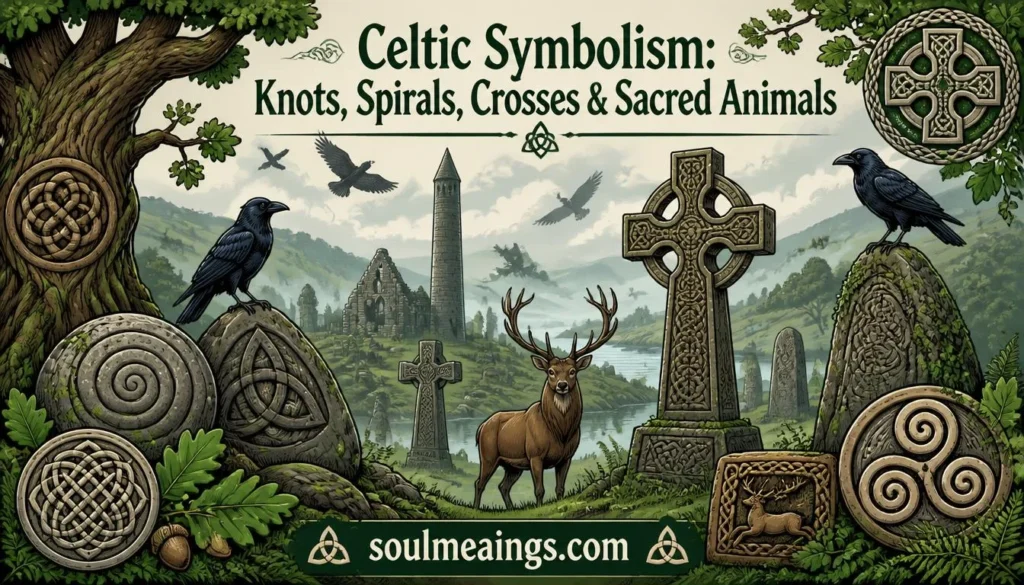
Celtic symbolism reflects the fascinating traditions and cultural heritage of the ancient Celts across Ireland, Scotland, Wales, and Europe.
These ancient designs express spirituality, mythology, and the natural world through a rich symbolic language. Celtic knots represent eternity, unity, and interconnectedness, while the Triskelion and its three spirals symbolize progress, transformation, and the cycles of life.
Through intricate patterns, sacred geometry, and decorative art, these Celtic designs reflect ancient beliefs about balance, harmony, renewal, and the connection between humanity and nature.
Celtic crosses and sacred animals carry rich spiritual meanings rooted in Celtic mythology, folklore, and ancient traditions. Their symbolism explores life, death, rebirth, unity, and the unseen forces of nature. These sacred symbols appeared in artwork, rituals, and storytelling, preserving ancient wisdom and ancestral heritage.
Today, Celtic symbolism remains popular in tattoos, jewelry, modern jewellery, literature, weddings, and pop culture. From Celtic tattoos to traditional ornaments, these timeless designs inspire mindfulness, spiritual exploration, and cultural preservation, keeping the enduring legacy of Celtic culture alive.
Quick Answer
Celtic Symbolism: Meanings of Knots, Spirals, Cross, Trees & Animals usually represents eternity, spiritual connection, nature, ancestry, and life’s cycles. In the United States, these symbols are often linked to Irish heritage, personal identity, spirituality, tattoos, and emotional resilience.
TL;DR
• Celtic knots often symbolize eternity and interconnected life.
• Spirals represent growth, rebirth, and spiritual journeys.
• Celtic crosses blend Christian and older pagan traditions.
• Sacred trees symbolize wisdom, protection, and connection to nature.
• Celtic animals reflect courage, intuition, loyalty, or transformation.
• Americans often use Celtic symbols for heritage and self-expression.
Overview of Celtic Symbolism
Ancient Visual Language
Celtic symbolism includes detailed patterns, carved stones, sacred animals, and spiritual signs. Many symbols appeared in metalwork, manuscripts, weapons, and monuments. Unlike some ancient cultures, the Celts often expressed beliefs through art instead of written records.
Most Celtic designs feature flowing lines and repeating shapes. These patterns create a sense of endless motion. Because of this, many modern viewers associate Celtic symbols with eternity and connection.
Common visual features include:
• Interwoven loops without beginning or end
• Triple spirals and circular designs
• Sacred animals carved into stone or jewelry
• Tree imagery tied to wisdom and life
• Crosses combining geometric and spiritual forms
• Natural symbols linked to seasons and cycles
Why Americans Connect With Celtic Symbols
In the United States, Celtic imagery became especially popular through Irish and Scottish immigration. Over time, these symbols entered mainstream culture through music, tattoos, movies, and heritage festivals.
Today, Americans often use Celtic symbols to express:
• Family ancestry and ethnic pride
• Spiritual exploration outside organized religion
• Emotional endurance after hardship
• Love, loyalty, and eternal connection
• Respect for nature and ancient traditions
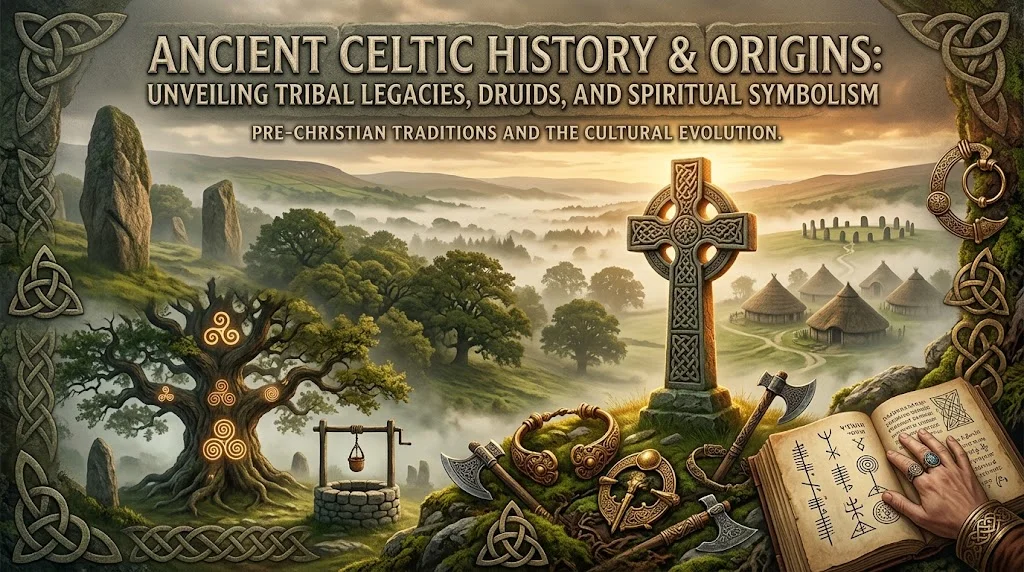
Ancient Celtic History and Origins
Pre-Christian Celtic Traditions
The Celts were tribal peoples spread across parts of Europe before Roman expansion. Their spiritual beliefs centered on nature, oral storytelling, sacred landscapes, and seasonal rituals.
Druids, who served as spiritual leaders, likely helped preserve symbolic traditions. Although much of their knowledge was oral, archaeological finds reveal recurring imagery tied to cosmic balance and natural cycles.
Roman and Christian Influence
As Christianity spread through Ireland and Britain, older Celtic imagery did not disappear completely. Instead, many symbols blended with Christian teachings.
For example, the Celtic cross combined the Christian cross with circular solar imagery already important in earlier traditions. Similarly, sacred wells and trees remained culturally significant even after conversion.
This blending explains why Celtic symbolism often feels both pagan and Christian today.
Celtic Knots and Their Meaning
Why Knots Matter
Celtic knots are among the most recognized Celtic symbols in America. These looping designs have no visible start or finish, which gives them strong emotional meaning.
Because the lines never end, knots often symbolize eternal bonds. They appear in wedding jewelry, memorial tattoos, and spiritual art.
Common Meanings of Celtic Knots
• Eternal love and devotion
• Interconnection between people and nature
• Spiritual continuity after death
• Unity of mind, body, and spirit
• Infinite cycles of life and rebirth
Popular Knot Variations
| Symbol | Meaning in the USA | Common Associations | Notes |
| Trinity Knot | Spiritual unity | Faith, family, balance | Often tied to Christianity |
| Dara Knot | Inner strength | Oak roots, resilience | Popular in tattoos |
| Sailor’s Knot | Eternal love | Marriage, loyalty | Common in jewelry |
| Shield Knot | Protection | Defense, courage | Sometimes used in memorials |
| Celtic Heart Knot | Romantic connection | Partnership, affection | Modern adaptation |
Knots in Modern Culture
Americans frequently use Celtic knots in:
• Wedding rings and anniversary gifts
• Tattoo sleeves and memorial tattoos
• Irish-American celebrations
• Spiritual jewelry and meditation spaces
• Digital artwork and social media aesthetics
The Spiritual Meaning of Celtic Spirals
Symbols of Motion and Change
Spirals are some of the oldest Celtic symbols ever discovered. Ancient stone carvings in Ireland show spiral patterns dating back thousands of years.
Unlike rigid geometric designs, spirals feel alive and moving. Because of this, people often associate them with growth and transformation.
Types of Celtic Spirals
Single Spiral
The single spiral often symbolizes personal growth and spiritual expansion. It may also represent the journey from birth to death.
Double Spiral
This design reflects balance between opposites. Examples include life and death, light and dark, or physical and spiritual worlds.
Triple Spiral (Triskele)
The triskele is especially important in Celtic symbolism. It commonly represents:
• Past, present, and future
• Earth, sea, and sky
• Mind, body, and spirit
• Birth, death, and rebirth
Modern Emotional Meaning
Today, many Americans choose spiral symbols during periods of personal change. The design often signals healing, recovery, or spiritual awakening.
The Meaning of the Celtic Cross
A Blend of Traditions
The Celtic cross combines a traditional Christian cross with a surrounding circle. Historians still debate its exact origin, but many believe the circle connects to solar symbolism from earlier pagan traditions.
Because of this blend, the Celtic cross carries layered meanings.
Symbolic Interpretations
• Christian faith and salvation
• Eternal life and divine unity
• Connection between heaven and earth
• Blending of ancient and newer beliefs
• Cultural identity and Irish heritage
Celtic Crosses in America
In the United States, Celtic crosses commonly appear in:
• Cemeteries and memorial stones
• Churches with Irish heritage
• Religious jewelry
• Military memorial symbolism
• Family ancestry displays
However, context matters. A small number of extremist groups have misused variations of Celtic imagery. Most traditional Celtic crosses remain cultural or religious symbols, not political ones.
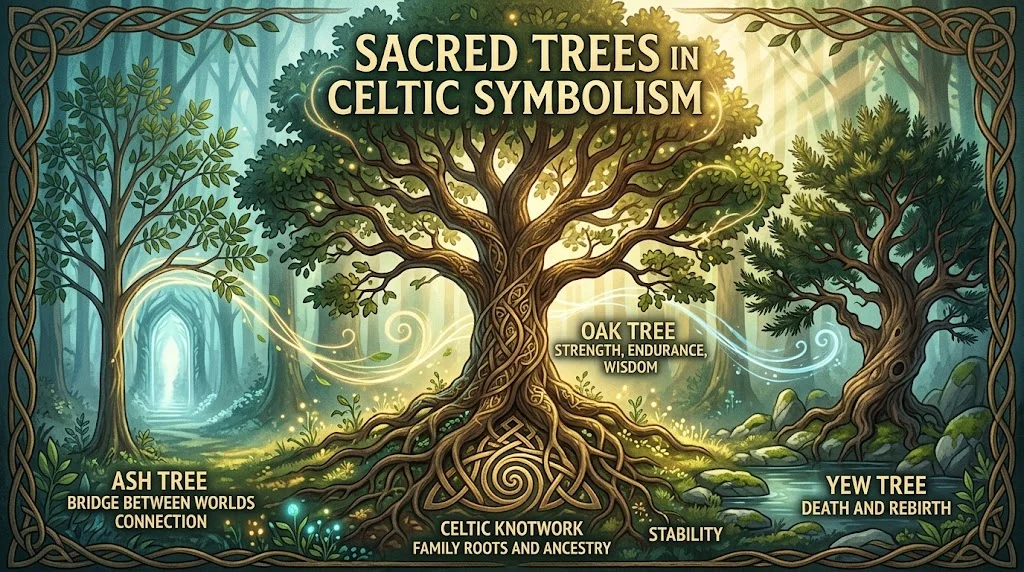
Sacred Trees in Celtic Symbolism
Nature as a Spiritual Force
Trees held enormous importance in Celtic culture. Forests were viewed as sacred places filled with wisdom and spiritual energy.
The Celts believed certain trees carried protective or mystical qualities. Even today, tree symbolism remains central in Celtic-inspired spirituality.
Important Celtic Trees
Oak Tree
The oak symbolized strength, endurance, and wisdom. Druids especially respected oak groves.
Ash Tree
Ash trees often represented connection between worlds. Some myths described them as bridges between earthly and spiritual realms.
Yew Tree
The yew became linked with death and rebirth because it survives for centuries.
Modern Meanings of Celtic Trees
• Stability during difficult times
• Family roots and ancestry
• Personal growth and healing
• Respect for nature and ecology
• Spiritual grounding and mindfulness
Celtic Animal Symbolism
Animals as Spiritual Guides
Celtic cultures often viewed animals as sacred messengers or protectors. Many stories described animals carrying wisdom from other realms.
Unlike modern mascots, these creatures held spiritual meaning tied to survival, nature, and identity.
Common Celtic Animals and Meanings
Raven
The raven symbolized prophecy, mystery, and transformation.
Stag
Stags represented masculinity, wilderness, and leadership.
Salmon
The salmon symbolized wisdom and hidden knowledge.
Boar
Boars reflected courage, ferocity, and warrior strength.
Wolf
Wolves represented loyalty, instinct, and survival.
Why Animal Symbols Remain Popular
Today, Celtic animal imagery appears in:
• Tattoos and fantasy-inspired art
• Pagan and neo-spiritual practices
• Jewelry and family crests
• Outdoor and wilderness symbolism
• Gaming and entertainment culture
Celtic Symbolism in American Identity
Irish-American Cultural Pride
Irish immigration strongly shaped American views of Celtic symbolism. During the 19th and 20th centuries, Irish communities used Celtic imagery to preserve cultural identity.
Symbols became especially visible during:
• St. Patrick’s Day celebrations
• Irish dance and music festivals
• Catholic community traditions
• Heritage organizations and parades
Beyond Ethnic Identity
Today, many Americans without Celtic ancestry still connect with these symbols. Some are drawn to their visual beauty. Others value the spiritual or emotional meanings attached to them.
Celtic symbolism now crosses cultural boundaries through fashion, entertainment, and personal spirituality.
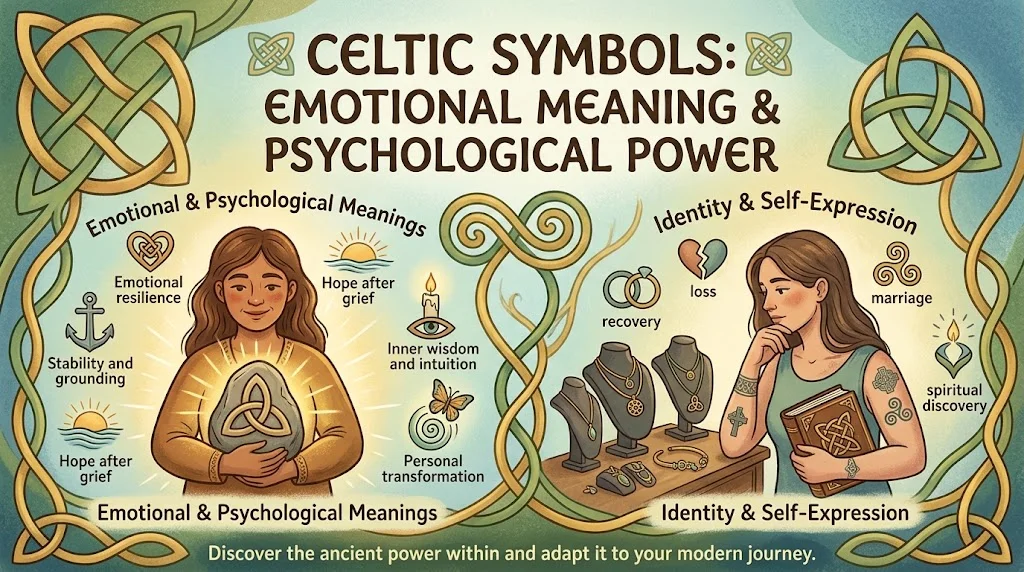
Emotional and Psychological Meanings
Why These Symbols Feel Powerful
Celtic designs often create emotional comfort because they emphasize continuity and connection. Endless loops and circular patterns can feel calming during uncertain times.
People commonly associate Celtic symbolism with:
• Emotional resilience
• Stability and grounding
• Hope after grief
• Inner wisdom and intuition
• Personal transformation
Identity and Self-Expression
Many Americans choose Celtic symbols during life transitions. Tattoos and jewelry may mark recovery, loss, marriage, or spiritual discovery.
Because the symbols feel ancient yet flexible, people often adapt them to personal meaning.
Celtic Symbolism in Tattoos and Modern Design
Tattoo Culture
Celtic tattoos became widely popular in America during the late 1990s and early 2000s. Their flowing patterns worked well for sleeves, armbands, and memorial art.
Popular tattoo themes include:
• Knotwork for eternal love
• Ravens for mystery and wisdom
• Crosses for faith and ancestry
• Trees representing family roots
• Spirals symbolizing healing journeys
Home Decor and Fashion
Celtic imagery also appears in:
• Wall art and carved wood decor
• Wedding invitations and jewelry
• Spiritual altar designs
• Clothing and festival fashion
• Social media graphics and digital art
Misunderstandings and Controversies
Romanticized History
Modern Celtic symbolism is sometimes presented as more unified than it truly was. Ancient Celtic cultures varied across regions and centuries.
Because written records are limited, some modern interpretations rely partly on reconstruction and modern spiritual movements.
Misuse by Extremist Groups
A few extremist organizations have appropriated certain Celtic-inspired symbols. However, these uses represent a small minority and do not define traditional Celtic meanings.
Context is important. Most Celtic symbols continue to represent heritage, spirituality, art, or emotional identity.
Commercialization
Some critics argue that mass-produced Celtic imagery oversimplifies sacred traditions. Yet others see modern adaptation as part of cultural evolution.
read more: Symbolism of Triangle: Spiritual, Cultural & Universal Meanings
How Celtic Meanings Changed Over Time
Ancient to Medieval Eras
Originally, Celtic symbols were tied closely to tribal spirituality, oral tradition, and sacred landscapes.
Later, Christianity reshaped many meanings while preserving visual styles.
Modern Revival
During the 19th-century Celtic Revival, artists and writers renewed interest in Celtic identity. This movement influenced literature, nationalism, and decorative art.
Digital Age Symbolism
Today, Celtic symbolism thrives online through:
• Tattoo inspiration communities
• Spiritual content creators
• Fantasy entertainment fandoms
• Heritage and genealogy groups
• Wellness and mindfulness spaces
Modern meanings often blend history with personal interpretation.
FAQs About Celtic Symbolism
What does Celtic symbolism mean?
Celtic symbolism represents the spiritual beliefs, cultural traditions, and connection with nature found in ancient Celtic cultures. Its symbols often express eternity, unity, transformation, protection, and the cycles of life.
What do Celtic knots symbolize?
Celtic knots commonly symbolize eternity, interconnectedness, loyalty, and everlasting bonds. Their continuous loops have no clear beginning or end, making them popular in jewelry, tattoos, and decorative art.
What does the Triskelion symbolize?
The Triskelion is an ancient symbol featuring three spirals or three connected sections. It is commonly associated with progress, movement, transformation, and the cycles of life.
What is the spiritual meaning of a Celtic cross?
The Celtic cross is associated with Irish Christian heritage and combines a cross with a surrounding ring. Its meanings may include faith, eternity, spiritual connection, and the relationship between heaven and earth.
Which animals are important in Celtic symbolism?
Animals such as stags, ravens, wolves, salmon, and horses appear in Celtic mythology and folklore. Depending on the story or tradition, they may symbolize wisdom, strength, protection, transformation, or a connection with nature.
Why are Celtic symbols popular in modern tattoos and jewelry?
Celtic symbols feature intricate patterns and meaningful designs that appeal to people interested in heritage, spirituality, and personal expression. Celtic knots, crosses, spirals, and animal motifs remain popular in tattoos, jewelry, and modern artwork.
Conclusion
Celtic Symbolism: Knots, Spirals, Crosses & Sacred Animals reveals the lasting beauty and cultural importance of ancient Celtic designs. From the endless loops of Celtic knots to the three spirals of the Triskelion, each symbol carries meanings connected to eternity, unity, transformation, and nature. Celtic crosses and sacred animals also preserve stories of faith, wisdom, and cultural heritage. Today, these symbols continue to inspire tattoos, jewelry, art, and spiritual exploration. Understanding their history and cultural context helps us appreciate their deeper meanings while respecting the traditions that keep Celtic symbolism alive.

Isabella Taylor is a spiritual content creator who shares thoughtful insights on dreams, symbols, and self-discovery. Through her writing at SoulMeanings.com, she inspires readers to find meaning and guidance in everyday life.