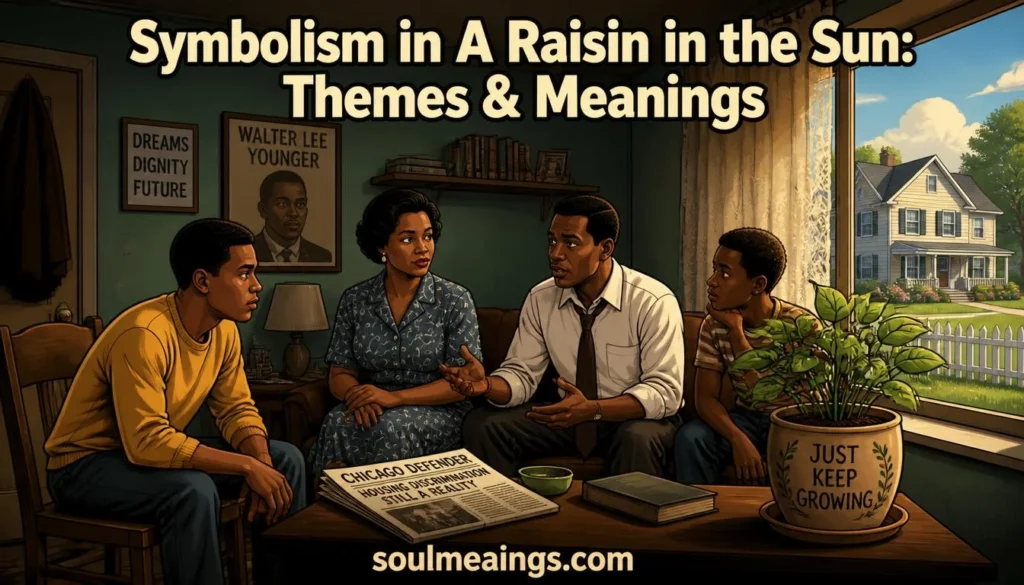
Symbolism in A Raisin in the Sun has a powerful role in showing the deeper themes and meaning of this famous drama.
Written by Lorraine Hansberry, one of the most influential playwrights of the 20th century, A Raisin in the Sun is a groundbreaking exploration of race, class, family, and identity. Set in Chicago during the 1950s, the play follows an African American family, the Younger family, as they face daily struggles, emotional challenges, and social challenges.
Through simple objects, familiar places, and everyday situations, Hansberry uses a rich tapestry of symbolism to express complex ideas and give the story a deeper meaning. In my view, the symbols make the play feel real because they connect ordinary family life with larger social problems. Mama’s plant, the new house, and money each reveal the family’s hopes, fears, and desire for a better future.
The play’s title also carries important title symbolism. Inspired by Langston Hughes and his poem, the title asks what happens when dreams deferred become unfulfilled aspirations. Like a raisin in the sun, a neglected dream may wither when people lack the freedom or resources to achieve it. This idea creates tension between dreams fulfilled and the pain of surrendering dreams.
The play explores personal conflicts, racial conflicts, and wider social conflicts, showing the cost of chasing dreams in an unfair society. These ideas make the play more than a family drama; symbolism transforms it into a universal story about hope and resilience. This complete guide to the major symbols and minor symbols examines the cultural context, historical context, and timeless life lessons that Hansberry conveys. Together, these symbolic elements help readers understand why the symbolism remains meaningful today.
Quick Answer
Symbolism in A Raisin in the Sun mainly represents hope, deferred dreams, racial inequality, family pride, and the search for dignity in America. In the USA, the play’s symbols especially reflect the Black American experience during segregation while also speaking to universal struggles about identity and opportunity.
TL;DR
• Mama’s plant symbolizes hope and care under difficult conditions.
• The apartment reflects poverty and limited opportunities.
• The house represents freedom, dignity, and racial progress.
• Money creates both dreams and family conflict.
• Sunlight symbolizes growth, renewal, and possibility.
• The play still reflects modern American social struggles.
Overview of Symbolism in A Raisin in the Sun
Why Symbolism Matters in the Play
Symbolism drives nearly every emotional moment in the story. Instead of explaining themes directly, the play uses objects and spaces to reveal what characters truly want.
American audiences often connect deeply with these symbols because they mirror real social pressures. The Younger family’s experiences reflect housing discrimination, economic hardship, and generational dreams common in mid-century America.
Major Symbols at a Glance
• Mama’s plant represents hope and nurturing.
• The new house symbolizes freedom and progress.
• Money reflects both opportunity and danger.
• Sunlight symbolizes dreams and emotional growth.
• Travis represents the future generation.
• Beneatha’s hair symbolizes cultural identity.
Historical Background Behind the Play
The Civil Rights Era Context
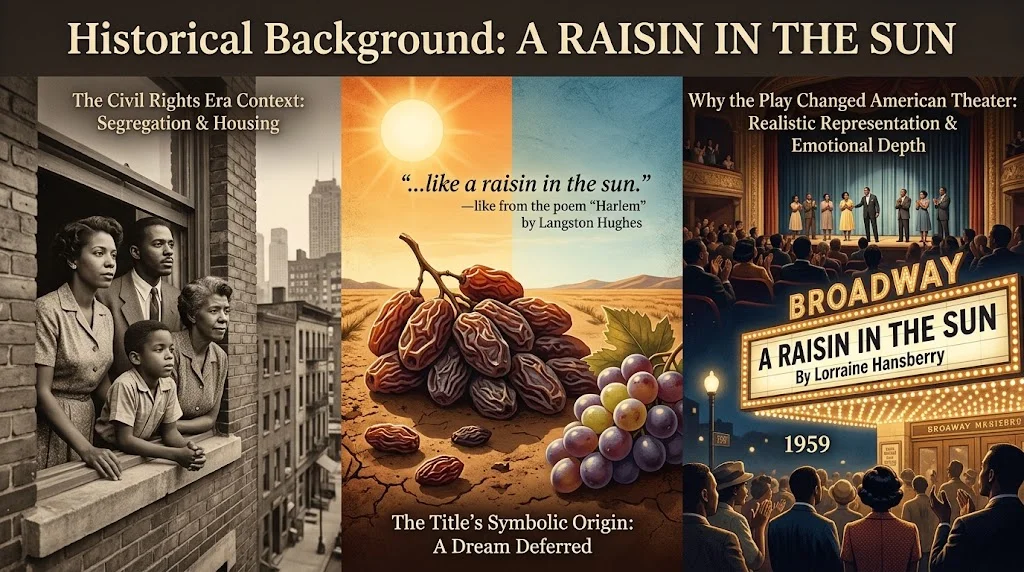
The play appeared during the growing Civil Rights Movement in the United States. Segregation and racist housing practices deeply affected Black families across American cities.
Many Black Americans faced unfair housing restrictions called restrictive covenants. These practices blocked families from moving into white neighborhoods. Therefore, the Younger family’s housing struggle reflected real American history.
The Title’s Symbolic Origin
The title comes from Langston Hughes and his poem “Harlem,” which asks what happens to a dream deferred.
The famous line compares delayed dreams to “a raisin in the sun.” This image suggests something once full of life becoming dry and damaged over time. However, the play also asks whether dreams can survive despite hardship.
Why the Play Changed American Theater
Before this play, Black families were rarely shown realistically on major American stages. Lorraine Hansberry presented complex characters with ambitions, flaws, humor, and emotional depth.
Because of this, the play became a symbol itself. It represented a broader demand for representation and dignity in American culture.
Mama’s Plant Symbolism
The Plant as Hope
Mama’s small plant is one of the play’s most famous symbols. It struggles to survive in poor lighting and cramped conditions, much like the Younger family.
Even so, Mama keeps caring for it. This reflects her refusal to give up on her family’s future.
• The plant survives despite harsh conditions.
• Mama protects it with patience and faith.
• It symbolizes fragile but lasting hope.
• Growth becomes possible through care and resilience.
The Plant and Black American Experience
Many readers see the plant as a symbol of Black perseverance in America. During segregation, Black families often faced limited opportunities, poor housing, and economic hardship.
Still, communities continued building families, traditions, and dreams. Therefore, the plant represents survival against systems designed to limit growth.
Sunlight and Renewal
The plant also needs sunlight to grow. Symbolically, sunlight represents freedom, opportunity, and emotional warmth.
Without those things, dreams struggle. Yet the play suggests hope can survive even in darkness.
The Symbolism of the Younger Family’s Apartment
Cramped Space and Emotional Pressure
The apartment feels crowded and worn down throughout the play. Multiple generations share limited space, creating tension and frustration.
The setting reflects the emotional exhaustion caused by poverty and discrimination.
| Context | Meaning in the USA | Common Associations | Notes |
| Small apartment | Economic inequality | Stress, confinement | Linked to segregation |
| Shared rooms | Lack of privacy | Family tension | Limited opportunity |
| Poor lighting | Deferred dreams | Emotional heaviness | Connects to symbolism of sunlight |
| Aging furniture | Financial struggle | Weariness | Reflects long-term hardship |
| Overcrowding | Social limitation | Frustration | Common urban reality |
Housing Discrimination Symbolism
The apartment is not simply a poor home. It also reflects racial barriers in mid-century America.
Because Black families often faced unfair housing restrictions, the apartment becomes symbolic of systemic inequality rather than personal failure.
Emotional Effects of the Setting
• The apartment increases conflict between characters.
• Lack of space limits emotional freedom.
• The setting reflects trapped ambitions.
• Crowding symbolizes restricted social mobility.
The House as a Symbol of Freedom
More Than a Physical Home
The new house represents one of the play’s biggest dreams. For Mama, the home means safety, dignity, and a better future for her family.
However, the house also symbolizes entrance into spaces historically denied to Black Americans.
The American Dream
The house strongly connects to the idea of the American Dream. In US culture, home ownership often symbolizes stability and success.
For the Youngers, buying a home becomes an act of resistance against discrimination.
Why the House Creates Conflict
The family’s move threatens racist neighborhood systems. This is why Karl Lindner tries convincing them not to move.
The house therefore becomes symbolic of social change and racial progress.
• Ownership symbolizes independence and dignity.
• The neighborhood move challenges segregation.
• The home represents future opportunity.
• The decision reflects courage under pressure.
Money Symbolism in A Raisin in the Sun
Money as Hope and Temptation
The insurance check creates excitement and conflict throughout the story. Every family member imagines a different future connected to the money.
Because of this, money becomes symbolic of both dreams and division.
Different Meanings for Each Character
Walter sees money as power and masculinity. Beneatha sees it as education and independence. Mama views it as security and stability.
This difference reveals how economic pressure shapes identity.
The Emotional Meaning of Wealth
In the play, money is never just financial. Instead, it becomes tied to pride, freedom, respect, and disappointment.
• Walter links money to self-worth.
• Beneatha connects money with opportunity.
• Mama values security over status.
• Financial stress creates emotional strain.
Beneatha’s Hair and Cultural Identity
Natural Hair Symbolism
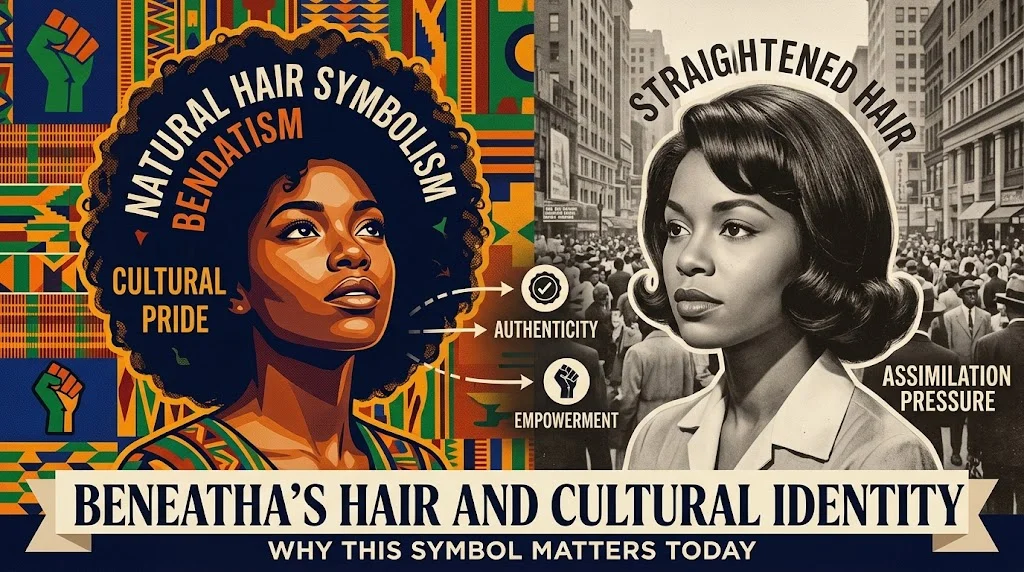
Beneatha’s decision to wear her hair naturally represents cultural pride and self-discovery. During the 1950s, straightened hair often reflected pressure to fit white beauty standards.
Therefore, her hairstyle becomes a symbol of rejecting forced assimilation.
African Heritage and Identity
Beneatha explores African culture throughout the play. She questions what it means to be Black in America and seeks deeper cultural roots.
This search reflects larger conversations about identity during the Civil Rights era.
Why This Symbol Still Matters Today
Modern discussions about natural hair, beauty standards, and cultural identity continue across the United States today.
Because of this, Beneatha’s hair symbolism still feels current and meaningful.
• Natural hair symbolizes authenticity.
• Straightening reflects social pressure.
• African identity becomes empowering.
• Appearance connects to self-respect.
Sunlight and Dreams in the Play
The Meaning of Sunlight
Sunlight appears repeatedly through images of growth and possibility. It connects especially to Mama’s plant and the family’s dreams.
In symbolic terms, sunlight represents the conditions needed for emotional survival.
Deferred Dreams
The title itself suggests dreams drying out without opportunity. Therefore, sunlight also symbolizes access to hope and progress.
Without support or freedom, dreams may weaken over time.
Emotional Associations
• Sunlight suggests optimism and renewal.
• Darkness symbolizes frustration and limitation.
• Growth reflects emotional healing.
• Warmth represents love and family unity.
Walter Lee Younger as a Symbol
Masculinity and Pressure
Walter represents the pressure many men feel to provide financial success for their families. He believes money will finally earn him respect.
However, his frustration reveals the emotional cost of blocked opportunity.
The Struggle for Dignity
Walter’s journey becomes symbolic of dignity under oppression. He feels trapped by race, class, and economic limitation.
Yet by the play’s end, he chooses family pride over humiliation.
What Walter Represents in America
Many American readers view Walter as symbolic of frustrated ambition. His struggles remain relatable because economic insecurity still affects families today.
read more: Color Symbolism in The Great Gatsby With Quotes Explained
Cross-Cultural and Spiritual Meanings
Universal Themes Beyond America
Although the play centers on Black American experiences, its symbols connect with audiences worldwide.
Dreams, family pressure, migration, and identity struggles appear across many cultures.
Spiritual Elements
Mama’s faith also shapes the symbolism of the story. Her belief in perseverance reflects Christian ideas about endurance, sacrifice, and hope.
However, the play stays grounded in everyday human experience rather than religious preaching.
Shared Human Emotions
• Families seek safety and belonging everywhere.
• Dreams often face social barriers.
• Hope survives through community support.
• Identity struggles appear across cultures.
Modern Symbolism and Pop Culture Influence
Why the Symbols Still Resonate
Many themes in the play remain visible in modern American life. Housing inequality, generational stress, and identity questions continue shaping public discussion.
Because of this, younger audiences still connect with the play emotionally.
Symbolism in Schools and Media
The play is widely taught in American schools because its symbols are accessible yet powerful. Students often relate strongly to the themes of ambition and family conflict.
Modern Interpretations
Today, people often discuss the play in connection with:
• Economic inequality in urban America.
• Conversations about racial justice.
• Generational expectations and burnout.
• Identity and cultural pride online.
• Housing affordability and discrimination.
• Emotional effects of delayed opportunity.
Misunderstandings and Controversies
Is the Play Only About Race?
Some readers reduce the play entirely to racism. While racial discrimination is central, the story also explores family, ambition, gender, and emotional identity.
Its symbolism works because the themes feel both specific and universal.
Conflicts Around Gender Roles
Walter and Beneatha frequently clash over gender expectations. Modern audiences sometimes debate whether Walter’s attitudes reflect sexism or emotional desperation.
The play intentionally presents flawed but human characters.
Misreading the Ending
Some viewers believe the ending is fully optimistic. Others see it as uncertain because the family still faces racism after moving.
Both interpretations are common today.
• Hope exists beside ongoing struggle.
• Symbols remain emotionally layered.
• Characters reflect human contradictions.
• The ending mixes courage with uncertainty.
How the Meaning Has Changed Over Time
Early Interpretations
When the play first appeared, audiences mainly focused on segregation and civil rights themes.
At the time, its realistic portrayal of a Black family felt groundbreaking.
Modern Perspectives
Today, readers also discuss mental health, masculinity, feminism, and generational trauma within the play’s symbolism.
Social media conversations often connect the story to modern financial stress and identity struggles.
Why the Play Endures
The symbols remain powerful because they adapt to new cultural conversations while keeping their emotional core.
FAQs
What is the main symbolism in A Raisin in the Sun?
The main symbolism in A Raisin in the Sun focuses on dreams, hope, and the struggle for a better future. Mama’s plant, the new house, money, and the play’s title reveal the Younger family’s challenges and aspirations.
What does Mama’s plant symbolize in the play?
Mama’s plant symbolizes hope, love, and the strength to survive difficult conditions. Like the plant, Mama’s family needs care and support to grow despite poverty and discrimination.
What does the title A Raisin in the Sun mean?
The title refers to Langston Hughes’ poem “Harlem,” which asks what happens to a dream that is delayed. A raisin drying in the sun represents how an ignored or postponed dream may lose its strength.
What does the new house symbolize?
The new house symbolizes progress, independence, and the possibility of a better life. For the Younger family, it represents their hope of escaping crowded living conditions and building a brighter future.
How does money function as a symbol in the play?
Money symbolizes opportunity, security, and family conflict. The insurance payment gives the Younger family a chance to pursue their dreams, but their different plans also create tension and disagreement.
How does symbolism help explain the play’s major themes?
Symbolism helps readers understand the play’s themes of racism, family unity, identity, hope, and deferred dreams. Ordinary objects reveal the emotional struggles and social barriers that shape the Younger family’s choices.
Conclusion
Symbolism in A Raisin in the Sun: Themes & Meanings reveals how ordinary objects can express powerful ideas about family, identity, and the pursuit of happiness. Mama’s plant represents hope and resilience, the new house reflects progress and independence, and money highlights both opportunity and conflict. The title, inspired by Langston Hughes’ poem “Harlem,” reminds readers that delayed dreams can cause pain when people lack the freedom to achieve them.
Through these symbols, Lorraine Hansberry explores racism, economic hardship, family responsibility, and the courage to keep moving forward. The play remains meaningful because its message reaches beyond the Younger family: everyone deserves the chance to build a better future and pursue their dreams with dignity.

Charlotte Brown is a passionate writer at SoulMeanings.com, dedicated to exploring spirituality, symbolism, dreams, and life’s deeper meanings. Her work helps readers find clarity, inspiration, and personal insight.