
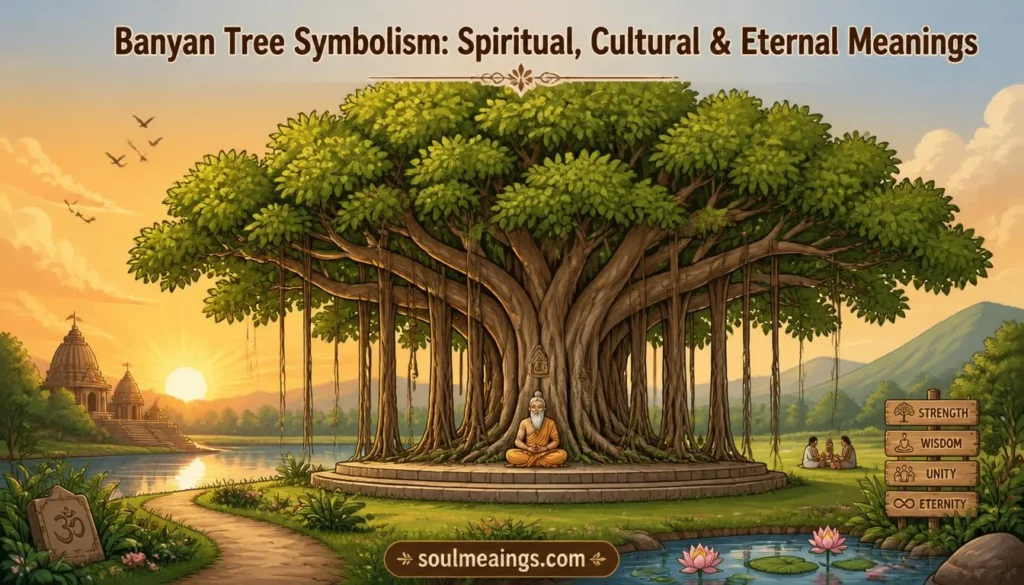
Banyan Tree Symbolism: Spiritual, Cultural & Eternal Meanings connects the banyan tree with strength, wisdom, longevity, and eternal life.
Its towering presence, sprawling branches, aerial roots, and broad canopy allow it to grow across vast landscapes. As its roots develop into new trunks, one living tree can resemble a small grove. In my view, this natural wonder represents resilience, renewal, continuous growth, stability, and rootedness. It also provides shelter, nourishment, and community support. Protecting these natural giants supports biodiversity, ecological balance, environmental conservation, and sustainability.
Across religions, cultures, folklore, and mythology, the banyan represents sacred nature, spiritual growth, and ancient wisdom. In India and older South Asian traditions, it is connected with Hindu sacred groves, Buddhist traditions, ritual life, and cultural heritage. The Bodhi tree is especially associated with the Buddha’s enlightenment.
The banyan’s roots and branches can symbolize family roots, ancestral connections, and bonds across generations. In modern American culture, it may represent shelter, grounded wisdom, and spiritual connection. Its meaning also appears in dreams, tattoos, and art, where it can symbolize protection, fertility, immortality, interconnectedness, and enduring life. Overall, the banyan remains a powerful symbol of strength, spiritual wisdom, cultural identity, and lasting growth.
Quick Answer
Banyan Tree Symbolism usually represents wisdom, eternity, protection, and interconnected life. In the United States, the banyan tree is often linked with mindfulness, healing, personal growth, and spiritual balance, while older traditions connect it with sacred knowledge and immortality.
TL;DR
• Symbolizes wisdom, strength, and eternal life
• Known for interconnected roots and endless growth
• Sacred in Hindu and Buddhist traditions
• Popular in wellness, tattoos, and meditation imagery
• Represents family, shelter, and spiritual grounding
• Modern Americans often associate it with mindfulness
What Is a Banyan Tree?
Appearance and Natural Features
The banyan tree is famous for its huge canopy and aerial roots. These roots grow downward from branches and eventually form new trunks. As a result, one tree can spread across a massive area.
Because of this appearance, the banyan often feels ancient and mysterious. Its twisting roots and wide shade create a powerful visual symbol of endurance and connection.
Common visual traits include:
• Hanging roots that become additional trunks
• Massive spreading branches and dense shade
• Long lifespan and continual outward growth
• Thick bark and tangled root systems
• Sacred gathering spaces beneath the canopy
Why Its Shape Matters Symbolically
Many symbolic meanings come directly from the tree’s structure. Since the tree keeps expanding, it often represents never-ending life and generational continuity.
Its connected roots also symbolize relationships, ancestry, and shared human experience. In modern American symbolism, these ideas often appear in wellness communities and spiritual design.
Historical Origins of Banyan Tree Symbolism
Ancient South Asian Roots
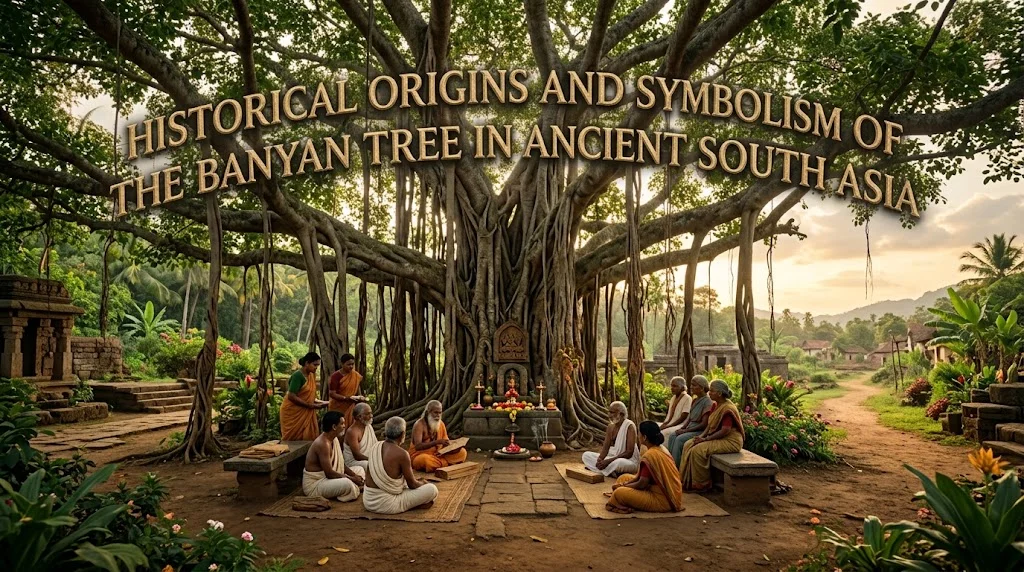
The banyan tree has deep historical ties to South Asia, especially India. For thousands of years, it served as a sacred meeting place, meditation site, and community center.
Ancient traditions often viewed the tree as a bridge between earthly life and spiritual wisdom. Because it lived so long and continually regenerated itself, people associated it with immortality and divine knowledge.
In many villages, important discussions, ceremonies, and teachings happened beneath banyan trees. That social role strengthened its symbolic meaning as a protector of community memory.
Pre-Christian and Mythological Meanings
Long before modern spiritual movements, the banyan tree appeared in myths and sacred teachings. It often symbolized the universe itself because its roots and branches spread in every direction.
Some traditions viewed the tree as representing:
• Eternal cycles of life and rebirth
• Hidden wisdom passed through generations
• Spiritual shelter and divine protection
• The connection between heaven and earth
• Balance between growth and stability
These meanings still influence modern interpretations today.
Spiritual Meaning of the Banyan Tree
Sacred Wisdom and Enlightenment
The banyan tree is strongly connected with spiritual awakening. In many traditions, spiritual teachers meditated beneath large trees because they symbolized peace, patience, and deeper understanding.
The tree’s enormous canopy creates a quiet, protected environment. Because of this, many people associate it with reflection and inner calm.
In modern spiritual communities across the USA, banyan imagery often appears in:
• Meditation rooms
• Yoga studios
• Healing retreats
• Mindfulness artwork
• Spiritual journals and decor
Eternal Life and Rebirth
The banyan’s growth pattern makes it a natural symbol of eternity. Instead of dying after producing new roots, it expands continuously.
This idea connects with spiritual themes such as:
• Renewal after hardship
• Personal transformation
• Emotional resilience
• Generational continuity
• Spiritual rebirth
Today, many Americans interpret the banyan as a reminder that growth continues throughout life.
Banyan Tree Symbolism in Hindu Traditions
A Sacred and Protective Tree
In Hindu traditions, the banyan tree is highly respected and often considered sacred. It is associated with longevity, wisdom, and divine presence.
Many communities believe the tree provides spiritual protection. Religious gatherings and rituals historically took place beneath its branches.
The tree is commonly linked with:
• Eternal knowledge
• Sacred feminine energy
• Protection of family lineage
• Patience and discipline
• Stability during change
Symbol of Divine Connection
The banyan also appears in spiritual teachings about interconnected existence. Its expanding roots reflect the idea that all life remains connected.
Because of this symbolism, the tree became associated with compassion, responsibility, and spiritual duty.
Banyan Tree Meaning in Buddhism
Meditation and Inner Peace
In Buddhist traditions, large trees often symbolize awakening and mindfulness. While the Bodhi tree receives the most attention, banyan trees also became associated with meditation and peaceful reflection.
The tree’s quiet shade naturally supports contemplation. As a result, it came to symbolize calm awareness and spiritual balance.
Common Buddhist-related associations include:
• Mental clarity
• Compassion
• Patience
• Non-attachment
• Inner stillness
The Tree as a Living Teacher
Many spiritual teachings describe nature as a guide for human behavior. The banyan’s steady growth and deep roots symbolize emotional grounding and wise living.
Modern mindfulness culture in the USA often borrows these symbolic ideas respectfully, especially in wellness spaces and meditation branding.
Banyan Tree Symbolism in the United States
Modern American Interpretations
In the United States, banyan tree symbolism has shifted toward personal wellness and emotional healing. Many Americans see the tree as a symbol of grounded living and inner strength.
Unlike older religious meanings, modern interpretations are often more psychological and lifestyle-focused.
The banyan commonly symbolizes:
• Emotional stability
• Personal growth
• Family connection
• Healing after hardship
• Mindful living
Influence of Wellness Culture
Yoga, meditation, and mindfulness movements helped popularize banyan symbolism in America. Images of wide-rooted trees now appear frequently in wellness products and calming interior design.
Because Americans often seek symbols of balance in stressful times, the banyan fits naturally into modern spiritual and emotional culture.
Emotional and Psychological Symbolism
Feelings the Banyan Tree Represents
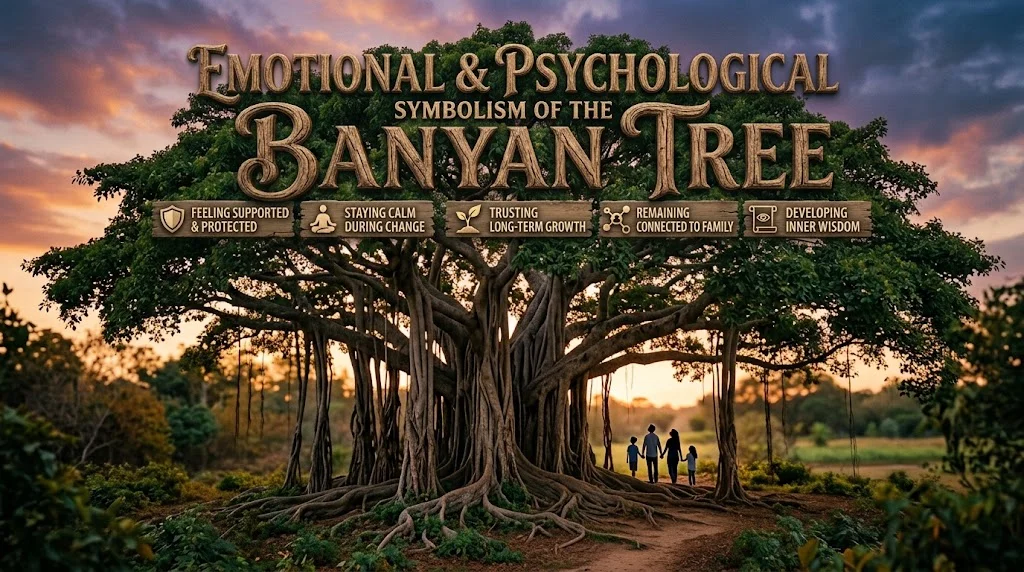
The banyan tree often creates emotional associations with safety and endurance. Its giant canopy feels protective, while its roots suggest emotional grounding.
Psychologically, people may connect the tree with stability during uncertain periods.
Common emotional meanings include:
• Feeling supported and protected
• Staying calm during change
• Trusting long-term growth
• Remaining connected to family
• Developing inner wisdom
Why People Feel Drawn to It
Large trees naturally create feelings of awe. However, the banyan’s unusual shape makes it especially memorable.
Its expanding roots can remind people that healing and growth are ongoing processes rather than quick fixes.
Banyan Tree Symbolism in Tattoos
Popular Tattoo Meanings
Banyan tree tattoos have become more popular in the USA, especially among people interested in spirituality, travel, or personal transformation.
Most designs focus on the roots and spreading branches because those features carry the strongest symbolic meaning.
| Tattoo Style | Meaning in the USA | Common Associations | Notes |
| Full banyan tree | Strength and wisdom | Spiritual growth | Often large back pieces |
| Root-focused tattoo | Family and ancestry | Emotional grounding | Popular minimalist style |
| Banyan with birds | Freedom and connection | Personal healing | Nature-inspired symbolism |
| Circular banyan design | Eternal life | Unity and balance | Common meditation symbol |
| Watercolor banyan | Creativity and peace | Modern spirituality | Popular among younger adults |
Identity and Personal Growth
Many tattoo wearers choose the banyan to represent survival through difficult periods. Others connect it with staying rooted while continuing to grow emotionally.
Because the tree symbolizes both strength and flexibility, it appeals to people navigating major life changes.
Banyan Tree in Modern Decor and Social Media
Symbol of Calm Living
Today, banyan imagery appears in home decor, wellness branding, and social media aesthetics. Large trees often create a peaceful atmosphere in visual design.
Americans commonly use banyan imagery to signal:
• Simplicity and mindfulness
• Emotional balance
• Nature-centered living
• Spiritual openness
• Long-term personal growth
Digital Symbolism
On social media, banyan trees often appear in motivational posts and reflective photography. They’re especially common in content about healing journeys, meditation, and reconnecting with nature.
The tree’s visual complexity also makes it popular in artistic photography and calming digital spaces.
Cross-Cultural Meanings of the Banyan Tree
Shared Themes Across Cultures
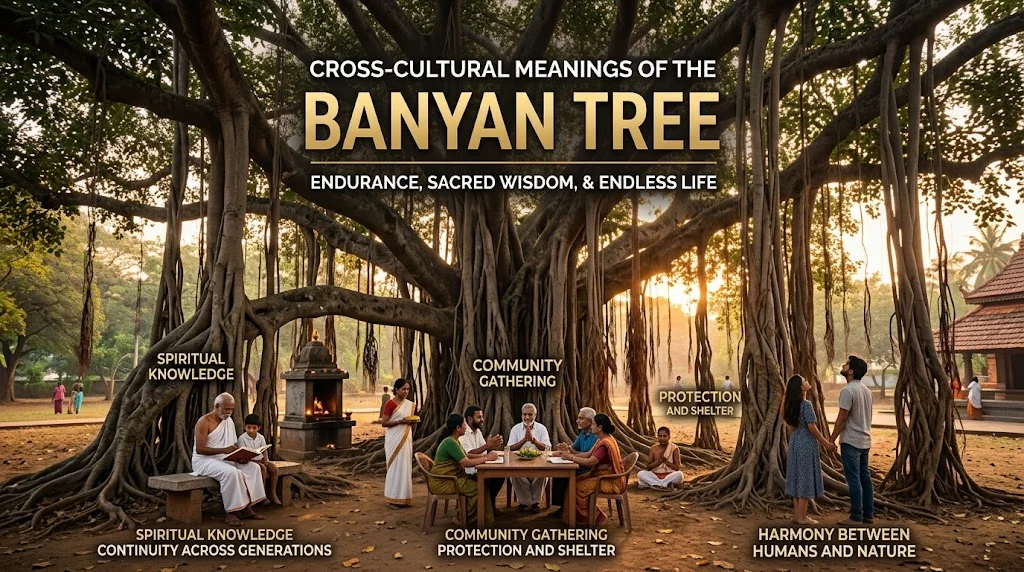
Although meanings vary, many cultures connect the banyan tree with endurance and sacred wisdom. Its long life naturally inspires symbolic thinking.
Across different traditions, recurring themes include:
• Protection and shelter
• Spiritual knowledge
• Community gathering
• Continuity across generations
• Harmony between humans and nature
Regional Differences
Some cultures emphasize the tree’s spiritual role, while others focus more on ancestry or social unity. In modern America, however, interpretations are usually more personal and emotional than strictly religious.
Even so, many people still respect the tree’s older sacred meanings.
Misunderstandings and Cultural Sensitivities
Oversimplification in Modern Culture
As banyan symbolism became popular in Western wellness spaces, some meanings became simplified. For example, people sometimes reduce the tree to a generic “peace symbol” without understanding its deeper cultural roots.
This doesn’t always come from disrespect. However, understanding the tree’s historical background adds important context.
Respectful Use of Sacred Symbols
Using banyan imagery respectfully usually means recognizing its spiritual significance rather than treating it as an empty trend.
Helpful approaches include:
• Learning basic historical context
• Avoiding stereotypes about Eastern religions
• Respecting sacred cultural traditions
• Understanding symbolism beyond aesthetics
• Appreciating the tree’s spiritual history
How Banyan Tree Symbolism Changed Over Time
From Sacred Gathering Place to Global Symbol
Historically, the banyan tree functioned as a real social center. Communities gathered beneath it for discussions, ceremonies, and learning.
Over time, globalization introduced banyan symbolism to wider audiences. Today, people worldwide connect it with mindfulness, healing, and emotional resilience.
Modern Revivals
Interest in meditation, spirituality, and wellness helped revive ancient symbolic meanings in modern ways. Americans now often blend traditional symbolism with contemporary self-growth ideas.
This shift shows how symbols evolve while still keeping parts of their older meanings alive.
read more: Tea Symbolism: Spiritual, Cultural, and Dream Meanings
Banyan Tree Symbolism in Literature and Art
Symbol of Memory and Time
Writers and artists often use banyan trees to symbolize memory, history, and emotional depth. Their huge root systems suggest layered experiences and hidden connections.
In visual art, the tree may represent:
• Ancient wisdom
• Emotional complexity
• Human interconnectedness
• Spiritual journeys
• Nature’s endurance
A Powerful Visual Archetype
Because the tree looks both beautiful and mysterious, it appears frequently in spiritual art and cinematic landscapes.
Its dramatic shape creates an immediate sense of timelessness and reflection.
FAQs About Banyan Tree Symbolism
1. What does a banyan tree symbolize?
The banyan tree symbolizes strength, wisdom, longevity, protection, and eternal life. Its spreading roots also represent family connections and continuity across generations.
2. What is the spiritual meaning of a banyan tree?
Spiritually, the banyan tree represents growth, resilience, enlightenment, and interconnectedness. Many traditions also associate it with sacred knowledge and spiritual protection.
3. Why is the banyan tree sacred in Hinduism?
In Hindu traditions, the banyan tree is associated with longevity, wisdom, and divine presence. It also holds an important place in religious rituals and sacred spaces.
4. What is the connection between the banyan tree and Buddha?
The Buddha attained enlightenment beneath a Bodhi tree, a close relative of the banyan. This connection makes the Bodhi tree an important Buddhist symbol of wisdom and spiritual awakening.
5. What does a banyan tree symbolize in dreams?
A banyan tree in a dream may represent stability, personal growth, family bonds, or a need for protection. Its meaning depends on the dreamer’s feelings and personal experiences.
6. What does a banyan tree tattoo mean?
A banyan tree tattoo often represents strength, wisdom, family roots, resilience, and eternal life. Some people choose it to express their spiritual beliefs or connection with nature.
Conclusion
Banyan Tree Symbolism: Spiritual, Cultural & Eternal Meanings reveals how one remarkable tree can represent strength, wisdom, protection, and lasting life. Its expansive roots and branches reflect family connections, cultural traditions, and the importance of staying grounded while growing. Across spiritual beliefs and modern interpretations, the banyan remains a meaningful symbol of resilience, interconnectedness, and renewal. It reminds us that strong roots can help us face change, support others, and continue growing through every stage of life.

Charlotte Brown is a passionate writer at SoulMeanings.com, dedicated to exploring spirituality, symbolism, dreams, and life’s deeper meanings. Her work helps readers find clarity, inspiration, and personal insight.