
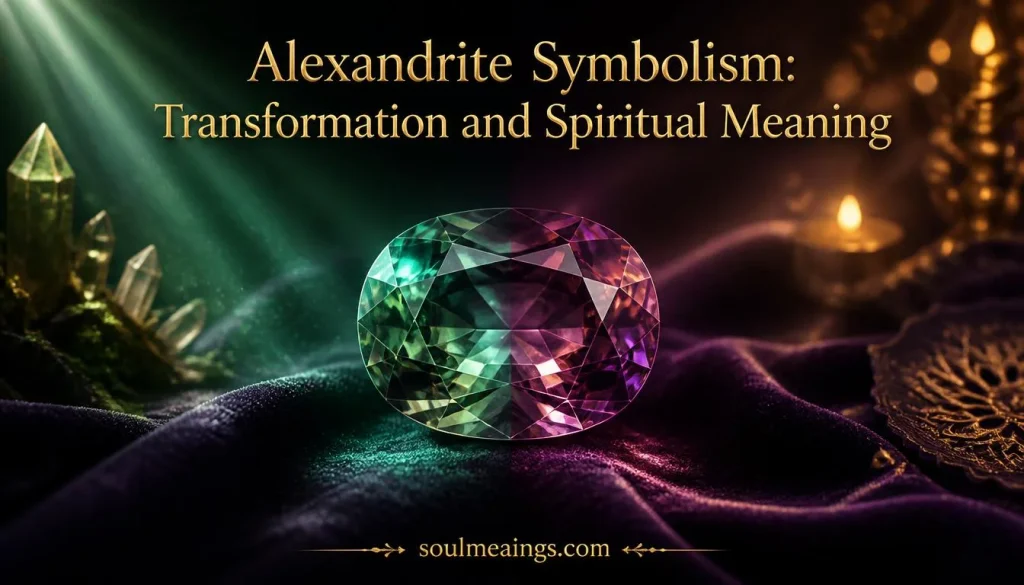
Alexandrite symbolism explores how this rare gemstone represents transformation, balance, adaptability, and personal growth through its changing colors.
Alexandrite is a captivating gemstone known for its color-changing ability, shifting from green in daylight to red under incandescent light. This unique feature makes it a symbol of change, duality, and harmony. Its beauty and rarity also strengthen its connection to gemstone symbolism and spiritual meaning.
In spiritual traditions, alexandrite meaning is often linked to intuition, inner wisdom, emotional balance, and spiritual growth. It can symbolize self-awareness, inner strength, abundance, and positive change.
Although its spiritual energy is based on personal beliefs rather than scientific proof, alexandrite can serve as a meaningful reminder to embrace life’s changes while maintaining inner balance.
Quick Answer
Alexandrite symbolism: transformation, balance & spiritual meaning centers on change, adaptability, and emotional harmony. In the USA, alexandrite often symbolizes personal growth, confidence, luck, and the ability to stay balanced during life transitions. Spiritually, many people also associate it with intuition, duality, and inner wisdom.
TL;DR
• Alexandrite symbolizes transformation and personal growth.
• Its color change represents balance between opposites.
• Americans often connect it with resilience and individuality.
• Spiritually, it’s linked to intuition and emotional clarity.
• The gem also symbolizes luck, rarity, and prosperity.
• Modern uses include jewelry, tattoos, and spiritual decor.
What Is Alexandrite?
Alexandrite is one of the world’s rarest gemstones. It belongs to the chrysoberyl mineral family and is famous for changing color under different lighting conditions. This unusual trait gives the stone much of its symbolic power.
For American audiences, alexandrite often represents the idea that people can evolve while still remaining true to themselves. Its shifting appearance feels both mysterious and deeply personal.
Appearance and Color Meaning
Alexandrite usually appears:
• Green or teal in natural daylight
• Purple, red, or burgundy in warm light
• Bright and reflective with strong sparkle
• Rare and valuable compared with many gemstones
The color shift itself carries meaning. Green commonly symbolizes renewal, growth, and calmness. Red or purple often symbolizes passion, wisdom, creativity, or spiritual depth. Because alexandrite contains both worlds, people see it as a bridge between emotional and practical life.
Why People Feel Drawn to Alexandrite
Many people connect emotionally with alexandrite because it reflects change without losing identity. The gem transforms, yet it remains the same stone.
That idea resonates strongly in modern American culture, especially during times of reinvention, healing, or self-discovery.
The Historical Origins of Alexandrite Symbolism
Although alexandrite was officially discovered in the nineteenth century, many beliefs about color-changing stones are much older. Ancient cultures often viewed unusual gems as magical objects connected to fate and spiritual forces.
Today’s symbolism combines both historical myths and modern emotional meanings.
Discovery in Russia
Alexandrite was first identified in Russia during the 1830s. According to popular stories, the gem was named after future Russian emperor Alexander II.
The stone became associated with imperial prestige because its colors resembled military shades used in Imperial Russia. Green and red also reflected ideas of strength and royal power.
Earlier Beliefs About Changing Stones
Long before alexandrite was discovered, people associated changing colors with supernatural meaning.
Ancient and medieval traditions often linked unusual gems with:
• Hidden wisdom and secret knowledge
• Protection against negative energy
• Spiritual transformation and rebirth
• Balance between physical and spiritual worlds
Because alexandrite shifts dramatically under light, later generations naturally attached those older symbolic ideas to it.
Alexandrite in the Victorian Era
Victorian society loved symbolic jewelry. During that period, gemstones often carried emotional messages about love, mourning, hope, or destiny.
Alexandrite quickly became connected with:
• Good fortune and prosperity
• Passion balanced with self-control
• Elegance and sophistication
• Emotional maturity and wisdom
These themes still influence modern interpretations today.
Alexandrite Symbolism in the United States
In the USA, alexandrite symbolism has evolved beyond royalty and luxury. Americans often view the gem through a more personal lens focused on identity, resilience, and transformation.
Modern interpretations especially appeal to people navigating major life changes.
A Symbol of Reinvention
American culture strongly values reinvention and self-improvement. Because alexandrite changes color, many people see it as representing the freedom to evolve.
The stone may symbolize:
• Starting a new chapter in life
• Emotional healing after hardship
• Career or identity transformation
• Confidence during uncertain periods
This meaning has grown especially popular online, where self-growth themes dominate wellness and lifestyle spaces.
June Birthstone Meaning
Alexandrite is one of the official birthstones for June in the United States. Birthstones often carry emotional significance tied to personality and destiny.
Americans commonly associate June-born alexandrite wearers with:
• Creativity and curiosity
• Emotional intelligence
• Adaptability and charm
• Inner strength beneath calmness
Alexandrite Meaning in American Jewelry Culture
In modern American jewelry, alexandrite often symbolizes uniqueness because natural stones are extremely rare.
People may choose alexandrite rings or necklaces to represent:
• Individuality and authenticity
• Lasting emotional connection
• Rare love or friendship
• Balance between logic and emotion
Spiritual Meaning of Alexandrite
Spiritual interpretations of alexandrite have become increasingly popular in recent years. Crystal communities often connect the gem with intuition, emotional awareness, and higher consciousness.
Although these beliefs vary widely, certain themes appear consistently.
A Stone of Transformation
Many spiritual traditions describe alexandrite as a transformation stone. Because it changes color, it symbolizes inner evolution and awakening.
People may use alexandrite during:
• Meditation and reflection
• Emotional healing practices
• Life transitions or major decisions
• Spiritual growth journeys
Emotional Balance and Harmony
Alexandrite’s dual colors also represent balance. Some believe the gem helps people manage emotional extremes or conflicting feelings.
For example, the green tones may symbolize calmness and grounding, while red or purple tones symbolize passion and intuition.
Intuition and Inner Wisdom
Some crystal practitioners believe alexandrite strengthens awareness and self-understanding.
It’s often associated with:
• Clearer intuition
• Emotional honesty
• Creative inspiration
• Spiritual insight
However, these meanings are symbolic and personal rather than scientific.
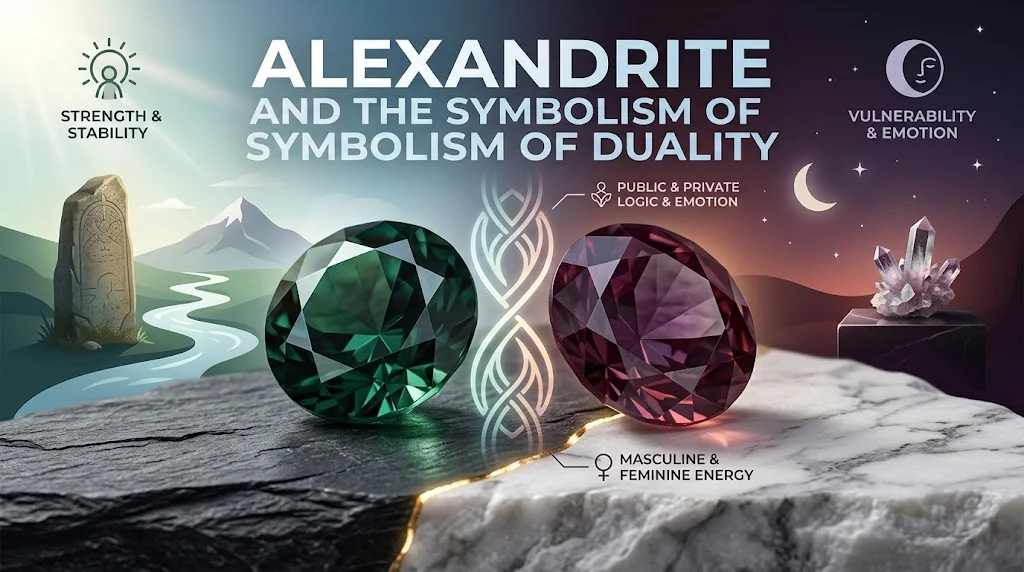
Alexandrite and the Symbolism of Duality
One of alexandrite’s strongest symbolic themes is duality. The stone visually expresses the idea that opposite qualities can exist together.
This symbolism feels especially meaningful in modern life, where people often balance multiple identities or emotional states.
Light and Shadow
Alexandrite can symbolize the coexistence of opposing energies.
Common symbolic contrasts include:
• Strength and vulnerability
• Logic and emotion
• Public identity and private self
• Stability and change
Instead of choosing one side, the gem suggests harmony between both.
Masculine and Feminine Energy
Some spiritual traditions interpret alexandrite as balancing masculine and feminine energy. This doesn’t necessarily refer to gender. Instead, it symbolizes complementary forces like action and intuition.
That interpretation appeals to people seeking emotional wholeness and self-acceptance.
Emotional and Psychological Associations
People often respond emotionally to alexandrite because it feels mysterious and unpredictable. Psychologically, shifting colors can create fascination and emotional depth.
In American culture, the gem frequently signals emotional complexity and resilience.
Common Emotional Meanings
| Context | Meaning in the USA | Common Associations | Notes |
| Personal growth | Reinvention and resilience | Self-improvement | Popular in wellness culture |
| Relationships | Rare emotional connection | Loyalty and depth | Often used in anniversary gifts |
| Spiritual symbolism | Inner wisdom | Intuition and healing | Common in crystal practices |
| Fashion and identity | Uniqueness | Confidence and individuality | Linked with luxury aesthetics |
| Emotional balance | Harmony between opposites | Calmness and passion | Inspired by color change |
Why Alexandrite Feels Symbolically Powerful
Several psychological factors strengthen alexandrite’s symbolism:
• Rare objects often feel emotionally meaningful
• Color changes create mystery and fascination
• Contrasting colors suggest emotional complexity
• Shifting appearance mirrors human growth
Because of this, many people see alexandrite as deeply personal rather than simply decorative.
Alexandrite in Tattoos and Modern Identity
Alexandrite symbolism has expanded into tattoos, fashion, and digital identity. Many people now use the gem as a symbol of transformation and authenticity.
This modern usage reflects broader American interest in self-expression.
Alexandrite Tattoo Meaning
Alexandrite tattoos often symbolize surviving difficult experiences while becoming stronger afterward.
Popular tattoo meanings include:
• Personal rebirth after hardship
• Emotional resilience
• Identity transformation
• Spiritual awakening
Some designs show two colors blending together to emphasize duality and balance.
Social Media and Aesthetic Trends
Online communities frequently associate alexandrite with:
• “Main character” transformation stories
• Healing journeys and emotional growth
• Mystical or celestial aesthetics
• Luxury and rarity symbolism
The gemstone’s dramatic color shifts also make it visually striking in photos and videos.
Fashion and Decor
Alexandrite-inspired colors appear in:
• Mood-light interiors
• Mystic-themed decor
• Statement jewelry
• Celestial fashion trends
Today, the gem symbolizes individuality as much as beauty.
read more: Symbolism in Julius Caesar: Themes and Historical Meaning
Cross-Cultural Meanings of Alexandrite
Although alexandrite itself is relatively modern, many cultures attach symbolic meaning to color-changing objects and rare stones.
These interpretations vary, but several shared themes appear across traditions.
Russian Symbolism
Because alexandrite was discovered in Russia, it remains closely tied to Russian cultural history.
Traditional associations include:
• Imperial prestige and authority
• National pride and identity
• Luck and prosperity
• Emotional courage
Eastern Spiritual Interpretations
Some Eastern spiritual traditions value gemstones connected to balance and energy flow.
Alexandrite may symbolize:
• Harmony between mind and heart
• Spiritual awakening
• Emotional clarity
• Energetic alignment
These meanings are modern adaptations rather than ancient historical beliefs about alexandrite specifically.
Universal Themes
Across cultures, people commonly connect rare changing objects with:
• Mystery and magic
• Transformation and rebirth
• Protection during uncertainty
• Wisdom gained through experience
Alexandrite and Love Symbolism
Alexandrite also carries strong romantic symbolism. Because the gem is rare and changes under different light, people often compare it to lasting relationships that evolve over time.
This symbolism is especially common in anniversary jewelry.
Romantic Meanings
Alexandrite can symbolize:
• Deep emotional connection
• Loyalty through change
• Passion balanced with trust
• Long-term commitment
Unlike symbols focused only on passion, alexandrite often represents mature love that adapts and grows.
Anniversary Associations
In the United States, alexandrite is sometimes connected with milestone anniversaries because of its rarity and emotional symbolism.
Couples may choose it to represent:
• Shared growth over time
• Emotional resilience together
• A relationship strengthened by challenges
• Enduring affection despite change
Misunderstandings and Symbolic Controversies
Like many symbolic objects, alexandrite meanings sometimes become exaggerated or commercialized. Online spiritual spaces may also present conflicting interpretations.
Understanding these differences helps separate traditional symbolism from modern marketing.
Confusion With Mood Stones
Some people mistakenly assume alexandrite is similar to mood rings or synthetic color-changing materials.
However, natural alexandrite changes color because of its unique mineral structure, not body temperature.
Overstated Spiritual Claims
Certain online sources claim alexandrite has guaranteed healing powers or supernatural abilities.
Most symbolic interpretations are personal, emotional, or cultural rather than scientifically proven.
Synthetic Alexandrite and Authenticity
Lab-created alexandrite has become more common. Some collectors value natural stones more highly because of their rarity.
Still, symbolic meaning often depends more on personal connection than market value.
How Alexandrite Symbolism Has Changed Over Time
Alexandrite symbolism has shifted greatly since the nineteenth century. Earlier meanings focused heavily on royalty and wealth. Modern interpretations center more on identity, transformation, and emotional growth.
This shift reflects broader cultural changes in the United States.
Older Symbolism
Historically, alexandrite symbolized:
• Imperial power
• Luxury and status
• Protection and luck
• Elite social identity
Modern Interpretations
Today, many Americans associate alexandrite with:
• Self-discovery
• Emotional resilience
• Personal transformation
• Balance during uncertainty
Instead of symbolizing only wealth, the stone now often represents inner evolution.
Alexandrite in Popular Culture
Modern media and online aesthetics have helped expand alexandrite symbolism beyond jewelry collectors.
Today, the gem appears in fantasy themes, spiritual branding, and luxury culture.
Why Pop Culture Loves Alexandrite
Alexandrite’s changing appearance naturally fits themes involving:
• Magic and mystery
• Hidden identities
• Emotional complexity
• Transformation arcs
Because of this, the gemstone often appears in fantasy-inspired art and storytelling.
Modern Symbolic Appeal
Younger audiences especially connect alexandrite with authenticity and emotional depth.
The stone feels modern because it reflects a common cultural idea: people can change while remaining true to themselves.
FAQs About Alexandrite Symbolism
1. What does alexandrite symbolize?
Alexandrite symbolism represents transformation, balance, adaptability, and personal growth. Its color-changing ability makes it a symbol of embracing change and finding harmony in different situations.
2. What is the spiritual meaning of alexandrite?
The spiritual meaning of alexandrite is often associated with intuition, inner wisdom, spiritual growth, and self-awareness. Some people use this gemstone as a reminder to trust themselves during life’s changes.
3. Why is alexandrite associated with transformation?
Alexandrite changes from green to red under different lighting conditions. This remarkable feature symbolizes transformation, flexibility, and adaptability in spiritual and personal interpretations.
4. What does alexandrite symbolize in love?
In love, alexandrite can symbolize emotional balance, loyalty, harmony, and understanding. Its changing colors may also represent how relationships grow and adapt through different stages of life.
5. Is alexandrite considered a lucky gemstone?
Alexandrite is often associated with good fortune, abundance, prosperity, and positive change in modern gemstone beliefs. However, there is no scientific evidence that wearing it directly attracts luck or wealth.
6. What does alexandrite mean in spiritual practices?
In spiritual practices, alexandrite meaning may connect with intuition, inner strength, balance, and personal transformation. Some people use it during meditation or reflection to focus on personal goals and emotional growth.
Conclusion
Alexandrite symbolism offers a meaningful way to understand transformation, balance, and personal growth. Its beautiful shift from green to red represents the ability to adapt to change while maintaining inner harmony. Across modern spiritual beliefs and gemstone traditions, alexandrite is associated with intuition, abundance, emotional balance, and self-awareness.
Whether you appreciate alexandrite for its rarity, beauty, or spiritual meaning, it can serve as a reminder that change is a natural part of life. Its symbolism encourages you to welcome new opportunities, learn from challenges, and find balance between different parts of yourself.

Evelyn Thomas is the voice behind SoulMeanings.com, sharing thoughtful articles on spirituality, dream interpretation, symbolism, and self-discovery to inspire meaningful living.

Pingback: Evil Symbolism: Meaning in Culture, Myth & Art