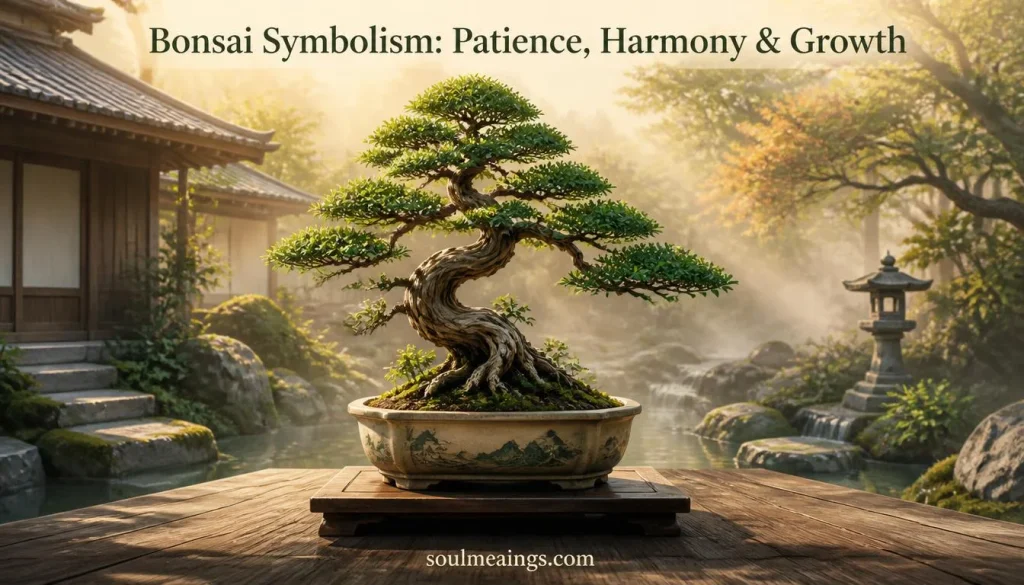

Bonsai Symbolism: Patience, Harmony & Growth explores how these miniature trees represent patience, balance, mindful care, and personal growth.
A bonsai tree is a living work of art that reflects patience, harmony, and thoughtful living. In the United States, bonsai trees are admired for their natural beauty and artistic value. Through careful pruning, shaping, and long-term care, growers create miniature trees with curved branches and balanced forms.
Rooted in Japanese culture and influenced by Chinese horticultural traditions, bonsai has a rich history and cultural significance. Its symbolism connects with resilience, wisdom, endurance, and spiritual growth, reminding us that meaningful progress takes time. Bonsai also encourages mindfulness, inner peace, perseverance, and a deeper connection with nature.
Different bonsai tree species and shapes carry different meanings. Their branches and forms can represent harmony, strength, longevity, and personal development. Bonsai traditions also connect with spiritual symbolism, art, and literature.
Today, bonsai reflects modern values such as slow living, simplicity, and peaceful living. Some people explore bonsai meanings in dreams, where miniature trees may symbolize patience, stability, or growth. Through cultivation, pruning, and thoughtful care, bonsai offers valuable life lessons about nurturing growth and appreciating nature over time.
Quick Answer
Bonsai symbolism: patience, harmony, and spiritual growth centers on steady effort, balance with nature, and personal development. In the United States, bonsai commonly represents mindfulness, resilience, and peaceful living, while Chinese and Japanese traditions add connections to nature, artistic discipline, and spiritual reflection.
TL;DR
- Patience: Bonsai teaches that meaningful results require consistent care and time.
- Harmony: Its balanced form reflects a relationship between nature and human creativity.
- Spiritual growth: Caring for a tree can encourage reflection and awareness.
- Resilience: Weathered trunks symbolize endurance through changing conditions.
- Japanese tradition: Bonsai developed into a distinctive art of representing mature trees in miniature.
- Modern American meaning: Bonsai represents mindfulness, personal growth, and peaceful surroundings.
What Does a Bonsai Tree Symbolize?
Bonsai trees symbolize several qualities that remain meaningful across cultures. In American homes and gardens, their compact size and carefully shaped appearance often suggest a calmer, more intentional way of living.
The Main Symbolic Meanings
The most common interpretations include:
- Patience: A bonsai develops through years of careful attention.
- Harmony: Its branches, trunk, roots, and container work together visually.
- Spiritual growth: Regular care can encourage mindfulness and self-reflection.
- Resilience: An aged-looking trunk suggests survival through changing conditions.
- Balance: Its design combines natural growth with thoughtful human guidance.
- Wisdom: Older specimens can represent experience, maturity, and lasting knowledge.
These meanings aren’t fixed rules. A person who grows bonsai for relaxation may value mindfulness, while another may see the tree as a symbol of perseverance.
Why a Small Tree Carries a Big Meaning
A bonsai represents a larger tree in a carefully managed space. Its miniature form encourages you to notice details that might otherwise escape your attention, including the curve of a branch or the texture of its bark.
Because the tree changes gradually, it also provides a visible reminder that progress doesn’t always happen quickly. Even small developments can become meaningful when you give them time.
The Historical Origins of Bonsai Symbolism
Bonsai has a long history rooted in East Asian horticulture and artistic traditions. Understanding its development helps separate documented history from modern interpretations of its symbolism.
Ancient Chinese Roots
The practice of growing trees and miniature landscapes in containers developed in China before becoming closely associated with Japan. Early visual records from the Tang dynasty, including tomb paintings, show plants arranged in shallow containers.
The Chinese art form known as penjing combines plants, stones, and sometimes other natural elements to evoke landscapes in miniature. Its historical associations include artistic appreciation of nature and, in some traditions, ideas connected with Daoist thought and mythical mountain landscapes.
These miniature scenes could suggest the vastness of nature within a small space. That contrast helped establish an artistic foundation for themes such as harmony, balance, and the relationship between humans and the natural world.
How Bonsai Developed in Japan
The art traveled from China to Japan, where it gradually developed its own styles and methods. By the medieval period, Japanese artists and gardeners were cultivating miniature trees and landscapes as part of refined artistic and cultural practices.
Over time, Japanese bonsai became known for its careful attention to trunk shape, branch placement, proportion, and seasonal character. The goal wasn’t simply to make a tree small. It was to create a convincing impression of a mature tree shaped by nature.
The modern Japanese term bonsai combines characters associated with a tray or container and planting. During the Edo and Meiji periods, the art evolved further, eventually reaching wider international audiences.
Did Bonsai Begin Before Christianity?
The broader tradition of miniature container landscapes has ancient roots, although its earliest beginnings remain uncertain. Historical evidence supports the existence of Chinese miniature garden art centuries before the modern bonsai tradition took shape.
Therefore, it’s reasonable to describe bonsai as an art with deep historical roots. However, claims that every modern bonsai meaning originated in a particular ancient religion or spiritual practice should be treated carefully.
read more: Symbolism vs Allegory: Differences, Meaning & Literary Insights
Bonsai Symbolism in American Culture
In the United States, bonsai is often appreciated as both a horticultural art and a symbol of a thoughtful lifestyle. Its cultural meaning has grown through gardening communities, botanical exhibitions, Japanese cultural influence, and changing ideas about home design.
Patience and Personal Responsibility
Many Americans associate bonsai with the value of working toward long-term goals. Growing one requires attention to watering, light, pruning, soil, and seasonal needs.
Unlike a decorative object, a bonsai responds to how it’s treated. This makes it a natural reminder that responsibility involves ongoing effort rather than a single decision.
Peace in a Busy World
Bonsai also fits into the modern American interest in creating peaceful personal spaces. A small tree on a desk or shelf can bring a natural element into an otherwise crowded environment.
For some people, caring for bonsai becomes a break from screens and daily demands. The meaning comes from the experience itself, not from any guaranteed spiritual effect.
Bonsai in American Institutions
The National Bonsai and Penjing Museum in Washington, D.C., helps introduce visitors to the art’s Chinese and Japanese histories. Its collections demonstrate that bonsai belongs to a broader family of artistic traditions rather than a single isolated practice.
In the United States, bonsai clubs, public exhibitions, botanical gardens, and educational programs also help preserve knowledge. Together, these spaces connect the art with horticulture, cultural exchange, and artistic expression.
The Spiritual Meaning of a Bonsai Tree
Bonsai can carry spiritual meaning because its care encourages attention, restraint, and reflection. However, it doesn’t belong exclusively to one religion, and owning one doesn’t automatically make a person spiritually connected.
Mindfulness and Present-Moment Awareness
Caring for a bonsai involves noticing small changes in leaves, soil, roots, and branches. These repeated observations can encourage you to slow down and focus on what’s happening now.
Some people connect this routine with meditation or mindful living. Others simply enjoy the quiet concentration that gardening provides.
Connections With Buddhist and Daoist Thought
Bonsai’s historical development overlaps with East Asian cultural traditions influenced by Buddhist and Daoist ideas. Yet the relationship between these philosophies and bonsai isn’t a single, universal doctrine.
Buddhist ideas about attention and impermanence may offer a useful lens for interpreting the tree’s changing appearance. Daoist perspectives on nature and balance can also provide context for appreciating its organic forms.
These are interpretive connections, not mandatory beliefs for bonsai growers. The art can be meaningful to people with religious, spiritual, or entirely secular outlooks.
Growth Without Perfection
A bonsai rarely looks exactly the same throughout the year. New growth appears, older leaves fall, and branches respond to changes in their environment.
This natural process can remind you that personal development doesn’t require perfection. Instead, growth often involves adjustment, acceptance, and steady attention.
Bonsai Symbolism Across Cultures
Although bonsai is strongly associated with Japan today, its historical roots and related artistic traditions extend across East Asia. Comparing these traditions provides a richer understanding of how people interpret miniature trees.
Chinese Penjing and Harmony With Nature
Chinese penjing often represents more than an individual tree. Some compositions include rocks, plants, and miniature landscapes that evoke mountains, valleys, or other natural scenes.
These arrangements can express the idea that a small setting may suggest a much larger world. Their symbolism varies by artist and tradition, but harmony between natural elements remains an important artistic theme.
Japanese Aesthetics and Simplicity
Japanese bonsai often emphasizes restraint, asymmetry, and the impression of natural age. A trunk that bends unexpectedly or a branch that extends beyond the main canopy can contribute to the tree’s character.
These qualities connect with broader Japanese aesthetic traditions that appreciate simplicity, seasonal change, and the beauty of imperfection. However, no single aesthetic principle explains every bonsai style or Japanese interpretation.
Broader Spiritual Interpretations
Outside East Asia, people may interpret bonsai through their own cultural and personal experiences.
- Mindfulness traditions: Regular care can support attention and reflection.
- Nature-centered spirituality: The tree may represent connection with the living world.
- Personal growth: Gradual development can mirror changing life experiences.
- Secular philosophy: Bonsai can illustrate patience, adaptation, and long-term commitment.
These interpretations can coexist, but they shouldn’t be presented as identical beliefs shared by every culture.
What Different Bonsai Features Symbolize
A bonsai’s meaning can change according to its appearance, species, age, and presentation. In American homes and gardens, people may choose particular trees because their shapes and seasonal features suggest qualities they value.
Trunk Shape and Branch Structure
A thick trunk often gives the impression of age and stability. Twisting branches can suggest movement, while a carefully balanced canopy may evoke calm and order.
However, these impressions are artistic interpretations rather than universal symbolic rules. A tree’s shape also reflects its species, growing conditions, and the techniques used by its caretaker.
Common Bonsai Features and Their Meanings
| Feature | Common Symbolic Meaning | Context |
| Thick, aged trunk | Strength, endurance, maturity | Personal reflection and traditional displays |
| Curved branches | Adaptability and resilience | Nature-inspired artwork and decor |
| Balanced canopy | Harmony and thoughtful design | Homes, offices, and gardens |
| Visible surface roots | Stability and connection | Artistic appreciation of age and structure |
| New spring growth | Renewal and fresh beginnings | Seasonal displays and personal milestones |
| Weathered or deadwood features | Survival and the passage of time | Advanced bonsai artistry |
These meanings offer possible interpretations, not a formal symbolic code. For example, a weathered trunk might represent resilience to one person and the beauty of age to another.
Does the Pot Affect the Meaning?
Yes, the container can influence how a bonsai is perceived. A simple, earthy pot may emphasize the tree’s natural appearance, while a colorful or ornate container creates a different visual mood.
Traditional displays often consider the tree, pot, and surrounding presentation as a single composition. In a home, choosing a container that complements the tree can reinforce feelings of calm, simplicity, or elegance.
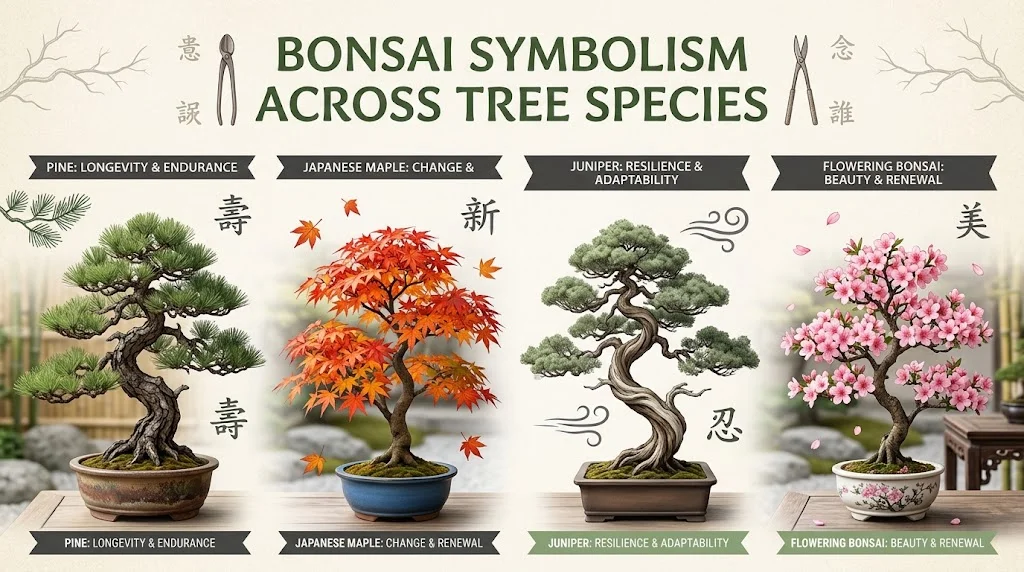
Bonsai Symbolism in Different Tree Species
The species used for bonsai can add another layer of meaning. Still, many symbolic associations come from broader traditions involving trees, flowers, and seasonal change rather than from bonsai alone.
Pine Bonsai: Longevity and Endurance
Pine trees remain green through much of the year and often withstand challenging outdoor conditions. Consequently, pine imagery is associated in some East Asian traditions with longevity, perseverance, and steadfastness.
A pine bonsai may appeal to someone who values consistency or wishes to celebrate a long-lasting relationship. Its appearance also makes it a natural choice for expressing endurance.
Japanese Maple Bonsai: Change and Renewal
Japanese maple bonsai can display striking seasonal colors, particularly in autumn. Its changing leaves offer a visible reminder that transformation is a normal part of life.
For some American owners, a maple represents accepting change or appreciating each stage of a journey. However, its meaning can also be purely aesthetic.
Juniper Bonsai: Resilience and Adaptability
Junipers are popular bonsai subjects because their forms can evoke trees shaped by wind and difficult conditions. Their rugged appearance often suggests persistence and the ability to adapt.
This makes juniper a fitting symbol for people who associate growth with overcoming setbacks. Its twisted branches can communicate character without suggesting that hardship is necessary for personal development.
Flowering Bonsai: Beauty and Renewal
Flowering species, including flowering cherries and some azaleas, bring seasonal color to bonsai displays. Their blossoms can suggest beauty, renewal, and the temporary nature of life’s most memorable moments.
Because different flowers have distinct cultural associations, it’s worth considering the species before assigning a specific meaning. A flowering bonsai can be appreciated without assuming that every blossom represents the same idea.
The Emotional and Psychological Meaning of Bonsai
Bonsai can influence how a space feels and how a person thinks about daily routines. Its symbolic value often comes from the relationship between the caretaker and the living tree.
Patience and Delayed Rewards
Bonsai develops over long periods, and many desired changes happen gradually. This makes it a useful reminder that meaningful results don’t always appear immediately.
For example, someone learning a new skill may use bonsai as a personal symbol of steady improvement. The tree represents commitment to the process rather than pressure to achieve instant results.
Calm, Focus, and Connection
Many people find plant care satisfying because it provides a concrete activity with visible changes. Checking soil moisture, studying new growth, and removing unwanted branches can encourage focused attention.
However, individual experiences vary. Bonsai isn’t a treatment for stress or a guarantee of emotional well-being, and people may enjoy it for artistic or practical reasons instead.
Resilience Without the Pressure to Be Perfect
A bonsai can survive pruning and environmental changes when its needs are properly understood and met. Its continued development may remind an owner that adjustment is part of growth.
This doesn’t mean every setback automatically leads to something better. Rather, the tree illustrates how living things respond to conditions and how careful attention can support continued development.
Bonsai in Modern Life: Tattoos, Decor, and Social Media
Today, bonsai symbolism appears in personal art, home styling, online posts, and thoughtful gifts. In the United States, people often use the tree to communicate values without relying on long explanations.
Bonsai Tattoos
A bonsai tattoo can represent patience, personal growth, family history, or a commitment to staying grounded. Its meaning may also relate to a particular life experience or a person’s interest in Japanese art.
Common design choices include:
- A single tree with visible roots, suggesting stability and connection.
- A curved trunk, expressing adaptability and individuality.
- A flowering canopy, reflecting renewal or the beauty of change.
- A tree with exposed deadwood, emphasizing age and survival.
Before choosing a design, consider what the tree means to you personally. A short explanation of your intended symbolism can help distinguish your tattoo from generic nature imagery.
Home and Office Decor
Bonsai can introduce a natural focal point into a room without taking up much space. A thoughtfully placed tree may complement minimalist interiors, reading corners, and garden-inspired rooms.
However, bonsai is a living plant, not just an ornament. Its light, watering, humidity, and seasonal requirements matter more than the decorative effect alone.
Social Media and Personal Identity
Online, bonsai imagery may accompany messages about mindfulness, discipline, patience, and self-improvement. A growing tree can serve as a visual metaphor for progress that happens gradually and away from public attention.
Some creators use bonsai photos to celebrate milestones or document long-term projects. Others share them simply because they appreciate the art.
Bonsai as a Gift
A bonsai can make a thoughtful gift for someone beginning a new chapter. It may express wishes for stability, growth, or a lasting connection.
Still, consider the recipient’s interest and ability to care for a living tree. A gift becomes more meaningful when its symbolism matches the person’s circumstances and the practical responsibilities involved.
read more: Stag Beetle Symbolism: Strength and Transformation
Bonsai Symbolism in Feng Shui and Spiritual Decor
Some people in the United States incorporate bonsai into spaces inspired by feng shui or other approaches to mindful interior design. In these settings, the tree may represent growth, vitality, or a closer connection with nature.
Bonsai and Feng Shui
Feng shui is a Chinese tradition concerned with how people arrange their surroundings and relate to their environment. Within some modern feng shui interpretations, healthy plants represent living energy and growth.
However, bonsai doesn’t have one universally accepted meaning in feng shui. Some practitioners appreciate its natural beauty and careful cultivation, while others have concerns about its deliberately restricted growth.
Therefore, avoid assuming that every feng shui practitioner considers bonsai lucky or appropriate for every room. Interpretations differ according to the school of practice and the person’s beliefs.
Choosing a Place for Your Bonsai
If you display a bonsai as a symbol of balance, choose a place where you can appreciate and care for it.
- Home office: A reminder of patience and steady progress.
- Reading area: A natural focal point for quiet reflection.
- Garden: A connection between cultivated spaces and the wider landscape.
- Living room: A decorative expression of balance and appreciation for nature.
The best location also depends on the tree’s actual growing needs. Some bonsai species require outdoor conditions and shouldn’t remain indoors permanently.
Bonsai Misunderstandings and Controversies
Bonsai symbolism is generally positive, but several common misunderstandings can distort its history and meaning. Understanding these issues helps you appreciate the art without reducing it to a collection of spiritual slogans.
Is Bonsai a Symbol of Restriction?
Some people see bonsai as a symbol of control because the tree is pruned and its roots are managed to maintain a small size. They may interpret this as a metaphor for limiting someone’s potential.
Others see the same practice as careful artistic guidance that preserves the tree’s health and creates a miniature representation of nature.
Neither interpretation describes every bonsai experience. The symbolism depends on the viewer’s perspective, while responsible cultivation should always prioritize the tree’s needs.
Is Bonsai Only Japanese?
Bonsai is strongly associated with Japanese culture, but its historical development is closely connected to Chinese penjing. Recognizing this relationship gives a more accurate account of the art’s origins.
Japan developed distinctive bonsai traditions, and Chinese penjing continues as an important art form in its own right. Appreciating one doesn’t require overlooking the other.
Does Bonsai Automatically Bring Luck or Spiritual Energy?
Some people assign bonsai meanings involving prosperity, harmony, or positive energy. However, these are beliefs and personal interpretations, not proven effects of owning a tree.
A bonsai can be meaningful without promising wealth, protection, or spiritual transformation. Its value may come from the care it requires, its artistic qualities, or the memories attached to it.
Is Bonsai Cultural Appropriation?
Owning or growing bonsai isn’t automatically cultural appropriation. The art has spread internationally through cultural exchange, public exhibitions, education, and horticultural communities.
Problems are more likely when people misrepresent its origins, treat all Asian traditions as interchangeable, or claim expertise without learning the basics. A respectful approach acknowledges the art’s Chinese and Japanese histories and remains open to learning from experienced practitioners.
How Bonsai Symbolism Has Changed Over Time
Bonsai’s history shows how an art form can develop new meanings as it moves between cultures. Its original artistic and cultural settings still matter, but modern interpretations continue to grow.
From Elite Art to Wider Participation
Miniature trees and landscapes were historically associated with particular social groups, including aristocrats and educated circles. Over time, cultivation became more accessible to wider communities in Japan.
International exhibitions and cultural exchanges later introduced bonsai to larger audiences outside East Asia. Today, hobbyists across the United States and other countries study its techniques and create their own interpretations.
From Traditional Art to Personal Symbol
Historically, bonsai was appreciated for its artistic representation of nature and its place within cultivated traditions. Modern owners may also connect it with personal goals, emotional milestones, or a preference for simpler surroundings.
This doesn’t mean older meanings have disappeared. Instead, traditional artistic values coexist with newer associations involving mindfulness, sustainability, and individual identity.
What Bonsai Means Today
In contemporary American culture, bonsai can represent several ideas at once. Someone may appreciate its cultural history, enjoy the challenge of growing it, and value its reminder to slow down.
Its symbolism remains flexible because the tree is both an artwork and a living organism. As long as it continues to grow, its appearance and meaning can evolve.
FAQs About Bonsai Symbolism
1. What does a bonsai tree symbolize?
A bonsai tree symbolizes patience, harmony, balance, and personal growth. Its careful cultivation reminds people that meaningful progress takes time and consistent effort.
2. What is the spiritual meaning of a bonsai tree?
The spiritual meaning of a bonsai tree often relates to inner peace, mindfulness, wisdom, and a connection with nature. It can encourage a more balanced and thoughtful lifestyle.
3. Why do bonsai trees represent patience?
Bonsai trees require regular pruning, shaping, and long-term care. Their gradual development represents patience, dedication, and perseverance.
4. What does a bonsai tree symbolize in Japanese culture?
In Japanese culture, bonsai is associated with harmony, simplicity, natural beauty, and careful cultivation. It also reflects the value of appreciating nature in a small, carefully shaped form.
5. Do different bonsai tree species have different meanings?
Yes, different bonsai tree species can carry different symbolic meanings. Depending on the species and cultural tradition, a bonsai may represent strength, longevity, resilience, wisdom, or renewal.
6. What does a bonsai tree symbolize in dreams?
A bonsai tree in a dream may represent personal growth, patience, stability, or the need to nurture an important part of your life. Its meaning depends on the dream’s details and your personal experiences.
Conclusion
Bonsai symbolism offers meaningful lessons about patience, harmony, balance, and growth. Through careful pruning and long-term cultivation, these miniature trees show that lasting beauty develops with time, attention, and dedication. Their connections with Japanese culture, nature, and mindfulness make them powerful symbols of thoughtful living. Whether you keep a bonsai at home or simply admire its beauty, it can remind you to embrace gradual progress, nurture your goals, and find balance in everyday life.

Mark Taylor is a content writer at soulmeaings.com. He writes clear, research-based articles on symbolism, spiritual meaning, and cultural interpretation, helping readers understand the ideas behind the symbols they encounter.