
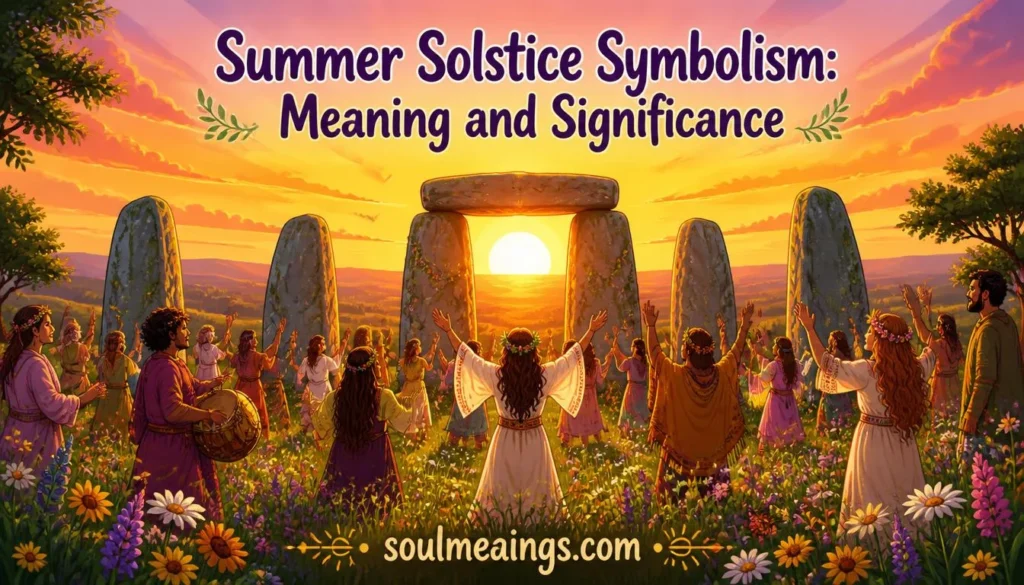
Summer Solstice Symbolism: Meaning and Significance explores how this ancient seasonal event connects light, growth, renewal, and spiritual wisdom across cultures.
The summer solstice, also called midsummer, marks the longest day of the year and the official start of summer in the Northern Hemisphere. This astronomical event carries profound symbolic meaning across cultures, religions, and spiritual traditions. For thousands of years, people in ancient times have observed rituals, built monuments, and crafted stories to honor the Sun as it reaches its peak.
Throughout history, culture, spirituality, art, and literature, summer solstice symbolism has inspired dreams, rituals, and modern practices, offering insights and life lessons to apply year-round. Its deep spiritual significance also reflects transformation and personal development.
The Summer Solstice represents the fullness of life and the value of appreciating progress. For months, the days have been growing longer as the Earth travels around the Sun, leaning steadily toward summer. Personal growth often unfolds, almost imperceptibly, leaf by leaf, hour by hour, and breath by breath. This seasonal threshold is more than a beginning; it is a culmination.
Unlike spring, which invites new ideas to emerge, Summer Solstice wisdom encourages us to question what has already grown, what has taken root in our life, and what has reached full visibility. Reflecting on what is now illuminated that we could not see six months ago inspires gratitude for the full light before the slow turning toward darkness begins once again.
Quick Answer
Summer Solstice Symbolism commonly represents light, abundance, growth, and life’s peak energy in the United States. Spiritually, it also symbolizes renewal, balance, celebration, and humanity’s connection to nature. Across cultures, the solstice has long been linked with the sun, fertility, protection, and seasonal change.
TL;DR
• Symbolizes light, vitality, and abundance
• Marks the longest day of the year
• Rooted in ancient solar celebrations
• Connected with personal growth and transformation
• Popular in modern festivals and spiritual practices
• Represents both celebration and life’s turning point
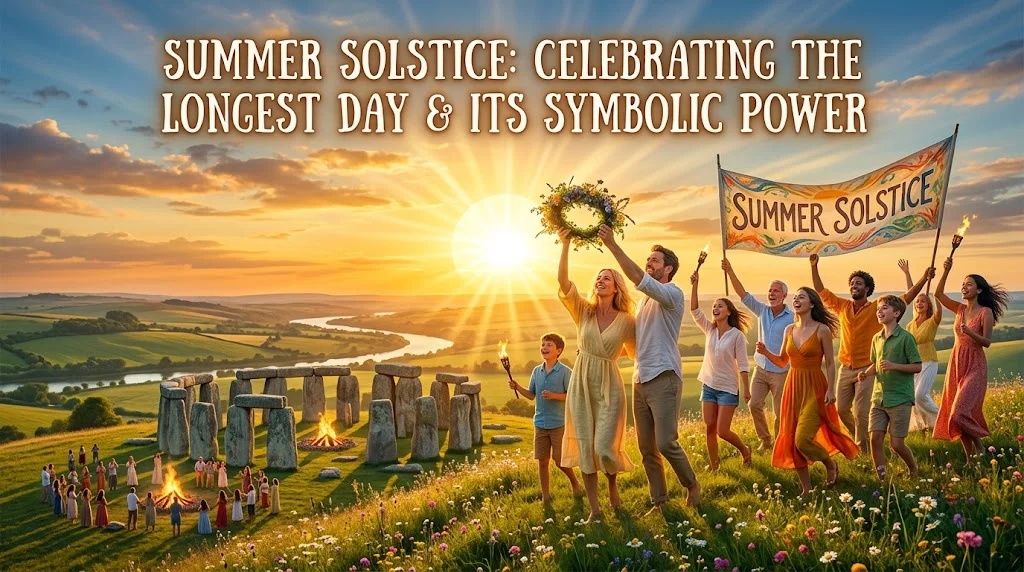
What Is the Summer Solstice?
The summer solstice is an astronomical event, but it also carries strong symbolic meaning. For many Americans, it represents the official emotional beginning of summer, even beyond the calendar date.
Because the sun appears strongest during the solstice, people often associate the day with fullness, confidence, and achievement.
The Longest Day of the Year
The solstice occurs when Earth’s tilt places the Northern Hemisphere closest toward the sun. As a result, daylight lasts longer than on any other day of the year.
Many symbolic meanings come from this extended sunlight, including:
• Clarity and truth
• Success and achievement
• Warmth and optimism
• Vitality and physical energy
• Celebration and freedom
• Nature at full strength
Why the Sun Matters Symbolically
The sun has always represented life and survival. Ancient farming societies depended on sunlight for crops, warmth, and predictable seasons.
Because of this, the solstice became more than a scientific event. It turned into a symbol of human hope and survival itself.
Ancient Roots of Summer Solstice Symbolism
The summer solstice has pre-Christian roots stretching back thousands of years. Ancient civilizations tracked the sun carefully and built rituals around seasonal changes.
Even today, modern celebrations still carry echoes of these early beliefs.
Ancient Stone Monuments
Several ancient structures align with the solstice sunrise or sunset. These sites suggest that early cultures viewed the solstice as sacred.
Famous examples include:
• Stonehenge
• Newgrange
• Chaco Culture National Historical Park
These places connected astronomy with spiritual meaning and community identity.
Pagan and Pre-Christian Beliefs
Many early European traditions honored the solstice with bonfires, dancing, and fertility rituals. Fire symbolized the power of the sun and protection against darkness.
Common ancient associations included:
• Fertility and healthy harvests
• Protection from evil spirits
• Solar power and divine energy
• Seasonal transition and balance
• Community celebration and unity
The Turning Point Symbolism
Although the solstice marks maximum daylight, it also begins the gradual return of darkness. Because of this, many traditions viewed it as both joyful and bittersweet.
This dual meaning still appears today. The solstice can symbolize success, while also reminding people that every peak eventually changes.
Summer Solstice Symbolism in the United States
In the USA, the summer solstice blends ancient symbolism with modern seasonal culture. Americans may not always celebrate it formally, yet its meanings still appear in everyday life.
Summer itself often symbolizes freedom, youth, travel, and emotional openness.
American Cultural Associations
The solstice connects with several familiar American themes:
| Context | Meaning in the USA | Common Associations | Notes |
| Summer vacation | Freedom and adventure | Beaches, road trips | Linked with childhood memories |
| Outdoor festivals | Community celebration | Music, food, gatherings | Often tied to local identity |
| Wellness culture | Personal renewal | Yoga, meditation | Popular in spiritual spaces |
| Nature symbolism | Growth and abundance | Gardens, sunlight | Connected with seasonal living |
| Social media trends | Positive energy | Golden-hour photos | Modern digital symbolism |
National Parks and Nature Celebrations
Many Americans celebrate the solstice outdoors. National parks, camping trips, and sunrise hikes become symbolic ways to reconnect with nature.
Popular symbolic activities include:
• Watching the sunrise
• Lighting bonfires
• Gathering with friends outdoors
• Practicing meditation or yoga
• Hosting seasonal festivals
• Spending time near water or forests
Modern Spiritual Interest
Interest in astrology, mindfulness, and seasonal spirituality has grown in recent years. Because of that, many people now treat the solstice as a moment for intention-setting and emotional reflection.
For some, it marks a midpoint of the year and a chance to pause before autumn approaches.
Spiritual Meaning of the Summer Solstice
The spiritual meaning of the summer solstice often centers on light, awakening, and transformation. Different traditions interpret these ideas differently, yet several themes remain consistent.
Today, spiritual communities across the USA celebrate the solstice in both religious and nonreligious ways.
Light as a Spiritual Symbol
Light commonly symbolizes awareness and truth. During the solstice, the sun becomes a visible reminder of illumination and clarity.
Many spiritual interpretations connect the day with:
• Inner awakening
• Emotional healing
• Higher energy
• Personal confidence
• Gratitude and abundance
• Renewal of purpose
Balance and Transition
The solstice also symbolizes balance between growth and decline. While daylight reaches its peak, the cycle slowly begins shifting again.
Because of this, the solstice can encourage reflection about:
• Life stages
• Personal goals
• Emotional growth
• The passage of time
• Acceptance of change
Solstice Rituals Today
Modern solstice rituals vary widely. Some are deeply spiritual, while others are simply reflective or nature-focused.
Common modern practices include:
• Sunrise meditation
• Journaling intentions
• Nature walks
• Fire ceremonies
• Flower crowns and seasonal decorations
• Group gatherings and music
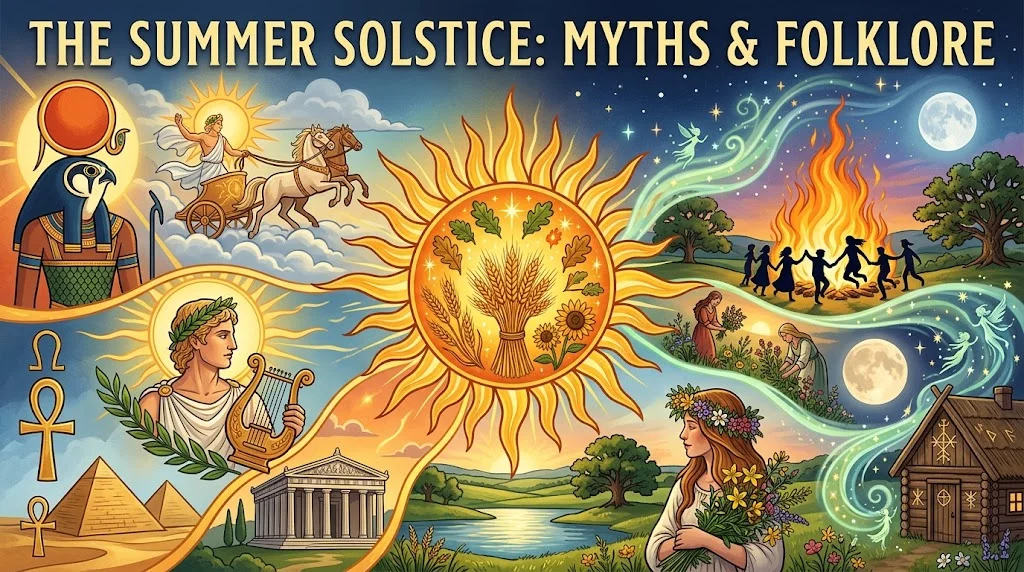
Summer Solstice in Mythology and Folklore
Myths about the solstice appear in many cultures. These stories often focus on the sun, fertility, magic, or supernatural activity.
Even in modern America, traces of these myths survive through storytelling and seasonal traditions.
Solar Gods and Divine Power
Ancient cultures frequently connected the solstice with sun gods or divine kingship.
Examples include:
• Ra in ancient Egypt
• Helios in Greek mythology
• Apollo as a later solar figure
These deities represented power, order, health, and cosmic stability.
European Folk Beliefs
In European folklore, midsummer nights were thought to contain magical energy. Plants gathered during the solstice were believed to have special healing powers.
Folklore traditions included:
• Jumping over bonfires for luck
• Gathering herbs at dawn
• Wearing flower crowns
• Protecting homes from harmful spirits
• Celebrating fertility and romance
Emotional and Psychological Symbolism
The summer solstice often creates strong emotional reactions. Long daylight hours can affect mood, energy, and social behavior.
Symbolically, the season reflects expansion and emotional openness.
Feelings Commonly Linked to the Solstice
Many people emotionally associate the solstice with:
• Happiness and optimism
• Freedom and exploration
• Confidence and visibility
• Creativity and inspiration
• Social connection
• Nostalgia for youth and summer memories
The Psychology of Sunlight
Sunlight strongly influences human emotions and routines. Longer days often encourage outdoor activity and social interaction.
Because of this, the solstice has become psychologically tied to:
• Motivation
• Energy
• Celebration
• Emotional warmth
• Hopefulness
However, not everyone experiences summer positively. Some people feel pressure to appear constantly happy or socially active during the season.
Summer Solstice Symbolism in Modern Media and Pop Culture
Today, summer solstice symbolism appears across movies, wellness culture, fashion, and social media.
Although many references are subtle, the themes remain recognizable.
Social Media and “Golden Hour”
Online culture often romanticizes sunlight and summer imagery. Golden-hour photography especially reflects solstice symbolism.
Popular visual themes include:
• Sunsets and glowing skies
• Wildflowers and open fields
• Beaches and road trips
• Bohemian fashion
• Firelight and candles
• Outdoor celebrations
Festivals and Music Culture
Many summer music festivals symbolically reflect solstice ideas of freedom, connection, and collective joy.
The imagery often includes:
• Bright colors
• Floral patterns
• Solar imagery
• Nature-inspired design
• Community gathering spaces
Summer Solstice Tattoos and Personal Symbolism
Solstice-inspired tattoos have become increasingly popular in the USA. People often choose them to represent transformation, balance, or personal growth.
These designs usually combine natural and solar imagery.
Common Tattoo Symbols
Popular tattoo elements include:
• Suns and sun rays
• Circles and spirals
• Wildflowers
• Fire imagery
• Mountains and horizons
• Celestial symbols
What Solstice Tattoos Often Mean
Different people attach different meanings to these tattoos. However, several themes appear often.
Common interpretations include:
• A personal rebirth
• Overcoming darkness
• Celebrating freedom
• Honoring nature
• Spiritual awakening
• Embracing life changes
read more: Japanese Animals Symbolism: Fox, Koi, Crane & More
Cross-Cultural Meanings of the Summer Solstice
Although American interpretations dominate modern media, the solstice has global significance. Different cultures continue honoring it in unique ways.
These traditions reveal how deeply humans connect sunlight with meaning.
Scandinavian Midsummer Traditions
In parts of Northern Europe, midsummer celebrations remain major cultural events. These gatherings often include dancing, flowers, and outdoor meals.
Common symbolic themes include:
• Fertility
• Community unity
• Seasonal abundance
• Nature worship
• Romantic luck
Indigenous Connections to Seasonal Cycles
Some Indigenous traditions across North America recognize seasonal transitions through ceremonies tied to nature and balance.
These traditions often emphasize:
• Respect for Earth
• Cyclical time
• Community harmony
• Gratitude for natural resources
It is important to avoid treating all Indigenous beliefs as identical. Traditions differ greatly between nations and communities.
Misunderstandings and Controversies
Most summer solstice symbolism is positive. However, confusion and misuse sometimes occur.
Modern conversations often involve cultural appropriation, commercialization, or inaccurate historical claims.
Confusion Between Paganism and Evil
Some people wrongly associate pagan solstice traditions with danger or evil. Historically, most solstice rituals focused on nature, fertility, protection, and seasonal celebration.
Modern pagan communities generally view the solstice peacefully and spiritually.
Commercialization of Spiritual Symbols
Today, solstice imagery sometimes becomes heavily commercialized. Businesses may market “spiritual” products without understanding their cultural background.
Critics sometimes argue this weakens the deeper historical meaning.
Social Media Simplification
Online content occasionally oversimplifies ancient traditions or spreads myths without evidence.
Because of that, it helps to approach symbolic claims thoughtfully and respectfully.
How Summer Solstice Meaning Has Changed Over Time
The meaning of the summer solstice has evolved constantly. Ancient agricultural societies viewed it as necessary for survival. Modern Americans often see it more emotionally or spiritually.
Still, the core themes remain surprisingly consistent.
Ancient to Modern Shifts
Over time, the solstice shifted from:
• Survival-focused ritual → personal spirituality
• Agricultural importance → emotional symbolism
• Community ceremony → digital celebration
• Sacred observance → seasonal lifestyle trend
Why the Symbol Still Endures
The solstice continues resonating because it connects humans with natural cycles. Even in highly modern societies, people still respond emotionally to sunlight, seasons, and shared celebration.
That emotional connection keeps the symbolism alive.
FAQs About Summer Solstice Symbolism
1. What does the summer solstice symbolize?
The summer solstice symbolizes light, abundance, growth, renewal, and vitality. It represents the peak of sunlight and encourages people to appreciate their achievements and personal progress.
2. What is the spiritual meaning of the summer solstice?
Spiritually, the summer solstice represents enlightenment, transformation, gratitude, and spiritual growth. It encourages self-reflection and helps people recognize the positive changes in their lives.
3. Why is the summer solstice called the longest day of the year?
The summer solstice is called the longest day of the year because it has the most daylight hours in the Northern Hemisphere. It occurs when this hemisphere is tilted most directly toward the Sun.
4. How did ancient cultures celebrate the summer solstice?
Many ancient cultures celebrated the summer solstice through seasonal festivals, bonfires, prayers, and other rituals. Some communities built monuments aligned with the Sun to mark important solar events.
5. How can I celebrate the summer solstice spiritually?
You can celebrate by spending time in nature, practicing meditation, keeping a gratitude journal, or setting personal intentions. These activities can help you reflect on your growth, abundance, and renewal.
6. What does the summer solstice teach us about personal growth?
The summer solstice reminds us that growth often happens gradually, even when we cannot immediately see the results. It encourages us to recognize our progress, appreciate our experiences, and prepare for future changes.
Conclusion
Summer Solstice Symbolism: Meaning and Significance highlights the powerful connections between light, abundance, renewal, and personal growth. As the longest day of the year, the summer solstice invites us to celebrate our achievements, express gratitude, and reflect on how far we have come. Its spiritual message reminds us to appreciate the present while accepting that life moves through changing seasons. By embracing summer solstice symbolism, we can find inspiration in nature, strengthen our connections with others, and approach the future with greater clarity and purpose.

Charlotte Brown is a passionate writer at SoulMeanings.com, dedicated to exploring spirituality, symbolism, dreams, and life’s deeper meanings. Her work helps readers find clarity, inspiration, and personal insight.
Pingback: Lavender Symbolism: Spiritual Meaning, Healing and Calm