
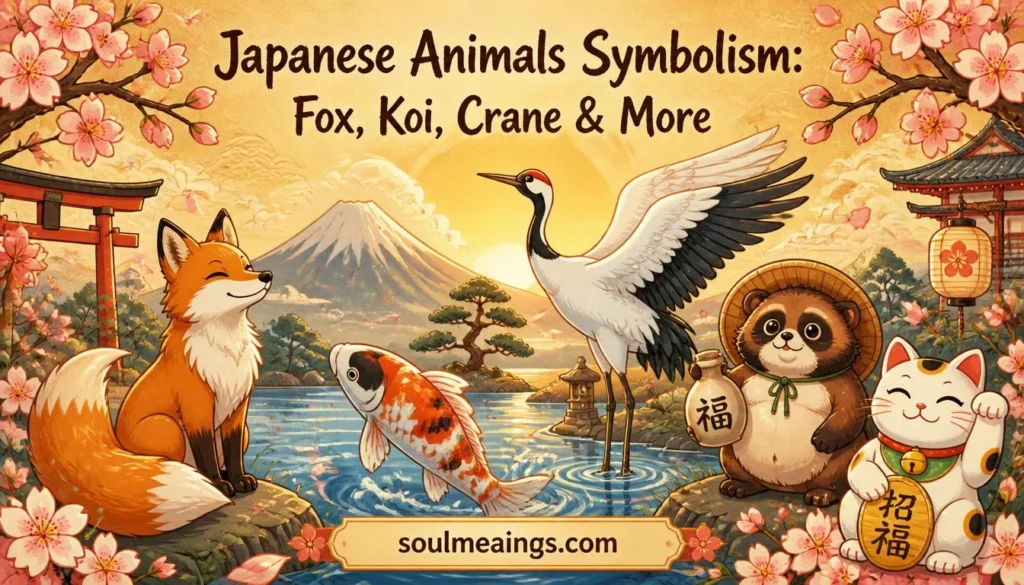
Japanese Animal Symbolism: Fox, Koi, Crane & More explores how Japanese animals connect spiritual beliefs, folklore, and cultural traditions.
In Japanese culture, animals represent spiritual meaning, protection, good luck, and transformation. From ancient myths to modern art, these creatures reflect human values, morality, and the connection between humans and nature.
The Fox, Koi, and Crane appear in Japanese folklore, while the Dragon, Phoenix, and Tanuki hold important places in Japanese mythology. Their symbolic meanings connect with wisdom, perseverance, longevity, renewal, and good fortune.
Japan’s rich biodiversity and wildlife also shape its animal traditions. Crane symbolism often represents peace and longevity, koi fish symbolism reflects perseverance and success, and dragon symbolism suggests power and protection.
Meanwhile, phoenix symbolism represents renewal, and tanuki symbolism connects with playfulness and prosperity. These symbolic animals remain important in Japanese art, literature, temples, and modern decorations, preserving Japan’s cultural heritage, national identity, and enduring spiritual traditions.
Quick Answer
In the United States, Japanese animal symbolism often represents luck, perseverance, intelligence, peace, and prosperity. Japanese Animals Symbolism: Meanings of the Fox, Koi, Crane, Tanuki, and Lucky Cat combines ancient folklore with modern identity, especially in tattoos, decor, anime culture, and spiritual aesthetics.
TL;DR
• Foxes symbolize intelligence, mystery, and spiritual transformation.
• Koi fish represent perseverance, success, and personal growth.
• Cranes are linked to peace, longevity, and hope.
• Tanuki symbolize humor, adaptability, and financial luck.
• Lucky cats represent prosperity and welcoming energy.
• These symbols remain popular in American tattoos and decor.
Overview of Japanese Animal Symbolism
Japanese animal symbolism blends mythology, religion, art, and everyday life. Many symbolic animals first appeared in folk stories centuries ago. Today, they still appear in shrines, festivals, manga, and home decorations.
For American audiences, these animals often feel calming, magical, or inspiring. Their meanings also fit modern interests in mindfulness, spirituality, and personal identity.
Why Animal Symbols Matter in Japan
Animals in Japanese culture often act as messengers or spiritual beings. Some protect humans. Others test morality or bring fortune.
Common symbolic themes include:
• Harmony with nature
• Balance between humans and spirits
• Good luck and protection
• Transformation and wisdom
• Emotional resilience
Nature and Spiritual Beliefs
Shinto traditions shaped many animal meanings. In Shinto belief, spirits called kami may inhabit animals, rivers, trees, or mountains.
Because of this, symbolic animals are rarely seen as random decorations. Instead, they often carry emotional or sacred significance.
Japanese Fox Symbolism Meaning
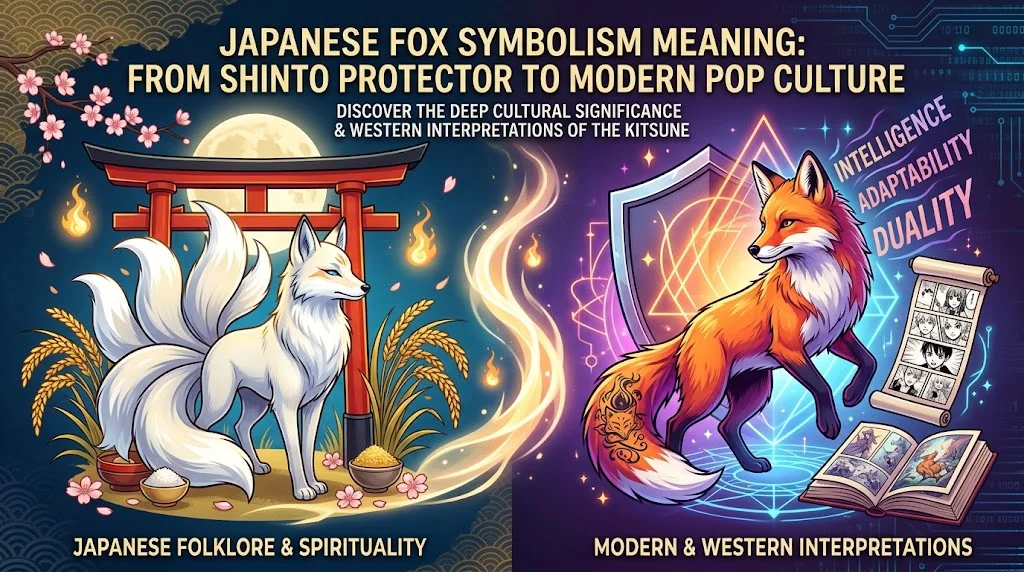
The Japanese fox, or kitsune, remains one of the most recognized symbols worldwide. In the United States, fox imagery often appears in tattoos, fantasy art, and anime communities.
However, the original symbolism is much deeper and more complex.
The Kitsune in Japanese Folklore
Kitsune are supernatural fox spirits connected to intelligence and transformation. In some stories, they protect people. In others, they trick humans with illusions.
Over time, foxes became linked with the Shinto deity Inari, associated with rice, prosperity, and fertility.
Common Meanings of the Fox
• Intelligence and cleverness
• Transformation and hidden identity
• Spiritual protection
• Mystery and intuition
• Duality between danger and wisdom
Fox Symbolism in America
In the USA, fox symbolism often feels less spiritual and more psychological. Many people connect foxes with independence, adaptability, and feminine energy.
Social media also shaped modern interpretations. Fox imagery now appears heavily in fantasy aesthetics and gaming culture.
Koi Fish Symbolism in Japanese Culture
Koi fish symbolism became extremely popular in the United States through tattoo culture. Many Americans recognize koi as symbols of persistence and ambition.
The deeper meaning comes from ancient East Asian legends about determination and transformation.
The Legend Behind the Koi
A famous legend tells of koi swimming upstream against powerful currents. One koi finally reached the top of a waterfall and transformed into a dragon.
Because of this story, koi became symbols of overcoming hardship.
What Koi Fish Symbolize
• Perseverance during struggle
• Success after difficulty
• Courage and determination
• Personal transformation
• Inner strength
Koi Colors and Their Meanings
| Koi Color | Meaning in the USA | Common Associations | Notes |
| Red | Love and passion | Romance, emotional strength | Popular in tattoos |
| Black | Overcoming hardship | Resilience and survival | Often linked to life challenges |
| Gold | Wealth and prosperity | Success and abundance | Common in decor |
| Blue | Calmness and peace | Emotional healing | Modern spiritual meaning |
| White | Purity and renewal | New beginnings | Minimalist symbolism |
Crane Symbolism and Spiritual Meaning
The crane is one of Japan’s most respected symbolic animals. Americans often associate cranes with peace because of the paper crane tradition.
However, crane symbolism stretches back long before modern times.
Ancient Meaning of Cranes
In Japanese tradition, cranes symbolize longevity and harmony. Ancient stories claimed cranes could live for a thousand years.
Because of this, cranes became symbols of enduring hope and good fortune.
Paper Cranes and Peace
After World War II, paper cranes gained global recognition through the story of Sadako Sasaki. Folding cranes became connected with healing and peace movements worldwide.
Today, many Americans associate cranes with compassion and remembrance.
Emotional Associations of Cranes
• Grace and emotional balance
• Peace after hardship
• Hope and healing
• Loyalty and devotion
• Longevity and wisdom
Tanuki Symbolism in Japanese Folklore
Tanuki are often misunderstood outside Japan. In reality, they are not simple raccoons. Japanese tanuki are raccoon dogs with rich folklore traditions.
In the USA, tanuki symbolism mainly appears through anime, games, and statues outside restaurants.
The Traditional Meaning of Tanuki
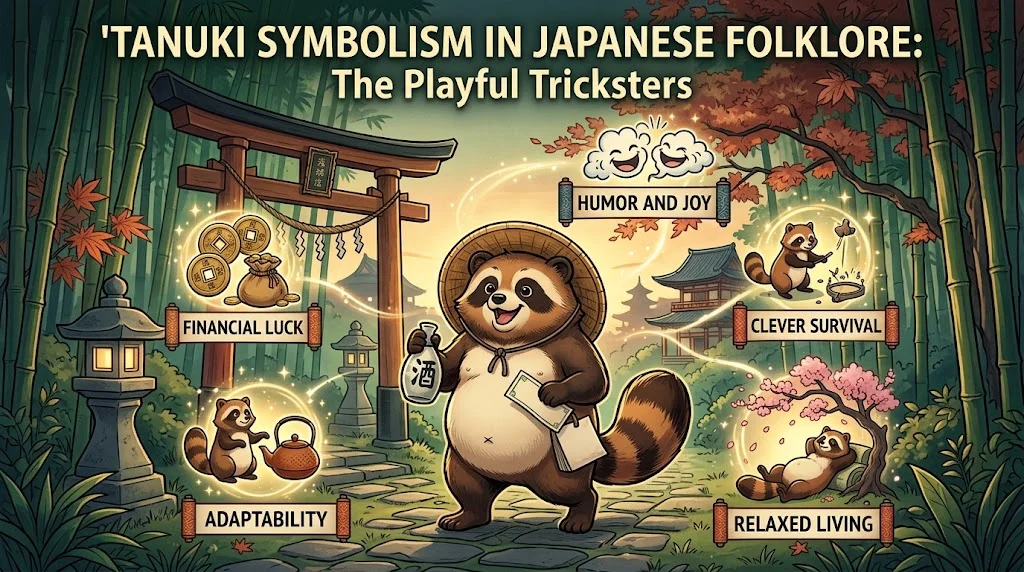
Tanuki are playful tricksters. Unlike darker trickster figures in some traditions, tanuki usually represent humor and good fortune.
Their exaggerated features in statues symbolize abundance and boldness rather than realism.
Common Tanuki Symbolism
• Financial luck
• Adaptability
• Humor and joy
• Clever survival
• Relaxed living
Modern Misunderstandings
Some Western audiences misread tanuki statues as strange or comedic without understanding the historical symbolism behind them.
However, in Japan, tanuki are often viewed affectionately rather than seriously.
Lucky Cat Symbolism and Meaning
The lucky cat, or maneki-neko, is one of the most recognized Japanese symbols in America. These waving cat figures commonly appear in restaurants, shops, and homes.
Most people know them as symbols of luck. Yet the details matter.
Why the Lucky Cat Waves
The raised paw represents inviting good fortune or customers. Different paw positions may carry slightly different meanings.
For example:
• Left paw attracts customers
• Right paw attracts wealth
• Gold color symbolizes prosperity
• White symbolizes happiness
• Black may symbolize protection
Origins of the Lucky Cat
Stories about the lucky cat began during Japan’s Edo period. One popular legend describes a cat saving a traveler from danger by waving him toward a temple.
Over time, the lucky cat became connected with prosperity and hospitality.
Japanese Animal Symbolism in the USA
Japanese animal symbolism became especially visible in America during the late twentieth century. Anime, martial arts, tattoos, gaming, and Japanese restaurants all helped spread these meanings.
Today, these symbols often blend traditional meaning with personal interpretation.
Where Americans Commonly See These Symbols
• Tattoo studios
• Anime and manga fandoms
• Home decor and wellness spaces
• Clothing and jewelry
• Restaurant branding
• Social media aesthetics
Why Americans Connect With Them
Many Americans value symbolism tied to resilience and personal growth. Japanese animal imagery often feels calming yet emotionally powerful.
Additionally, minimalist Japanese-inspired design became highly influential in modern American decor trends.
read more: White Snake Symbolism: Purity, Wisdom & Renewal
Spiritual Meaning of Japanese Animals
Some people connect these animals with spirituality rather than religion. This is especially common in meditation, mindfulness, and wellness communities.
However, it’s important to avoid oversimplifying sacred traditions.
Spiritual Themes Across Animal Symbols
• Balance between strength and peace
• Harmony with nature
• Personal transformation
• Protection from negativity
• Emotional endurance
Respectful Cultural Appreciation
Learning the original stories behind these animals helps avoid shallow stereotypes. Appreciation usually focuses on understanding history and meaning rather than copying symbols carelessly.
Emotional and Psychological Associations
Animal symbolism often reflects emotions people struggle to describe directly. That emotional connection explains why these symbols remain popular.
In the United States, symbolic animals frequently become part of personal identity.
What These Animals Emotionally Represent
| Animal | Emotional Signal | Psychological Association |
| Fox | Intelligence and mystery | Adaptability and independence |
| Koi | Persistence | Personal growth |
| Crane | Peace and healing | Emotional balance |
| Tanuki | Joy and humor | Flexibility during stress |
| Lucky Cat | Hope and optimism | Security and abundance |
Identity and Self-Expression
People often choose symbolic animals during life transitions. Tattoos, jewelry, or decor can reflect goals, memories, or emotional healing.
Because of this, symbolic meaning stays deeply personal even when traditions evolve.
Japanese Animal Tattoos and Modern Style
Japanese-inspired tattoos remain highly influential in American tattoo culture. Full-body irezumi styles helped popularize koi, foxes, cranes, and cats internationally.
Today, meanings vary widely depending on the wearer.
Popular Tattoo Interpretations
• Koi tattoos symbolize overcoming difficult periods
• Crane tattoos represent peace after grief
• Fox tattoos suggest mystery or independence
• Lucky cat tattoos symbolize prosperity
• Tanuki tattoos reflect humor and resilience
Social Media and Digital Aesthetics
Modern internet culture reshaped these symbols again. Platforms like TikTok and Instagram often turn traditional imagery into visual trends.
However, many creators now also educate audiences about original meanings and folklore.
read more: Hummingbird Symbolism: Spiritual, Cultural & Life Meanings
Misunderstandings and Cultural Controversies
Symbolic animals can lose context when they spread globally. This sometimes leads to confusion or oversimplified interpretations.
Still, meanings constantly evolve across cultures.
Common Misunderstandings
• Kitsune are not simply “anime fox girls”
• Tanuki are not ordinary raccoons
• Lucky cats are not Chinese symbols originally
• Koi symbolism is deeper than wealth alone
• Cranes represent peace beyond paper crafts
Cultural Sensitivity Today
Most concerns involve commercialization without understanding historical meaning. However, respectful learning and thoughtful use are usually welcomed more positively.
Intent and context matter greatly.
How These Meanings Changed Over Time
Japanese animal symbolism changed across centuries. Ancient spiritual meanings often blended with modern entertainment and global media.
Today, many people hold both traditional and personal interpretations simultaneously.
Major Shifts in Symbolism
• Sacred meanings became mainstream decor
• Folklore spread through anime and gaming
• Tattoos normalized symbolic imagery
• Younger audiences prefer emotional interpretations
• Global audiences simplified some older meanings
Revival of Traditional Interest
Interestingly, younger generations increasingly research the original folklore behind these symbols. This renewed curiosity helps preserve older cultural meanings rather than replacing them completely.
Why Japanese Animal Symbolism Still Resonates
These symbols continue thriving because they balance beauty with emotional meaning. They feel ancient while still fitting modern life.
For many Americans, they represent resilience, calmness, and self-discovery.
Enduring Themes
• Hope during uncertainty
• Strength through adversity
• Emotional healing
• Harmony with nature
• Personal transformation
FAQs About Japanese Animal Symbolism
1. What does Japanese animal symbolism mean?
Japanese animal symbolism explores the meanings animals hold in Japanese culture, folklore, and spiritual traditions. Animals often represent wisdom, courage, protection, good fortune, and renewal.
2. What does the fox symbolize in Japanese culture?
The fox, known as kitsune in Japanese, symbolizes intelligence, mystery, and spiritual power. In Shinto traditions, foxes are closely connected with Inari, a deity associated with rice, agriculture, and prosperity.
3. What does the koi fish symbolize in Japan?
The koi fish represents perseverance, strength, success, and good fortune. Its ability to swim against strong currents makes it a symbol of overcoming challenges and achieving goals.
4. What does the crane symbolize in Japanese culture?
The crane traditionally symbolizes longevity, peace, hope, and good fortune. It appears in Japanese art, origami, and wedding traditions as a symbol of happiness and lasting relationships.
5. What do dragons and phoenixes symbolize in Japan?
The Japanese dragon often represents power, wisdom, water, and protection. The phoenix, known as hō-ō, symbolizes renewal, harmony, and prosperity in Japanese mythology and traditional art.
6. What does the tanuki symbolize in Japanese folklore?
The tanuki, or Japanese raccoon dog, symbolizes playfulness, adaptability, and good fortune. Its image frequently appears in Japanese folklore and traditional decorations as a symbol of prosperity.
Conclusion
Japanese Animal Symbolism: Fox, Koi, Crane & More reveals the deep connection between animals, spiritual beliefs, and Japanese cultural heritage. The fox represents intelligence, the koi fish symbolizes perseverance, and the crane stands for longevity and peace. Meanwhile, the dragon, phoenix, and tanuki reflect power, renewal, and good fortune. Understanding these Japanese animal meanings helps us appreciate the country’s folklore, traditions, and lasting relationship with the natural world.

Isabella Taylor is a spiritual content creator who shares thoughtful insights on dreams, symbols, and self-discovery. Through her writing at SoulMeanings.com, she inspires readers to find meaning and guidance in everyday life.