
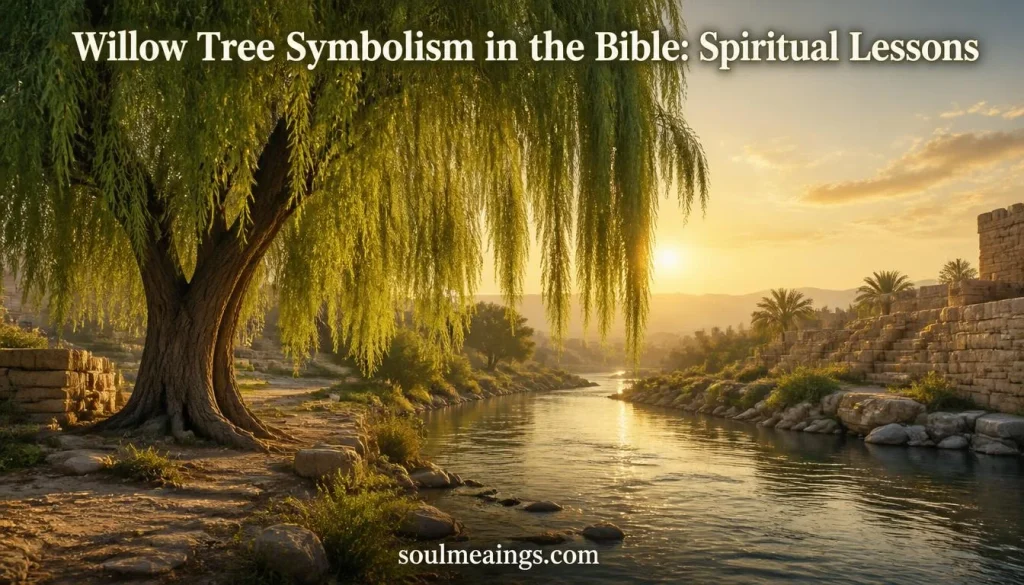

Willow Tree Symbolism in the Bible: Spiritual Lessons explores how willow trees represent sorrow, faith, renewal, and hope.
In the Bible, the willow tree symbolizes mourning, grief, and divine hope. Its graceful, drooping branches reflect sadness and spiritual reflection. In Psalm 137:2, willows represent Israel’s grief during the Babylonian exile, expressing loss and emotional suffering. Growing near water, these trees also symbolize life, nourishment, endurance, and spiritual resilience.
Other biblical references reveal deeper meanings. Isaiah 44:4 connects willows with growth and flourishing, while Leviticus 23:40 mentions them during the Feast of Tabernacles. These passages highlight their religious symbolism, cultural significance, and historical importance. Willow trees also represent faith, prayer, lamentation, spiritual renewal, and divine guidance.
Their flexibility and strength offer valuable life lessons about perseverance, adaptability, personal growth, and hope. Today, willow symbolism continues in art, literature, dreams, and modern spirituality, reminding people of the importance of faith and resilience during difficult times.
Quick Answer
Willow Tree Symbolism in the Bible primarily connects with sorrow, remembrance, spiritual growth, and renewal. In American Christian interpretations, the willow can represent enduring faith through hardship and the hope of flourishing through God’s blessings.
TL;DR
- Willow branches represent mourning and remembrance in Psalm 137.
- Isaiah 44 connects willows with growth and divine blessing.
- Leviticus 23 includes willow branches in the Feast of Tabernacles.
- Flowing water suggests nourishment, life, and spiritual renewal.
- Modern Christian art often associates willows with comfort and hope.
What Does the Willow Tree Represent in the Bible?
The willow tree carries several meanings throughout biblical literature. Its symbolism depends on the passage, setting, and surrounding events. For American readers, these differences reveal why the tree represents both sadness and hope.
Main Biblical Meanings
The most common interpretations include:
- Sorrow: Represents grief, loss, and emotional suffering.
- Remembrance: Connects with memories of displacement and difficult experiences.
- Renewal: Reflects life returning through nourishment and spiritual growth.
- Resilience: Suggests the ability to endure challenging seasons.
- Blessing: Connects with flourishing life beside flowing water.
However, not every meaning appears equally in Scripture. Some come directly from biblical passages, while others develop through later Christian reflection.
Why Context Matters
Psalm 137 presents the willow in a setting of exile and sadness. Isaiah 44 uses similar imagery to describe flourishing life.
Therefore, the willow doesn’t have one fixed biblical meaning. Its message changes with the passage.
Biblical Verses About Willow Trees
Several biblical passages mention willows or trees traditionally identified as willows. These references provide the foundation for understanding their symbolism.
Important Scripture References
Psalm 137:1–2 — Sorrow and Remembrance
This passage describes Jewish exiles sitting beside Babylon’s rivers. They hang their musical instruments on willow trees because they cannot bring themselves to sing.
The scene connects willows with homesickness, grief, and memories of their homeland. It also reflects the emotional pain of losing familiar surroundings.
Isaiah 44:3–4 — Growth and Blessing
Isaiah describes people flourishing like willows beside flowing streams. The passage connects water with God’s blessing and spiritual renewal.
Here, the willow becomes an image of life, abundance, and growth.
Leviticus 23:40 — Celebration and Gratitude
This verse includes willow branches among the plants used during the Feast of Tabernacles. The branches formed part of a joyful religious celebration.
Therefore, the willow also has connections with gratitude and worship.
Job 40:22 — Shelter and Protection
Job describes Behemoth resting beneath trees associated with willows. Their shade creates an image of shelter and natural strength.
Isaiah 15:7 — Separation and Loss
This passage mentions the Brook of Willows in a description of Moab’s distress. Its wider setting involves judgment, hardship, and displacement.
Ezekiel 17:5 — Water and Growth
Ezekiel describes a planted seedling growing near abundant water. Some translations identify the tree in this passage as a water willow.
However, translations and botanical identifications differ.
These references show that biblical willow imagery includes both joyful and sorrowful settings.
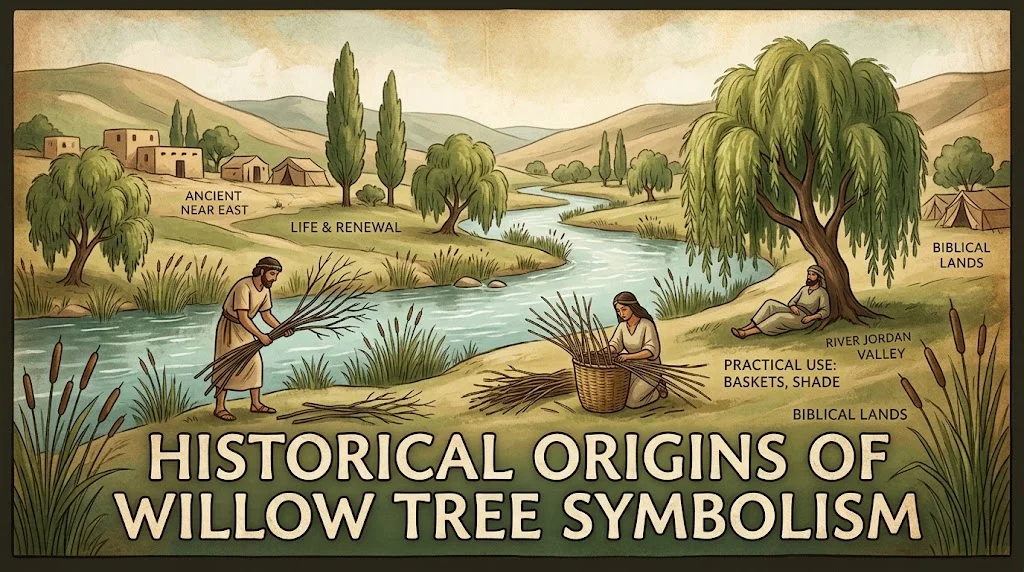
Historical Origins of Willow Tree Symbolism
Willow trees have a long history in landscapes surrounding the ancient Near East. Their connection with water made them familiar features of everyday life.
Willows in Ancient Biblical Lands
Willows and closely related trees grew near rivers, streams, and wet ground. Their flexible branches also served practical purposes.
Ancient communities used willow-like branches for:
- Making baskets and woven household objects.
- Creating simple bindings and useful materials.
- Providing shade near water sources.
- Supporting everyday activities around rivers.
Because these trees grew near water, people naturally connected them with life and nourishment.
Hebrew Names and Botanical Identification
The Hebrew word commonly associated with biblical willows is aravah. Another related term appears in Ezekiel 17:5.
However, identifying the exact species isn’t always simple. Biblical translations sometimes use willow or related tree names for different plants.
Some scholars suggest that certain references could describe poplars rather than true willows. Therefore, readers should avoid assuming every biblical willow was the modern weeping willow.
Bible Gateway+2
Before Christianity
Willows existed in ancient cultures long before Christianity developed. Their natural connection with rivers made them useful symbols of fertility, seasonal renewal, and life.
However, there isn’t enough evidence to assign one universal pre-Christian meaning to every willow tradition. Biblical symbolism should be understood within its own historical and religious setting.
Willow Tree Symbolism in the Bible and Psalm 137
Psalm 137 provides the most recognizable biblical image of willow trees. It connects their branches with one of the Bible’s strongest expressions of collective grief.
The Willows of Babylon
The psalm remembers Jewish people living in exile beside Babylon’s rivers. They have been separated from Jerusalem and their familiar religious life.
The willow branches become part of this emotional landscape. Their presence reflects the sadness surrounding the exiles.
The passage also describes their musical instruments hanging from the trees. Music, normally associated with celebration, becomes difficult during their suffering.
Lessons About Grief and Memory
This biblical scene offers several spiritual lessons:
- Remembering home: Difficult experiences can strengthen connections with our roots.
- Respecting grief: Sadness deserves acknowledgment rather than forced happiness.
- Preserving identity: Hardship doesn’t erase cultural or spiritual belonging.
- Finding meaning: Memories can help people understand their personal journeys.
For American readers, this imagery can connect with migration, separation, family memories, and periods of uncertainty.
However, Psalm 137 describes a particular historical experience. Its message shouldn’t be reduced to a general symbol of sadness.
Spiritual Meaning of the Willow Tree in the Bible
The spiritual meaning of the willow depends on how Scripture presents it. Its strongest themes include dependence, endurance, hope, and renewal.
Spiritual Growth and Renewal
Isaiah 44 offers an encouraging picture of willows growing beside water. The passage compares flourishing vegetation with people receiving divine blessing.
Water becomes an image of nourishment. The growing tree reflects the results of receiving what sustains life.
In Christian reflection, this imagery can suggest:
- Growing through a deeper relationship with God.
- Remaining spiritually nourished during difficult seasons.
- Developing patience through life’s changes.
- Finding hope after periods of emotional struggle.
- Trusting that growth can follow hardship.
The Lesson of Dependence
A willow’s growth near water provides another meaningful lesson. Living things need nourishment to survive and flourish.
Similarly, Christian teachings often use water as an image of spiritual life. The willow therefore offers a natural reminder of dependence on God.
Hope After Suffering
The contrast between Psalm 137 and Isaiah 44 is especially meaningful.
One passage presents sorrow, while another describes flourishing growth. Together, they allow readers to reflect on the movement from hardship toward renewed hope.
Willow Tree Symbolism in the USA
In the United States, willow trees carry both biblical and broader cultural associations. Their meaning often depends on whether people encounter them through religion, literature, nature, or family traditions.
Christian Interpretations in American Culture
American Christians may interpret willow imagery through Scripture and personal reflection.
Some associate the tree with God’s comfort during grief. Others connect it with perseverance and spiritual renewal.
However, these interpretations aren’t universal Christian doctrines. They represent ways people apply biblical imagery to modern experiences.
American Cultural Associations
Outside religious settings, willow trees frequently appear in landscapes, memorial gardens, and artistic representations.
Their drooping branches create a recognizable appearance that encourages reflection.
Common American associations include:
- Memorial gardens honoring loved ones.
- Quiet spaces for prayer and reflection.
- Nature-inspired paintings and landscape photography.
- Personal artwork representing family memories.
- Garden designs associated with peace and solitude.
Biblical Meaning Compared With Modern American Meaning
| Context | Meaning in the USA | Common Associations | Notes |
| Psalm 137 | Grief and remembrance | Exile, homesickness | Biblical setting |
| Isaiah 44 | Spiritual renewal | Growth, blessing | Biblical imagery |
| Leviticus 23 | Celebration | Worship, gratitude | Jewish religious tradition |
| Memorial gardens | Remembrance | Love, loss | Modern cultural association |
| Christian artwork | Hope and comfort | Faith, perseverance | Interpretive symbolism |
The important distinction is that modern American associations can extend beyond the original biblical meaning.
Willow Tree Meaning in Christianity
Christian interpretations often connect the willow with faith during suffering. However, the Bible doesn’t establish a formal doctrine assigning one meaning to the tree.
A Symbol of Faith During Difficult Times
Psalm 137 reminds readers that faithful people can experience profound sadness. Spiritual commitment doesn’t mean avoiding grief.
The willow can therefore become a reminder that difficult emotions deserve compassion.
A Picture of God’s Nourishment
Isaiah 44 presents a different spiritual image. The willow grows beside water, reflecting the abundance associated with divine blessing.
For Christian readers, this can suggest that spiritual growth requires continued nourishment.
Lessons for Everyday Christian Life
The willow offers several useful reflections:
- Keep faith during uncertain periods.
- Allow yourself time to process grief.
- Seek spiritual nourishment through Scripture and prayer.
- Remember that personal growth takes time.
- Offer comfort to people experiencing loss.
These lessons come from reflecting on biblical passages rather than treating the tree as a supernatural sign.
Emotional and Psychological Meaning of Willow Trees
Willow trees have a distinctive appearance that influences their emotional associations. Their curved branches and gentle movement often create a peaceful atmosphere.
Why Willows Suggest Sadness
The connection between willows and sorrow is especially strong in Western culture. Psalm 137 helped reinforce this association through its image of grieving exiles.
Their hanging branches also resemble a posture of quiet reflection. This visual quality supports their use in memorial art.
Why Willows Also Suggest Strength
Despite their delicate appearance, many willow species grow successfully in moist environments. Their flexible branches can bend with moving air.
This natural quality encourages symbolic connections with adaptability.
People may associate the tree with:
- Emotional resilience during difficult experiences.
- Patience when facing uncertainty.
- Acceptance of changing circumstances.
- Peace after emotional struggles.
- Strength without aggression or resistance.
These are modern interpretive associations, not direct biblical definitions.
Willow Tree Symbolism in Other Cultures and Spiritual Traditions
Willow symbolism extends beyond biblical literature. Different societies have developed their own meanings through folklore, poetry, religion, and traditional art.
Chinese Cultural Symbolism
In Chinese cultural traditions, willow branches can carry associations with spring, renewal, and farewell.
Their flexible growth also makes them suitable images of adaptability. However, meanings differ across historical periods and artistic settings.
Japanese Cultural Associations
Willows appear in Japanese poetry, visual art, and traditional landscapes. Their delicate branches can suggest beauty, seasonal change, and quiet reflection.
Western Folklore
In European folklore and literature, willow trees became strongly connected with mourning and unreturned love.
The weeping willow’s appearance helped strengthen these associations.
Respecting Different Traditions
These cultural meanings shouldn’t be treated as identical to biblical symbolism. Each tradition has its own history and interpretations.
The willow’s wider significance shows how one natural tree can inspire different human experiences.
Modern Uses of Willow Tree Symbolism
Today, willow trees appear in many forms of personal and creative expression. Their biblical associations make them meaningful subjects for religious artwork and personal reflection.
Willow Tree Tattoos
Willow tree tattoos can represent different experiences depending on their design.
Common interpretations include:
- Weeping willow tattoos: Grief, remembrance, and emotional healing.
- Willow with water: Renewal, spiritual nourishment, and personal growth.
- Willow with birds: Freedom, hope, and new beginnings.
- Willow with roots: Family connections, stability, and personal identity.
- Willow with a Bible verse: Faith, comfort, and spiritual commitment.
Some people choose willow tattoos to remember loved ones. Others use them to represent personal growth after difficult experiences.
Home Decor and Garden Design
Willow trees also bring symbolic meaning into American homes and outdoor spaces.
People may choose willow-inspired decorations for:
- Peaceful garden settings and meditation spaces.
- Memorial gardens dedicated to family members.
- Nature-inspired paintings and wall decorations.
- Religious artwork representing hope and renewal.
Social Media and Digital Expression
On social media, willow imagery often communicates emotional experiences.
A photograph of a weeping willow might accompany a reflection about grief, healing, or personal change.
However, these modern meanings depend on personal interpretation. A willow photograph doesn’t automatically communicate a religious belief.
Read more: Lilac Flower Symbolism: Love, Renewal & Spiritual Meaning
Misunderstandings About Willow Tree Symbolism
Willow symbolism can become confusing when biblical passages, cultural traditions, and modern interpretations overlap.
Understanding these differences helps readers avoid unsupported religious claims.
Does the Bible Say Willows Are Always Symbols of Sadness?
No. Psalm 137 connects willows with mourning and exile. However, Isaiah 44 presents them through imagery of flourishing growth.
Therefore, sadness is only one part of their biblical symbolism.
Is the Willow a Christian Religious Symbol?
The willow appears in biblical passages, but it isn’t an official Christian emblem.
Some Christian communities use it in artwork and memorial settings. These uses reflect personal interpretation rather than a universal religious rule.
Is Every Weeping Willow Mentioned in Scripture?
No. The Bible doesn’t identify every willow reference as the modern weeping willow.
Historical botanical identification remains uncertain in some passages. Related trees, including poplars, may be involved.
Does a Willow Tree Predict Spiritual Events?
There is no biblical basis for treating a willow tree as a prediction of future events.
People may find personal meaning in nature. However, symbolic reflection should remain separate from claims about supernatural messages.
How Willow Tree Symbolism Changed Over Time
The willow’s symbolism developed through religious texts, cultural traditions, literature, and modern artistic expression.
From Celebration to Mourning
Leviticus 23 includes willow branches in a joyful religious festival. Their presence shows that the tree wasn’t originally limited to sorrowful associations.
Later, Psalm 137 created a powerful connection between willows and mourning.
This contrast helped establish two important symbolic directions.
Influence of Literature and Art
Western literature and visual art further strengthened the weeping willow’s association with sadness.
Artists often used its hanging branches in memorial scenes. Writers also used the tree to express separation and emotional loss.
Modern Interpretations
Today, willow symbolism includes more than grief.
Many people connect the tree with resilience, emotional recovery, and peaceful reflection. Christian readers may also revisit Isaiah 44 for its encouraging imagery.
The meaning continues to develop through personal experience and cultural expression.
Spiritual Lessons We Can Learn From the Willow Tree
The biblical willow offers several lessons about human experiences. Its different appearances encourage reflection on faith, loss, and personal growth.
Learn to Accept Difficult Seasons
Psalm 137 shows that grief is a real part of human life. People don’t need to hide their sadness to demonstrate faith.
Stay Connected to Your Spiritual Roots
The exiles remembered Jerusalem despite their difficult circumstances. Their experience highlights the importance of identity, belonging, and spiritual connection.
Continue Growing Through Change
Isaiah 44 offers an image of flourishing willows beside water. It reminds readers that nourishment supports healthy growth.
Practice Patience and Adaptability
A willow’s flexible branches provide a useful natural comparison. Life often requires patience and the ability to adjust.
Find Hope Without Ignoring Sorrow
The willow’s contrasting biblical images offer an important reminder. Hope doesn’t require pretending that suffering never happened.
Instead, people can acknowledge their experiences while continuing toward renewal.
FAQs About Willow Tree Symbolism in the Bible
1. What does the willow tree symbolize in the Bible?
The willow tree symbolizes mourning, sorrow, resilience, and hope. It reflects emotional struggles while reminding believers of faith and spiritual renewal.
2. What is the meaning of willows in Psalm 137:2?
In Psalm 137:2, willows appear in the account of Israel’s Babylonian exile. They represent the grief and sadness of people separated from their homeland.
3. What does the willow tree represent in Isaiah 44:4?
Isaiah 44:4 uses willow imagery to describe growth and flourishing. It connects the tree with renewal, nourishment, and God’s provision.
4. Why are willow branches mentioned in Leviticus 23:40?
Willow branches were part of the Feast of Tabernacles celebration. They were used during this sacred festival as part of its traditional plant offerings.
5. What spiritual lessons can we learn from the willow tree?
The willow teaches resilience, flexibility, patience, and faith. Its ability to bend without easily breaking reminds us to remain strong during difficult times.
6. Does the willow tree symbolize hope and healing?
Yes, willow symbolism can represent hope, healing, restoration, and spiritual growth. Its connection with water and renewal offers a meaningful reminder of life’s ability to continue.
Conclusion
Willow Tree Symbolism in the Bible: Spiritual Lessons reveals a meaningful connection between sorrow, faith, resilience, and renewal. Biblical passages such as Psalm 137:2, Isaiah 44:4, and Leviticus 23:40 provide different perspectives on willow imagery. From mourning during exile to growth and joyful celebration, the willow carries lessons about life’s changing seasons. Its graceful branches remind us to remain flexible through hardship and hold on to faith. Ultimately, the willow tree offers a powerful symbol of endurance, spiritual renewal, divine hope, and God’s provision.

Mark Taylor is a content writer at soulmeaings.com. He writes clear, research-based articles on symbolism, spiritual meaning, and cultural interpretation, helping readers understand the ideas behind the symbols they encounter.


Pingback: Northern Flicker Symbolism: Meaning and Spiritual Lessons
Pingback: Dead Snake Symbolism: Meaning and Spiritual Lessons