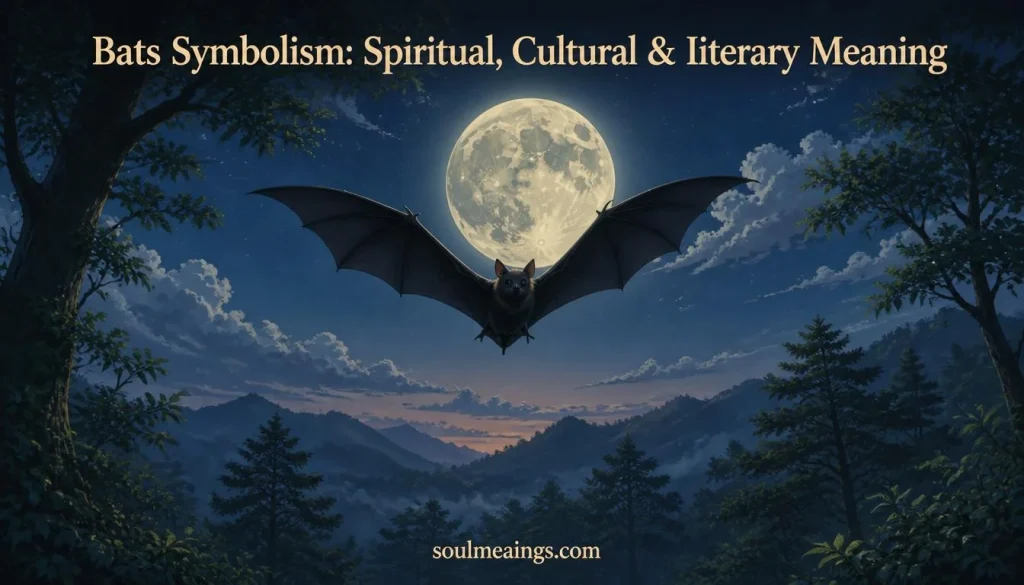
Bats symbolism explores why these nocturnal creatures represent mystery, fear, intuition, and transformation.
Bats often create strong reactions in people. Some feel uneasy about their mysterious aura, while others admire their quiet flight, silent movement, and nighttime activity. Their cave homes, natural habitats, and echolocation help them navigate darkness, giving them an important place in animal symbolism.
Across different cultures and spiritual traditions, bats carry deep meanings. In mythology, folklore, and literature, they represent omens, fear, reverence, rebirth, and transformation. Some cultural beliefs connect them with death and hidden meanings, while others celebrate them as symbols of guidance, intuition, and spiritual rebirth.
Their appearance can encourage people to embrace the unknown, trust their instincts, and reflect on life’s changes. From bat encounters and spiritual messages to modern literature and art, bat symbolism offers valuable life lessons about the cycles of life and death, personal growth, and new beginnings.
Quick Answer
Bats symbolism in American culture commonly represents mystery, transformation, darkness, and the supernatural. Spiritually, bats can symbolize rebirth, intuition, adaptability, and the courage to navigate life’s uncertainties.
TL;DR
- Bats symbolize transformation, mystery, intuition, and rebirth.
- Ancient traditions connected bats with the underworld and supernatural powers.
- American culture strongly associates bats with Halloween and vampires.
- Chinese traditions often connect bats with happiness, prosperity, and good fortune.
- In literature, bats represent darkness, hidden fears, and transformation.
- Modern bat tattoos can express independence, individuality, and personal change.
What Do Bats Symbolize?
Bats carry several meanings because of their unusual physical features and behaviors. They fly at night, live in hidden spaces, and use sound to navigate their surroundings. These qualities have inspired different symbolic interpretations throughout history.
The Main Symbolic Meanings
The most common meanings associated with bats include:
- Transformation: Moving through darkness represents personal growth and change.
- Intuition: Echolocation suggests finding direction without relying entirely on sight.
- Mystery: Their nighttime activity connects them with secrets and hidden knowledge.
- Rebirth: Emerging from dark spaces can represent a fresh beginning.
- Adaptability: Their ability to navigate changing environments represents resilience.
- Protection: Some cultural traditions associate bats with good fortune and protective qualities.
However, these meanings aren’t universal. A bat appearing in a horror story carries a different message from one displayed in traditional Chinese artwork.
What Makes Bats Symbolically Unique?
Bats are mammals capable of powered flight. Their wings consist of thin membranes stretched across elongated fingers. This unusual structure makes them visually different from most other animals.
Additionally, many bats use echolocation to find food and avoid obstacles. This ability creates a natural connection with perception, awareness, and navigating uncertainty.
Their combination of unusual features makes them especially powerful symbols in storytelling.
Historical Origins of Bat Symbolism
Bats have appeared in human stories, artwork, religious traditions, and folklore for thousands of years. Their meanings developed differently across ancient civilizations and later European societies.
Ancient Civilizations and Mythology
One important example comes from ancient Maya mythology. Camazotz, often translated as the death bat, appears in the Popol Vuh, a sacred narrative associated with the Maya.
The story describes the House of Bats as a dangerous place within the underworld. Its connection with death and supernatural danger influenced how bats appeared in later interpretations.
Ancient Greek traditions also connected bats with the underworld. Their nighttime habits and association with caves helped create connections with darkness and the realm of the dead.
Medieval European Interpretations
During the Middle Ages, European religious artwork sometimes portrayed bats negatively. Their dark wings became associated with devils, evil spirits, and supernatural danger.
Christian imagery often contrasted dark, bat-like wings with the bright wings of angels. This visual difference strengthened the connection between bats and darkness.
However, historical attitudes weren’t entirely negative. Bats also appeared in decorative artwork, manuscripts, and other forms of visual expression.
The Development of Vampire Stories
The connection between bats and vampires became especially influential during the nineteenth century.
Earlier vampire folklore didn’t always include bats. However, popular literature gradually connected these creatures through supernatural transformation.
Bram Stoker’s Dracula, published in 1897, helped establish the familiar image of a vampire transforming into a bat. Since then, bats have remained closely connected with Gothic fiction and supernatural storytelling.
Bats Symbolism in American Culture
In the United States, bats have a strong connection with Halloween, horror entertainment, and supernatural traditions. However, American culture also recognizes their importance in nature and environmental protection.
Halloween and American Traditions
Bats are among the most recognizable Halloween decorations in America. Their dark wings, nighttime activity, and association with haunted places create an instantly spooky atmosphere.
During October, people commonly display artificial bats on walls, windows, costumes, and outdoor decorations.
Their connection with Halloween developed through older European folklore and supernatural stories. These traditions became part of American celebrations through cultural influences and popular entertainment.
Common American associations include:
- Haunted houses and mysterious nighttime settings.
- Witches, vampires, ghosts, and supernatural creatures.
- Halloween costumes and seasonal decorations.
- Fear of darkness and unfamiliar surroundings.
- Mystery, suspense, and supernatural transformation.
Batman and the Symbol of Protection
One of America’s most recognizable positive bat symbols comes from Batman.
The superhero uses a bat-inspired identity to frighten criminals and protect innocent people. His character connects darkness with courage, justice, discipline, and personal responsibility.
Interestingly, Batman transforms an animal traditionally associated with fear into a symbol of protection.
This demonstrates how popular culture can completely change an animal’s symbolic meaning.
American Folklore and Superstitions
American folklore contains several old beliefs about bats entering homes or flying near people.
Some communities historically considered these encounters warnings of misfortune or approaching death. Other beliefs connected bats with witchcraft and supernatural activity.
These interpretations reflect historical fears rather than reliable predictions. Today, many Americans recognize bats as important wildlife rather than supernatural warnings.
read more: Dreaming of Spiders: Symbolism, Meaning and Life Lessons
Spiritual Meaning of Bats
The spiritual meaning of bats often centers on transformation, intuition, and personal growth. Their ability to navigate darkness creates a powerful metaphor for finding direction during uncertain periods.
Bats as Symbols of Transformation
Bats can represent the process of leaving an old version of yourself behind.
Their nighttime lifestyle provides a metaphor for personal experiences that aren’t always visible to others. You might be changing internally before anyone notices your progress.
In this interpretation, bats encourage you to:
- Accept changes instead of resisting every unfamiliar experience.
- Release outdated habits that prevent personal development.
- Trust yourself during uncertain periods of life.
- Recognize opportunities hidden within difficult situations.
- Become comfortable with personal growth and new beginnings.
Bats and Intuition
Bats use echolocation to understand their surroundings. They produce sounds and interpret returning echoes to locate objects.
Spiritually, this ability can represent intuition and inner awareness.
It reminds people that understanding doesn’t always come from what they immediately see. Sometimes, patience, observation, and self-reflection provide better direction.
Bats as Symbols of Rebirth
A bat emerging from a dark cave can represent a new beginning.
This interpretation connects with emotional healing, personal development, and leaving difficult experiences behind.
However, rebirth isn’t necessarily about becoming someone completely different. It can mean rediscovering qualities that were already within you.
Bat Symbolism Across Different Cultures
Bat symbolism varies significantly across the world. Some traditions connect bats with danger, while others celebrate them as fortunate and meaningful creatures.
Understanding these differences prevents one cultural interpretation from being treated as universal.
Chinese Culture: Good Fortune and Happiness
In traditional Chinese culture, bats are widely associated with good fortune, happiness, prosperity, and longevity.
This positive meaning comes partly from Chinese wordplay. The word for bat, fú (蝠), sounds like the word for blessing or good fortune, fú (福).
Consequently, bat designs became popular decorative motifs in traditional Chinese art.
Five bats appearing together can represent five blessings:
- Longevity and a long life.
- Wealth and material prosperity.
- Health and physical well-being.
- Love of virtue and goodness.
- Peaceful and natural passing in old age.
These traditional meanings appear in paintings, textiles, ceramics, and decorative objects.
Maya Culture: Death and the Underworld
Maya mythology provides a different interpretation.
Camazotz, the death bat, appears in the Popol Vuh. The creature connects bats with danger, sacrifice, and the underworld.
This symbolism reflects particular mythological narratives. It shouldn’t be treated as a complete description of Maya beliefs about every bat.
European Folklore: Darkness and the Supernatural
European traditions often connected bats with witches, vampires, devils, and hidden supernatural forces.
Their dark wings and nocturnal habits made them natural characters in mysterious stories.
However, European folklore also contains varied interpretations. Not every historical belief presented bats as evil or dangerous.
Other Spiritual Interpretations
Across different Asian and Indigenous traditions, bats have received diverse cultural meanings.
Some communities associate them with good fortune, while others connect them with spiritual power or the world beyond ordinary human experience.
These traditions shouldn’t be combined into one universal spiritual message.
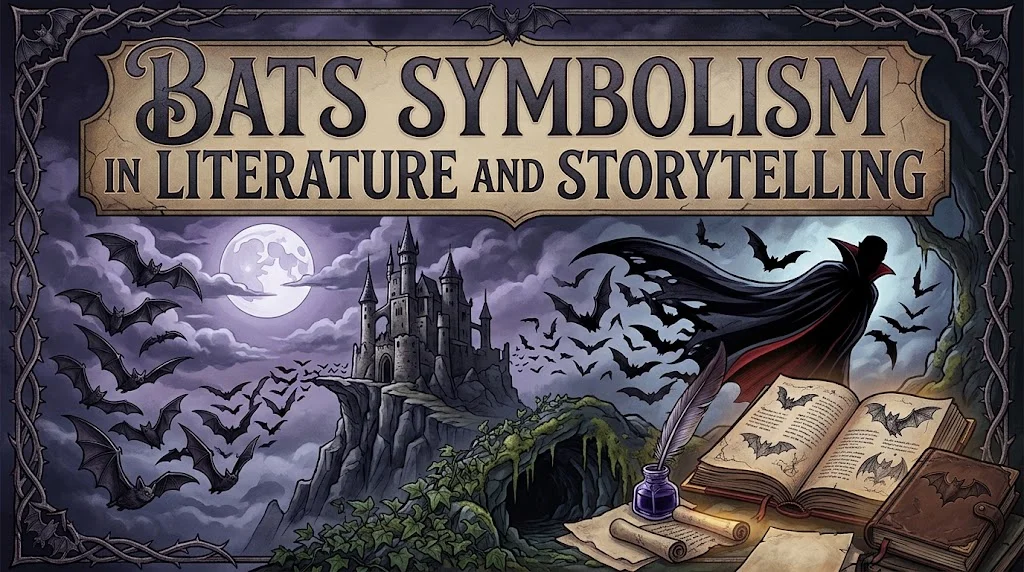
Bats Symbolism in Literature and Storytelling
Bats have a fascinating place in literature because writers use them to create atmosphere, communicate fear, and explore transformation.
Their unusual appearance makes them especially useful in Gothic fiction, fantasy, poetry, and supernatural storytelling.
Bats in Gothic Literature
Gothic literature often uses bats to represent darkness, mystery, isolation, and approaching danger.
Their appearance near abandoned castles, caves, and nighttime landscapes creates suspense.
Writers also use bats to suggest that something hidden is about to become visible.
In this setting, a bat can represent:
- Fear of the unknown.
- Secrets hidden beneath ordinary appearances.
- Supernatural forces and mysterious events.
- Isolation and emotional uncertainty.
- The boundary between life and death.
Bats in Dracula
Bram Stoker’s Dracula helped establish the bat as an important symbol in vampire literature.
The vampire’s ability to transform into a bat connects human identity with animal imagery. It also creates an unsettling connection between familiar life and supernatural danger.
This literary association continues in modern vampire films, television programs, and fantasy stories.
Bats in Modern Fiction
Contemporary writers sometimes move beyond traditional horror meanings.
Bats can represent outsiders, misunderstood individuals, independence, and characters who feel comfortable in darkness.
Their ability to move through environments that other creatures avoid makes them useful symbols of resilience.
Emotional and Psychological Meaning of Bats
Bats can produce very different emotional reactions. Some people find them frightening, while others admire their intelligence, unusual appearance, and ecological importance.
Their symbolism often reflects how people respond to unfamiliar experiences.
Fear and Uncertainty
For many people, bats represent things they don’t fully understand.
Their sudden movements, nighttime activity, and unusual appearance can create feelings of uncertainty.
Psychologically, this makes bats useful symbols of hidden fears and unexplored emotions.
Independence and Individuality
Bats can also represent people who feel different from those around them.
They follow a lifestyle that doesn’t fit ordinary expectations. Their nighttime activity provides a metaphor for independence and individuality.
Someone who identifies with bat symbolism might value:
- Personal freedom and independent thinking.
- Comfort with individuality and differences.
- Confidence during challenging situations.
- Curiosity about unfamiliar ideas.
- Strength through personal transformation.
Resilience and Adaptability
Bats have developed specialized abilities that help them survive in different environments.
Their adaptability makes them symbols of resilience.
They remind readers that unusual qualities can become strengths when used effectively.
Bat Colors and Their Symbolic Meanings
The appearance of a bat can influence its artistic and symbolic interpretation. Artists often use colors, lighting, and surrounding objects to communicate different meanings.
Black Bats
Black bats are strongly associated with mystery, darkness, secrets, and supernatural stories.
In American Halloween imagery, black silhouettes are especially popular because they create a recognizable nighttime atmosphere.
Brown Bats
Brown bats often create a more natural and realistic impression.
They can represent grounding, survival, adaptability, and a connection with nature.
White Bats
White bats are less common in ordinary symbolic artwork.
When artists use them, they may represent purity, mystery, spiritual awareness, or unusual transformation.
These meanings are artistic interpretations rather than established universal traditions.
Red Bats
Red bats can represent passion, danger, intense emotions, and powerful transformation.
Their appearance is especially common in fantasy and Gothic-inspired artwork.
Bat Symbolism at a Glance
| Context | Meaning in the USA | Common Associations | Notes |
| Black bat | Mystery and darkness | Halloween, vampires | Common horror imagery |
| Brown bat | Nature and survival | Wildlife, adaptability | Grounded interpretation |
| White bat | Spiritual mystery | Purity, unusual transformation | Modern artistic meaning |
| Red bat | Intensity and danger | Passion, power | Often used in fantasy art |
| Five bats | Cultural good fortune | Happiness, longevity | Traditional Chinese symbolism |
Bat Tattoos: Meaning and Popular Designs
Bat tattoos are popular among people who appreciate Gothic artwork, supernatural themes, and unusual animal symbolism.
However, their meanings depend on personal experiences and design choices.
Common Bat Tattoo Meanings
A bat tattoo can communicate several ideas:
- Transformation: A reminder of personal change and new beginnings.
- Independence: Confidence in following an individual path.
- Mystery: Appreciation for hidden meanings and the unknown.
- Protection: Inspiration from protective fictional characters.
- Resilience: Strength during difficult personal experiences.
Popular Bat Tattoo Designs
Some popular designs include:
Flying Bat: Represents freedom, movement, and independence.
Bat Silhouette: Expresses simplicity, mystery, and individuality.
Gothic Bat: Connects with dark aesthetics, supernatural stories, and alternative fashion.
Bat with a Moon: Represents nighttime, intuition, and emotional transformation.
Bat Wings: Can symbolize protection, strength, and personal freedom.
Ultimately, a bat tattoo doesn’t have one fixed meaning. Its significance comes from the wearer’s intentions and experiences.
What Does It Mean When You Dream About Bats?
Dreaming about bats can create curiosity because these animals carry strong cultural associations.
However, dreams don’t have scientifically established universal meanings. Their interpretation often depends on personal emotions, experiences, and the dream’s setting.
Seeing a Bat in Your Dream
A bat might represent uncertainty, hidden concerns, or something unfamiliar.
It could also reflect your interest in personal change or unexplored opportunities.
A Bat Flying Toward You
This dream might reflect feelings of pressure or something demanding your attention.
Consider whether you’re currently avoiding a difficult conversation or personal decision.
A Bat Inside Your House
A bat entering a house can symbolize unexpected change in a personal or family setting.
However, it doesn’t predict misfortune or death.
A Dead Bat
A dead bat might represent the end of a difficult period or the loss of an old habit.
Alternatively, it could reflect feelings of disappointment or emotional exhaustion.
A Friendly Bat
A friendly bat may represent acceptance of unfamiliar experiences.
It can also reflect growing confidence in your own individuality.
Bats, Halloween, and Modern Pop Culture
Bats remain important symbols in modern American entertainment and seasonal celebrations. Their visual appearance makes them easy to recognize in costumes, decorations, illustrations, and fictional stories.
Bats in Halloween Decorations
During Halloween, bats commonly appear alongside pumpkins, spiders, skeletons, and haunted-house decorations.
Their silhouettes create a mysterious atmosphere without requiring complicated designs.
Bats in Fashion and Alternative Identity
Bat imagery also appears in Gothic fashion, alternative clothing, jewelry, and accessories.
Some people use bat designs to express individuality or an interest in supernatural themes.
Others simply enjoy their distinctive shape and dramatic appearance.
Bats on Social Media
On social platforms, bat illustrations and emojis often communicate Halloween excitement, dark humor, or Gothic aesthetics.
The bat emoji (🦇) is commonly used in seasonal posts and playful supernatural conversations.
However, its meaning depends on the surrounding message.
Misunderstandings and Controversies About Bat Symbolism
Bats have experienced considerable misunderstanding throughout history. Their association with vampires, disease, and darkness sometimes overshadows their actual behavior.
Understanding these differences helps separate folklore from scientific information.
Are All Bats Blood-Sucking Animals?
No. This is one of the most common misconceptions.
There are more than 1,300 bat species worldwide. Only three species are vampire bats, and they live in Central and South America.
Most bats eat insects, fruit, nectar, or other natural food sources.
Therefore, the traditional image of every bat as a blood-drinking creature is inaccurate.
Are Bats Symbols of Evil?
Not universally.
Some European religious and literary traditions connected bats with evil spirits and darkness. However, Chinese traditions often celebrate bats as symbols of happiness and good fortune.
Their meanings depend on cultural background and historical context.
Bats and Disease-Related Fears
Modern discussions sometimes associate bats with infectious diseases.
Although certain bats can carry diseases, portraying all bats as dangerous is misleading. Such generalizations can encourage unnecessary fear and harm conservation efforts.
Bats also provide important ecological benefits through insect control, pollination, and seed dispersal.
Why Positive Representation Matters
Changing negative perceptions can help people understand bats more accurately.
Respectful representations recognize both their cultural symbolism and ecological importance.
Rather than treating bats as frightening creatures, people can appreciate their unusual abilities and valuable role in nature.
How Bat Symbolism Has Changed Over Time
Bat symbolism has changed considerably as societies developed new stories, beliefs, and scientific knowledge.
Their historical meanings weren’t always consistent, and modern interpretations continue to evolve.
From Ancient Mythology to Modern Entertainment
Ancient Maya stories connected bats with the underworld and supernatural danger. European traditions later developed strong associations with darkness and evil.
During the nineteenth century, vampire literature strengthened the connection between bats and horror.
In twentieth-century American entertainment, superheroes and children’s stories introduced more positive representations.
From Fear to Conservation Awareness
Modern science has also changed how people understand bats.
Instead of focusing only on nighttime behavior and folklore, researchers highlight their ecological importance.
Today, bat conservation organizations encourage public awareness and habitat protection.
Comparing Historical and Modern Meanings
| Historical Interpretation | Modern Interpretation | Main Symbolic Shift |
| Underworld creatures | Symbols of mystery | Mythology to imagination |
| Vampire companions | Gothic entertainment | Folklore to fiction |
| Signs of misfortune | Wildlife worth protecting | Fear to awareness |
| Supernatural beings | Symbols of individuality | Fear to self-expression |
| Traditional lucky motifs | Decorative cultural symbols | Heritage to modern design |
This evolution shows that animal symbolism changes alongside human knowledge and cultural values.
FAQs About Bats Symbolism
What do bats symbolize spiritually?
Bats spiritually symbolize intuition, transformation, rebirth, and guidance. They can represent personal growth and the courage to face the unknown.
Are bats a sign of good luck?
In some cultures, bats represent good fortune, happiness, and prosperity. However, their meaning varies across cultural traditions.
What does seeing a bat mean spiritually?
Seeing a bat may symbolize change, hidden truths, and spiritual awareness. It can also encourage you to trust your instincts.
Do bats symbolize death and rebirth?
Yes, bats sometimes represent death and rebirth. This symbolism often reflects the end of one phase and the beginning of another.
What do bats represent in different cultures?
Different cultures associate bats with fortune, mystery, protection, and transformation. Some traditions view them positively, while others connect them with fear and darkness.
What life lessons can we learn from bats?
Bats remind us to embrace the unknown, trust our intuition, and adapt to change. Their ability to navigate darkness also represents finding direction during difficult times.
Conclusion
Bats symbolism carries powerful meanings connected to mystery, intuition, transformation, and rebirth. Across spiritual traditions, cultures, and literature, bats represent both fear and positive change. Their connection with darkness reminds us that uncertainty is a natural part of life.
Whether you see a bat in nature, encounter one in a dream, or explore its cultural meaning, its symbolism can encourage self-reflection. Ultimately, bats teach us to trust our instincts, welcome change, and find guidance even in uncertain situations.

Charlotte Brown is a passionate writer at SoulMeanings.com, dedicated to exploring spirituality, symbolism, dreams, and life’s deeper meanings. Her work helps readers find clarity, inspiration, and personal insight.