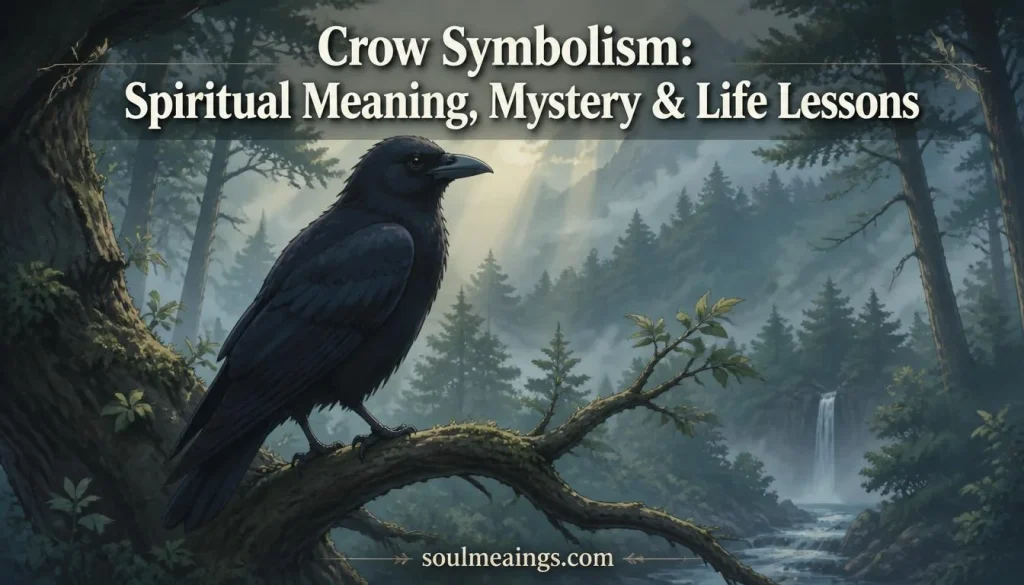
Crow symbolism explores how this intelligent bird represents mystery, wisdom, intelligence, and transformation.
Across different cultures and spiritual traditions, people connect crows with life, death, change, and personal growth. They also represent intuition, insight, knowledge, and awareness, encouraging people to look beyond what they see. Although crows sometimes have a negative reputation in folklore, their deeper meanings often include wisdom, survival, and the ability to adapt to difficult situations.
In American culture, crows are often viewed as messengers, protectors, and spiritual guides. Their presence may symbolize important signs, messages, protection, or guidance during periods of change. Their spiritual significance also connects with life’s deeper truths and the interconnectedness of life.
Crows appear in folklore, literature, dream interpretations, and spiritual beliefs, where their appearance and color can carry different meanings. Today, their influence continues through art, tattoos, and modern cultural expressions.
Many people choose crow designs to represent strength, independence, mystery, and transformation. Understanding crow symbolism through its cultural and spiritual meanings offers a deeper appreciation of this fascinating bird and the life lessons it represents.
Quick Answer
In American culture, crow symbolism commonly represents intelligence, transformation, mystery, and adaptability. Spiritually, crows can symbolize change, awareness, protection, and the connection between the visible and unseen worlds.
TL;DR
- Crows represent intelligence, curiosity, and problem-solving.
- Their black feathers often symbolize mystery and transformation.
- Ancient cultures connected crows with gods, prophecy, and death.
- American folklore sometimes associates crows with omens and bad luck.
- Spiritual interpretations connect crows with awareness and personal growth.
- Modern tattoos use crows to express independence and resilience.
What Does a Crow Symbolize?
Crows carry several meanings because of their behavior, appearance, and place in folklore. In American culture, people often connect them with intelligence and mystery. However, their symbolism can also represent important life changes.
Core Symbolic Meanings
The most common meanings associated with crows include:
- Intelligence: Their problem-solving abilities represent wisdom and clever thinking.
- Mystery: Their dark appearance creates connections with secrets and hidden knowledge.
- Transformation: Their presence can represent endings, beginnings, and personal growth.
- Adaptability: Their survival skills symbolize flexibility during difficult situations.
- Spiritual awareness: Some traditions view crows as messengers between different worlds.
- Protection: Their alert behavior can represent watchfulness and awareness.
These meanings aren’t universal. A crow can represent good fortune in one tradition and misfortune in another.
What Makes the Crow Symbolic?
Several physical and behavioral features contribute to its symbolic identity.
- Black feathers: Often represent darkness, mystery, and the unknown.
- Sharp eyes: Suggest observation, awareness, and intelligence.
- Loud calls: Can symbolize communication, warnings, or important messages.
- Group behavior: Represents cooperation, family connections, and community.
- Flight: Suggests freedom, perspective, and movement toward change.
Interestingly, these associations connect human imagination with the crow’s natural behavior.
Historical Origins of Crow Symbolism
Crow symbolism has developed through centuries of mythology, storytelling, and religious traditions. Ancient people noticed these birds around settlements, farms, battlefields, and burial places. Their unusual behavior inspired both admiration and fear.
Ancient Beliefs and Early Civilizations
In ancient societies, crows and ravens often appeared in stories about gods, death, and prophecy. People sometimes interpreted their calls and movements as messages about future events.
In ancient Greece, the crow was associated with Apollo, a god connected with prophecy and knowledge. Greek stories also linked the bird with communication and divine messages.
Meanwhile, Roman traditions sometimes treated crows as birds of omen. Their calls and movements could influence interpretations of coming events.
Celtic and Norse Traditions
Celtic mythology connected crow-like birds with warfare, fate, and transformation. The goddess Morrígan, for example, could appear in crow or raven form.
In Norse mythology, Odin had two famous ravens:
- Huginn: Associated with thought.
- Muninn: Associated with memory.
These birds traveled across the world and brought information back to Odin. Their story strengthened the connection between corvids, intelligence, and knowledge.
How Historical Meanings Changed
Over time, European folklore increasingly connected black birds with death and misfortune. Their presence around battlefields and places of death influenced these interpretations.
However, positive meanings never disappeared completely. Crows continued representing cleverness, survival, and spiritual knowledge.
Crow Symbolism in American Culture
In the United States, crows have a distinctive place in everyday life and popular imagination. They appear in rural landscapes, suburban neighborhoods, city parks, and American literature. Their familiar presence has helped create several cultural interpretations.
American Folklore and Superstitions
American folklore includes stories about crows predicting weather, warning communities, or announcing unfortunate events.
Some people believe that a crow calling near a house signals unexpected news. Others associate repeated sightings with upcoming changes.
However, these beliefs vary by family, region, and cultural background. They aren’t established facts or reliable predictions.
Crows in American Literature and Media
American storytelling has helped maintain the crow’s mysterious reputation.
Edgar Allan Poe’s famous poem The Raven popularized the image of a dark bird connected with grief, memory, and mystery. Although Poe used a raven rather than a crow, people sometimes combine their symbolic meanings.
Crows also appear in:
- Gothic literature and supernatural stories.
- Halloween decorations and autumn artwork.
- Horror films and mysterious illustrations.
- Children’s stories featuring clever animal characters.
- Contemporary artwork exploring nature and transformation.
The Crow as an American Cultural Symbol
For many Americans, the crow represents a combination of intelligence and mystery. Its ability to thrive around people also makes it a symbol of adaptability.
However, its meaning depends on the context. A crow in a nature photograph may suggest freedom, while one in a horror illustration may create feelings of suspense.
Spiritual Meaning of Crows
Spiritually, crows are often associated with awareness, transformation, intuition, and communication. Some people interpret their appearance as a reminder to notice changes happening around them.
These interpretations come from personal beliefs and cultural traditions. They shouldn’t be treated as universal spiritual rules.
Crow as a Spiritual Messenger
Some spiritual traditions describe crows as messengers between the physical world and the spiritual realm.
In this interpretation, a crow’s appearance encourages people to examine their thoughts and surroundings. It may represent a need to listen carefully or recognize something previously overlooked.
Crow as a Symbol of Transformation
Crows can represent the transition between different stages of life.
For example, seeing a crow might inspire someone to think about:
- Leaving behind an unhealthy habit.
- Accepting an important life transition.
- Learning from a difficult experience.
- Becoming more confident and independent.
- Finding new opportunities after a setback.
Rather than predicting change, the bird can serve as a meaningful reminder of personal growth.
Crow and Intuition
Another spiritual interpretation connects crows with intuition. Their alert behavior makes them natural symbols of observation and awareness.
Therefore, some people associate them with trusting their judgment and looking beyond appearances.
read more: Animals with Symbolism: Meaning, Culture and Life Lessons
Crow Symbolism Across Different Cultures
Crows and ravens appear in traditions around the world. However, their meanings differ depending on local stories, religious beliefs, and historical experiences.
It’s important not to treat every culture’s interpretation as identical.
Indigenous North American Traditions
Indigenous traditions include many distinct stories about crows and ravens. Their meanings vary among individual nations and communities.
For example, Raven holds an important role in several Pacific Northwest Coast traditions. In Tlingit and Haida storytelling, Raven appears as a trickster and transformer associated with bringing light into the world.
Some other Indigenous traditions feature Crow as a creator, teacher, or clever figure.
These stories often communicate lessons about human behavior, nature, responsibility, and community. They also preserve cultural knowledge through generations.
Importantly, Raven and Crow aren’t interchangeable in every Indigenous tradition. Their roles depend on the specific community and story.
Celtic Cultural Meanings
Celtic mythology connects crow-like birds with battle, fate, and powerful female figures.
The Morrígan is particularly associated with war and sovereignty. Her connection with crow and raven imagery gives these birds associations with courage, change, and the uncertain nature of conflict.
Norse Cultural Meanings
Norse mythology presents ravens as companions of Odin. Their connection with thought and memory represents knowledge, observation, and communication.
This tradition continues influencing modern fantasy artwork, tattoos, and historical designs.
Asian Spiritual Interpretations
In Japanese mythology, the three-legged crow known as Yatagarasu represents divine guidance.
The legendary bird appears in stories connected with guidance and direction. It is also associated with the sun in traditional imagery.
This interpretation offers a different perspective from European stories about dark birds and misfortune.
Psychological and Emotional Meaning of Crows
Crows create strong emotional reactions because of their appearance, sounds, and behavior. Some people find them fascinating, while others feel uncomfortable around them.
Their symbolism often reflects the feelings people associate with darkness, intelligence, and the unknown.
Mystery and the Human Mind
Black feathers and nighttime imagery frequently appear together in stories about hidden things. As a result, crows can represent secrets, uncertainty, and unexplored parts of life.
In symbolic and psychological discussions, the crow may represent something a person hasn’t fully understood.
This doesn’t mean the bird reveals hidden truths. Instead, it provides an image for personal reflection.
Intelligence and Independence
Crows are known for solving problems, recognizing people, and sometimes using tools. These behaviors strengthen their association with cleverness and independence.
Psychologically, people may connect with the crow when they value:
- Independent thinking and self-confidence.
- Curiosity and creative problem-solving.
- Adaptability during uncertain situations.
- Awareness of personal surroundings.
- Learning through experience rather than assumptions.
Grief, Loss, and Renewal
Because folklore often connects black birds with death, crows can symbolize grief and emotional endings.
However, death symbolism doesn’t always mean physical death. It can also represent the end of a relationship, an old identity, or a difficult chapter.
In this sense, the crow becomes a symbol of renewal after loss.
Crow Symbolism in Dreams
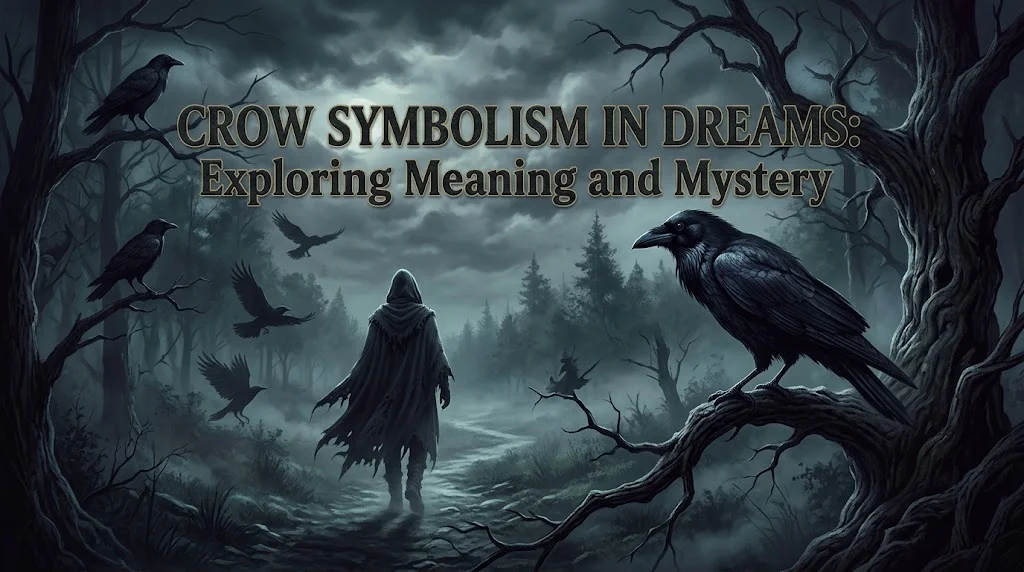
Dreams about crows can feel mysterious, especially when the bird appears repeatedly or behaves unusually. Different dream interpretations connect crows with awareness, uncertainty, change, and hidden emotions.
However, dreams don’t provide reliable predictions about future events.
Seeing a Crow in a Dream
A crow appearing in a dream may reflect curiosity, uncertainty, or an important personal transition.
Consider what was happening in your life when you experienced the dream. Your feelings may provide more useful context than the bird alone.
A Flying Crow
A flying crow can symbolize freedom, independence, and a desire for change.
It may reflect your wish to move beyond an uncomfortable situation or explore new possibilities.
A Black Crow
A black crow may represent mystery, fear, or something unfamiliar. However, black isn’t automatically a negative symbol.
It can also represent strength, protection, and the courage to face uncertainty.
A Group of Crows
Several crows appearing together may symbolize community, communication, and shared experiences.
In some folklore, groups of crows are connected with ominous events. However, this is a cultural interpretation rather than a prediction.
What Does a Crow at Your Window or House Mean?
A crow visiting your house can attract attention because people sometimes connect birds with spiritual messages and unusual events.
In folklore, a crow near a window may represent news, change, or a warning. Some spiritual interpretations also associate it with protection and awareness.
Crow at the Window
A crow sitting near a window may symbolize:
- A need to pay attention to your surroundings.
- Curiosity about an upcoming personal change.
- A reminder to examine your current decisions.
- An invitation to become more aware of your emotions.
Crow on the Roof
Some traditional superstitions connect a crow on the roof with family news or unexpected events.
However, crows commonly use rooftops as resting and observation points. Their presence doesn’t establish that something unusual will happen.
Crow Following You
Repeated encounters with the same crow can feel meaningful. Symbolically, some people interpret this experience as a reminder to remain observant.
In reality, crows can recognize familiar people and remember locations associated with food.
Meaning of One, Two, Three, or More Crows
The number of crows sometimes influences their meaning in folklore and modern spiritual interpretations. However, these interpretations aren’t consistent across cultures.
| Context | Meaning in the USA | Common Associations | Notes |
| One crow | Mystery and awareness | Independence, uncertainty | Sometimes considered an omen |
| Two crows | Partnership and balance | Connection, companionship | Often associated with good fortune |
| Three crows | Transformation | Growth, change, new beginnings | Interpretations vary |
| Four crows | Stability and structure | Family, foundations | Modern symbolic interpretation |
| Large group | Community and communication | Cooperation, collective energy | Often called a murder of crows |
These meanings are best understood as folklore and personal symbolism. There is no universal rule connecting crow numbers with specific future events.
Crow Symbolism in Tattoos, Art, and Modern Fashion
Crow imagery has become popular in tattoos, illustrations, clothing, jewelry, and home decoration. Its dark appearance and rich cultural background make it suitable for different artistic styles.
Crow Tattoo Meaning
A crow tattoo can communicate several personal values. Its meaning often depends on the design and the wearer’s experiences.
Common interpretations include:
- Wisdom: Appreciation for intelligence and knowledge.
- Transformation: Recognition of personal change.
- Independence: A desire to follow an individual path.
- Mystery: Interest in the unknown and unexplored.
- Resilience: Strength through difficult experiences.
- Remembrance: A personal connection with someone who has passed away.
Some people also choose crow tattoos because they admire the bird itself.
Crow in Art and Home Decor
Crows frequently appear in gothic artwork, nature photography, decorative prints, and seasonal displays.
In American homes, crow decorations are particularly popular during autumn and Halloween. Their dark feathers create a mysterious atmosphere that suits seasonal displays.
However, crow artwork can also communicate intelligence, nature appreciation, and personal individuality.
Crows on Social Media
On social media, crows often appear in videos, illustrations, photography, and symbolic posts.
People share their experiences with these birds because of their unusual intelligence and interesting behavior.
Their online image often combines humor, mystery, independence, and spiritual curiosity.
What Does a Dead Crow Symbolize?
Finding a dead crow can create strong emotions, especially for someone who connects birds with spiritual meanings. In symbolic traditions, a dead crow can represent endings, loss, transformation, and the closing of an important chapter.
Spiritual Interpretation of a Dead Crow
Some spiritual interpretations connect a dead crow with the end of an old situation. It may encourage reflection on experiences that no longer serve your personal growth.
Possible symbolic meanings include:
- Endings: Closing an important chapter of life.
- Renewal: Making room for new opportunities.
- Release: Letting go of emotional burdens.
- Reflection: Learning from past experiences.
- Acceptance: Understanding that change is part of life.
Is a Dead Crow a Bad Omen?
Some European and American folk beliefs associate dead crows with bad luck. However, this interpretation isn’t shared by everyone.
A dead crow is not evidence of an upcoming tragedy. It may simply reflect natural causes, illness, injury, or environmental conditions.
Crow vs. Raven: Symbolism and Differences
Crows and ravens belong to the same bird family, Corvidae. Because they share dark feathers and intelligent behavior, people often confuse their symbolic meanings.
However, they have different physical features and cultural associations.
Physical Differences
Crows are generally smaller, with relatively slender bills and fan-shaped tails. Ravens are larger, with heavier bills and wedge-shaped tails.
Ravens also have shaggy throat feathers that become noticeable when they call.
Symbolic Differences
| Feature | Crow | Raven |
| Intelligence | Cleverness and adaptability | Wisdom and knowledge |
| Spiritual meaning | Awareness and transformation | Mystery and prophecy |
| Cultural role | Trickster and messenger | Creator and messenger |
| Appearance | Smaller, slimmer body | Larger, heavier body |
| Common association | Community and curiosity | Solitude and mystery |
These distinctions are general patterns, not universal rules. Many cultures use crow and raven imagery in overlapping ways.
Negative Meanings, Misunderstandings, and Controversies
Crow symbolism isn’t always positive. Some traditions associate these birds with death, darkness, misfortune, or supernatural forces.
Understanding these interpretations requires separating folklore from real-world behavior.
Why Are Crows Associated With Death?
Crows are scavengers and sometimes feed on dead animals. Historically, people also noticed them around battlefields and burial grounds.
Their black feathers and loud calls strengthened these associations. Over generations, stories connected their presence with death and misfortune.
However, these associations don’t mean crows cause or predict death.
Are Crows Evil or Dangerous?
Crows aren’t inherently evil or dangerous. They’re intelligent wild animals that usually avoid unnecessary contact with humans.
They may become defensive when protecting their nests or young. This behavior is a natural response rather than evidence of aggression or supernatural activity.
Cultural Misuse and Stereotypes
Crow imagery sometimes appears in horror stories as a symbol of evil or dark magic. These portrayals are artistic choices, not universal cultural beliefs.
There is also an important distinction between Indigenous cultural traditions and generic spiritual merchandise. Raven and Crow figures can carry specific cultural and community meanings.
Using these figures without understanding their origins can oversimplify meaningful traditions. Respectful interpretation begins with recognizing each community’s distinct stories.
Life Lessons We Can Learn From Crows
Beyond mythology and spiritual beliefs, crows offer interesting lessons through their natural behavior. Their intelligence, social connections, and ability to survive in changing environments provide useful inspiration.
Adapt to Changing Situations
Crows live in forests, farms, coastal areas, and busy American cities. They adjust their feeding habits and behavior to different surroundings.
Their adaptability offers a simple lesson: flexibility helps you respond to life’s unexpected challenges.
Use Intelligence Before Acting
Crows observe their surroundings and solve problems to find food. Some even use tools to reach difficult places.
This behavior encourages thoughtful decisions rather than unnecessary reactions.
Value Community and Cooperation
American crows often live in family groups. Parents and their offspring may cooperate while raising young.
Their social behavior highlights the importance of support, communication, and shared responsibility.
Don’t Fear Every Ending
Crow symbolism sometimes connects darkness with transformation. This offers another way to understand difficult experiences.
An ending doesn’t always represent failure. Sometimes, it creates room for learning and a fresh beginning.
How Crow Symbolism Has Changed Over Time
The crow’s symbolic identity has never remained fixed. Different societies have interpreted its appearance according to their beliefs, environments, and storytelling traditions.
From Ancient Messenger to Ominous Bird
Ancient traditions often connected crows and ravens with gods, knowledge, and prophecy. Later European folklore emphasized their association with death and misfortune.
Religious stories, literature, and supernatural tales helped strengthen these darker interpretations.
The Modern Appreciation of Crows
Today, many Americans admire crows for their intelligence and unusual social behavior.
Wildlife photography, nature documentaries, and scientific research have also encouraged people to understand these birds beyond superstition.
Modern symbolism increasingly embraces both sides of their identity:
- Darkness alongside creativity and renewal.
- Mystery alongside intelligence and observation.
- Independence alongside family connections.
- Death symbolism alongside transformation.
- Ancient folklore alongside scientific curiosity.
As a result, the crow remains a flexible symbol that connects traditional stories with modern experiences.
FAQs About Crow Symbolism
1. What does a crow symbolize spiritually?
A crow spiritually symbolizes wisdom, transformation, intuition, and mystery. Many traditions view it as a messenger that brings guidance and encourages self-awareness.
2. Are crows considered good or bad omens?
Crows are not always considered bad omens. Some cultures associate them with death and misfortune, while others connect them with protection, intelligence, and positive change.
3. What does seeing a crow mean?
Seeing a crow may symbolize change, awareness, wisdom, or a new beginning. Its meaning often depends on personal beliefs and cultural traditions.
4. What do crows represent in different cultures?
Crows have different meanings across cultures. They appear as symbols of creation, prophecy, protection, death, and spiritual guidance in various traditions.
5. What does a crow symbolize in dreams?
A crow in a dream may represent hidden thoughts, intuition, transformation, or uncertainty. The dream’s setting and your emotions can influence its interpretation.
6. Why are crows associated with intelligence and mystery?
Crows are known for their problem-solving skills, memory, and ability to adapt. Their dark feathers, unusual calls, and clever behavior also contribute to their mysterious image.
Conclusion
Crow symbolism carries powerful meanings connected to wisdom, mystery, intelligence, and transformation. Across cultures and spiritual traditions, crows represent messengers, protectors, and guides. Their connection with life, death, and change makes them meaningful symbols in folklore, literature, dreams, art, and tattoos.
Beyond their mysterious reputation, crows teach valuable life lessons about adaptability, awareness, intuition, and personal growth. They remind us to welcome change, trust our observations, and remain open to new experiences. Whether you see a crow as a spiritual sign or simply admire its intelligence, this fascinating bird offers plenty of reasons to look deeper into its meaning.

Sophia Wilson is a spiritual content writer and researcher at SoulMeanings.com, specializing in dream meanings, symbolism, spiritual insights, and personal growth topics that help readers navigate life’s journey with greater understanding.