
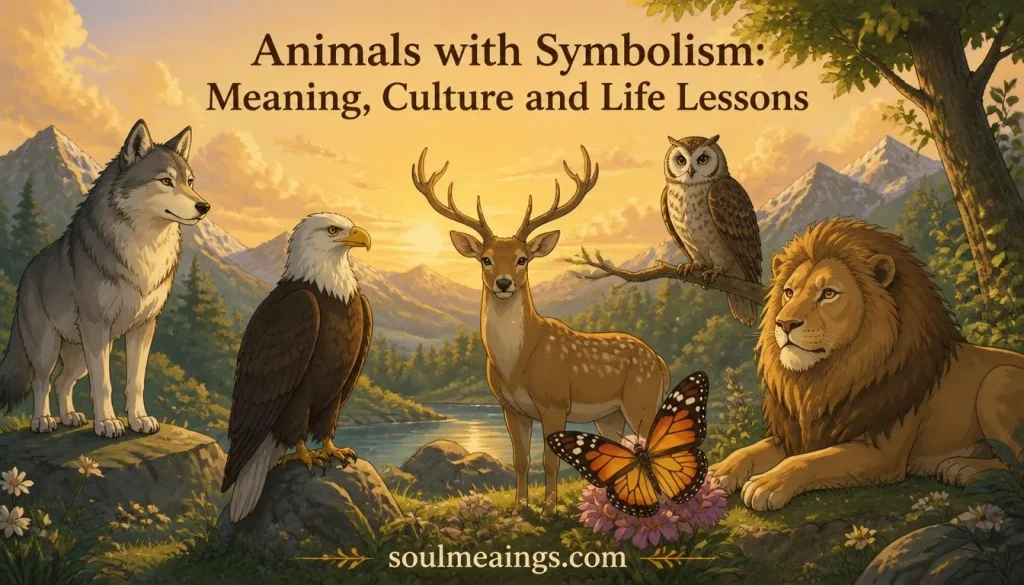
Animals with Symbolism: Meaning, Culture and Life Lessons explores how animals represent human values, cultural beliefs, spiritual meanings, and identity.
Throughout human history, animals have symbolized important qualities, emotions, and life lessons. Across different cultures, the lion represents strength, courage, and power, while the owl symbolizes wisdom and awareness.
These animal symbols appear in literature, art, and spirituality, offering guidance through cultural traditions and spiritual beliefs. Animals also serve as totems, guides, and reminders of life’s lessons.
Today, animal symbolism remains popular in dream interpretation, tattoos, and personal development. Exploring the human-animal bond can encourage self-awareness, personal growth, and a deeper connection with nature.
Quick Answer
In American culture, animals with symbolism commonly represent strength, freedom, wisdom, loyalty, protection, and personal transformation. Their meanings also reflect spiritual beliefs, cultural traditions, emotions, and lessons from nature.
TL;DR
- Lions commonly represent courage, leadership, and personal strength.
- Eagles symbolize freedom, vision, and American national identity.
- Butterflies represent transformation, renewal, and new beginnings.
- Owls are widely associated with wisdom, knowledge, and observation.
- Wolves often symbolize loyalty, instinct, and community.
- Animal tattoos express identity, personal values, and meaningful experiences.
What Do Animals Symbolize?
Animals are powerful symbols because their natural behaviors remind us of human experiences. Their movements, survival skills, relationships, and physical features inspire different interpretations. However, an animal’s meaning often depends on its surroundings and cultural background.
Common Symbolic Meanings
Some animals have become familiar symbols in American stories, artwork, and everyday language.
- Strength: Lions, bears, bulls, and elephants suggest courage and power.
- Wisdom: Owls, ravens, and elephants connect with knowledge and experience.
- Freedom: Eagles, horses, and wild birds represent independence.
- Loyalty: Dogs, wolves, and horses suggest trust and companionship.
- Transformation: Butterflies, snakes, and frogs represent change and renewal.
- Protection: Bears, dogs, and lions can represent safety and guardianship.
These associations aren’t universal rules. Instead, they offer starting points for understanding animal imagery.
How Animal Appearance Influences Meaning
An animal’s physical appearance can influence its symbolic interpretation. A creature’s size, color, posture, and natural environment all contribute.
For example, an eagle flying above mountains suggests freedom and a wider perspective. Meanwhile, a turtle carrying its shell may represent patience, security, and self-protection.
Context also matters. A snake appearing in a healing emblem carries a different meaning from one appearing in a frightening story.
Popular Animals and Their Symbolic Meanings
Different animals communicate different ideas through their natural characteristics. In the United States, many familiar creatures appear in books, films, artwork, and personal designs.
Animal Symbolism at a Glance
| Animal | Common Symbolic Meaning | Common Associations | Life Lesson |
| Lion | Courage and leadership | Strength, confidence | Face challenges bravely |
| Eagle | Freedom and vision | Independence, patriotism | Look beyond limitations |
| Wolf | Loyalty and instinct | Family, teamwork | Value meaningful relationships |
| Butterfly | Transformation | Renewal, hope | Welcome personal growth |
| Owl | Wisdom | Knowledge, observation | Think before acting |
| Deer | Gentleness | Peace, sensitivity | Practice compassion |
| Bear | Strength and protection | Confidence, resilience | Respect your boundaries |
| Snake | Renewal and change | Healing, danger | Accept life’s transitions |
| Horse | Freedom and endurance | Movement, independence | Keep moving forward |
| Elephant | Memory and wisdom | Family, patience | Learn from experience |
| Fox | Cleverness | Adaptability, awareness | Use intelligence carefully |
| Dove | Peace and hope | Love, reconciliation | Choose understanding |
Lions, Eagles, and Wolves
Lions often represent courage, authority, and leadership. Their powerful appearance makes them familiar symbols of confidence.
Eagles represent freedom, vision, and independence. Their ability to soar high makes them especially meaningful in American national imagery.
Wolves often symbolize loyalty, instinct, and cooperation. Their social behavior inspires stories about family and community.
Butterflies, Owls, and Deer
Butterflies are widely associated with transformation. Their life cycle makes them natural symbols of personal development.
Owls commonly represent wisdom and observation. Their nighttime activity also connects them with mystery.
Deer often symbolize gentleness, sensitivity, and peaceful living. Their alert movements can also suggest awareness and caution.
Historical Origins of Animal Symbolism
Animal symbolism developed long before modern books, movies, and social media. Early communities observed animals closely because their survival often depended on understanding nature.
Ancient Civilizations and Animal Images
Ancient civilizations used animal images in religious objects, architecture, jewelry, and storytelling. These images often represented divine qualities, fertility, protection, and political authority.
In ancient Egypt, animals played important roles in religious life. Cats were associated with Bastet, while falcons represented Horus. Anubis appeared with jackal-like features and connections to burial practices.
Animal mummification also formed part of Egyptian religious traditions. Some animals were preserved as offerings connected with particular deities.
Ancient Greece and Rome
Ancient Greek mythology connected animals with gods and goddesses. These relationships helped communicate divine qualities through familiar creatures.
For example:
- Athena was associated with the owl and wisdom.
- Artemis was connected with deer and wild nature.
- Zeus was frequently associated with the eagle.
- Hera was connected with the peacock.
Roman culture also used animal imagery in military standards, public monuments, coins, and political art.
Animals in Ancient Art
Across the ancient Near East, artists represented animals through sculptures, pottery, and carved objects. Lions and bulls frequently communicated power and authority.
Meanwhile, domestic animals could represent fertility, abundance, and protection. These images helped people express ideas through recognizable features of nature.
Animal Symbolism in American Culture
Animal symbolism has a special place in the United States. Animals appear in national emblems, state identities, sports, literature, and popular entertainment.
The Bald Eagle and American Freedom
The bald eagle is among America’s most recognizable national symbols. It represents independence, strength, courage, and freedom.
In 1782, the eagle became part of the Great Seal of the United States. Its image later appeared on government buildings, military insignia, currency, and official documents.
In December 2024, Congress formally designated the bald eagle as the national bird. This recognition strengthened its official place in American identity.
The American Bison and National Heritage
The American bison represents strength, endurance, and the natural heritage of North America.
It became the United States national mammal in 2016. Historically, bison supported the food systems, economies, and cultural traditions of many Indigenous communities.
Their near disappearance during the nineteenth century also reflects a painful period of American expansion. Today, bison restoration represents conservation and renewed attention to ecological history.
Animals in American Everyday Life
Animal imagery also influences ordinary American experiences.
- State emblems use animals to express regional identity.
- Sports teams use animal mascots to suggest energy and strength.
- Children’s stories teach values through animal characters.
- Wildlife conservation campaigns connect animals with environmental responsibility.
- Holidays and seasonal decorations feature animals with familiar cultural meanings.
Consequently, animals remain meaningful parts of American storytelling and national identity.
read more: Dreaming of Spiders: Symbolism, Meaning and Life Lessons
Spiritual and Cross-Cultural Meanings of Animals
Animals carry spiritual meanings in many cultures and religious traditions. However, interpretations can differ greatly between communities. The same creature may represent protection in one tradition and danger in another.
Animal Symbolism in Indigenous Traditions
Many Indigenous communities maintain deep relationships with animals. These connections appear in creation stories, family histories, ceremonies, art, and traditional knowledge.
Some communities associate particular animals with clans, kinship, and community responsibilities. However, these traditions aren’t interchangeable.
Therefore, it’s important to respect tribal differences and avoid treating Indigenous traditions as one shared belief system.
Animals in Christianity
Animals appear throughout Christian scripture, artwork, and religious teaching. Their meanings often depend on the passage or religious setting.
Common examples include:
- Lamb: Innocence, sacrifice, and Jesus Christ.
- Dove: Peace, the Holy Spirit, and hope.
- Lion: Strength, kingship, and courage.
- Serpent: Temptation, deception, and sometimes wisdom.
- Fish: Faith, discipleship, and Christian identity.
These images have influenced churches, paintings, jewelry, and religious decorations.
Animal Meanings in Asian Traditions
Animals also carry important meanings across Asian cultures.
In many Chinese traditions, the dragon represents power, good fortune, and authority. The tiger can represent courage and protection, while the crane is associated with longevity.
In Buddhist traditions, elephants can symbolize mental strength and endurance. Some Buddhist teachings also emphasize compassion toward living creatures.
However, these meanings vary across regions and religious communities.
Emotional and Psychological Meanings of Animals
People often connect animals with feelings, memories, and personal experiences. Sometimes, an animal becomes meaningful because of its natural behavior. Other times, its importance comes from a childhood memory or cultural story.
Animals as Reflections of Personality
People may choose animals to express qualities they admire or recognize within themselves.
For example:
- A wolf may represent independence and loyalty.
- A butterfly may reflect personal growth.
- An eagle may express ambition and freedom.
- A bear may communicate confidence and protection.
- A deer may represent kindness and sensitivity.
These associations are personal interpretations, not scientific personality assessments.
Why People Feel Connected to Animals
Humans develop emotional connections with animals through different experiences. Pets, wildlife encounters, childhood stories, and nature experiences can create lasting memories.
For example, someone who grew up with dogs may associate them with unconditional companionship. Another person might admire horses because they represent independence and movement.
Animals can also help people express emotions that are difficult to explain directly.
Lessons We Can Learn From Nature
Animal behavior offers useful ideas for personal reflection.
- Bees demonstrate cooperation and shared responsibility.
- Ants show the value of preparation and teamwork.
- Turtles remind us that progress doesn’t require constant speed.
- Birds encourage independence and exploration.
- Elephants highlight the importance of social bonds.
These examples aren’t instructions from nature. Instead, they’re meaningful ways to reflect on everyday human experiences.
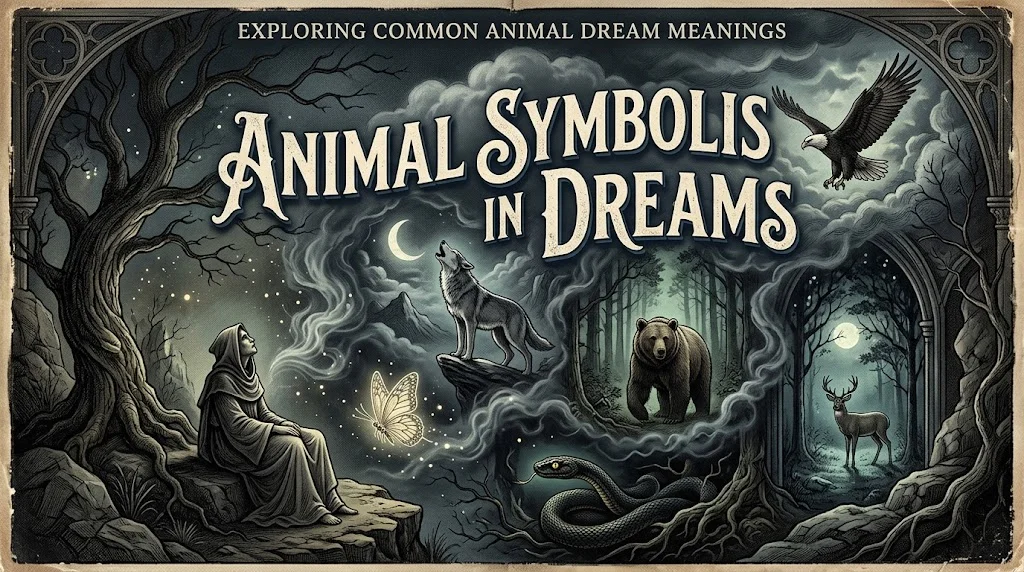
Animal Symbolism in Dreams
Dreams involving animals can feel powerful because creatures often carry strong emotional associations. Their meaning may depend on the animal, its behavior, and the dreamer’s feelings.
Common Animal Dream Meanings
Some familiar interpretations include:
- Dreaming of a snake: Change, fear, hidden concerns, or renewal.
- Dreaming of a wolf: Loyalty, independence, or personal instincts.
- Dreaming of a butterfly: Transformation and emotional growth.
- Dreaming of an eagle: Freedom, ambition, or a wider perspective.
- Dreaming of a bear: Protection, strength, or confronting challenges.
- Dreaming of a deer: Gentleness, vulnerability, or peaceful relationships.
These interpretations aren’t fixed predictions. Personal memories and experiences can influence dream imagery.
Why Animal Dreams Feel Meaningful
An animal in a dream may remind someone of a relationship, challenge, or personal quality.
For example, dreaming about a frightened deer might reflect feelings of vulnerability. However, it could simply connect with a recent wildlife encounter.
Instead of assuming every dream carries a spiritual message, consider its emotional context.
Animals in Tattoos, Art, and Modern Lifestyle
Animal imagery remains popular in American fashion, tattoos, artwork, and home decoration. People often select particular creatures because their meanings reflect personal values.
Popular Animal Tattoos and Their Meanings
Animal tattoos can communicate identity, memories, personal beliefs, and important life experiences.
Some popular choices include:
- Lion tattoos: Courage, leadership, and inner strength.
- Wolf tattoos: Loyalty, family, and independence.
- Butterfly tattoos: Transformation and fresh beginnings.
- Eagle tattoos: Freedom, patriotism, and ambition.
- Snake tattoos: Renewal, resilience, and personal change.
- Deer tattoos: Gentleness, spirituality, and connection with nature.
However, tattoo meanings aren’t universal. The same design can carry different stories for different people.
Animals in Home Decor and Fashion
Animal designs frequently appear in American homes and clothing. Wildlife paintings, decorative sculptures, printed fabrics, and nature-inspired accessories add personality to living spaces.
For example, an eagle painting may suggest freedom and national pride. Meanwhile, butterfly decorations can create a peaceful atmosphere associated with renewal.
Animal patterns also appear in jewelry, handbags, clothing, and personalized gifts.
Animals on Social Media
Animals have become familiar images in digital communication.
People use animal photographs, illustrations, stickers, and emojis to communicate moods and reactions. A lion emoji might express confidence, while a butterfly can suggest growth.
Likewise, animal videos and wildlife photographs often inspire conversations about nature, humor, and conservation.
Misunderstandings and Controversies in Animal Symbolism
Animal meanings can become confusing when people treat cultural interpretations as universal facts. Understanding the background helps prevent misunderstandings.
One Animal Can Have Different Meanings
A snake is a good example of changing symbolism. In some traditions, snakes represent healing, renewal, and life. In others, they symbolize temptation, danger, or deception.
Similarly, wolves can represent loyalty and community or fear and aggression. Their meaning depends on the story and cultural setting.
Cultural Appropriation and Sacred Imagery
Some animal symbols have specific meanings within Indigenous communities and other cultural traditions. Copying sacred designs without understanding their origins can cause offense.
For example, traditional clan imagery and ceremonial animal designs may carry responsibilities beyond decoration.
Respectful appreciation involves learning about the source and avoiding the misuse of protected cultural expressions.
Separating Symbolism From Superstition
Some people believe seeing a particular animal carries a spiritual message. Others understand these encounters through nature, coincidence, or personal memory.
Neither interpretation needs to be presented as a proven fact. It’s helpful to distinguish cultural beliefs from scientific explanations.
Animal symbolism becomes more meaningful when people approach it with curiosity and respect.
How Animal Meanings Have Changed Over Time
Animal symbolism has never remained completely fixed. Historical events, religious traditions, literature, and popular culture continue to influence how people understand creatures.
From Ancient Beliefs to Modern Interpretations
In ancient societies, animals frequently appeared in religious ceremonies and royal imagery. Their physical abilities made them powerful representations of divine qualities and political authority.
During later historical periods, animals became common in heraldry, literature, and national emblems.
Today, people also use animals to communicate personal identity, environmental concerns, and emotional experiences.
The Influence of Books and Popular Culture
American books, films, cartoons, and television have shaped animal meanings.
For example, wolves frequently appear as characters representing loyalty, danger, or independence. Lions often become symbols of leadership, while owls serve as wise guides.
However, fictional portrayals can simplify real animal behavior. A wolf isn’t naturally evil, and an owl isn’t automatically wise.
Conservation and Changing Attitudes
Modern conservation movements have also influenced animal symbolism.
Endangered species can represent environmental responsibility and the need to protect natural habitats. The recovery of the bald eagle offers an important American example.
Today, animal imagery can communicate both personal values and wider environmental concerns.
How to Understand the Meaning of an Animal You Encounter
Seeing an animal in nature can create a memorable experience. Some people interpret these encounters spiritually, while others simply appreciate the beauty of wildlife.
Consider the Animal’s Behavior
Start by observing what the animal was doing. Its behavior may offer a useful starting point for personal reflection.
For example, a bird flying freely might remind you of independence. A resting bear could bring thoughts of patience, strength, or personal boundaries.
Connect the Encounter With Your Experiences
Consider these questions:
- What feelings did the animal create?
- Did it remind you of someone or something?
- What qualities do you associate with that creature?
- Does its behavior connect with something happening in your life?
These questions can help you explore personal meaning without assuming every encounter predicts something.
Respect the Natural Animal
Animals have real ecological roles beyond their symbolic meanings. Their survival, habitats, and behaviors deserve attention and respect.
Understanding both their natural importance and cultural significance creates a deeper appreciation of wildlife.
FAQs
What do animals symbolize?
Animals symbolize different human qualities, including strength, courage, wisdom, freedom, and loyalty. Their meanings often depend on cultural and spiritual beliefs.
Why are animals important in symbolism?
Animals help people express emotions, values, and life lessons. They also represent the connection between humans and nature.
Which animals symbolize strength and wisdom?
The lion commonly represents strength, courage, and leadership. The owl is widely associated with wisdom, knowledge, and awareness.
What is the spiritual meaning of animals?
Spiritually, animals can represent guidance, protection, transformation, and personal growth. Their meanings vary across different traditions and beliefs.
What do animals symbolize in dreams?
Animals in dreams may reflect personal emotions, instincts, fears, or life experiences. Their meanings often depend on the animal and the dream’s context.
Why are animal tattoos meaningful?
Animal tattoos often express personal identity, strength, freedom, loyalty, and spiritual connection. People choose them to represent qualities or experiences that matter to them.
Conclusion
Animals with Symbolism: Meaning, Culture and Life Lessons reveal the deep connection between humans, nature, and culture. From the lion’s strength to the owl’s wisdom, animals represent powerful qualities, spiritual beliefs, and meaningful life lessons. Their symbolism continues through art, dreams, tattoos, and cultural traditions. Understanding these meanings encourages self-awareness, personal growth, and appreciation of the natural world. Ultimately, animals remind us of our shared connection with nature and the values that shape human life.

Evelyn Thomas is the voice behind SoulMeanings.com, sharing thoughtful articles on spirituality, dream interpretation, symbolism, and self-discovery to inspire meaningful living.

Pingback: Crow Symbolism: Spiritual Meaning, Mystery & Life Lessons