
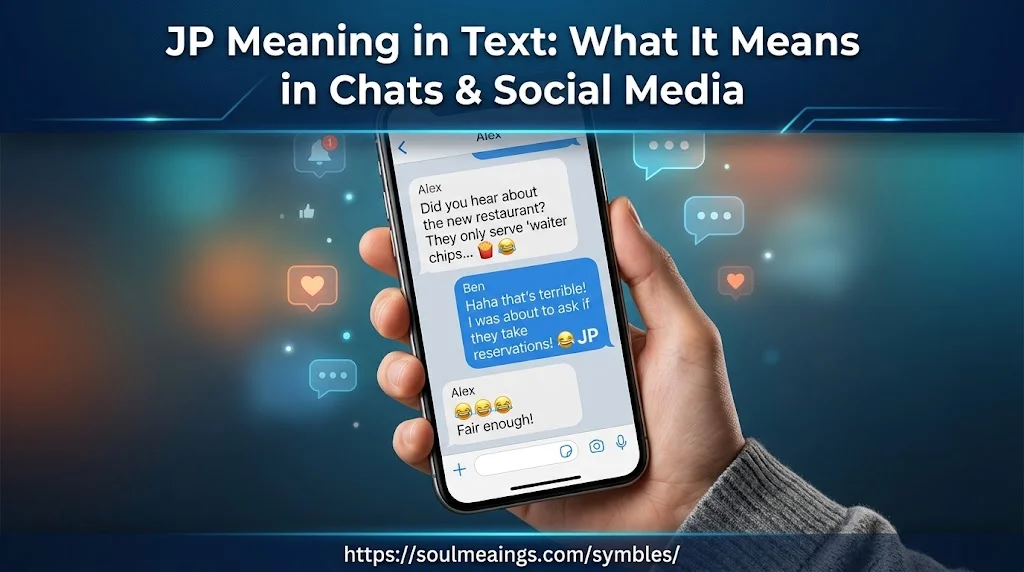
In the fast-paced digital world, JP meaning in text depends on context, platform, and how people communicate online; JP often means Just Playing.
Users use short forms, slang, and abbreviations in chats across WhatsApp, Instagram, TikTok, and Snapchat, especially during casual conversations. When someone uses JP, it can show joking or teasing, rather than something serious that people should take seriously.
For example, a person might say they are buying dinner for everyone tonight, then add JP after mentioning they will pay. This shows they were joking around. Understanding the complete message makes the meaning easy and clear, helping people respond correctly.
This practical guide explains exactly how the short form appears in daily texting abbreviations and ordinary online exchanges.
However, JP can have multiple meanings, so the surrounding message still matters. The initials may refer to Japan or something other than Just Playing, depending on the platform, message, and situation.
People often use JP to shorten phrases, communicate quickly, and make messages faster in gaming chats, comments, and casual online conversations. Someone searching for JP means in text may also wonder about its romantic meaning, but the sender’s use of JP and the relationship between the people usually provide the answer.
Quick Answer: What Does JP Mean in Text?
JP usually means “Just Playing” in casual texts, chats, and social media conversations. It tells someone that a previous statement was meant as teasing, joking, or playful banter.
For example:
“You’re the worst teammate ever. JP 😂”
Here, the sender isn’t seriously attacking the other person. They are signaling that the criticism was playful.
Quick facts about JP:
- JP: Just Playing
- Main use: Casual texting and online conversations
- Tone: Playful, teasing, joking, or lighthearted
- Similar expression: JK, meaning “Just Kidding”
- Context matters: JP can have other meanings
- Formal use: JP can mean “Justice of the Peace”
- Geographic use: JP can refer to Japan or Japanese in certain contexts
What Does JP Mean in Text?
In everyday messaging, JP means “Just Playing.” It works as a quick way to tell someone that a statement wasn’t intended literally.
Imagine a friend texts, “I’m never speaking to you again.” A few seconds later, they add “JP 😂.” The second message changes how you should read the first one.
Rather than taking the statement at face value, you can understand it as playful exaggeration.
People commonly use JP after:
- A teasing comment
- A sarcastic remark
- An exaggerated statement
- A playful insult
- A fake complaint
- A deliberately dramatic reaction
- A joke that could otherwise sound serious
The abbreviation saves time while keeping the conversation casual.
What Does “Just Playing” Mean?
“Just Playing” means the person wasn’t being fully serious. They’re essentially saying, “I’m joking around with you.”
It can resemble saying:
- “I’m only kidding.”
- “I’m joking.”
- “I’m messing with you.”
- “Don’t take that seriously.”
- “I was teasing you.”
Still, JP doesn’t automatically make every comment harmless. If someone says something genuinely offensive and then adds “JP,” the recipient can still feel uncomfortable.
That distinction matters because intent and impact aren’t always identical.
How Is JP Used in Text Messages?
JP usually appears after the statement it explains. It acts almost like a small tone marker.
For example:
“You owe me $500 for that terrible advice. JP 😂”
Without JP, the message could sound like a real demand. With JP, the sender signals that they’re exaggerating for humor.
Sometimes the sender puts JP after several messages instead of immediately after the joke. That can make the conversation harder to interpret.
JP at the End of a Message
This is one of the clearest uses.
“I’m deleting your number. JP.”
The sender is signaling that the dramatic statement wasn’t literal.
JP After Teasing
Friends often use JP when teasing each other.
“You really thought you could beat me at chess. JP 😭”
The phrase works because the surrounding conversation already establishes playful competition.
JP With Emojis
Emojis can reinforce the intended tone.
Common companions include:
- 😂 for laughter
- 😭 for exaggerated amusement
- 😅 for awkward humor
- 😜 for playful teasing
- 🤣 for strong laughter
However, JP doesn’t require an emoji. The surrounding conversation can provide enough context.
JP Meaning in Different Chat Situations
The same two letters can mean different things depending on the topic.
| Context | Likely Meaning | Example |
| Friends teasing each other | Just Playing | “You’re buying dinner tonight. JP 😂” |
| Sarcastic conversation | Just Playing | “Nice job being five minutes late. JP.” |
| Gaming discussion | Japan/Japanese | “Choose the JP server.” |
| Talking about a person | Initials | “Ask JP about the meeting.” |
| Legal or official setting | Justice of the Peace | “The JP conducted the ceremony.” |
This is why dictionary-style definitions don’t always settle slang questions.
Context acts like a decoder.
If the conversation revolves around jokes, JP probably means “Just Playing.” If you’re discussing gaming servers, JP may point toward Japan or Japanese.
What Does JP Mean on Social Media?
On social media, JP can also mean “Just Playing” when someone uses it after a joke or teasing comment.
The abbreviation can appear in:
- Comments
- Replies
- Direct messages
- Group chats
- Gaming communities
- Social posts
- Informal online conversations
Social media creates one extra challenge: you often don’t know the relationship between the people talking.
A comment that sounds playful between close friends might sound rude between strangers. Therefore, JP may clarify the sender’s intent without completely explaining the emotional tone.
JP in Comments
Consider this comment:
“You really call that cooking? JP 😂”
The commenter likely intends playful criticism.
JP in Direct Messages
A private conversation might look like this:
A: “I’m blocking you for stealing my fries.”
B: “JP, you’re dramatic.”
Here, the context makes the humor obvious.
JP in Group Chats
Group chats can make JP especially useful. Several people may already understand an inside joke that would confuse an outsider.
For example:
“Mike is officially banned from choosing the restaurant. JP.”
Everyone who knows what happened understands the joke.
JP vs. JK, LOL, and Other Texting Abbreviations
JP sometimes gets confused with other internet abbreviations. Although some serve similar purposes, they aren’t interchangeable in every situation.
| Abbreviation | Full Meaning | What It Usually Signals |
| JP | Just Playing | Playful teasing or joking |
| JK | Just Kidding | A statement wasn’t serious |
| LOL | Laughing Out Loud | Amusement or laughter |
| LMAO | Laughing My Ass Off | Strong amusement |
| IDK | I Don’t Know | Uncertainty or lack of knowledge |
The biggest distinction is between JP and JK.
Both can tell someone not to interpret a statement literally. Yet “Just Playing” often carries a slightly more playful or teasing feel.
For example:
“I’m taking your last slice. JP.”
This sounds like playful banter.
Meanwhile:
“I actually won the lottery. JK.”
The second example directly signals that the statement was false.
Is JP the Same as JK?
JP and JK overlap, but they aren’t exactly the same phrase.
“Just Kidding” focuses on the fact that someone made a joke. “Just Playing” can emphasize that the person was messing around or teasing.
Think of them as close cousins rather than identical twins.
When JP Fits Better
“You’re terrible at this game. JP 😂”
The sender is playfully teasing someone.
When JK Fits Better
“I’m moving to Antarctica tomorrow. JK.”
The speaker is clearly retracting an intentionally false statement.
In casual online conversation, people may understand either abbreviation. Still, the exact tone depends on the speaker and situation.
Other Meanings of JP
Although “Just Playing” is the key slang meaning in casual texting, JP has several legitimate uses elsewhere.
JP Meaning Japan or Japanese
In some online communities, JP can refer to Japan or Japanese.
This is especially common when discussing:
- Japanese servers
- Japanese games
- Japanese players
- Regional releases
- Japanese-language content
- Country-specific versions
For example:
“The JP server gets the update next week.”
Here, “Just Playing” makes no sense. The gaming context points toward Japan or a Japanese region.
JP Meaning Justice of the Peace
In legal and civic contexts, JP can stand for “Justice of the Peace.”
A Justice of the Peace is a public official whose duties vary by jurisdiction. Depending on the location, those duties can involve witnessing documents, performing certain ceremonies, or handling specific judicial or administrative matters.
This meaning has little connection with internet slang.
If someone writes “JP” in an official document, legal discussion, or civic context, don’t automatically interpret it as “Just Playing.”
JP as Someone’s Initials
JP can simply be someone’s initials.
For example:
“JP said he’ll join us later.”
Here, JP might represent a person’s first and last names.
This is especially likely when the abbreviation appears as a person’s name rather than after a joke.
Context-Specific Uses
Companies, games, communities, organizations, and technical systems may also use JP as an abbreviation.
That doesn’t mean every possible expansion belongs in a texting dictionary. The surrounding subject should determine the interpretation.
related post: KMSL Meaning in Text: Full Form and Usage
How to Tell Which JP Meaning Someone Intended
When JP appears in a message, don’t decode the letters in isolation. Instead, examine the conversation as a whole.
Use these clues:
- Read the sentence before JP.
A joke or exaggerated statement strongly supports “Just Playing.” - Check the conversation topic.
Gaming, travel, or Japanese culture may point toward Japan or Japanese. - Look at the relationship.
Close friends often use slang and playful teasing more freely. - Notice nearby emojis.
Laughing or playful emojis can support a joking interpretation. - Consider whether JP follows a serious claim.
The sender may be clarifying that they weren’t serious. - Look for a person’s name.
If JP refers to someone directly, initials may be more likely. - Consider the setting.
A formal document calls for a completely different interpretation.
A Simple Context Test
Ask yourself:
“What was the person talking about immediately before they wrote JP?”
That single question often solves the mystery.
If they were teasing you, Just Playing probably fits. If they were discussing Japanese servers, another meaning makes more sense.
How to Respond When Someone Says JP
Your response should match the tone of the conversation.
If you understand the joke, you can simply play along.
“Haha, I knew you were joking.”
Or:
“You almost had me 😂”
If you’re genuinely confused, asking is perfectly reasonable.
“Wait, what do you mean by JP?”
Sometimes clarification beats guessing. Two letters aren’t worth turning a simple conversation into a misunderstanding.
If the Comment Felt Too Harsh
Don’t assume “JP” automatically cancels the previous statement.
Someone might say:
“You’re seriously annoying. JP.”
If that comment bothered you, you can say so. The abbreviation communicates the sender’s claimed intent, but it doesn’t dictate how you must feel about the message.
Can JP Sound Rude or Sarcastic?
JP itself isn’t inherently rude. The tone comes from the statement, relationship, and surrounding conversation.
Compare these two examples:
“You’re such a slow gamer. JP 😂”
This likely sounds friendly between gaming friends.
Now consider:
“Nobody likes you. JP.”
Adding JP doesn’t necessarily make that statement feel playful.
Text removes many vocal cues that people use in face-to-face conversations. Without facial expressions or voice tone, sarcasm can become slippery.
That’s why context matters so much.
When Should You Use JP?
JP works best in informal conversations where the other person understands casual slang.
Good situations include:
- Friendly group chats
- Casual texting
- Gaming conversations
- Playful social-media replies
- Conversations with people who already know your humor
However, avoid relying on JP when clarity is important.
Situations Where Plain Language Works Better
You may want to avoid JP in:
- Workplace communication
- Formal messages
- Serious disagreements
- Important instructions
- Sensitive conversations
- Messages involving unfamiliar people
If someone could reasonably misunderstand the statement, saying “I’m joking” may be clearer than using two letters.
JP Text Examples You Can Actually Understand
Realistic examples make the meaning much easier to recognize.
Example 1: Friendly Teasing
A: “You’re definitely losing this game.”
B: “JP 😂”
The sender uses JP to show the comment wasn’t meant seriously.
Example 2: Playful Complaint
A: “You ate my fries. I’m never forgiving you.”
B: “JP 😭”
The dramatic statement is playful rather than literal.
Example 3: Sarcasm
A: “Nice of you to arrive on time.”
B: “JP, I’m only two minutes late.”
Here, JP signals sarcastic teasing.
Example 4: Exaggeration
“I’m deleting every app because of this update. JP.”
The dramatic statement is meant humorously.
Example 5: Gaming Context
“Which server are you playing on?”
“JP.”
Here, Japan/Japanese may make more sense than “Just Playing.”
Example 6: Initials
“JP will send the file tonight.”
In this context, JP may simply identify a person.
Example 7: Formal Context
“The JP witnessed the document.”
Here, Justice of the Peace may be the intended meaning.
These examples show why the same abbreviation doesn’t have one universal definition.
Common Mistakes When Interpreting JP
A few habits can lead to unnecessary confusion.
Assuming JP Always Means “Just Playing”
This is the biggest mistake. Casual texting strongly favors that meaning, but context can change it.
Ignoring the Previous Message
JP often modifies something that came immediately before it. Read backward before deciding what it means.
Treating JP as Automatically Friendly
A sender may intend humor, yet the wording can still feel inappropriate or hurtful.
Confusing JP With JK
The abbreviations overlap, but “Just Playing” and “Just Kidding” aren’t identical expressions.
Overanalyzing Capitalization
“JP” and “jp” don’t necessarily represent different meanings. Typing habits vary widely between users.
Forgetting the Conversation Topic
A gaming discussion, legal document, and friendly text can use the same letters differently.
Is JP Still Common in Texting and Social Media?
JP remains understandable as casual internet slang, but usage isn’t universal.
Texting language changes quickly. Different age groups, friend circles, gaming communities, and social platforms develop their own habits.
Some people prefer JK because “Just Kidding” is more widely recognized. Others use “just joking,” “lol,” or an emoji instead.
That variation means you shouldn’t treat JP as a mandatory or universal texting abbreviation.
A better approach is simple: interpret the message from context rather than from the abbreviation alone.
Why Context Matters More Than the Abbreviation
Short forms remove information. A phrase such as “I’m just playing” contains more linguistic detail than “JP.”
That means the reader has to reconstruct the intended tone from other clues.
Think of JP as a road sign. The sign gives you a direction, but the surrounding road tells you where you’re actually going.
If someone says:
“You’re buying dinner. JP 😂”
the playful meaning is fairly obvious.
But if someone simply writes:
“JP”
you may not have enough information.
In that situation, asking for clarification is more reliable than guessing.
Final Takeaway
The most common JP meaning in text is “Just Playing.” In casual chats and social media conversations, people use it to show that they’re joking, teasing, or exaggerating.
Still, JP isn’t locked to one definition. It can also refer to Japan, Japanese, a person’s initials, or Justice of the Peace depending on the setting.
The safest way to interpret it is to read the entire conversation. Two letters may be short, but context does the heavy lifting.
Frequently Asked Questions
1. What does JP mean in text?
JP commonly means Just Playing in casual texting. People use it after a joke or teasing comment to show they aren’t being serious.
2. How is JP used in a text message?
JP is usually added after a playful statement. It tells the other person that the message was meant as joking or teasing.
3. Does JP always mean Just Playing?
No. JP can have multiple meanings depending on the context, platform, and conversation. It may also refer to Japan or something else.
4. What does JP mean on social media?
On Instagram, TikTok, Snapchat, and other social platforms, JP can mean Just Playing. The surrounding message helps clarify the intended meaning.
5. Does JP have a romantic meaning?
JP does not have one fixed romantic meaning. If someone sends it during a romantic conversation, its meaning depends on the message and relationship.
6. How can I understand JP correctly?
Look at the complete message, the conversation, and the situation. Considering the context makes it easier to respond correctly and avoid misunderstandings.
Conclusion
Understanding JP meaning in text is simple when you look at the full conversation instead of the abbreviation alone. In many casual chats, JP means Just Playing, signaling that someone is joking, teasing, or being playful rather than making a serious statement. This usage is common in texting, social media, comments, and other online conversations where people want to communicate quickly.
At the same time, JP can have other meanings, including Japan, so context remains important. Paying attention to the words around the abbreviation can help you understand the sender’s intention and respond with confidence. Whether you see JP in a text message, gaming chat, or social media post, the complete message usually provides the clearest answer.

Sophia Wilson is a spiritual content writer and researcher at SoulMeanings.com, specializing in dream meanings, symbolism, spiritual insights, and personal growth topics that help readers navigate life’s journey with greater understanding.