
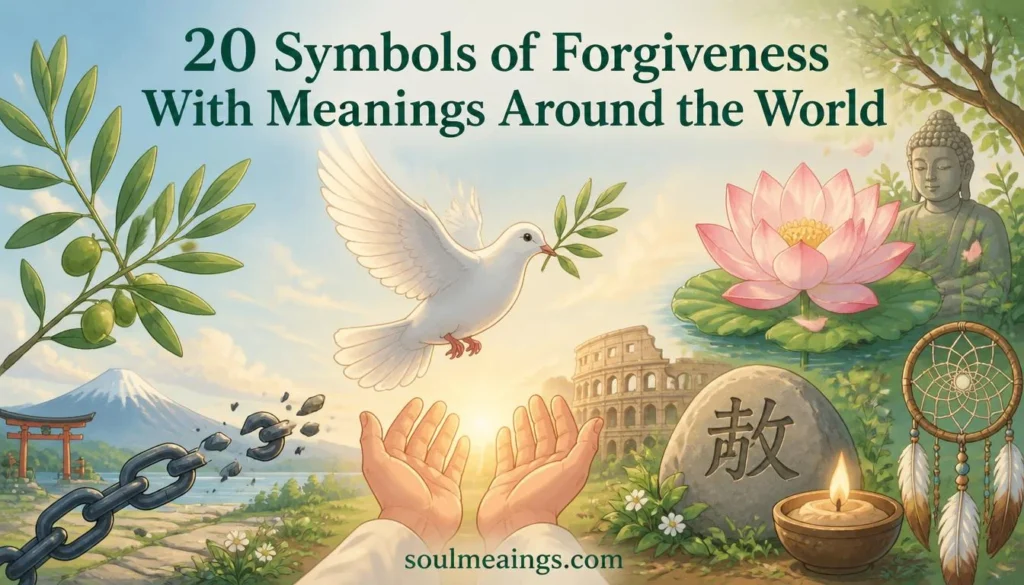
The 20 Symbols of Forgiveness With Meanings Around the World show how forgiveness can become a transformative act.
Forgiveness is a profound process of letting go of resentment, anger, and the desire for retribution. Across almost every culture and spiritual tradition, symbols have carried meanings connected with peace, healing, strength, liberation, and transformation.
These powerful symbols can guide people through a long, difficult journey when it feels harder to forgive than doing nothing. When justice cannot repair the hurt or the pain has not dimmed, such symbols may encourage people to forgive those who have hurt you. They can also represent emotional release and inner peace.
From my experience studying spiritual symbolism, forgiveness can have a powerful effect on the human soul. It can become the first step on a path toward cleansing, renewal, and healing. When forgiveness is achieved, it may become a main factor in rebirth, redemption, and renewal, giving you the push to move on and release old pain.
This article explores meaningful symbols that represent forgiveness and their meanings, while connecting emotional healing, spiritual healing, and personal growth with your life.
Quick Answer
The 20 Symbols of Forgiveness With Meanings Around The World commonly symbolize peace, emotional healing, reconciliation, compassion, and personal growth. In the USA, they’re often linked to self-healing, spirituality, therapy culture, and rebuilding relationships, while globally they may carry religious, cultural, or ceremonial meanings.
TL;DR
• Forgiveness symbols often represent healing and emotional release.
• Many began in ancient spiritual or religious traditions.
• Americans often use them in tattoos and wellness spaces.
• Common themes include peace, renewal, and second chances.
• Meanings can shift across cultures and historical periods.
• Some symbols now carry both spiritual and modern psychological meanings.
Overview of Forgiveness Symbols
Why Humans Create Symbols of Forgiveness
Forgiveness is emotional and difficult to explain with words alone. Because of that, cultures often use visual symbols to express peace, reconciliation, and release from pain. These symbols help people process grief, regret, anger, and healing.
In the USA today, forgiveness imagery appears in art therapy, inspirational decor, memorial jewelry, and online wellness communities. Many people also use symbols privately as reminders of emotional growth.
Common Themes Shared by Forgiveness Symbols
Although cultures differ, many forgiveness symbols share similar meanings.
• Peace after conflict
• Emotional release and healing
• Mercy and compassion
• Spiritual renewal
• Reconciliation between people
• Freedom from resentment
• Personal transformation
The Olive Branch as a Symbol of Peace and Forgiveness
Ancient Roots of the Olive Branch
The olive branch is one of the oldest forgiveness symbols in Western history. It appeared in ancient Greek culture, where olive trees symbolized peace, wisdom, and renewal.
Later, early Christians connected the olive branch to mercy and reconciliation through the biblical story of Noah’s Ark. In that story, a dove returned carrying an olive branch after the floodwaters receded.
Meaning in Modern America
Today, Americans often associate the olive branch with ending conflict peacefully. It appears in political imagery, diplomacy, memorial art, and spiritual spaces.
| Context | Meaning in the USA | Common Associations | Notes |
| Religious settings | Mercy and reconciliation | Prayer, healing | Common in churches |
| Political imagery | Peaceful compromise | Diplomacy | Seen in seals and emblems |
| Tattoos | Personal healing | Growth after hardship | Popular minimalist design |
| Home decor | Calm and harmony | Wellness culture | Often paired with neutral tones |
| Social media | Emotional maturity | Letting go | Common inspirational symbol |
Emotional Associations
The olive branch often signals emotional maturity. Instead of revenge, it represents calm understanding and peaceful communication.
The White Dove and Spiritual Reconciliation
Why Doves Symbolize Forgiveness
White doves symbolize purity, peace, and emotional renewal. Because they appear gentle and calm, many cultures connected them with compassion and forgiveness.
In Christianity, the white dove also symbolizes the Holy Spirit and divine grace. However, its peaceful meaning extends far beyond religion.
Modern Symbolism
Americans frequently use white dove imagery during funerals, peace ceremonies, and memorial events. It also appears in wedding decor and healing artwork.
• Spiritual cleansing
• Peace after emotional pain
• Innocence and compassion
• Hope for reconciliation
• Calm communication
Lotus Flowers and Emotional Healing
Ancient Eastern Meanings
The lotus flower has deep roots in Hinduism and Buddhism. It grows from muddy water yet blooms beautifully above the surface. Because of this, it became a symbol of rising beyond suffering.
Forgiveness connects naturally to this symbolism. The lotus suggests healing without forgetting hardship.
Modern American Interpretation
In the USA, lotus tattoos and meditation imagery often represent emotional recovery. Many people see the lotus as proof that pain can lead to growth.
Psychological Meaning
The lotus is strongly linked to inner peace and emotional resilience. It often represents forgiving yourself after mistakes or trauma.
Open Hands as a Universal Symbol of Mercy
Historical Background
Open hands appear in many ancient cultures as symbols of honesty and peace. Empty hands showed that a person carried no weapon and intended no harm.
Over time, open palms also became signs of generosity, acceptance, and forgiveness.
Modern Usage
Today, open-hand imagery appears in therapy logos, humanitarian art, and mindfulness branding.
• Acceptance without judgment
• Compassion toward others
• Emotional openness
• Surrendering anger
• Human connection
Broken Chains and Freedom From Resentment
Symbolism Through History
Broken chains traditionally symbolized liberation from slavery or oppression. However, modern emotional symbolism expanded this meaning.
Today, broken chains can represent freedom from guilt, resentment, shame, or toxic relationships.
Why Americans Connect With This Symbol
American self-help culture often focuses on emotional release and personal empowerment. Because of that, broken chains became popular in motivational imagery and tattoos.
Shifting Meaning Over Time
Originally political and social, the symbol now also carries personal psychological meaning. It often reflects emotional independence.
The Heart Symbol and Compassion
More Than Romantic Love
The heart symbol is deeply connected to forgiveness because forgiveness often begins with empathy and compassion.
Historically, the stylized heart became popular in medieval Europe. Over centuries, it evolved into a universal symbol of emotional connection.
Forgiveness Meanings
• Compassion after betrayal
• Emotional vulnerability
• Healing damaged relationships
• Kindness and mercy
• Self-forgiveness
Modern Culture
In the USA, hearts appear everywhere from therapy journals to social media graphics. Soft pastel hearts often signal emotional healing and acceptance.
The Phoenix and Rebirth After Pain
Ancient Mythological Origins
The phoenix comes from ancient mythology and symbolizes rebirth through fire. According to legend, the bird dies and rises again from its ashes.
Because forgiveness often follows emotional destruction, the phoenix became a powerful metaphor for starting over.
Why the Symbol Remains Popular
Americans frequently use phoenix imagery in tattoos after surviving hardship, addiction recovery, divorce, or trauma.
• Renewal after suffering
• Emotional transformation
• Strength through healing
• Letting go of the past
• New beginnings
Water as a Symbol of Cleansing and Release
Ancient Spiritual Connections
Water has symbolized purification for thousands of years. Many religions use water in rituals connected to cleansing, rebirth, or forgiveness.
For example, baptism in Christianity symbolizes spiritual renewal and forgiveness of sins.
Emotional Meaning Today
Modern Americans often associate water with calmness and emotional release. Ocean imagery, rain sounds, and rivers appear heavily in wellness culture.
Common Associations
• Washing away emotional pain
• Inner peace and calm
• Spiritual renewal
• Fresh starts
• Emotional clarity
Candles and the Light of Forgiveness
Historical and Religious Meaning
Candles symbolize hope, remembrance, and spiritual presence. In many traditions, lighting a candle reflects prayer, reflection, or healing intentions.
Forgiveness rituals often include candles because light symbolizes emotional clarity.
Modern American Use
Candles are common in grief rituals, meditation spaces, and healing ceremonies.
• Quiet reflection
• Peace after conflict
• Spiritual comfort
• Emotional warmth
• Healing intentions
The Willow Tree and Emotional Flexibility
Symbolism Across Cultures
Willow trees bend without breaking. Because of this, they became symbols of emotional resilience and adaptability.
In Chinese symbolism, willow branches sometimes represented reconciliation and parting without hatred.
Psychological Meaning
The willow suggests that forgiveness is strength, not weakness. Instead of rigid anger, it reflects emotional flexibility.
Feathers and Messages of Peace
Spiritual and Cultural Interpretations
Feathers often symbolize communication between the physical and spiritual worlds. Different Native American traditions also connect feathers with honor, wisdom, and prayer.
However, meanings vary greatly among tribes, so respectful interpretation matters.
Modern Symbolism
Americans often view feathers as signs of emotional comfort or spiritual guidance.
• Gentle emotional healing
• Peaceful communication
• Spiritual reassurance
• Letting go of burdens
• Calm reflection
Yin and Yang and Balanced Forgiveness
Ancient Chinese Philosophy
The yin-yang symbol comes from Chinese philosophy and represents balance between opposites. Light and dark exist together rather than fighting each other.
Forgiveness connects to this idea because healing often involves accepting complexity instead of seeing people as purely good or bad.
Modern Interpretation in America
Today, yin-yang imagery appears in mindfulness culture, yoga spaces, and spiritual tattoos.
Shifting Meaning
Although originally philosophical, modern Western culture sometimes simplifies the symbol into general harmony or inner peace.
read more: Symbolic and Spiritual Meaning of Bird Poop
Forgiveness Symbols in Tattoos and Social Media
Why These Symbols Became Popular
Modern Americans often use symbols publicly to tell personal emotional stories. Tattoos especially became tools for identity and healing.
Social media also helped spread forgiveness imagery through motivational quotes, mental health pages, and spiritual content creators.
Common Modern Uses
• Memorial tattoos after loss
• Recovery and sobriety symbols
• Meditation room decor
• Jewelry for emotional healing
• Inspirational digital artwork
• Wellness and therapy branding
The Rise of Self-Forgiveness
Older traditions focused heavily on forgiving others. Today, many Americans also focus on self-forgiveness and emotional recovery.
Misunderstandings and Cultural Sensitivity
Why Context Matters
Not every forgiveness symbol means the same thing everywhere. A symbol that appears peaceful in one culture may carry religious or sacred meanings elsewhere.
Because of this, respectful understanding matters, especially online.
Common Issues
• Oversimplifying sacred religious symbols
• Using cultural symbols without understanding origins
• Treating spiritual imagery as trendy decoration
• Ignoring historical context
Neutral Perspective
Most symbols evolve naturally over time. However, many people still value their original cultural meaning deeply.
How Forgiveness Symbols Changed Over Time
From Sacred Rituals to Personal Identity
Historically, forgiveness symbols often belonged to religious ceremonies or public peace agreements. Today, they also reflect private emotional journeys.
This shift mirrors broader American conversations about mental health, trauma, and personal healing.
Modern Trends
• More focus on emotional wellness
• Increased tattoo symbolism
• Growth of mindfulness culture
• Blending spiritual traditions
• Greater interest in self-reflection
FAQs
1. What are symbols of forgiveness?
Symbols of forgiveness are objects, gestures, animals, or images that represent letting go, peace, healing, and reconciliation. Different cultures use different symbols to express the idea of releasing anger and resentment.
2. What is the most common symbol of forgiveness?
There is no single universal symbol of forgiveness. White doves, olive branches, open hands, and hearts are often associated with peace, reconciliation, compassion, and emotional healing.
3. Why is forgiveness important in different cultures?
Forgiveness can help people release resentment and seek inner peace after experiencing hurt. Many spiritual traditions view forgiveness as part of healing, renewal, personal growth, or restoring relationships.
4. What does a white dove symbolize in forgiveness?
A white dove is commonly associated with peace, innocence, and reconciliation. In some spiritual and cultural contexts, it can also represent the desire to move beyond conflict and begin again.
5. Can forgiveness symbols have spiritual meanings?
Yes. Many forgiveness symbols have spiritual healing and renewal meanings. Their interpretation can depend on a person’s culture, faith, personal experience, and the situation in which the symbol appears.
6. How can forgiveness symbols help with personal healing?
Forgiveness symbols can serve as reminders to release anger, process emotional pain, and seek peace. They do not erase what happened, but they may help a person reflect on healing, acceptance, and moving forward.
Conclusion
The 20 Symbols of Forgiveness With Meanings Around the World show how different cultures express the ideas of peace, healing, release, and renewal. From ancient traditions to modern personal practices, these symbols can remind us that forgiveness is often a personal journey.
Forgiveness does not mean ignoring hurt or pretending that injustice never happened. It can mean choosing to release the weight of resentment and create space for personal growth, peace, and a new beginning.

Sophia Wilson is a spiritual content writer and researcher at SoulMeanings.com, specializing in dream meanings, symbolism, spiritual insights, and personal growth topics that help readers navigate life’s journey with greater understanding.