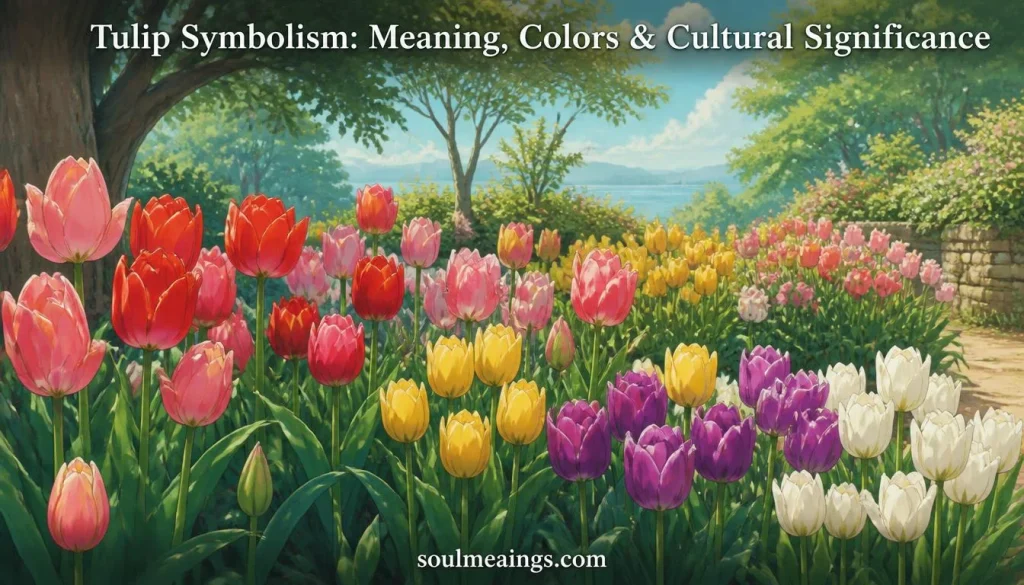
Tulip Symbolism: Meaning, Colors & Cultural Significance explores how tulips represent love, renewal, beauty, and cultural significance across generations.
Tulips are iconic flowers known for their smooth petals, elegant shape, and vibrant colors. Their early spring bloom symbolizes rebirth, growth, optimism, and fresh beginnings. Across cultures and centuries, tulips have represented love, wealth, prosperity, and happiness.
Their rich history stretches from the Ottoman Empire to the Dutch Golden Age, where paintings and literature helped establish their cultural importance. Today, tulip symbolism connects spiritual meaning, emotional expression, and cultural traditions, making these flowers meaningful symbols of beauty and hope.
Tulip meanings often depend on color, occasion, and personal connections. Red tulips symbolize romance, love, affection, and admiration, making them popular romantic gifts and wedding flowers. Yellow tulips often represent friendship, appreciation, and cheerful thoughts.
In American culture, tulips appear in spring festivals, weddings, holidays, artwork, tattoos, and personal gifts. Their colorful arrangements carry symbolic messages and express different feelings without words. Today, tulip symbolism continues to inspire new beginnings, abundance, and hope, showing how these beautiful flowers connect history, emotions, and modern life.
Quick Answer
Tulip symbolism in the United States most commonly represents love, springtime, renewal, and fresh beginnings. Red tulips often express romantic love, pink suggests affection, yellow conveys cheerfulness, white can represent forgiveness or remembrance, and purple suggests elegance or admiration. Meanings vary by culture, occasion, and personal experience.
TL;DR
- Tulips commonly symbolize love, renewal, beauty, and fresh beginnings.
- Red tulips often express romantic love and deep affection.
- Yellow tulips bring associations of happiness, warmth, and friendship.
- Tulips originated in Central Asia and became important in Ottoman culture.
- American gardens and spring celebrations connect tulips with hope and new life.
- Modern tulip tattoos and bouquets express personal feelings, memories, and identity.
What Does a Tulip Symbolize?
Tulips are widely recognized for their smooth petals, upright stems, and bright spring colors. Although they look simple, their symbolism changes with color, setting, and the relationship between the giver and receiver.
In American culture, tulips usually carry positive meanings. They can communicate romantic interest, appreciation, optimism, or a desire to begin again.
The Core Meanings of Tulips
Three major themes appear repeatedly in tulip symbolism.
- Love and affection: Tulips can express romantic feelings, friendship, or appreciation.
- Renewal and hope: Their spring blooms suggest fresh starts after difficult periods.
- Beauty and elegance: Their balanced shapes and vivid colors represent natural grace.
Tulips can also symbolize prosperity, personal growth, and the enjoyment of life’s simple pleasures. These meanings often overlap, especially when flowers are given during important life events.
Why Tulips Feel So Meaningful
Part of a tulip’s appeal comes from its seasonal timing. Many varieties bloom as winter fades, making their arrival a visible sign of changing seasons.
Their upright stems and opening petals also suggest movement toward light and growth. People may connect this image with recovery, new opportunities, or a willingness to embrace change.
However, these associations aren’t universal rules. A tulip may remind one person of a wedding, another of a loved one, and someone else of a childhood garden.
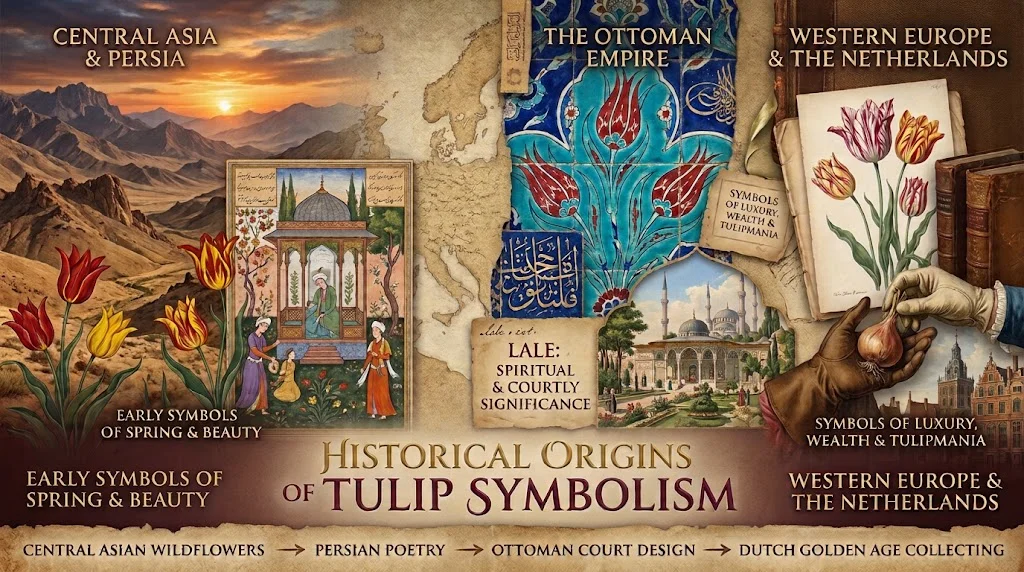
Historical Origins of Tulip Symbolism
Tulips have a long cultural history that extends far beyond the Netherlands. Their journey from Central Asia into Persian, Ottoman, and European traditions shaped how people understood and valued them.
For American readers, this history explains why tulips can represent both natural beauty and cultural heritage.
Ancient Roots in Central Asia and Persia
Wild tulip species originated across parts of Central Asia, where they adapted to cold winters and hot summers. Their ability to return and bloom seasonally made them familiar signs of spring in their native landscapes.
By the medieval period, Persian poets were celebrating tulips in literature. Their vivid colors and striking forms became useful images for beauty, passion, and the beloved.
Tulips weren’t universally sacred symbols in every ancient society. Instead, their meanings developed through particular traditions, artistic practices, and local environments.
The Tulip in Ottoman Culture
Tulips became especially important in the Ottoman Empire, where gardeners cultivated them and artists incorporated their shapes into decorative designs. The flower appeared on ceramics, textiles, manuscripts, and architectural ornament.
During the Ottoman Tulip Era, commonly dated from 1718 to 1730, tulips became associated with courtly refinement, pleasure, and artistic expression. Their presence reflected a wider appreciation for gardens, design, and cultivated beauty.
The tulip also gained spiritual associations in some Ottoman Muslim traditions. Its Turkish name, lale, was linked through calligraphy and letter forms with the name of Allah. This interpretation belongs to a specific cultural and religious context rather than representing every Muslim’s understanding of the flower.
How Tulips Reached Europe
Tulips entered Western European gardens during the 16th century, after centuries of cultivation farther east. They soon attracted botanists, collectors, artists, and wealthy garden owners.
In the Netherlands, rare varieties became highly desirable during the 17th century. Their unusual colors and patterns helped turn the tulip into a symbol of luxury and social standing.
That history created an important contrast: the same flower could represent spiritual reflection in one setting and material wealth in another.
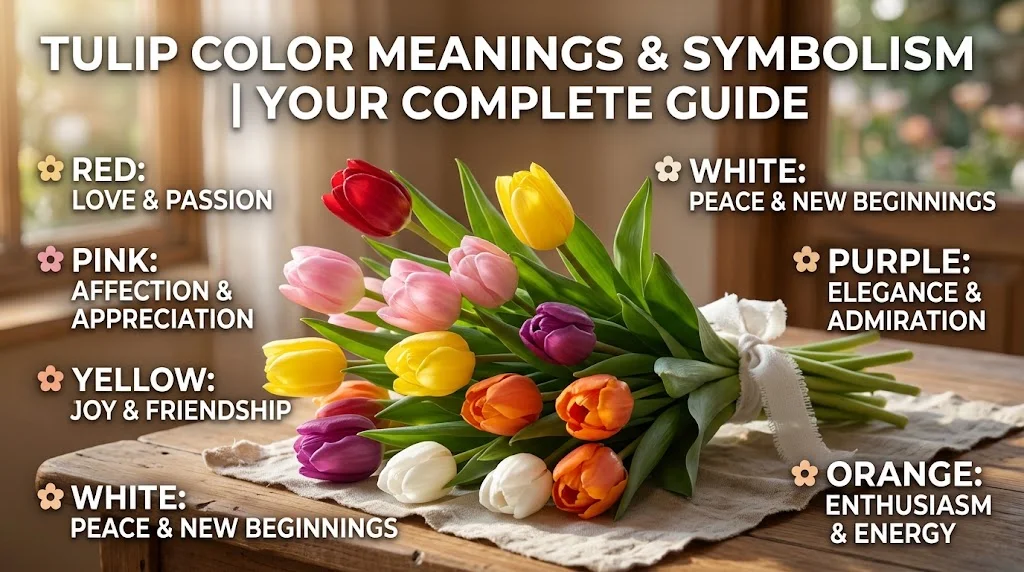
Tulip Color Meanings and Symbolism
Color is one of the easiest ways to personalize a tulip bouquet. In American floral traditions, different shades often suggest different feelings, although their meanings aren’t fixed.
The following guide covers common interpretations of tulip colors. Use these meanings as helpful starting points rather than strict rules.
What Different Tulip Colors Mean
| Tulip Color | Common Symbolic Meaning | Best-Known Associations | Possible Occasions |
| Red | Romantic love and passion | Devotion, desire, commitment | Anniversaries, romantic gifts |
| Pink | Affection and appreciation | Gentleness, admiration, warmth | Mother’s Day, birthdays |
| Yellow | Joy and optimism | Friendship, sunshine, hope | Celebrations, cheerful gifts |
| White | Forgiveness and new beginnings | Peace, sincerity, remembrance | Apologies, weddings, memorials |
| Purple | Elegance and admiration | Dignity, royalty, refinement | Graduations, special occasions |
| Orange | Enthusiasm and energy | Confidence, excitement, encouragement | Achievements, celebrations |
Red Tulips: Love and Passion
Red tulips are strongly associated with romantic love and heartfelt affection. They offer a meaningful alternative to roses when you want to express sincere feelings.
Their vivid color naturally draws attention, making them suitable for anniversaries, romantic gestures, and thoughtful surprises. Some floral traditions also connect red tulips with perfect love.
However, a red bouquet doesn’t automatically mean a marriage proposal or lifelong commitment. The relationship and the giver’s intentions matter more than the flower alone.
Pink Tulips: Affection and Appreciation
Pink tulips commonly express tenderness, kindness, admiration, and appreciation. Their softer appearance makes them suitable for close friends, family members, teachers, and romantic partners.
They’re especially popular for Mother’s Day and birthdays because they communicate warmth without feeling overly formal. A pink bouquet can also celebrate someone’s achievement or show gratitude.
Yellow Tulips: Happiness and Hope
Yellow tulips often symbolize happiness, friendship, optimism, and cheerful energy. Their sunny color makes them natural choices for congratulating someone or brightening a difficult week.
Historically, yellow flowers sometimes carried less positive meanings in European flower dictionaries. Today, however, yellow tulips are commonly presented as joyful, welcoming flowers.
White, Purple, and Orange Tulips
These colors offer additional ways to communicate a particular mood or sentiment.
- White tulips can suggest forgiveness, peace, sincerity, and fresh starts.
- Purple tulips often convey elegance, admiration, dignity, or a sense of luxury.
- Orange tulips can represent enthusiasm, energy, encouragement, and fascination.
White tulips can suit weddings or remembrance ceremonies, depending on the circumstances. Purple varieties work well for formal gifts, while orange blooms add excitement to celebratory arrangements.
Do Tulip Colors Have Universal Meanings?
No. Color symbolism changes across cultures, generations, and individual experiences.
A yellow tulip may represent friendship to one person and a cherished memory to another. Likewise, white flowers can signal celebration in one setting and mourning in another.
Consider the recipient’s preferences and the occasion before relying on a traditional color meaning.
Tulip Symbolism in American Culture
In the United States, tulips are closely associated with spring, gardening, family celebrations, and seasonal renewal. Their popularity comes partly from their beauty and partly from the way they fit into American traditions.
Unlike a national flag or official emblem, tulips don’t carry one fixed meaning for all Americans. Their symbolism is shaped by local communities, family customs, and personal memories.
Spring, Hope, and New Beginnings
Tulips often bloom as winter gives way to warmer weather. Across much of the country, their arrival signals longer days, brighter gardens, and the return of outdoor activities.
This seasonal change helps explain their connection with hope and renewal. People may plant tulips after moving into a new home or give them to someone starting a new chapter.
Holland, Michigan, and Dutch Heritage
One of America’s best-known tulip traditions takes place in Holland, Michigan. The city’s Tulip Time Festival began in 1929, celebrating spring flowers and the area’s Dutch heritage.
Today, the festival combines tulip displays with parades, performances, and cultural activities. It shows how a flower can become a symbol of community identity and shared history.
For local residents and visitors, tulips can represent civic pride, cultural continuity, and the excitement of spring. Their meaning extends beyond individual bouquets into a community-wide celebration.
Tulips in American Holidays
Tulips also appear during several familiar American occasions.
- Easter: Spring blooms can complement themes of renewal and new life.
- Mother’s Day: Pink and mixed-color tulips express appreciation and affection.
- Weddings: White or pastel tulips can suggest sincerity and a fresh beginning.
- Graduations: Bright tulips celebrate progress, achievement, and future possibilities.
- Memorial gatherings: Thoughtfully chosen tulips can express love and remembrance.
These associations depend on family traditions and the setting. Tulips aren’t official symbols for every holiday, but their seasonal appearance makes them popular decorative choices.
Spiritual and Cross-Cultural Meanings of Tulips
Tulips have developed different meanings across Persian, Ottoman, European, and modern spiritual traditions. Exploring these interpretations adds depth to the flower’s symbolism without assuming that every culture understands it the same way.
Persian and Ottoman Traditions
Persian poetry used tulips as images of beauty, passion, and emotional intensity. Poets could compare a flower’s vivid appearance with the beauty of a beloved person or the strength of human feeling.
In Ottoman art, tulips became important decorative and cultural symbols. They appeared in ceramics, textiles, and other artistic forms, sometimes carrying associations with divine beauty and spiritual devotion.
Some Ottoman interpretations connected the flower’s Turkish name with the written form of Allah. This is a specific historical association, not a universal religious rule.
Tulips in European Traditions
European flower symbolism developed through art, poetry, gardening, and the language of flowers. During the 19th century, floral dictionaries helped popularize the idea that flowers could communicate unspoken messages.
Tulips came to represent love, beauty, elegance, and fame in various interpretations. However, different dictionaries didn’t always agree, so there was never one perfectly consistent system.
Modern Spiritual Interpretations
Today, some people view tulips as reminders of personal growth, gratitude, and spiritual renewal. Their return each spring can inspire reflection on change, patience, and life’s recurring cycles.
Common personal interpretations include:
- Renewal: Letting go of the past and welcoming new possibilities.
- Gratitude: Appreciating beauty and connection in everyday life.
- Balance: Finding calm through nature and simple experiences.
- Growth: Recognizing that meaningful changes often take time.
These are reflective interpretations rather than proven supernatural messages. A tulip can hold spiritual significance for an individual without having the same meaning for everyone.
Emotional and Psychological Meaning of Tulips
Flowers can influence how people experience a space or remember an important moment. Tulips often feel cheerful, gentle, and welcoming because of their colors, familiar shapes, and connection with spring.
Their symbolism also depends on the emotions people attach to them.
Tulips and Emotional Renewal
The tulip’s seasonal cycle offers a natural image of change. Bulbs remain underground during colder months before producing new growth when conditions become favorable.
People may connect this process with recovery, patience, and starting over. A tulip gift can communicate encouragement when someone faces a move, a career change, or another life transition.
However, a flower doesn’t guarantee a particular emotional response. Its value often comes from the thought behind the gesture and the recipient’s personal associations.
What Tulips May Communicate About You
Choosing tulips can reflect the mood or message you want to share.
- Red tulips may express confidence in romantic feelings.
- Pink tulips can communicate kindness and thoughtful appreciation.
- Yellow tulips often create a cheerful, welcoming impression.
- White tulips may suggest simplicity, peace, or sincerity.
- Purple tulips can reflect a preference for elegance and individuality.
These impressions aren’t psychological diagnoses or reliable personality tests. They’re common cultural associations that help people communicate through flowers.
Why Tulips Feel Calm and Optimistic
Tulips have smooth petals and relatively simple forms. Their uncluttered appearance can complement peaceful interiors, thoughtful gifts, and relaxed garden spaces.
Bright colors may create an energetic atmosphere, while pale pinks and whites can feel softer. Still, individual reactions vary according to taste, memory, and cultural background.
Ultimately, tulips can help people express feelings that are sometimes difficult to put into words.
read more: Bonsai Symbolism: Patience, Harmony & Growth
Modern Tulip Symbolism in Tattoos, Decor, and Social Media
Tulips remain popular because their appearance works in many settings, from traditional gardens to minimalist artwork. Today, people use them to express personal values, celebrate relationships, and create meaningful visual designs.
Tulip Tattoos and Personal Identity
A tulip tattoo can represent love, renewal, beauty, or an important personal memory. Its meaning often comes from the wearer’s experience rather than a universal symbolic code.
Different styles can create different impressions:
- Single-line tulips: Simplicity, grace, and understated beauty.
- Red tulip tattoos: Romantic love or a meaningful relationship.
- Purple tulip tattoos: Individuality, elegance, or personal pride.
- White tulip designs: Peace, remembrance, or a new chapter.
- Wilted tulips: Change, loss, or the passing of a meaningful period.
A tattoo may also commemorate a loved one, celebrate recovery, or mark a fresh start. Combining tulips with dates, initials, or other meaningful elements can make the design more personal.
Tulips in Home Decor and Gardens
Tulips are popular in American homes because they add color without requiring elaborate arrangements. A simple vase can brighten a kitchen, dining table, entryway, or bedroom.
Their colors can also support different decorating styles. White tulips complement clean, understated rooms, while bright yellow and orange varieties add energy.
In gardens, tulips can represent renewal and the enjoyment of nature. Planting bulbs in autumn also creates a sense of anticipation for spring.
Tulips on Social Media
On platforms such as Instagram, TikTok, and Pinterest, tulips frequently appear in seasonal photographs, floral arrangements, and gift inspiration.
People may use tulip images to communicate affection, celebrate a new beginning, or share the beauty of spring. A photograph of a bouquet can also preserve memories of a wedding, birthday, or special trip.
However, a tulip image doesn’t have a universal hidden meaning online. Captions, relationships, and the surrounding conversation provide important context.
Tulips in Weddings, Gifts, and Special Occasions
Tulips are versatile flowers because they can express romance, friendship, appreciation, or remembrance. Their meaning becomes clearer when you consider the occasion and the relationship between the people involved.
Choosing Tulips for Someone You Love
Red tulips suit romantic occasions when you want to communicate affection. Pink tulips offer a gentler option for showing appreciation to a partner, relative, or friend.
For a more personal gift, consider the recipient’s favorite color rather than following traditional symbolism alone. A carefully chosen bouquet often communicates more than an elaborate arrangement selected without their preferences in mind.
Tulips for Weddings and New Beginnings
White and pastel tulips work well in wedding bouquets and spring ceremonies. Their graceful shapes complement both traditional arrangements and modern, minimalist designs.
Tulips can also celebrate engagements, graduations, new homes, and career milestones. In these settings, their connection with fresh beginnings gives the gift an additional layer of meaning.
Tulips for Sympathy and Remembrance
Flowers can provide a gentle way to express care when words feel inadequate. White tulips may communicate peace or remembrance, while pink varieties can emphasize affection and cherished memories.
Still, cultural customs differ around sympathy flowers. When choosing an arrangement for a funeral or memorial, consider the family’s preferences and the traditions of the gathering.
Common Misunderstandings About Tulip Symbolism
Tulip meanings are useful cultural references, but they can become misleading when people treat them as universal facts. Understanding their limitations helps you appreciate the flower without placing too much importance on rigid interpretations.
Every Color Doesn’t Have One Fixed Meaning
One common misconception is that every tulip color sends an exact message. In reality, floral dictionaries, retailers, and cultural traditions sometimes assign different meanings to the same shade.
For example, yellow tulips are often associated with friendship and happiness today. Older flower-language traditions sometimes gave yellow flowers less positive associations.
Neither interpretation automatically determines what a modern bouquet means. The giver’s intention and the recipient’s understanding matter more.
Tulips Aren’t Exclusively Dutch
Many Americans associate tulips with the Netherlands, especially because of Dutch gardens and spring festivals. However, the flower’s history begins farther east, with wild species originating across parts of Central Asia.
Persian and Ottoman traditions played important roles in its cultural development before tulips became popular in Western Europe. Recognizing this broader history gives the flower a richer meaning.
Tulip Mania Was More Than a Story About Greed
The Dutch tulip trade of the 1630s is often described as a dramatic example of financial excess. Rare bulbs became extremely expensive, and the market experienced a sharp collapse in 1637.
However, popular retellings sometimes exaggerate how widely the speculation affected ordinary Dutch people. Historians continue to examine the scale and consequences of the episode.
The event illustrates how tulips became symbols of wealth and status, but it doesn’t define their entire history. Their roles in art, gardening, spirituality, and everyday life are equally important.
Symbolism Isn’t a Guaranteed Spiritual Message
Some people interpret flowers as personal signs of encouragement or spiritual connection. Others simply appreciate their color and natural beauty.
Neither approach needs to be treated as the only correct one. A tulip can carry personal significance without proving that an outside force is sending a message.
How Tulip Symbolism Has Changed Over Time
Tulip symbolism has never remained completely fixed. As the flower traveled between regions, its meanings developed through new artistic, social, and cultural settings.
From Wildflower to Cultural Treasure
In Central Asia, tulips belonged to the natural landscapes where wild varieties grew. Their beauty and seasonal appearance helped make them valued plants.
Persian poets incorporated them into literary imagery, while Ottoman gardeners and artists gave them a prominent place in cultivated spaces. These developments connected tulips with beauty, refinement, and, in some contexts, spiritual ideas.
From European Luxury to Everyday Flower
During the 17th century, rare tulips became prized possessions among wealthy European collectors. Their high prices linked them with prestige, luxury, and the desire to own something unusual.
Later, tulips became more familiar through gardening, commercial cultivation, and decorative art. Their meaning expanded beyond wealth to include affection, seasonal beauty, and ordinary enjoyment.
From Traditional Flower Language to Personal Meaning
The 19th-century language of flowers encouraged people to interpret bouquets as messages. Yet floral dictionaries offered competing definitions, showing that flower symbolism depended on the source and tradition.
Today, people still use color meanings when selecting gifts. At the same time, personal memories, visual preferences, and social media have made flower symbolism more flexible.
This shift reflects a wider pattern: symbols survive because people continue to adapt them to their own lives.
How to Choose Tulips Based on Their Meaning
If you want a bouquet to communicate something specific, start with the feeling you hope to express. Then consider the recipient’s tastes, the occasion, and the cultural context.
Match the Color to Your Message
Use these suggestions as a simple starting point:
- For romantic love: Choose red tulips for a clear expression of affection.
- For friendship: Consider yellow tulips to communicate warmth and happiness.
- For gratitude: Choose pink tulips to express appreciation and kindness.
- For forgiveness: Consider white tulips as a symbol of peace and reconciliation.
- For admiration: Choose purple tulips to convey respect and elegance.
- For encouragement: Select orange or yellow tulips for an energetic, hopeful message.
You can also mix colors when several feelings matter equally. A mixed bouquet can express joy, appreciation, affection, and celebration without relying on one specific interpretation.
Consider the Recipient and Occasion
Traditional meanings can guide your choice, but they shouldn’t replace personal understanding. Someone who loves yellow may appreciate yellow tulips more than red ones, regardless of their traditional associations.
Likewise, a bouquet intended for a memorial may need a more thoughtful approach than one for a birthday. When in doubt, choose flowers that suit the recipient and the atmosphere of the occasion.
Remember That Your Intention Matters Most
Flowers are a form of communication, but they don’t have a fixed dictionary understood by everyone. A simple bouquet becomes meaningful through the care, timing, and personal connection behind it.
Choose tulips because they reflect what you want to say, not because you feel bound by a symbolic rule.
FAQs About Tulip Symbolism
1. What do tulips symbolize?
Tulips symbolize love, renewal, beauty, happiness, and fresh beginnings. Their meaning can change depending on their color, cultural background, and the occasion.
2. What do red tulips mean?
Red tulips symbolize romantic love, affection, and admiration. They’re popular gifts for partners and special occasions.
3. What do yellow tulips symbolize?
Yellow tulips often represent friendship, happiness, appreciation, and cheerful thoughts. They’re a lovely choice for celebrating friends or sharing encouragement.
4. What is the spiritual meaning of tulips?
The spiritual meaning of tulips often relates to renewal, hope, growth, and new beginnings. Their spring bloom can remind people of personal growth and positive change.
5. What do tulips symbolize in different cultures?
Tulips have strong historical connections with the Ottoman Empire and the Dutch Golden Age. Across different cultures, they have represented beauty, prosperity, love, and social status.
6. Why are tulips popular for weddings and gifts?
Tulips are popular because their colors and elegant shapes communicate different feelings. Red tulips can express romance, while yellow tulips often convey friendship and happiness.
Conclusion
Tulip symbolism reveals how a simple flower can carry powerful meanings across cultures and generations. From love and romance to renewal, prosperity, and happiness, tulips offer a beautiful way to express emotions without words. Their colors add another layer of meaning, making them thoughtful choices for weddings, holidays, personal gifts, and everyday moments. Whether you admire their historical significance or enjoy their beauty in a spring garden, tulips remind us to welcome fresh beginnings, appreciate meaningful relationships, and find beauty in life’s changing seasons.

Sophia Wilson is a spiritual content writer and researcher at SoulMeanings.com, specializing in dream meanings, symbolism, spiritual insights, and personal growth topics that help readers navigate life’s journey with greater understanding.