
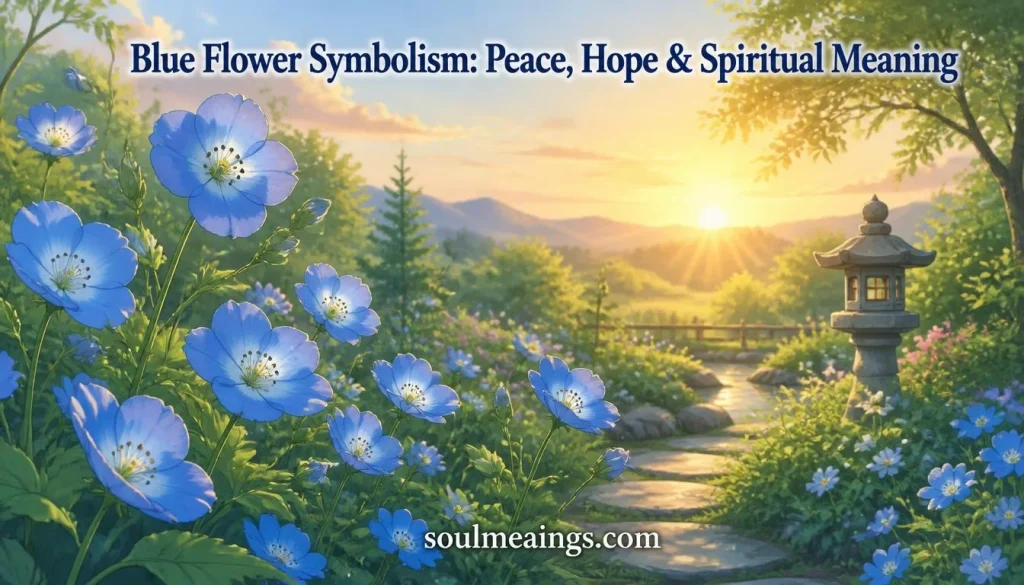
Blue Flower Symbolism connects blue blooms with peace, hope, emotional balance, and spiritual growth.
Blue flowers hold special meaning in nature, art, and human emotions. Their soft blue color, delicate beauty, and calming appearance represent tranquility, serenity, and inner peace.
Popular varieties include hydrangeas, delphiniums, orchids, hyacinths, cornflowers, bellflowers, and forget-me-nots. These beautiful flowers make meaningful floral gifts, expressing love, friendship, loyalty, care, and emotional support. Their symbolism also reflects comfort, openness, intimacy, and commitment.
Across cultures, blue flowers symbolize hope, inspiration, truth, and personal growth. In Romanticism, the blue flower became an important literary symbol representing longing, meaning, and the search for inner peace. Today, its cultural and spiritual significance continues through art, literature, and modern traditions.
From my perspective, blue flowers remind us to remain hopeful during difficult times. Their peaceful appearance represents emotional healing, reassurance, and positive feelings. Spiritually, they connect with faith, spiritual growth, and a meaningful journey toward self-understanding.
Quick Answer
In the USA, blue flower symbolism commonly represents peace, trust, inspiration, hope, and emotional healing. Spiritually and culturally, blue blossoms can also suggest wisdom, remembrance, loyalty, and a longing for something meaningful.
TL;DR
- Peace: Blue flowers suggest calmness, harmony, and emotional balance.
- Inspiration: Their unusual color evokes imagination, creativity, and new possibilities.
- Spirituality: They may represent reflection, wisdom, faith, and personal growth.
- Love: Certain blue blossoms communicate loyalty, tenderness, and lasting affection.
- History: The blue flower became a powerful symbol of Romanticism in Europe.
- Modern meaning: Americans use blue flowers in gifts, gardens, tattoos, and memorials.
What Does a Blue Flower Symbolize?
Blue flowers have several connected meanings, but no single interpretation applies to every species. Their color, shape, and setting influence the message people associate with them.
Peace and Emotional Balance
Blue often reminds people of clear skies, quiet water, and open spaces. Consequently, blue flowers can suggest relaxation, harmony, and a peaceful state of mind.
People may choose them when creating a restful garden or decorating a room. Their gentle appearance can also make floral arrangements feel thoughtful rather than dramatic.
Inspiration and Hope
Blue blossoms are visually distinctive, especially when their color appears against green leaves. This unusual beauty makes them natural symbols of imagination, curiosity, and possibility.
They can represent the courage to explore new ideas. For some people, they also symbolize hope during uncertain periods.
Loyalty and Remembrance
Certain blue flowers, especially forget-me-nots, are associated with remembrance and enduring affection. Their small petals can communicate a meaningful message without requiring grand gestures.
Blue cornflowers have also represented loyalty and faithfulness in some European traditions. However, these meanings vary by place and historical period.
History of Blue Flower Symbolism
Blue flowers have appeared in art, folklore, literature, and religious imagery for centuries. Their meanings developed through several traditions rather than from one universal ancient belief.
Ancient Roots and Early Flower Traditions
Ancient societies often connected flowers with nature, fertility, beauty, and the cycles of life. Specific flowers could also acquire sacred meanings through myths, rituals, and artistic representations.
Blue pigments and blue-colored objects sometimes carried associations with the sky, water, or the heavens. However, this doesn’t mean every ancient culture assigned the same spiritual meaning to blue flowers.
The symbolism depended on local plants and beliefs. A flower’s natural qualities often mattered as much as its color.
The Victorian Language of Flowers
During the 19th century, the language of flowers became especially popular in Britain and the United States. People used floral dictionaries to interpret bouquets and communicate feelings through carefully selected blossoms.
Blue flowers could express different ideas depending on the species and the dictionary consulted. For example, blue violets were associated with faithfulness in some Victorian floral traditions.
This practice made flower selection feel personal and expressive. However, floral meanings weren’t always consistent, even within the same period.
The Blue Flower in Romantic Literature
One of the most influential developments came from German Romanticism. Writer Novalis introduced the famous blue flower in his unfinished novel Heinrich von Ofterdingen, published after his death in 1802.
In the story, the flower becomes an object of longing and discovery. It represents artistic inspiration, spiritual searching, and the desire to reach beyond ordinary experience.
Over time, the blue flower became a lasting symbol of Romantic imagination. Its meaning extends beyond peace to include the pursuit of beauty, truth, love, and the seemingly unreachable.
Blue Flower Symbolism in American Culture
In the United States, blue flowers rarely have one official national meaning. Instead, their associations come from floral customs, everyday experiences, literature, and the broader symbolism of the color blue.
Peace, Trust, and Calmness
Blue is often used in American design to communicate stability, reliability, and calm. These associations can influence how people interpret blue flowers in homes, gardens, and gifts.
For example, a bouquet of pale blue blossoms may feel gentle and reassuring. Darker blue flowers can appear more formal, thoughtful, or mysterious.
Gifts and Special Occasions
Americans may choose blue flowers to express feelings that are difficult to put into words. Their meaning becomes especially personal when the recipient has a favorite flower or a strong memory connected to it.
Common uses include:
- Offering encouragement during a difficult transition.
- Celebrating a new home, creative project, or personal milestone.
- Expressing loyalty or appreciation in a meaningful relationship.
- Adding serenity to weddings, anniversaries, and remembrance ceremonies.
- Decorating a workspace to create a calm, reflective atmosphere.
These are common interpretations rather than fixed cultural rules. A personal message can matter more than a traditional flower dictionary.
Blue Flowers in American Gardens
Blue blossoms bring contrast to gardens filled with green foliage and warm-colored flowers. Gardeners often use them to create a cooler, softer visual effect.
Popular choices include blue hydrangeas, delphiniums, cornflowers, and forget-me-nots. Their symbolism can complement their practical appeal, especially when gardeners select plants for a memorial garden or peaceful outdoor space.
Spiritual Meaning of Blue Flowers
Spiritually, blue flowers can represent inner peace, wisdom, hope, and a desire for deeper understanding. These interpretations are personal and cultural, not universal rules that everyone must follow.
Inner Peace and Reflection
Blue flowers may serve as reminders to slow down and reflect. Their soft colors can encourage people to create quiet moments for prayer, meditation, journaling, or personal thought.
For someone facing change, a blue blossom might symbolize patience. It can also represent the hope of finding clarity without needing immediate answers.
Faith, Wisdom, and Spiritual Growth
Blue has been linked with heavenly imagery and spiritual contemplation in several artistic and religious traditions. However, the exact meaning depends on the tradition and the specific flower.
A blue flower in a personal spiritual practice might represent:
- Seeking wisdom before making an important decision.
- Remaining hopeful during periods of uncertainty.
- Developing patience and a deeper sense of purpose.
- Finding beauty in ordinary moments and natural surroundings.
- Staying open to personal growth and new understanding.
These meanings work best as reflective interpretations rather than promises of supernatural outcomes.
A Symbol of Personal Transformation
A flower grows through changing conditions, from a small bud to an open blossom. This natural process makes flowers useful symbols of personal development.
Blue blossoms add another layer through their associations with calmness and imagination. Together, these qualities can represent growth guided by patience, creativity, and self-understanding.
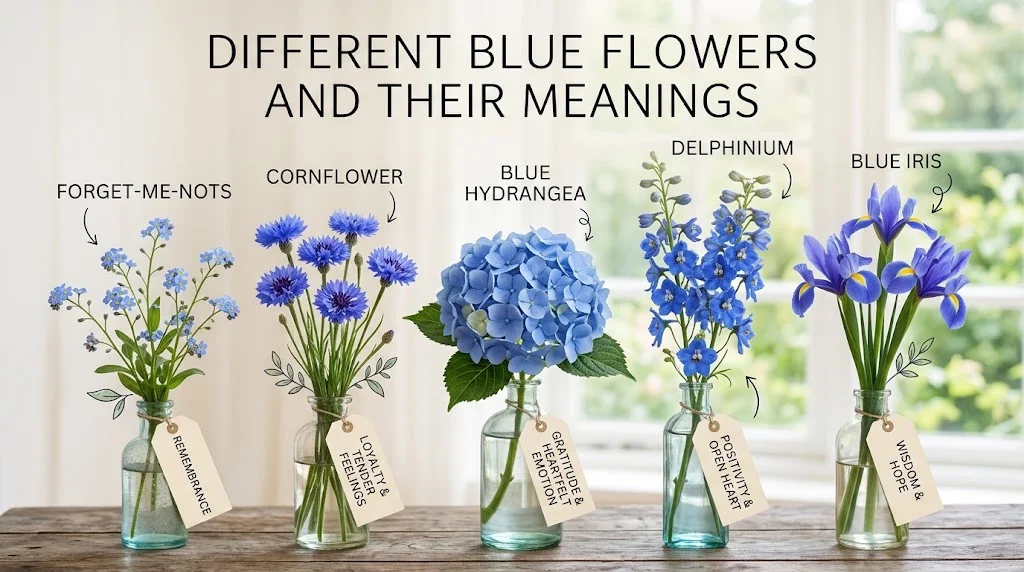
Different Blue Flowers and Their Meanings
Not every blue flower communicates the same message. The species, shade, and occasion can change how people understand a floral arrangement.
Popular Blue Flowers
Forget-Me-Not
Often associated with remembrance, faithful affection, and enduring connections. These tiny flowers suit memorial gardens and gifts that honor meaningful relationships.
Cornflower
Commonly linked with loyalty, perseverance, and tenderness in some European traditions. Its bright blue petals also bring a cheerful, natural look to bouquets.
Blue Hydrangea
Often associated with gratitude, grace, and heartfelt emotion in modern floral interpretations. Its large clusters create a soft, elegant effect in gardens and arrangements.
Delphinium
Often symbolizes positivity, dignity, and an open heart in contemporary flower guides. Its tall stems add height and movement to floral displays.
Blue Iris
Can represent wisdom, hope, and faith through associations with iris traditions and artistic imagery. Its distinctive shape gives it a striking, graceful presence.
Comparing Their Symbolic Meanings
| Flower | Common symbolic meaning | Suitable context | Important note |
| Forget-me-not | Remembrance and lasting affection | Memorials and personal gifts | Especially connected with memory |
| Cornflower | Loyalty and perseverance | Friendship and thoughtful bouquets | Meanings vary across cultures |
| Blue hydrangea | Gratitude and heartfelt emotion | Weddings and home decor | Flower meanings aren’t universal |
| Delphinium | Positivity and dignity | Celebrations and gardens | Often selected for its height |
| Blue iris | Wisdom and hope | Gifts and artistic arrangements | Interpretation depends on context |
These associations are starting points, not strict definitions. The recipient’s preferences and the occasion should guide your final choice.
Psychological and Emotional Meaning of Blue Flowers
Color can influence how people experience a space, although reactions differ between individuals. Blue flowers often create a visual impression of softness, freshness, and quiet beauty.
Calmness and Mental Space
Blue is frequently associated with open skies and peaceful water. As a result, blue floral displays may feel restful in bedrooms, reading corners, and outdoor seating areas.
However, a flower’s effect depends on more than its color. Lighting, fragrance, surrounding colors, and personal memories all shape the experience.
Creativity and Imagination
Blue flowers can feel unusual because many familiar garden blossoms appear in red, yellow, pink, or white. Their distinctive appearance may inspire curiosity and creative thinking.
Writers, artists, and nature lovers might use blue flowers as reminders to look beyond familiar ideas. In this sense, the flower becomes a symbol of discovery rather than a guaranteed source of inspiration.
Emotional Meanings at a Glance
- Serenity: A wish for quiet, balance, and a slower pace.
- Hope: Confidence that better possibilities may emerge.
- Nostalgia: Memories of loved ones, childhood gardens, or meaningful places.
- Wonder: Appreciation for beauty that feels rare or unexpected.
- Sensitivity: A gentle way to express feelings without dramatic gestures.
Blue flowers don’t automatically change your mood. Their symbolic value often comes from the meaning you personally give them.
Blue Flowers in Love, Friendship, and Relationships
Blue flowers offer an alternative to traditional romantic gifts. Instead of expressing intense passion, they can communicate loyalty, understanding, tenderness, and a quieter form of affection.
Blue Flowers as Romantic Gifts
A blue bouquet may suit someone who values creativity, individuality, or understated beauty. It can also represent a relationship built on patience and trust.
Consider blue flowers when you want to express:
- Lasting affection without relying on traditional red roses.
- A wish for peace after a disagreement.
- Appreciation for a partner’s individuality and creativity.
- Hope for a relationship’s next chapter.
- Tender remembrance of shared experiences.
The meaning becomes clearer when you include a personal note. A simple explanation of why you chose the flowers can make the gift more memorable.
Friendship and Family Connections
Blue flowers can also celebrate dependable friendships and close family bonds. Forget-me-nots are particularly suitable when you want to honor someone who remains important despite distance or time apart.
For a friend starting a new chapter, blue blossoms might express encouragement. For a family member, they can communicate appreciation, remembrance, or a wish for peace.
Blue Flower Symbolism in Tattoos, Art, and Home Decor
Modern Americans often use flowers to express personal values and memories. Blue flowers work especially well because their meanings can combine beauty with individuality.
Blue Flower Tattoos
A blue flower tattoo can represent a personal journey, a cherished relationship, or a commitment to creativity. Its meaning often becomes more specific when paired with another symbol.
Common design ideas include:
- A forget-me-not honoring a loved one or important memory.
- A blue rose representing individuality, mystery, or an uncommon dream.
- A blue iris symbolizing wisdom, hope, or personal reflection.
- A small blue blossom marking a new beginning or period of growth.
- A blue flower with a name or date commemorating a meaningful connection.
There isn’t a universal tattoo dictionary. The design’s meaning should reflect the wearer’s intention rather than assumptions about what every blue flower represents.
Art and Creative Expression
Artists may use blue flowers to create contrast, suggest dreamlike scenes, or express emotions that words cannot easily capture. Their unusual color can make a familiar natural subject feel mysterious.
In literature, the blue flower also carries a deeper meaning. The Romantic tradition established it as an image of longing, artistic aspiration, and the pursuit of something beyond everyday life.
Home Decor and Interior Design
Blue floral patterns can make a room feel softer, more traditional, or more contemporary, depending on the design. They work well in textiles, framed botanical prints, ceramic vases, and seasonal arrangements.
For a balanced look, consider:
- Pale blue flowers with white fabrics for an airy atmosphere.
- Deep blue blossoms against neutral walls for contrast.
- Blue-and-green arrangements for a natural garden-inspired style.
- Dried floral art to preserve a meaningful gift or memory.
- Blue floral patterns in a reading area or quiet corner.
Decorative choices don’t need a spiritual explanation to matter. Sometimes, a flower’s beauty and the feelings it brings are enough.
read more: Bird of Paradise Symbolism: Freedom and Spiritual Meaning
Blue Flowers Across Cultures and Spiritual Traditions
Blue flowers have different meanings around the world. Some traditions connect them with loyalty or remembrance, while others use blue floral imagery to explore wisdom, spiritual longing, or the natural world.
European Traditions
In parts of Europe, cornflowers became associated with loyalty, tenderness, and perseverance. Their strong blue color also helped them stand out in fields and folk art.
German Romantic literature gave the blue flower a different influence. Through Novalis, it became a symbol of yearning, imagination, and the search for deeper meaning.
These traditions overlap, but they aren’t identical. A blue flower in a folk song may communicate affection, while one in a Romantic novel may suggest an endless spiritual or artistic quest.
Asian Spiritual and Artistic Contexts
Blue lotus imagery appears in some South Asian and Buddhist artistic traditions, where particular lotus forms can carry associations with wisdom and spiritual understanding. The lotus has its own distinct history and symbolism, however, and shouldn’t be treated as interchangeable with every blue garden flower.
In other Asian artistic contexts, blue floral imagery may emphasize elegance, beauty, or harmony with nature. Interpretations vary by region, period, and artistic setting.
Religious Art and Personal Belief
Blue flowers may appear in religious art as part of a broader visual language involving color, plants, and sacred imagery. Their meaning depends on the specific flower and the surrounding symbols.
It’s best not to assign a universal religious message to blue blossoms. If a flower appears in a sacred artwork, the tradition and historical context provide the clearest guide.
Misunderstandings and Controversies About Blue Flower Symbolism
Blue flowers are generally associated with positive ideas, but their meanings aren’t always simple. Historical context matters, particularly when a symbol has been adopted by different political or cultural movements.
Are Blue Flowers Always Symbols of Peace?
No. Blue flowers can represent sadness, longing, distance, or unattainable dreams as well as peace and hope.
In Romantic literature, the blue flower often represents something deeply desired but difficult to reach. This gives the symbol a bittersweet quality that differs from the calmness commonly associated with blue in modern design.
Are All Blue Flowers Naturally Blue?
Not exactly. Some species produce naturally blue or blue-violet petals, while others appear closer to lavender or purple. The perceived color can also change with lighting and growing conditions.
Blue roses are particularly complicated because true, naturally occurring blue roses aren’t available in the same way as common red or pink varieties. Some blue-looking roses are produced through dyeing or specialized breeding methods.
If a flower’s natural color matters to you, check its species and growing details rather than relying on a photograph.
When Blue Flower Imagery Has Political Associations
The blue flower has sometimes been adopted by political and ideological movements. One important historical example is its use in Nazi-era German symbolism, which complicates any claim that the motif has always been harmless or universally peaceful.
However, this association doesn’t make every blue flower political. A blue hydrangea in a garden, a forget-me-not tattoo, and a blue flower in a Romantic novel have different contexts.
The key is to examine the specific design, accompanying imagery, historical setting, and intended message before drawing conclusions.
How Blue Flower Meanings Have Changed Over Time
Blue flower symbolism has evolved through literature, floral customs, art, and everyday life. Today, older meanings often coexist with newer personal interpretations.
From Literary Longing to Everyday Peace
During the Romantic period, the blue flower became an image of artistic ambition and spiritual yearning. It represented the desire to discover something beautiful or meaningful beyond ordinary experience.
Later, the Victorian language of flowers encouraged people to use blossoms as messages. In modern American settings, blue flowers are often chosen for their calming appearance, distinctive color, and emotional associations.
Traditional and Modern Interpretations
| Period or context | Common interpretation | How it appears today |
| Romantic literature | Longing and artistic inspiration | Creative art and literary references |
| Victorian flower customs | Affection and faithfulness | Thoughtful bouquets and gifts |
| Modern American design | Calmness and trust | Interiors, gardens, and floral arrangements |
| Personal spirituality | Reflection and hope | Meditation spaces and meaningful rituals |
| Contemporary tattoos | Memory and individuality | Personal stories and symbolic artwork |
These changes show how symbols remain relevant by adapting to new experiences. A blue flower can carry an old literary meaning while also representing a modern personal milestone.
How to Choose Blue Flowers for Their Meaning
Choosing blue flowers becomes easier when you begin with the feeling or message you want to express. The species, shade, and arrangement can then help you communicate that intention.
Match the Flower to the Occasion
Consider the recipient, the event, and the relationship before selecting a flower. A memorial bouquet may call for a different design than a birthday gift or wedding arrangement.
- For peace: Choose soft blue hydrangeas or gentle blue-toned arrangements.
- For remembrance: Consider forget-me-nots or another flower tied to a personal memory.
- For inspiration: Select vivid cornflowers or striking blue irises.
- For friendship: Choose a cheerful arrangement that reflects shared interests.
- For spiritual reflection: Use flowers that feel meaningful within your own beliefs.
Consider Shade and Presentation
Pale blue often creates a delicate, airy appearance. Deeper blue and blue-violet tones can feel more dramatic, reflective, or formal.
Pairing blue blossoms with white flowers can emphasize simplicity. Adding green foliage creates a natural look, while touches of yellow provide contrast and energy.
Ultimately, your choice should reflect the message you want the recipient to understand.
FAQs About Blue Flower Symbolism
1. What do blue flowers symbolize?
Blue flowers symbolize peace, hope, serenity, and spiritual growth. They also represent trust, loyalty, inspiration, and emotional balance.
2. What is the spiritual meaning of blue flowers?
The spiritual meaning of blue flowers connects with inner peace, wisdom, faith, and personal growth. They can also represent a deeper spiritual connection.
3. Which flowers are naturally blue?
Popular blue flowers include hydrangeas, delphiniums, cornflowers, bellflowers, and forget-me-nots. Blue orchids and hyacinths are also admired for their beauty.
4. Do blue flowers represent love?
Yes, blue flowers can express love, loyalty, trust, and commitment. They often communicate sincere feelings and lasting emotional connections.
5. Why are blue flowers associated with peace?
Their soft color creates associations with calm skies and peaceful water. This makes blue flowers popular symbols of relaxation, serenity, and emotional comfort.
6. What does a blue flower mean in literature?
In literature, the blue flower represents longing, inspiration, truth, and the search for deeper meaning. It became especially important during the Romantic literary movement.
Conclusion
Blue Flower Symbolism carries beautiful messages of peace, hope, love, and spiritual meaning. From their calming appearance to their cultural and historical importance, blue flowers represent much more than natural beauty.
Whether you admire hydrangeas, delphiniums, forget-me-nots, or cornflowers, these flowers remind us to stay hopeful through life’s challenges. Their timeless symbolism encourages emotional balance, personal growth, meaningful connections, and inner peace.

Isabella Taylor is a spiritual content creator who shares thoughtful insights on dreams, symbols, and self-discovery. Through her writing at SoulMeanings.com, she inspires readers to find meaning and guidance in everyday life.

Pingback: Queen of the Night Flower Symbolism: Mystique and Life Lessons