
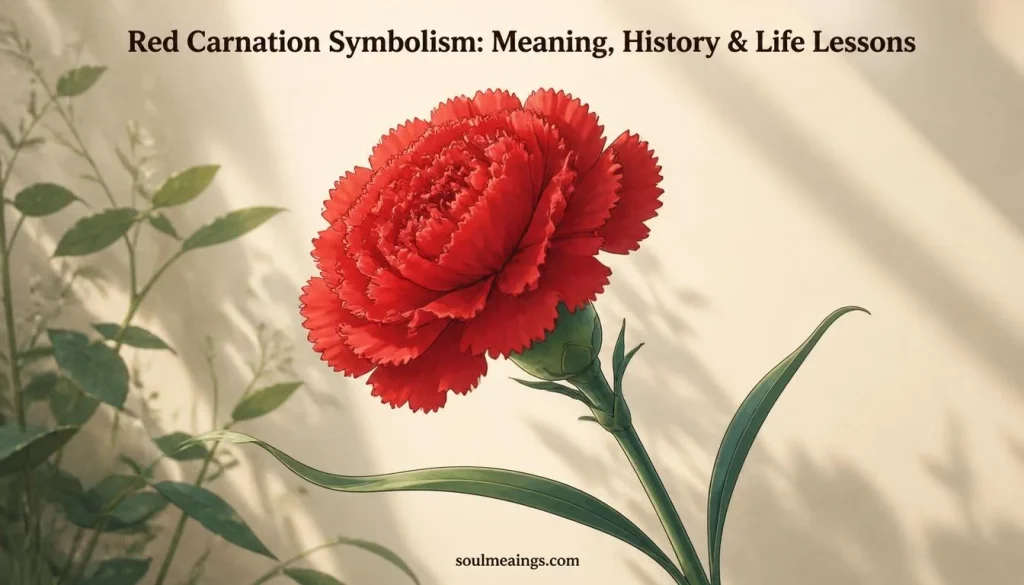
Red Carnation Symbolism explores how these beautiful flowers represent love, admiration, remembrance, and deep emotions across cultures.
Red carnations hold special meaning in the United States, where they often symbolize romantic love, affection, devotion, and passion. Their rich red shade reflects lasting love, respect, and appreciation. As meaningful flowers, they help express heartfelt feelings and carry deep emotional and cultural significance.
The history of red carnations connects with the language of flowers, through which people expressed emotions without words. Their traditional symbolism includes fascination, distinction, and elegance.
Today, red carnations remain symbolic flowers associated with romantic gestures, emotional connections, and meaningful relationships. They remind us that small acts of kindness can communicate love and admiration and create lasting emotional value.
Quick Answer
Red carnation symbolism in the United States primarily represents deep love, admiration, devotion, and respect. Across different cultures, red carnations can also symbolize remembrance, courage, solidarity, and lasting emotional connections.
TL;DR
- Red carnations commonly represent love, passion, and heartfelt admiration.
- Their historical meanings connect with affection, religious traditions, and public movements.
- In America, they appear in gifts, ceremonies, celebrations, and memorials.
- Their red color often communicates courage, commitment, and emotional strength.
- Modern tattoos and floral arrangements can express loyalty and personal identity.
- Their deeper lesson is to show love through consistent actions.
read more: Baby Deer Symbolism: Spiritual Meaning, Life Lessons & Culture
What Does Red Carnation Symbolism Mean?
Red carnations are flowering plants known for their layered petals, green stems, and rich colors. Their distinctive appearance makes them popular in bouquets and ceremonial arrangements.
Although carnations grow in several colors, red varieties are especially associated with powerful feelings. Their symbolism combines the emotional associations of red with the flower’s long history of affection and respect.
The Main Symbolic Meanings
Red carnations commonly express:
- Romantic love: A strong emotional bond, attraction, and heartfelt affection.
- Admiration: Appreciation for someone’s qualities, achievements, or character.
- Devotion: Loyalty that remains meaningful through changing circumstances.
- Respect and remembrance: Honor for people, relationships, or important shared experiences.
- Courage and solidarity: Commitment to a cause, community, or deeply held belief.
These meanings are common interpretations rather than universal rules. The relationship between the giver and receiver often matters as much as the flower itself.
Why the Flower’s Appearance Matters
A red carnation has densely layered petals that create a full, ruffled appearance. This shape can suggest abundance, warmth, and emotional depth.
Meanwhile, its sturdy stem and long-lasting blooms contribute to associations with endurance and devotion. Its vivid color draws attention, making it suitable for occasions when feelings deserve a clear expression.
Historical Origins of Red Carnation Symbolism
Carnations have a long cultural history, although their exact symbolic meanings have changed over time. Their story includes ancient Mediterranean traditions, European religious art, and later social customs.
Ancient Roots and Early Traditions
Carnations belong to the genus Dianthus, which includes several flowering plants native to parts of Europe and Asia. The name Dianthus comes from Greek roots commonly interpreted as “divine flower” or “flower of the gods.”
However, this name alone doesn’t prove that ancient Greeks assigned red carnations their modern meanings. Ancient flower traditions were diverse, and surviving evidence doesn’t establish one continuous symbolic tradition for every carnation color.
Red flowers more broadly have often been associated with vitality, desire, and strong emotions. These associations helped shape the ways people interpreted red blooms across different periods.
Medieval Europe and Christian Art
Carnations became important in European art and religious imagery during the Middle Ages and Renaissance. In some Christian paintings, carnations appear alongside figures of Mary and the infant Jesus.
Depending on the artwork, the flower can suggest divine love, devotion, or the bond between mother and child. These interpretations developed through artistic and religious traditions rather than one fixed rule.
Over time, carnations also became familiar flowers for personal gifts and celebrations. Their beauty, availability, and lasting blooms helped them gain a place in everyday customs.
From Traditional Gifts to Public Symbols
By the nineteenth and twentieth centuries, carnations appeared in a growing range of public and personal settings. People used them to communicate affection, honor respected individuals, and mark significant occasions.
Red carnations also became connected with labor movements and political traditions in several countries. Consequently, the flower developed meanings beyond romance and family relationships.
Today, these historical layers continue to influence how people understand carnations. A single bloom may carry personal, cultural, or political significance depending on its setting.
Red Carnation Symbolism in the United States
In the United States, carnations are familiar flowers for family celebrations, romantic gestures, and public ceremonies. Their meanings reflect both personal relationships and traditions that developed over time.
Mother’s Day and Family Love
Carnations became closely associated with American Mother’s Day through the efforts of Anna Jarvis. In 1908, she distributed white carnations at an early Mother’s Day observance to honor her mother, whose favorite flower they were.
The tradition expanded as the holiday gained national recognition in 1914. Over time, red and other colored carnations also became ways to honor living mothers.
Today, families may choose red carnations to express affection, gratitude, and respect. However, color customs vary, so the giver’s intention matters more than a strict rule.
Public Celebrations and American Culture
Red carnations also appear in ceremonies honoring achievements, relationships, and community connections. Their bold color makes them suitable for bouquets, lapel flowers, and formal arrangements.
In American culture, they can communicate several messages:
- Appreciation for a parent, mentor, or respected family member.
- Love for a romantic partner during anniversaries or Valentine’s Day.
- Respect for someone whose service or achievements deserve recognition.
- Remembrance of meaningful relationships during memorial gatherings.
These uses aren’t limited to one generation or community. Instead, people adapt the flower’s traditional meanings to their own experiences.
Spiritual Meaning of Red Carnations
Red carnations can carry spiritual meanings related to love, devotion, gratitude, and the strength of personal commitments. Their significance depends on individual beliefs and the traditions surrounding their use.
Love, Devotion, and Inner Strength
For some people, a red carnation represents love that reaches beyond physical attraction. It can suggest patience, loyalty, and the willingness to care for others through difficult times.
Its lasting blooms may also inspire reflection on spiritual dedication. Rather than treating the flower as a supernatural sign, people can use it as a reminder of their values.
Common spiritual interpretations include:
- Devotion: Staying committed to people and principles that matter.
- Gratitude: Recognizing the care and kindness received from others.
- Courage: Facing personal challenges with hope and determination.
- Renewed connection: Rebuilding relationships through honesty and compassion.
Religious and Personal Interpretations
In some Christian artworks, red carnations are associated with divine love and the Passion of Christ. These meanings arise from particular religious images and artistic traditions.
Outside formal religion, people may attach personal significance to a flower received during a major life event. A red carnation might remind someone of a loved one, a promise, or a moment of unexpected kindness.
No single spiritual meaning applies to everyone. Personal experience and cultural background shape how the flower is understood.
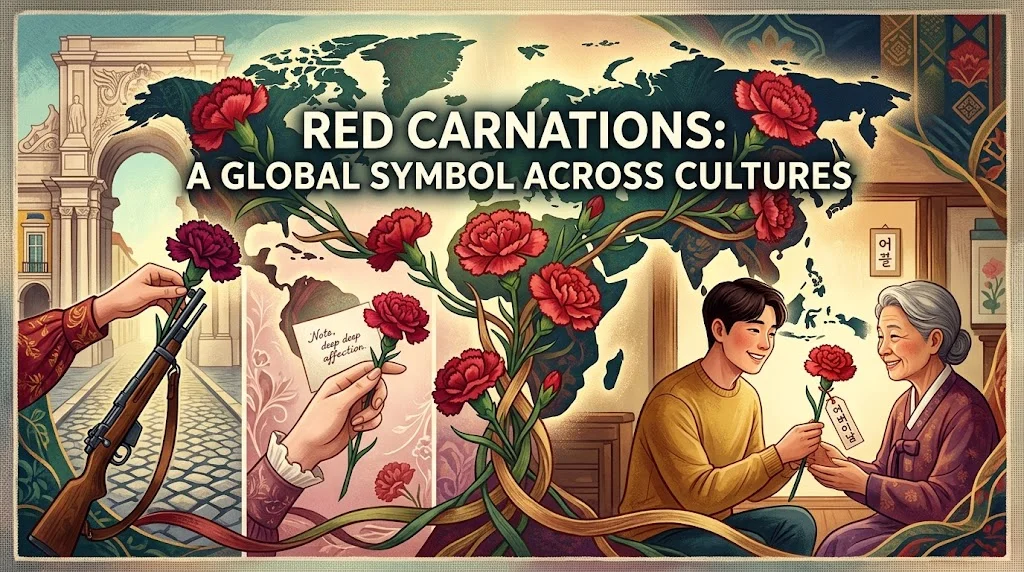
Red Carnations in Different Cultures
Carnation symbolism extends beyond the United States. Across different societies, the flower can express affection, gratitude, political commitment, or remembrance.
European Traditions
In European flower language, red carnations have often represented deep affection and admiration. During the Victorian era, people sometimes used flowers to communicate feelings that social customs made difficult to express openly.
Red carnations also acquired political meaning in parts of Europe. In Portugal, they became a powerful symbol of the 1974 Carnation Revolution, when flowers were associated with the largely peaceful military movement that brought down the country’s authoritarian regime.
This history shows how a flower can become connected with freedom and collective change. Its meaning can grow beyond the intentions of individual people.
Asian Traditions and Family Respect
In South Korea, carnations are strongly associated with Parents’ Day, observed on May 8. Children commonly give carnations to parents as expressions of love and gratitude.
Red and pink carnations can communicate appreciation and affection in this setting. The custom highlights the importance of family relationships and respect across generations.
A Respectful Cross-Cultural View
Although carnations appear in many traditions, their meanings aren’t identical everywhere. In some settings, they are celebratory flowers; in others, they may be associated with mourning or political history.
Before giving red carnations at a culturally significant event, consider local customs. A little awareness helps ensure that your gesture communicates the respect you intend.
Emotional and Psychological Meaning of Red Carnations
Flowers often communicate emotions through their colors, shapes, scents, and cultural associations. Red carnations combine these qualities in a way that many people connect with warmth, affection, and emotional intensity.
Why Red Feels Powerful
Red is often associated with love, energy, passion, and urgency. These associations influence how people respond to red flowers, although individual reactions vary.
The carnation’s full petals add another layer of meaning. Their rounded, closely packed form can suggest abundance, warmth, and a feeling of emotional fullness.
Together, these features make red carnations suitable for expressing feelings that are sincere and strong. Still, a flower’s color cannot reliably reveal someone’s personality or intentions.
Lessons About Emotional Relationships
Red carnations can inspire useful reflections on how people build and maintain relationships.
- Show affection openly: Let important people know they matter to you.
- Practice loyalty: Support loved ones through ordinary and difficult moments.
- Express appreciation: Recognize kindness instead of assuming it goes unnoticed.
- Respect emotional boundaries: Offer affection without demanding a particular response.
- Remember shared experiences: Use meaningful objects to celebrate relationships and preserve memories.
These lessons come from the flower’s symbolism, not from any proven psychological effect. Their value lies in how people apply them to everyday life.
Red Carnation Color Shades and Their Meanings
Not every red carnation looks the same. Some have bright scarlet petals, while others display deep crimson or burgundy tones.
Although floral color meanings aren’t universal, shade can influence the message a bouquet appears to convey.
Light Red, Deep Red, and Burgundy
Light Red Carnation
Often associated with admiration, warmth, and affectionate appreciation. It can suit a thoughtful gift for someone you respect.
Bright Red Carnation
Commonly expresses love, passion, and enthusiasm. It’s a natural choice for romantic gifts and joyful celebrations.
Dark Red or Burgundy Carnation
Can suggest deep affection, mature devotion, dignity, and emotional depth. It works well in elegant arrangements.
A Quick Meaning Table
| Context | Meaning in the USA | Common Associations | Notes |
| Romantic bouquet | Love and attraction | Passion, closeness | A personal message adds meaning |
| Mother’s Day | Affection and gratitude | Family, devotion | Color customs vary |
| Formal ceremony | Respect and admiration | Honor, appreciation | Often paired with other flowers |
| Memorial arrangement | Love and remembrance | Memory, enduring bonds | Depends on the service |
| Personal gift | Emotional connection | Loyalty, warmth | Meaning depends on the relationship |
The most important factor is the message behind the gift. A simple red carnation can become deeply meaningful when it reflects a genuine relationship.
Red Carnations in Tattoos, Art, and Personal Style
Red carnations have a recognizable shape and strong color, making them useful in visual art. Their symbolism also allows people to connect the flower with personal memories or values.
Red Carnation Tattoo Meaning
A red carnation tattoo can represent love, family, remembrance, or devotion. Some people choose it to honor a parent, partner, or another person who shaped their lives.
Others use it to symbolize resilience or a commitment they want to carry forward. The meaning becomes more personal when combined with dates, initials, or other meaningful designs.
Common design choices include:
- A single carnation representing one important relationship.
- A stem with leaves symbolizing growth and continuity.
- A bouquet honoring several loved ones or shared memories.
- A carnation paired with a name or date commemorating someone special.
No tattoo design has a universal meaning. The wearer’s story provides the clearest explanation.
Art, Fashion, and Home Decor
In paintings and illustrations, red carnations can draw attention to themes of love, beauty, or remembrance. Their layered petals also create interesting textures for floral designs.
In fashion, a red carnation worn on a jacket or lapel can add color and express appreciation for a special occasion. At home, the flower can create a warm focal point in a dining room or living space.
Today, social media also gives people new ways to share flower symbolism. A photograph of a red carnation may accompany a tribute, anniversary message, or post celebrating an important relationship.
read more: Nightingale Bird Symbolism: Love and Spiritual Meaning
Red Carnations for Love, Friendship, and Family
Red carnations are often chosen when people want a flower that feels affectionate without being overly formal. Their meaning can shift depending on who receives them and why.
Romantic Love
For romantic partners, red carnations can express passion, admiration, and continuing commitment. They offer an alternative to roses while retaining a strong message of affection.
They can accompany an anniversary card, a heartfelt note, or a spontaneous gesture of appreciation. The thought behind the gift often matters more than its price or size.
Friendship and Family Bonds
Red carnations can also celebrate relationships that aren’t romantic. Their symbolism can fit close friendships, supportive siblings, and relatives who have made a lasting difference.
For example, a bouquet might recognize a friend’s loyalty during a difficult year. It could also thank a family member for years of practical care and encouragement.
Choosing the Right Occasion
Consider the relationship and the message you want to communicate:
- Choose red carnations for heartfelt appreciation and strong affection.
- Add a personal note when the relationship has special history.
- Combine them with softer colors for a balanced, thoughtful bouquet.
- Ask about cultural or family preferences when the occasion is sensitive.
A flower is most meaningful when it reflects the receiver’s personality and the giver’s genuine intentions.
Misunderstandings and Controversies Around Red Carnations
Red carnations generally have positive associations, but their meanings aren’t always simple. Historical context, political movements, and personal experiences can influence how people interpret them.
Are Red Carnations Always Romantic?
No. Although red carnations commonly symbolize love and affection, they can also express respect, gratitude, remembrance, or solidarity.
A red carnation given to a parent may communicate family love. The same flower presented at a public ceremony might represent admiration or shared commitment.
It’s best to consider the occasion before assuming a romantic meaning. The giver’s words and the relationship provide important clues.
Political and Historical Associations
Red carnations have appeared in labor movements and political traditions, especially in parts of Europe. Their connection with Portugal’s 1974 Carnation Revolution gives them a lasting association with political change and freedom.
However, a red carnation isn’t automatically a political statement. Most floral gifts in everyday American life are chosen for personal or decorative reasons.
The flower’s historical associations matter most when it’s used in a setting where those meanings are recognized.
Avoiding Symbolic Assumptions
Flower meanings can become misleading when people treat them as fixed rules. A red carnation doesn’t prove romantic interest, political affiliation, or a particular spiritual belief.
Instead, interpret the flower in context. When its meaning matters, a direct and respectful conversation is more reliable than guessing.
How Red Carnation Symbolism Has Changed Over Time
Red carnation symbolism has developed through art, family traditions, public movements, and everyday relationships. Its history shows how familiar objects can acquire new meanings without losing older ones.
From Ancient Flower to Modern Gift
The carnation was cultivated in the ancient Mediterranean world and later became a familiar subject in European art. Religious imagery and flower-language traditions added layers of meaning over the centuries.
During the nineteenth century, the popularity of floral messages helped make color an important part of interpretation. Red carnations became associated with admiration and deep affection.
In the twentieth century, their use in family celebrations and political events expanded their significance. Today, they remain both traditional flowers and personal symbols.
Which Meanings Remain Relevant Today?
Several associations continue to appear in modern floral customs:
- Love and affection remain common reasons for giving red carnations.
- Admiration and respect suit ceremonies, achievements, and thoughtful gifts.
- Family devotion connects carnations with Mother’s Day and other celebrations.
- Solidarity and change remain important in certain historical and political contexts.
- Personal remembrance allows the flower to honor relationships and meaningful experiences.
Some interpretations are more common in particular countries or historical settings. Modern meanings often blend tradition with individual experience rather than replacing older associations entirely.
Life Lessons From Red Carnation Symbolism
Beyond its beauty and history, the red carnation can inspire practical lessons about how we treat others. Its strongest associations point toward love, consistency, appreciation, and courage.
Love Requires Action
A red carnation can represent deep affection, but meaningful relationships need more than symbolic gestures. Listening, offering support, and keeping promises help turn affection into everyday care.
Giving flowers can begin a meaningful conversation. However, lasting love grows through repeated actions and mutual respect.
Appreciation Should Be Expressed
People sometimes wait for special occasions to thank those who matter. The red carnation offers a reminder that appreciation can be expressed during ordinary moments, too.
A thoughtful message or sincere compliment may mean as much as a bouquet. What matters is recognizing another person’s contribution before the opportunity passes.
Stay Committed to What Matters
The carnation’s lasting bloom can serve as a reminder of perseverance. Relationships, personal goals, and meaningful responsibilities often require patience rather than dramatic gestures.
This doesn’t mean remaining in harmful situations or ignoring personal boundaries. Instead, it encourages commitment to values that support healthy relationships and personal growth.
Remember the Power of Small Gestures
A single flower can communicate care without requiring an elaborate explanation. Similarly, small acts of kindness can strengthen connections over time.
The lesson is simple: meaningful gestures become more powerful when they reflect sincere intentions.
FAQs About Red Carnation Symbolism
1. What does a red carnation symbolize?
A red carnation symbolizes love, admiration, passion, and deep affection. It can also express respect, devotion, and heartfelt appreciation.
2. What is the spiritual meaning of red carnations?
The spiritual meaning of red carnations often relates to love, emotional strength, devotion, and meaningful connections. They can remind people to appreciate the love in their lives.
3. What do red carnations mean in American culture?
In the United States, red carnations are commonly associated with love, admiration, and remembrance. They are often given to express affection or honor someone special.
4. Do red carnations symbolize romantic love?
Yes, red carnations symbolize romantic love, passion, and lasting affection. They make thoughtful gifts for anniversaries, Valentine’s Day, and other special occasions.
5. What is the historical meaning of red carnations?
The historical meaning of red carnations connects with the language of flowers, a tradition of using flowers to express emotions. Their symbolism has developed through cultural customs and personal relationships.
6. When should you give someone red carnations?
You can give red carnations on anniversaries, romantic occasions, celebrations, or other meaningful days. They express love, admiration, appreciation, and emotional support.
Conclusion
Red Carnation Symbolism: Meaning, History & Life Lessons explains how these flowers communicate powerful emotions through color, tradition, and cultural meaning. Red carnations commonly represent love, admiration, passion, devotion, and remembrance, making them meaningful gifts for different occasions.
Their connection with the language of flowers gives them lasting symbolic value. Whether given to a partner, friend, or loved one, red carnations offer a simple way to express deep love, respect, and appreciation. Their meaning reminds us that even small gestures can strengthen relationships and create lasting emotional connections.

Sophia Wilson is a spiritual content writer and researcher at SoulMeanings.com, specializing in dream meanings, symbolism, spiritual insights, and personal growth topics that help readers navigate life’s journey with greater understanding.


Pingback: Lilac Flower Symbolism: Love, Renewal & Spiritual Meaning