
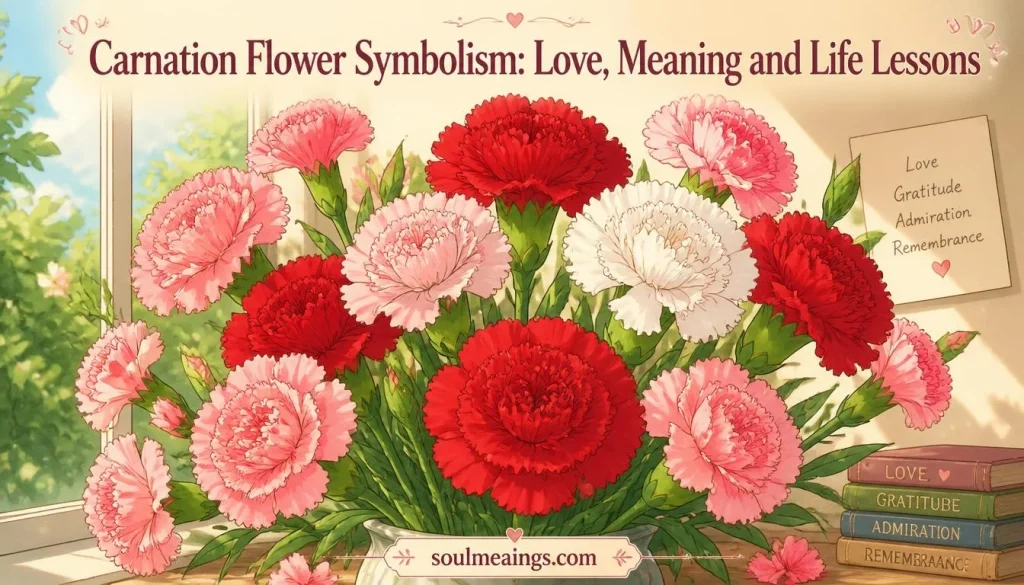
Carnation Flower Symbolism explores how carnations represent love, affection, gratitude, family bonds, and devotion.
These beautiful flowers are admired for their soft petals, ruffled petals, and rich colors. People choose carnations for bouquets, holidays, school events, and special occasions because they express meaningful emotions.
Their symbolism also includes care, admiration, appreciation, respect, tenderness, and loyalty. Carnations turn simple gifts into thoughtful expressions of love and personal connections.
Carnations have a rich floral history, with cultivation dating back thousands of years. Although their exact botanical origin remains uncertain, experts associate them with the Mediterranean region. Throughout history, these colorful flowers became part of floral traditions, cultural practices, and ceremonies.
Their cultural significance and spiritual meaning connect with relationships, devotion, and emotional expression. Today, carnations offer valuable life lessons about kindness, gratitude, meaningful gestures, and showing appreciation to others.
Quick Answer
Carnation flower symbolism in the United States centers on love, admiration, gratitude, and remembrance. Pink carnations often represent lasting affection, red ones express deep love, and white ones symbolize purity and cherished memories.
TL;DR
- Red carnations represent deep love, affection, and admiration.
- Pink carnations symbolize gratitude, appreciation, and lasting remembrance.
- White carnations represent purity, innocence, and motherly love.
- Yellow carnations traditionally suggest disappointment or rejection.
- Purple carnations are associated with unpredictability and changing moods.
- In America, carnations have a special connection with Mother’s Day.
What Is Carnation Flower Symbolism?
Carnation symbolism comes from the flower’s appearance, color, history, and cultural traditions. It connects natural beauty with human emotions and relationships.
Understanding the Carnation Flower
Carnations belong to the Dianthus genus and are known for their layered petals. Their flowers have softly ruffled edges and a sweet, slightly spicy fragrance.
They grow in several colors, including red, pink, white, yellow, purple, and green. Some varieties also feature stripes, mixed shades, or contrasting edges.
Their long stems and lasting blooms make them popular in American flower arrangements. Consequently, they often appear at celebrations, ceremonies, and memorial gatherings.
Why Carnations Carry Symbolic Meaning
Carnations communicate feelings that people sometimes struggle to express through words. Their colors provide different emotional messages.
• Love and devotion in close relationships.
• Gratitude toward parents, friends, and loved ones.
• Remembrance of people who have passed away.
• Beauty, dignity, and appreciation for life’s simple moments.
Historical Origins of Carnation Flower Symbolism
Carnations have a long history in Mediterranean culture. Their symbolic importance developed through ancient traditions, religious imagery, and European flower customs.
Ancient Greek and Roman Connections
The carnation has been cultivated for thousands of years. Historical records connect its cultivation with ancient Greek and Roman societies.
Its botanical name, Dianthus, comes from Greek words meaning divine and flower. This connection helps explain its association with beauty and heavenly qualities.
Ancient Greeks used flowers in ceremonies, decorations, and celebrations. However, specific modern color meanings shouldn’t automatically be assigned to their practices.
Religious and Medieval Traditions
During the Christian era, carnations gained associations with love, devotion, and religious remembrance. Later European traditions connected the flower with images of the Virgin Mary.
One popular Christian legend says carnations grew where Mary’s tears fell during Jesus’s journey to the cross. This story helped strengthen the flower’s association with maternal love and sorrow.
However, this is a religious legend rather than an established botanical explanation.
The Victorian Language of Flowers
During the Victorian era, flowers became a popular way to communicate private feelings. This practice was called floriography, or the language of flowers.
People used floral dictionaries to understand the messages behind different blooms. Carnations developed distinct meanings depending on their colors and patterns.
For example:
• Red carnations communicated affection and romantic feelings.
• Pink carnations expressed gratitude and lasting remembrance.
• Yellow carnations suggested disappointment or rejection.
• Striped carnations traditionally communicated refusal.
These interpretations became influential in European and American flower-giving traditions. However, different dictionaries sometimes assigned different meanings.
Carnation Flower Symbolism in the USA
In the United States, carnations have a particularly strong connection with family love and Mother’s Day. Their cultural importance also extends to celebrations, memorials, and everyday relationships.
The American Mother’s Day Tradition
Carnations became closely connected with Mother’s Day through Anna Jarvis, the holiday’s founder. She selected them because they were her mother’s favorite flowers.
On May 10, 1908, Jarvis sent 500 white carnations to a church service in Grafton, West Virginia. The flowers honored mothers and helped establish a lasting American tradition.
President Woodrow Wilson officially recognized Mother’s Day in 1914. By then, carnations had already become closely associated with the celebration.
Why Americans Wear Carnations on Mother’s Day
Traditionally, white carnations honor mothers who have passed away. Pink and other colored carnations celebrate living mothers.
However, these customs aren’t strict rules. Families can choose flowers according to personal preferences and memories.
Carnations in American Everyday Culture
Beyond Mother’s Day, carnations appear in many important moments.
• Weddings use carnations to represent affection and commitment.
• Memorial arrangements honor loved ones and preserve their memories.
• Graduations use flowers to celebrate achievement and encouragement.
• Valentine’s Day bouquets express romantic affection and appreciation.
• School and community events use carnations as affordable decorative flowers.
Carnation Color Meanings and Symbolism
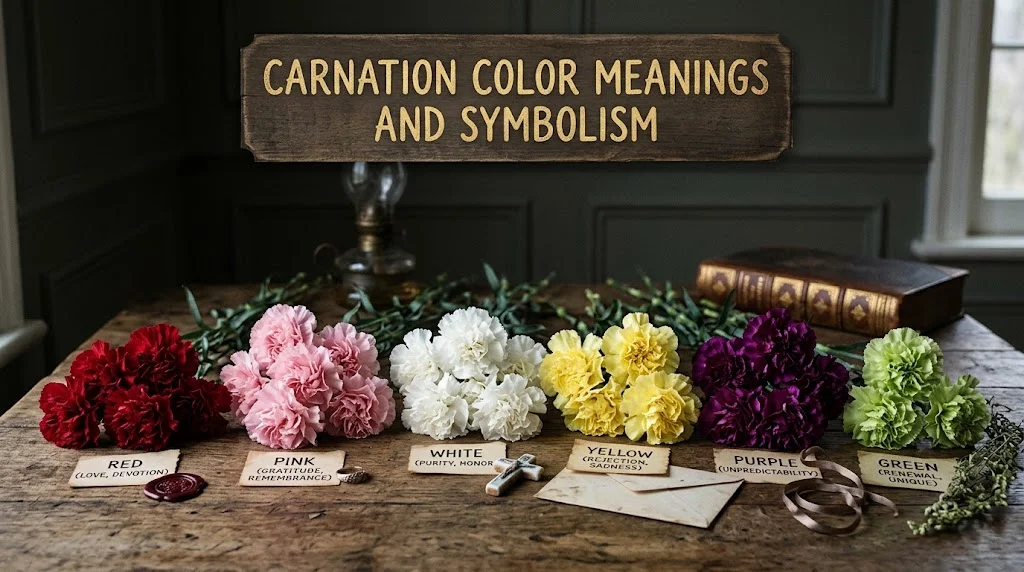
Color plays an important role in carnation flower symbolism. Each shade carries different traditional associations, although personal meanings can vary.
Red Carnation Meaning
Love, admiration, and devotion
Red carnations represent strong affection and emotional commitment. Darker red shades often suggest deep romantic love, while lighter reds can express admiration.
Pink Carnation Meaning
Gratitude, affection, and remembrance
Pink carnations have a special connection with maternal love. They can also express appreciation and the message, “I will never forget you.”
White Carnation Meaning
Purity, innocence, and remembrance
White carnations represent sincere affection and gentle love. In America, they’re especially meaningful when honoring deceased mothers.
Yellow Carnation Meaning
Disappointment and rejection
Traditional Victorian flower language associated yellow carnations with disappointment. Today, their cheerful color can also suggest friendship and happiness.
Purple Carnation Meaning
Unpredictability and individuality
Purple carnations traditionally suggest capriciousness, meaning unpredictable behavior. Modern interpretations can connect them with creativity and individuality.
Green Carnation Meaning
Renewal, uniqueness, and individuality
Green carnations can suggest freshness and new beginnings. They’re also used in festive arrangements, particularly around St. Patrick’s Day.
Carnation Color Meaning Table
| Color | Common Meaning | Common Associations |
| Red | Deep love | Romance and devotion |
| Pink | Gratitude | Motherly affection |
| White | Purity | Innocence and remembrance |
| Yellow | Disappointment | Rejection and changing feelings |
| Purple | Unpredictability | Individuality and creativity |
| Green | Renewal | Freshness and celebration |
These meanings reflect traditional flower language, not universal rules. The occasion and relationship matter just as much.
Spiritual Meaning of Carnations
Carnations carry spiritual meanings connected with love, compassion, devotion, and remembrance. These interpretations come from religious stories, cultural traditions, and personal beliefs.
Carnations as Symbols of Divine Love
The Greek name Dianthus means divine flower. This name gives carnations a historical connection with sacred beauty.
In Christian traditions, carnations sometimes represent Mary’s love and suffering. Their association with motherhood also makes them meaningful in religious artwork and ceremonies.
Spiritual Lessons Behind the Flower
People may interpret carnations as reminders of important spiritual values.
• Love can remain strong through difficult experiences.
• Compassion helps people build meaningful relationships.
• Gratitude makes ordinary moments feel more valuable.
• Remembrance keeps important connections alive.
• Inner beauty matters beyond outward appearance.
These are personal interpretations rather than fixed religious teachings. Different spiritual traditions may understand flowers in different ways.
Carnation Symbolism Across Different Cultures
Carnations have traveled through different countries and traditions. Their meanings depend on local customs, historical experiences, and social occasions.
Carnations in European Traditions
European flower traditions connected carnations with beauty, pride, affection, and admiration. During the Victorian period, their colors became part of a larger system of emotional communication.
In Spain, carnations hold an important place in national cultural identity. They’re widely associated with celebrations, traditional floral displays, and artistic expression.
Carnations in Asian Traditions
In Korea, carnations are associated with respect and appreciation for parents. Children traditionally give them to parents during Parents’ Day celebrations.
This custom reflects the importance of family relationships and gratitude. It also shows how one flower can express similar values through different cultural traditions.
Understanding Cultural Differences
A flower doesn’t communicate exactly the same message everywhere.
• Some traditions connect carnations with parental respect.
• European flower language emphasizes beauty and romantic feelings.
• Christian interpretations sometimes connect them with maternal devotion.
• Modern American customs emphasize affection and remembrance.
Respecting these differences helps prevent misunderstandings when giving flowers.
Emotional and Psychological Meaning of Carnations
Flowers can influence how people experience a space or remember an event. Carnations often create emotional connections through their colors, fragrance, and familiar appearance.
Carnations and Human Emotions
Different carnation colors can suggest different emotional experiences. Red may create feelings of passion, while pink often feels gentle and affectionate.
White carnations can communicate peace and sincerity. Meanwhile, yellow varieties may create cheerful impressions despite their older association with rejection.
What Carnations May Represent Personally
People often connect flowers with memories and meaningful relationships.
• A pink carnation may remind someone of a caring parent.
• A red carnation may represent a lasting romantic relationship.
• A white carnation may honor someone deeply missed.
• A yellow carnation may symbolize personal happiness and optimism.
Personal experiences often matter more than traditional flower dictionaries. A flower’s meaning can change depending on who gives it and why.
Carnation Flower Symbolism in Love and Relationships
Carnations have long represented affection, loyalty, and emotional connection. They’re especially useful when someone wants to express feelings without choosing traditional roses.
Carnations as Symbols of Romantic Love
Red carnations can communicate strong romantic feelings. Their rich color makes them suitable for anniversaries, Valentine’s Day, and meaningful celebrations.
Pink carnations offer a softer message. They can express admiration, tenderness, and appreciation for a romantic partner.
Family Love and Lasting Connections
Carnations aren’t limited to romantic relationships. Their association with Mother’s Day makes them powerful symbols of family affection.
They can also represent appreciation for grandparents, siblings, friends, and other important people.
Lessons About Healthy Relationships
Carnations can inspire several meaningful lessons about love.
• Strong relationships need patience and consistent care.
• Gratitude helps people recognize everyday acts of kindness.
• Loyalty grows through trust and mutual respect.
• Genuine affection doesn’t depend on expensive gifts.
Carnation Flower Symbolism in Tattoos and Personal Identity
Flower tattoos allow people to carry meaningful symbols throughout their lives. Carnations offer a combination of beauty, family connections, and personal expression.
Popular Carnation Tattoo Meanings
A carnation tattoo can represent different experiences depending on its color and design.
• Red carnation tattoos can represent romantic devotion.
• Pink designs may honor mothers or meaningful relationships.
• White carnations can symbolize remembrance and peaceful memories.
• Purple carnations may express individuality and creative thinking.
Why People Choose Carnation Tattoos
Some people select carnations to remember a parent or family member. Others choose them because January is their birth month.
The flower can also represent personal growth, gratitude, or a meaningful life experience. Its layered petals make it suitable for both realistic and minimalist designs.
Personal Meaning Matters
Tattoo symbolism doesn’t follow one universal dictionary. A carnation tattoo can carry a private message known only to its owner.
Therefore, the story behind the design matters more than traditional color associations.
read more: Queen of the Night Flower Symbolism: Mystique and Life Lessons
Carnations in Modern Fashion, Decor, and Social Media
Carnations remain popular because they combine visual beauty with practical versatility. Modern design has also introduced new ways to use them.
Carnations in Home Decor
Carnations can brighten living rooms, dining areas, and bedrooms. Their many colors make them suitable for different interior styles.
• White arrangements create a clean and peaceful atmosphere.
• Pink flowers add warmth to bedrooms and living spaces.
• Red carnations introduce a bold romantic accent.
• Mixed arrangements bring color to everyday celebrations.
Carnations in Social Media
Social media has helped people share flower meanings through photographs, captions, and personal stories. Carnations often appear in Mother’s Day posts, birthday tributes, and memorial messages.
A picture of a white carnation might communicate remembrance. A pink bouquet may express appreciation for someone important.
However, online interpretations aren’t always historically accurate. Many posts simplify traditional meanings or combine them with modern personal beliefs.
Carnations in Fashion and Branding
Carnation designs also appear in clothing patterns, jewelry, stationery, and decorative accessories. Their layered petals make recognizable floral designs.
Some people wear carnations to communicate affection or honor a special occasion. Others simply appreciate their beauty without attaching a deeper message.
Carnations in Holidays, Celebrations, and Special Occasions
Carnations are suitable for many occasions because their meanings can adapt to different relationships. In the United States, their strongest holiday association remains Mother’s Day.
Mother’s Day
White and pink carnations are especially popular for Mother’s Day arrangements. They honor maternal love, appreciation, and family memories.
Weddings and Anniversaries
Carnations can represent commitment, affection, and lasting relationships. They’re also popular in bouquets and decorative arrangements.
Their versatility makes them suitable for both traditional and modern wedding styles.
Memorial Services
White carnations often appear in sympathy arrangements. They can express respect, remembrance, and affection for someone who has passed away.
Other Special Occasions
• Graduations celebrate personal achievement and new opportunities.
• Birthdays offer opportunities to express affection and appreciation.
• Valentine’s Day arrangements communicate romantic interest and devotion.
• Family gatherings celebrate shared memories and meaningful relationships.
Misunderstandings and Controversies About Carnation Symbolism
Carnation meanings can sometimes cause confusion. Historical flower language doesn’t always match modern interpretations.
Are Yellow Carnations Always Negative?
No. Victorian flower dictionaries often associated yellow carnations with disappointment or disdain.
Today, yellow flowers can also represent happiness, friendship, and positive energy. Their meaning depends on the giver, recipient, and occasion.
Do White Carnations Always Represent Death?
No. White carnations can symbolize purity, innocence, and sincere affection.
Their association with deceased mothers comes mainly from American Mother’s Day traditions. They aren’t exclusively funeral flowers.
Are Carnations Less Meaningful Than Roses?
Some people consider roses more romantic or luxurious. However, carnations have their own cultural and emotional importance.
Their Mother’s Day history gives them a particularly meaningful place in American culture. Their symbolism also extends beyond romantic relationships.
Avoid Treating Flower Meanings as Universal Rules
Flower symbolism is shaped by culture and personal experience.
• Historical meanings can differ between floral dictionaries.
• Modern color interpretations may change with social customs.
• Personal memories can outweigh traditional symbolic associations.
• A flower’s purpose matters more than a rigid definition.
Understanding this context helps people choose flowers thoughtfully.
How Carnation Flower Symbolism Has Changed Over Time
Carnations have maintained their popularity while their meanings have evolved. Their history shows how natural objects gain new significance through changing traditions.
From Ancient Beauty to Religious Meaning
Ancient Mediterranean societies cultivated carnations for their beauty. Later, European traditions connected them with sacred imagery, devotion, and admiration.
From Victorian Messages to American Family Traditions
Victorian flower language gave carnations more specific emotional meanings. During the early twentieth century, Anna Jarvis helped establish their American Mother’s Day connection.
The flower gradually became associated with family affection and remembrance. This tradition remains recognizable today.
Carnations in Contemporary Culture
Modern flower arrangements focus more on personal preferences than strict symbolic rules. People choose carnations for their appearance, affordability, colors, and emotional associations.
However, traditional meanings still influence how people understand them. Their symbolism continues to adapt without losing its historical foundation.
FAQs About Carnation Flower Symbolism
1. What does carnation flower symbolism mean?
Carnation flower symbolism represents love, affection, gratitude, admiration, and devotion. It also reflects family connections and emotional appreciation.
2. What do carnations symbolize spiritually?
Carnations often symbolize love, purity, gratitude, strength, and spiritual devotion. Their meanings vary across cultures and personal beliefs.
3. Why are carnations associated with love?
Carnations express affection, admiration, tenderness, and lasting love. They are popular gifts for family members and loved ones.
4. What is the historical origin of carnations?
Carnations have been cultivated for thousands of years. Experts associate their origins with the Mediterranean region, although their exact native range remains uncertain.
5. What do different carnation colors represent?
- Red: Love, admiration, and affection.
- Pink: Gratitude, appreciation, and motherly love.
- White: Purity, innocence, and remembrance.
- Yellow: Disappointment or rejection in some traditions.
- Purple: Unpredictability and uniqueness.
6. What life lessons do carnations teach us?
Carnations remind us to practice kindness, gratitude, loyalty, and appreciation. They encourage us to express our feelings and value meaningful relationships.
Conclusion
Carnation Flower Symbolism: Love, Meaning and Life Lessons reveals how an ordinary flower can carry powerful emotional and cultural meanings. From love and gratitude to family bonds, admiration, and spiritual devotion, carnations express feelings that words sometimes cannot. Their long history and beautiful appearance make them meaningful gifts for many occasions. Most importantly, carnations remind us to appreciate others, show kindness, and build lasting connections through small but thoughtful gestures.

Charlotte Brown is a passionate writer at SoulMeanings.com, dedicated to exploring spirituality, symbolism, dreams, and life’s deeper meanings. Her work helps readers find clarity, inspiration, and personal insight.


Pingback: Rose Symbolism: Spiritual Meaning and Literary Insights