
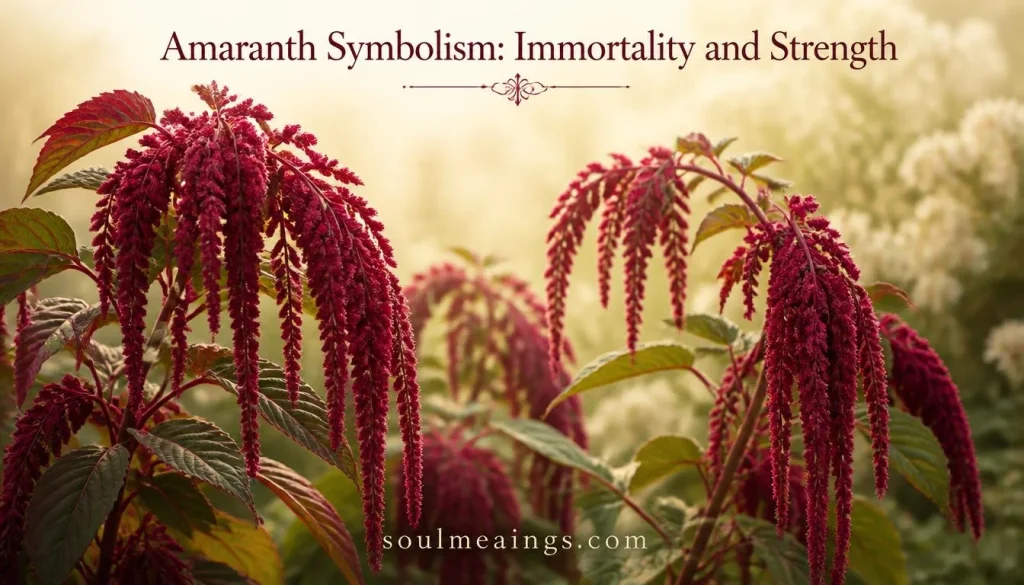

Amaranth Symbolism explores how this beautiful flower represents immortality, endurance, remembrance, resilience, and strength.
Known for its vibrant blooms, amaranth is an ancient plant with deep symbolic meaning. Its name comes from the Greek word amarantos, meaning unfading. This connection links the flower to eternal life, spiritual growth, and everlasting beauty.
Across different cultures, mythology, and art, amaranth represents timelessness and the wish to be remembered. Its greatest lesson is that true beauty comes from qualities that last beyond physical appearance.
The historical significance of amaranth connects with ancient traditions, flower meanings, and symbolism by color. Its different colors carry unique meanings across cultures and artistic traditions. Amaranth also has connections to biblical symbolism, literature, and historical beliefs.
Today, its modern uses include wedding bouquets, memorial wreaths, survival tattoos, and food gardens. Its natural color retention further supports its association with lasting beauty. These meanings also appear in contemporary plant symbolism, spiritual interpretations, and zodiac discussions.
Quick Answer
Amaranth Symbolism: Immortality, Strength & Spiritual Meaning centers on endurance, lasting love, and spiritual continuity in the United States. Its flowers represent the ability to preserve beauty through change, while its historical associations connect it with remembrance, resilience, and sacred life.
TL;DR
- Amaranth symbolizes immortality, endurance, strength, and lasting remembrance.
- Its name comes from a Greek word meaning “unfading.”
- Ancient Greek traditions connected amaranth with divine honor and eternal life.
- Indigenous American cultures valued amaranth as food and a sacred crop.
- Red and purple varieties often suggest passion, dignity, and spiritual depth.
- Today, amaranth inspires garden designs, tattoos, poetry, and personal reflection.
What Is Amaranth Symbolism?
Amaranth symbolism comes from the plant’s unusual appearance and its ability to retain color after drying. Its flower clusters often look like colorful tassels, upright plumes, or rounded blossoms. These features have helped people associate it with endurance, beauty, and life beyond physical change.
What Does the Amaranth Plant Look Like?
Amaranth belongs to the genus Amaranthus, which includes many ornamental plants and edible varieties. Some types produce long, hanging flower clusters, while others grow upright plumes or compact, globe-shaped blooms.
Their colors range from crimson and burgundy to purple, pink, green, and gold. The leaves may also display green, red, or mixed shades.
The plant’s appearance influences how people interpret its symbolism:
- Drooping tassels can suggest grief, remembrance, or the passage of time.
- Upright flower plumes may represent ambition, confidence, and determination.
- Rich red blooms evoke vitality, passion, and emotional intensity.
- Dried flowers illustrate the ability to preserve beauty beyond a season.
These meanings are symbolic interpretations, not fixed botanical rules. The flower’s meaning depends on its setting, cultural background, and the person interpreting it.
Why Does Amaranth Represent Immortality?
The central idea comes from the Greek word amarantos, meaning “unfading” or “not withering.” Certain amaranth flowers retain much of their color and shape after drying.
This quality offers a powerful image of permanence. A flower that continues looking beautiful after harvest can represent memories and values that survive change.
However, the plant itself isn’t literally immortal. Its symbolic power comes from the contrast between its lasting appearance and the temporary nature of human life.
Historical Origins of Amaranth Symbolism
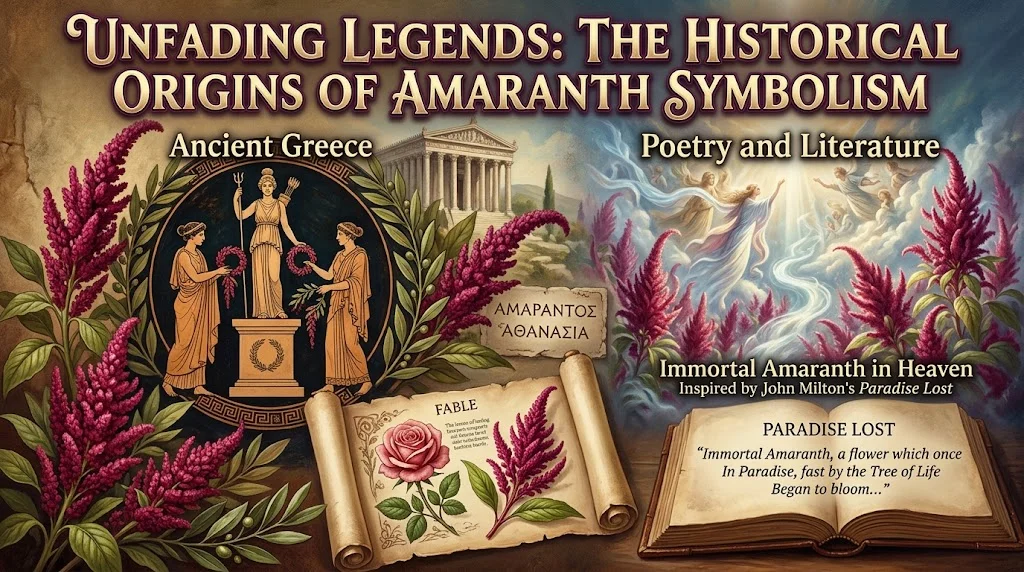
Amaranth has a long symbolic history, particularly in ancient Greek traditions and the literature that followed them. Its meanings developed through religious practices, stories, poetry, and changing ideas about death and remembrance.
Amaranth in Ancient Greece
Ancient Greek traditions connected amaranth with immortality and divine honor. Historical accounts associate the flower with Artemis, particularly her worship at Ephesus.
The flower was also linked with wreaths, sacred images, and funerary remembrance. Its resistance to fading made it a fitting emblem for honoring people or beliefs that communities hoped would endure.
An early Greek fable associated with Aesop compares amaranth with a rose. The rose possesses fragrance and beauty, but its bloom is brief. Amaranth, by contrast, represents lasting beauty.
The story offers a useful lesson: something doesn’t need to be the most striking or celebrated to possess enduring value.
Amaranth in Poetry and Literature
Over time, writers used amaranth to explore eternal life, heavenly beauty, and the persistence of memory.
In Paradise Lost, published in 1667, John Milton describes immortal amaranth growing in heaven. He uses the flower to evoke a place beyond ordinary decay and human limitations.
This literary image helped strengthen the flower’s connection with spiritual permanence. Later readers encountered amaranth not only as a plant but also as a poetic symbol of a life that transcends earthly change.
Its historical meaning therefore combines a botanical observation with a larger human hope: that love, honor, and memory can outlast physical life.
Amaranth Symbolism in the United States
In the United States, amaranth doesn’t have one universally recognized symbolic meaning. Instead, its significance comes from several traditions, including European literature, American gardening, Indigenous histories, and contemporary spiritual practices.
A Symbol of Resilience and Perseverance
Many Americans interpret amaranth as a reminder to remain steady during difficult periods. Its lasting appearance makes it a natural metaphor for holding onto one’s values while life changes.
For example, someone rebuilding their life after a setback might choose amaranth artwork to express determination. A dried flower arrangement might also represent a relationship that remains meaningful despite distance or time.
These interpretations fit broader American themes of perseverance, independence, and personal growth. Still, amaranth isn’t an official national emblem, and these associations vary from person to person.
Amaranth in American Gardens and Homes
Amaranth appears in ornamental gardens, floral arrangements, and seasonal displays. Its unusual tassels provide texture and movement, while its bold colors make it visually distinctive.
In home decor, the flower can express both natural beauty and the desire to preserve meaningful moments.
Common American interpretations include:
- Garden displays: Endurance, abundance, and the beauty of nature.
- Dried bouquets: Lasting memories and appreciation for earlier seasons.
- Memorial arrangements: Remembrance, continuing love, and honor.
- Personal artwork: Resilience, transformation, and spiritual reflection.
These uses don’t follow a single national tradition. Instead, they show how people adapt older symbols to their own experiences.
Spiritual Meaning of Amaranth
Spiritually, amaranth often represents the connection between change and continuity. Its lasting appearance can remind people that some values remain important even as circumstances shift.
Immortality and the Eternal Soul
For people who believe in an afterlife, amaranth may suggest that existence extends beyond physical death. Its historical connection with eternal life makes it a meaningful image for reflection on mortality.
Others interpret immortality in a less literal way. They may see it in the influence a person leaves behind, the kindness they share, or the memories that continue through generations.
Both interpretations focus on continuity. The difference lies in whether that continuity is understood spiritually, emotionally, or culturally.
Inner Strength and Spiritual Growth
Amaranth can also represent the strength needed to grow through uncertainty. Its bold flower clusters offer a visual reminder that beauty and purpose can persist under changing conditions.
For personal reflection, consider what the flower means in your own life:
- Remaining true to your values during a difficult transition.
- Preserving hope while accepting that circumstances change.
- Honoring loved ones without losing sight of the present.
- Finding meaning in experiences that once felt painful.
These ideas are personal interpretations rather than promises of supernatural outcomes. Amaranth can inspire spiritual reflection without requiring any particular religious belief.
Amaranth Symbolism Across Cultures
Amaranth’s history reaches beyond Europe. In particular, the plant has deep roots in the Americas, where it served as both an important food and a sacred part of certain Indigenous traditions.
Indigenous Cultures of Mesoamerica
Amaranth was an important crop in pre-Columbian Mesoamerica, including among the Aztecs. Known in Nahuatl as huāuhtli, it was valued alongside other staple foods.
Amaranth also held religious significance. During certain ceremonies, people shaped amaranth dough into figures associated with deities. These figures formed part of ritual practices and communal religious life.
Following the Spanish conquest, colonial authorities suppressed some Indigenous religious practices involving amaranth. The crop’s history therefore reflects not only sacred meaning but also the effects of cultural disruption and religious control.
Today, amaranth can represent cultural continuity, ancestral knowledge, and the recovery of Indigenous food traditions. These meanings deserve recognition on their own terms, rather than being reduced to a generic idea of spirituality.
Other Cultural and Religious Connections
Amaranth has also appeared in European Christian literature and artistic traditions. Milton’s heavenly amaranth, for example, draws on the image of a flower that doesn’t fade to portray eternal life.
In other regions, amaranth species have long been cultivated for their edible leaves or seeds. Their cultural significance may center on nourishment, agriculture, and traditional foodways rather than immortality.
| Context | Common symbolic association | Important distinction |
| Ancient Greek traditions | Immortality and divine honor | Connected with classical religious imagery and funerary remembrance |
| Indigenous Mesoamerica | Sacred practice and cultural heritage | The plant’s meaning was tied to specific communities and rituals |
| Christian literature | Eternal life and heavenly beauty | Literary symbolism isn’t the same as a universal church teaching |
| American gardens | Resilience and lasting beauty | Often reflects personal interpretation rather than formal tradition |
| Modern spiritual practice | Continuity and personal growth | Meaning depends on individual beliefs and experiences |
These traditions share some themes, but they aren’t interchangeable. Respectful interpretation recognizes each culture’s particular history.
Emotional and Psychological Meaning of Amaranth
Flowers can carry emotional meaning because people connect their appearance with memories, experiences, and personal values. Amaranth’s rich colors and unusual shape may encourage feelings of strength, comfort, or quiet reflection.
What Emotions Does Amaranth Represent?
Amaranth’s symbolic associations often combine hope with an awareness of life’s temporary nature. Its lasting appearance can offer reassurance, while its historical connection with mourning acknowledges loss.
Depending on the setting, the flower may suggest:
- Hope: The possibility of finding meaning after a difficult period.
- Comfort: The desire to preserve memories of loved ones.
- Confidence: Pride in personal strength and endurance.
- Reflection: Awareness of time, change, and life’s deeper questions.
- Gratitude: Appreciation for beauty that remains after a moment has passed.
These emotional responses aren’t universal. Someone might associate amaranth with a family garden, while another person might connect it with literature or spiritual practice.
Amaranth as a Reminder of Personal Identity
Choosing a particular flower can communicate values that matter to you. Amaranth may appeal to people who value persistence, remembrance, or the idea of creating something meaningful over time.
Its symbolism can also help people describe experiences that are difficult to express directly. A single image of a lasting flower may communicate a complicated mixture of grief, hope, and determination.
However, the flower doesn’t reveal a person’s character automatically. Its meaning comes from the story and intention behind the choice.
Amaranth Color Symbolism and Their Meanings
Amaranth appears in several colors, and each can suggest a different mood or message. These associations draw on broader floral symbolism rather than a fixed code that applies to every culture.
Red, Purple, Pink, and Green Amaranth
Red amaranth often attracts attention through its intensity. Purple varieties can feel more contemplative, while pink and green varieties create gentler or more natural impressions.
- Red: Passion, vitality, courage, and enduring love.
- Purple: Dignity, mystery, spiritual reflection, and depth.
- Pink: Tenderness, affection, and emotional warmth.
- Green: Renewal, growth, and connection with nature.
- Gold or yellow tones: Abundance, warmth, and optimism.
Color meanings are flexible. A red amaranth design might honor a relationship, while purple flowers might represent personal transformation.
The surrounding imagery matters, too. A flower paired with a memorial date communicates something different from the same flower used in a cheerful garden illustration.
Amaranth Symbolism in Tattoos, Art, and Home Decor
Amaranth’s distinctive shape and historical meaning make it suitable for designs that combine natural beauty with personal significance. In contemporary American culture, its imagery can communicate endurance without relying on familiar symbols such as anchors or mountains.
Amaranth Tattoos and Personal Expression
An amaranth tattoo may represent resilience, eternal love, or the memory of someone important. Its hanging tassels can create an elegant design, while its rich colors offer room for individual expression.
People might choose an amaranth tattoo to mark a turning point, remember a loved one, or celebrate personal growth.
Possible design approaches include:
- A single crimson flower representing lasting affection.
- A botanical outline expressing simplicity and natural beauty.
- Amaranth combined with a meaningful date for remembrance.
- A cluster of flowers representing family bonds or continuity.
These are creative interpretations, not established universal tattoo meanings. The most meaningful design is one that reflects the wearer’s actual intentions.
Amaranth in Art and Interior Design
Dried amaranth can bring texture and color to wreaths, bouquets, and seasonal arrangements. Its distinctive form also works well in botanical prints, textile patterns, and illustrations.
In a home, it can suggest a preference for natural materials and objects with lasting meaning. A framed botanical drawing might celebrate nature, while a dried arrangement might preserve a memory of a special occasion.
Unlike symbols with widely recognized public meanings, amaranth allows considerable freedom. Its interpretation can remain private, even when its appearance is striking.
read more: Snapdragon Symbolism: Strength, Grace & Spiritual Meaning
Amaranth Symbolism in Dreams and Modern Spirituality
Some people interpret flowers in dreams as reflections of emotions, memories, or current life experiences. Amaranth may take on particular meaning because of its associations with endurance and permanence.
What Does Amaranth Mean in a Dream?
There is no scientifically established meaning for dreaming about amaranth. However, you can use the image as a starting point for personal reflection.
Consider the flower’s condition and the feelings you experienced in the dream. A vivid bloom might remind you of hope, while a dried arrangement could bring thoughts of memory or a past relationship.
You might ask yourself:
- What in my life am I trying to preserve?
- Am I learning to accept change?
- Does this flower remind me of someone or somewhere?
- What personal strength have I overlooked recently?
Your answers may reveal more about the dream’s personal relevance than a universal interpretation.
Amaranth as a Symbol of Renewal
Modern spiritual interpretations sometimes use amaranth to represent renewal through change. Its lasting appearance offers an image of continuity, even when life moves into a different season.
For some people, this becomes a reminder to carry forward useful lessons rather than cling to every part of the past. Others may see it as a way to honor their roots while building a new identity.
Neither interpretation is mandatory. A flower can support reflection without serving as a prediction or supernatural message.
Misunderstandings and Controversies Around Amaranth
Amaranth’s long history creates opportunities for meaningful interpretation, but it can also lead to oversimplification. Understanding the plant’s different roles helps prevent confusion between established history and modern personal beliefs.
Is Amaranth Literally Immortal?
No. Amaranth plants grow, flower, and eventually complete their life cycles. Their dried flowers may retain color and form, but that doesn’t mean the living plant never dies.
Immortality is a symbolic meaning connected with the plant’s name and appearance. It expresses an idea about endurance rather than a botanical fact.
Avoiding Cultural Oversimplification
Amaranth’s Indigenous American history is sometimes overlooked when discussions focus only on Greek mythology or modern spiritual meanings. This can leave out the plant’s role in food systems, ceremony, and cultural survival.
It’s also misleading to treat all Indigenous American communities as sharing one spiritual interpretation. Traditions differ across peoples, regions, and historical periods.
A respectful approach recognizes that:
- Ancient Greek symbolism represents one part of amaranth’s history.
- Indigenous traditions have their own distinct meanings and histories.
- Modern spiritual interpretations may differ from documented historical beliefs.
- Personal symbolism should not be presented as a universal cultural rule.
There is no inherent controversy in using amaranth as a personal symbol. The main concern is how its history is represented and whether cultural practices are described accurately.
How Amaranth Symbolism Has Changed Over Time
Amaranth’s meaning has expanded as people encountered the plant through religion, food, literature, gardening, and personal expression. Although immortality remains a familiar association, the flower now carries several overlapping interpretations.
From Sacred Flower to Modern Personal Symbol
In ancient Greek traditions, amaranth was connected with divine honor and remembrance. Later European writers developed its association with eternal life, especially through poetic descriptions of heavenly gardens.
In the Americas, amaranth also had a long-standing role as a crop and a sacred plant. Colonial suppression disrupted some traditional practices, but the plant continued to be cultivated and used in different regions.
Today, amaranth can represent both historical continuity and individual identity. Its meaning isn’t limited to one religion, literary tradition, or decorative style.
Which Meanings Remain Relevant?
The most enduring associations are those linked to the flower’s lasting appearance and cultural history.
Immortality remains important in literary and spiritual contexts. Meanwhile, resilience, remembrance, and renewal make the flower accessible to people who don’t follow a particular spiritual tradition.
This evolution illustrates how symbols work. They preserve older associations while allowing new generations to connect them with their own experiences.
FAQs About Amaranth Symbolism
1. What does amaranth symbolize?
Amaranth symbolizes immortality, strength, endurance, and everlasting beauty. It represents the ability to remain meaningful through time and change.
2. Why is amaranth associated with immortality?
Amaranth comes from the Greek word amarantos, meaning unfading. Its lasting appearance inspired its connection with eternal life and immortality.
3. What does amaranth symbolize spiritually?
Spiritually, amaranth symbolism represents resilience, spiritual growth, inner strength, and remembrance. It reminds people to remain hopeful during difficult times.
4. What do different amaranth colors mean?
Different amaranth colors carry different symbolic meanings. Red often represents love and passion, purple suggests spirituality and dignity, while white can symbolize purity and peace.
5. What does an amaranth tattoo represent?
An amaranth tattoo often represents survival, strength, remembrance, and overcoming challenges. It can also honor someone who remains important in a person’s life.
6. Is amaranth mentioned in the Bible?
Amaranth is not clearly identified as a specific biblical flower. However, its symbolism of everlasting life and endurance connects with broader biblical themes of faith and eternal life.
Conclusion
Amaranth symbolism carries a powerful message of immortality, endurance, strength, and remembrance. Its unfading nature has inspired people across cultures, traditions, and generations. From ancient mythology and literature to modern tattoos and floral arrangements, this flower continues to represent lasting beauty and resilience.
The most meaningful lesson of amaranth is that something does not need to last forever physically to leave a lasting impression. Its symbolism encourages us to value inner strength, preserve meaningful memories, and remain hopeful through life’s changes. Whether featured in art, gardens, or personal designs, amaranth remains a beautiful symbol of everlasting life, spiritual growth, and timeless beauty.

Mark Taylor is a content writer at soulmeaings.com. He writes clear, research-based articles on symbolism, spiritual meaning, and cultural interpretation, helping readers understand the ideas behind the symbols they encounter.


Pingback: Bird of Paradise Symbolism: Freedom and Spiritual Meaning
Pingback: Cherry Blossom Symbolism: Beauty, Renewal & Meaning