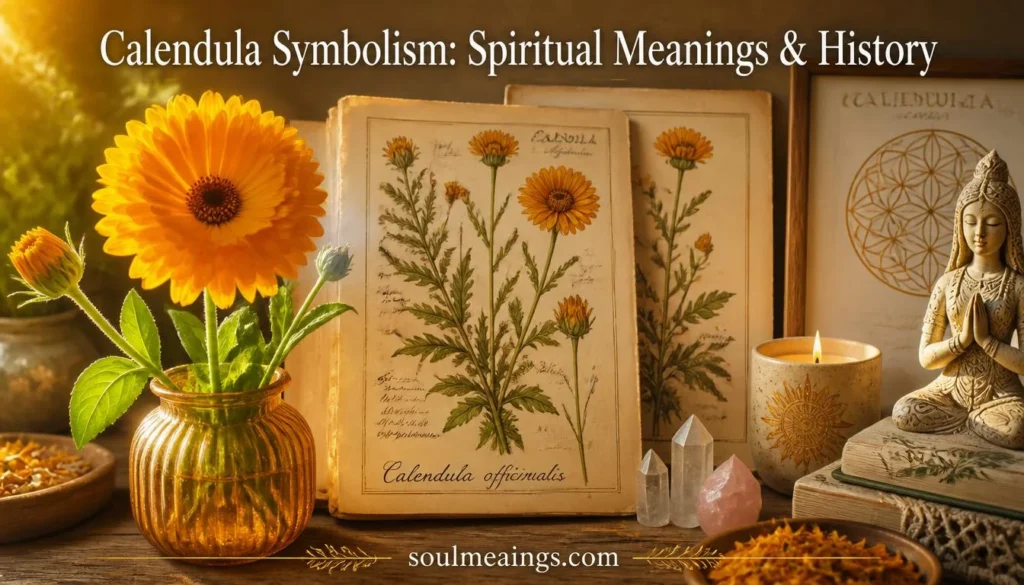
Calendula Symbolism: Spiritual Meanings & History shows how this flower connects warmth, healing, hope, and sunlight across cultures and time.
Its bright color, golden petals, and blossoms seem to radiate from the centre like the sun, creating warmth, comfort, and steady optimism. This structural fact helps explain its flower meaning across cultures and different contexts.
For over two thousand years, people have connected the flower with healing, hope, care, and spiritual meanings. Its emotional meaning also grows from garden beauty, sunlight, and the simple sight of a living plant.
The history and symbolic history of Calendula officinalis add another layer to its meaning. Known as pot marigold and English marigold, it appears in home remedy traditions, religious naming, and flower-language systems. In the United States, Americans often see it in herb gardens, skin-care products, seed catalogs, cottage-style floral design, and seasonal plantings.
This everyday familiarity makes its imagery feel connected to resilience, prosperity, affection, and useful hope rather than luxury, romance, or something overly dramatic. Some confusion comes from its common name, since Tagetes marigolds also appear in fall borders and Día de los Muertos imagery.
That distinction is important when studying their different meanings and comparing marigolds with calendula. The Fiurdelin collection shows how a poetic observation of the flower can lead to a deeper understanding of its cultural story.
Quick Answer
Calendula symbolism in the United States usually centers on healing, emotional warmth, protection, hope, and personal renewal. Across spiritual traditions, calendula is also linked with sunlight, positive energy, remembrance, and resilience during difficult times.
TL;DR
• Calendula symbolizes warmth, healing, and emotional strength.
• Ancient cultures connected it with the sun and protection.
• Americans often associate it with wellness and positivity.
• The flower appears in tattoos, decor, and spiritual practices.
• Orange and gold petals represent optimism and vitality.
• Modern meanings focus on growth, comfort, and renewal.
What Is Calendula?
Calendula is a bright flowering plant known for its golden yellow and orange petals. It belongs to the daisy family and is often called “pot marigold,” although it differs from common marigolds. In the United States, calendula is widely recognized in herbal products, cottage gardens, and natural skincare.
Because of its vibrant color and long blooming season, calendula became associated with endurance and light. The flower opens with the sun and closes at night, which helped shape many symbolic meanings over time.
How Calendula Appears Symbolically
The appearance of calendula strongly influences its symbolism. People often connect its shape and color with emotional energy and positivity.
• Golden petals symbolize sunlight and joy.
• Orange tones suggest creativity and emotional warmth.
• Circular flower heads represent continuity and renewal.
• Long blooming seasons symbolize persistence through hardship.
• Soft petals connect with comfort and gentle healing.
Why Americans Connect With Calendula
In the United States, calendula fits naturally into wellness culture and cottage-style aesthetics. It appears calming without feeling overly formal or distant.
Today, many people associate calendula with:
• Natural living and herbal traditions.
• Emotional recovery after difficult experiences.
• Self-care and personal healing rituals.
• Positive home energy and comfort.
• Quiet resilience during stressful periods.
The Historical Origins of Calendula Symbolism
Calendula symbolism has roots stretching back to ancient Mediterranean societies. Early civilizations admired the flower because it followed the movement of the sun. This connection gave calendula meanings related to vitality, cycles, and divine light.
Over time, the flower gained importance in medicine, folklore, and spiritual ceremonies. Many symbolic meanings used today developed from these early traditions.
Ancient Roman and Greek Meanings
The Romans and Greeks valued calendula for both practical and symbolic reasons. Herbal healers used the flower in remedies, while religious traditions linked it to solar energy.
Calendula often represented:
• Protection from illness and negativity.
• The life-giving power of sunlight.
• Cycles of life, death, and rebirth.
• Hope during uncertain seasons.
Medieval European Symbolism
During the Middle Ages, calendula became connected with devotion and remembrance. Monasteries commonly grew the flower in healing gardens.
People believed calendula could:
• Protect homes from bad fortune.
• Encourage emotional peace.
• Strengthen courage during grief.
• Bring spiritual comfort and guidance.
Because the flower bloomed consistently, it also symbolized loyalty and steady love.
Calendula in Folk Traditions
Folk traditions across Europe treated calendula as a protective flower. Some people placed petals near doorways or under beds to invite good energy.
These traditions later influenced American herbal and spiritual communities, especially during the rise of natural wellness movements in the twentieth century.
Spiritual Meaning of Calendula
Many spiritual interpretations of calendula focus on emotional healing and positive transformation. Its sun-like appearance gives it strong associations with inner light and hope.
In modern spiritual communities, calendula often represents recovery after emotional pain. People use it in rituals focused on peace, confidence, and renewal.
Calendula as a Symbol of Light
Calendula is commonly connected with spiritual illumination. Because the flower opens with daylight, it became linked with awakening and clarity.
Spiritually, it may symbolize:
• Emotional honesty and openness.
• Personal growth after hardship.
• Renewed optimism and motivation.
• Confidence during life transitions.
• Inner warmth and compassion.
Protection and Cleansing Energy
Some spiritual traditions view calendula as a protective flower. It is sometimes included in cleansing rituals or meditation spaces.
People may use calendula to encourage:
• Emotional balance.
• Peaceful home environments.
• Protection from negativity.
• Calm during stressful situations.
Calendula and Grief
Interestingly, calendula also carries gentle associations with mourning and remembrance. Unlike darker grief symbols, calendula represents healing after loss rather than sadness itself.
For many Americans today, this softer symbolism feels comforting and emotionally accessible.
Calendula Symbolism in American Culture
In the United States, calendula symbolism blends wellness culture, gardening traditions, and emotional self-care. The flower feels both nostalgic and modern at the same time.
Americans often embrace calendula because it represents positivity without appearing overly dramatic. Its meanings fit naturally into everyday life.
Common American Associations
| Context | Meaning in the USA | Common Associations | Notes |
| Home gardens | Warmth and comfort | Cottage aesthetics | Popular in backyard gardens |
| Herbal wellness | Natural healing | Self-care culture | Common in skincare products |
| Spiritual spaces | Peace and renewal | Meditation rituals | Used in calming environments |
| Tattoos | Resilience and growth | Personal transformation | Often paired with sun imagery |
| Seasonal decor | Optimism and light | Autumn decorations | Fits harvest color palettes |
Calendula in Wellness Culture
Modern American wellness culture strongly shaped calendula’s current symbolism. The flower appears in teas, oils, soaps, and skincare products.
Because of this, many people associate calendula with:
• Gentle healing and restoration.
• Natural beauty and simplicity.
• Emotional care and mindfulness.
• Slow living and relaxation.
Social Media and Aesthetic Trends
Calendula also became popular online through cottagecore, herbalism, and mindful living communities. Warm orange flowers photograph beautifully and suggest peaceful living.
As a result, the flower now symbolizes:
• Softness and emotional grounding.
• Creative self-expression.
• Calm lifestyles and nature connection.
• Authenticity over perfection.
What Does Calendula Symbolize Emotionally?
Emotionally, calendula often represents strength wrapped in gentleness. Unlike flowers associated with dramatic romance, calendula feels nurturing and emotionally steady.
Its symbolism appeals to people seeking comfort, recovery, and balance.
Emotional Associations
Calendula commonly signals:
• Warmth during emotional isolation.
• Encouragement after setbacks.
• Stability during life changes.
• Quiet confidence and patience.
• Hope without unrealistic positivity.
Psychological Symbolism
Psychologically, bright flowers often affect mood and emotional perception. Calendula’s orange and gold tones naturally feel energizing yet calming.
Because of this, people may connect calendula with:
• Emotional resilience.
• Creativity and optimism.
• Reduced emotional heaviness.
• A sense of safety and care.
Calendula in Tattoos and Personal Identity
Calendula tattoos became more common in the United States during the rise of botanical tattoo trends. Many people choose the flower for personal reasons tied to healing or growth.
Unlike aggressive symbolic imagery, calendula tattoos usually communicate warmth and endurance.
Common Tattoo Meanings
• Recovery after emotional struggles.
• Personal transformation and healing.
• Strength during grief or change.
• A reminder to remain hopeful.
• Spiritual growth and self-awareness.
Popular Tattoo Styles
Calendula appears in several artistic styles:
• Fine-line botanical tattoos.
• Vintage herbal illustrations.
• Sun-inspired floral designs.
• Minimalist orange flower tattoos.
• Nature-themed sleeve compositions.
Because calendula has softer symbolism, it often appeals to people wanting meaningful but calming body art.
read more: Symbolism of Turtles: Spiritual Meaning & Life Lessons
Calendula in Religion and Cross-Cultural Symbolism
Calendula carries spiritual significance in several cultures and traditions. However, meanings vary depending on historical context.
Today, many interpretations overlap around themes of light, protection, and remembrance.
Christian Symbolism
In parts of Europe, calendula became associated with devotion and sacred compassion. Some traditions linked golden flowers with the Virgin Mary because of their radiant appearance.
This connection encouraged meanings involving:
• Faithfulness and kindness.
• Spiritual comfort.
• Compassion during suffering.
Hindu and South Asian Traditions
Although marigolds are more common in South Asian ceremonies, calendula shares similar symbolic themes involving brightness and sacred energy.
Flowers in these traditions may represent:
• Celebration and blessing.
• Purity and divine connection.
• Positive spiritual energy.
Folk Magic and Herbal Traditions
Modern herbal spirituality sometimes uses calendula in symbolic rituals focused on emotional wellness.
People may include it in:
• Protection rituals.
• Seasonal ceremonies.
• Meditation practices.
• Personal reflection spaces.
Calendula and the Symbolism of the Sun
One of calendula’s strongest symbolic themes is its relationship with sunlight. The flower’s daily movement mirrors the sun’s rhythm, creating associations with life and renewal.
This solar symbolism appears repeatedly across history.
Why the Sun Connection Matters
Sun-related symbolism usually represents life force, visibility, and emotional vitality. Calendula naturally inherited these meanings.
Because of this, the flower often symbolizes:
• Energy and emotional awakening.
• Hope after darkness.
• Growth through difficult seasons.
• Warmth in relationships and communities.
Seasonal Symbolism
Calendula also connects strongly with late summer and autumn in the United States. Its colors fit harvest imagery and transitional seasons.
As a result, the flower may represent:
• Preparing for change gracefully.
• Appreciating temporary beauty.
• Finding warmth during colder periods.
Misunderstandings and Changing Meanings
Like many symbols, calendula meanings have shifted over time. Some older interpretations faded, while newer emotional meanings became more popular.
Understanding these changes helps explain why the flower feels modern today.
Confusion With Marigolds
One common misunderstanding involves calendula and marigolds being treated as identical flowers. Although related visually, they have different histories and symbolic traditions.
Calendula generally carries softer symbolism tied to healing and comfort, while marigolds often connect with celebration or remembrance.
Commercialization and Wellness Branding
Some critics argue modern wellness marketing oversimplifies traditional plant symbolism. Calendula sometimes gets reduced to a generic “natural healing” image.
However, many people still find personal meaning in the flower regardless of commercialization.
Revival of Ancient Symbolism
Interestingly, younger generations revived interest in historical plant symbolism through social media, gardening, and spiritual exploration.
Today, calendula symbolism blends:
• Ancient herbal traditions.
• Modern emotional wellness culture.
• Personal identity and creativity.
• Nature-focused lifestyles.
Calendula in Modern Home Decor and Design
Calendula’s warm appearance makes it popular in American interior design and seasonal decor. The flower feels cheerful without becoming overwhelming.
Many people use calendula imagery to create calm, welcoming environments.
Decor Symbolism
Calendula-inspired decor often suggests:
• Warm hospitality.
• Emotional comfort at home.
• Natural beauty and simplicity.
• Creative and peaceful living.
Popular Modern Uses
• Botanical wall prints.
• Dried flower arrangements.
• Cottage-style kitchen decor.
• Handmade candles and soaps.
• Herbal tea packaging aesthetics.
Because the flower feels timeless, it fits both vintage and modern styles.
FAQs
What does calendula symbolize?
Calendula commonly symbolizes healing, warmth, comfort, hope, care, resilience, and optimism. Its bright, sun-like appearance also connects it with sunlight, renewal, and emotional encouragement.
What is the spiritual meaning of calendula?
The spiritual meaning of calendula is often connected with protection, renewal, healing, hope, and positive energy. Its golden petals can also represent light, inner strength, and the ability to keep growing through difficult periods.
Why is calendula called pot marigold?
Calendula officinalis is commonly known as pot marigold because of its long history as a useful garden and herbal plant. Although it shares the word “marigold” in its common name, it is different from Tagetes marigolds.
Is calendula the same as a marigold?
Calendula and Tagetes marigolds are different plants. Calendula officinalis is often called pot marigold or English marigold, while Tagetes species are the marigolds commonly associated with fall gardens and Día de los Muertos imagery.
What does calendula symbolize in the United States?
In the United States, calendula often has practical and everyday associations. People may connect it with herb gardens, skin-care products, seasonal planting, cottage-style gardens, natural beauty, care, and resilience.
What does the golden color of calendula represent?
The golden-orange color of calendula can suggest sunlight, warmth, happiness, hope, affection, and optimism. Its sun-like form strengthens these associations and helps explain why the flower has carried positive meanings across different cultures.
Conclusion
Calendula Symbolism: Spiritual Meanings & History reveals a flower whose meaning reaches far beyond its cheerful appearance. Its golden petals, sun-like shape, and long history have connected calendula with healing, warmth, comfort, hope, care, resilience, and renewal. These meanings developed through different cultural settings, flower-language traditions, practical uses, gardens, and spiritual interpretations.
Today, calendula still feels meaningful because its symbolism remains easy to understand in everyday life. Its bright blossoms can represent light during difficult moments, while its resilience reflects the ability to keep growing and offering beauty. Whether you encounter calendula in an herb garden, floral design, skin-care product, historical tradition, or spiritual artwork, its symbolism continues to connect natural beauty with practical care and emotional hope.

Evelyn Thomas is the voice behind SoulMeanings.com, sharing thoughtful articles on spirituality, dream interpretation, symbolism, and self-discovery to inspire meaningful living.