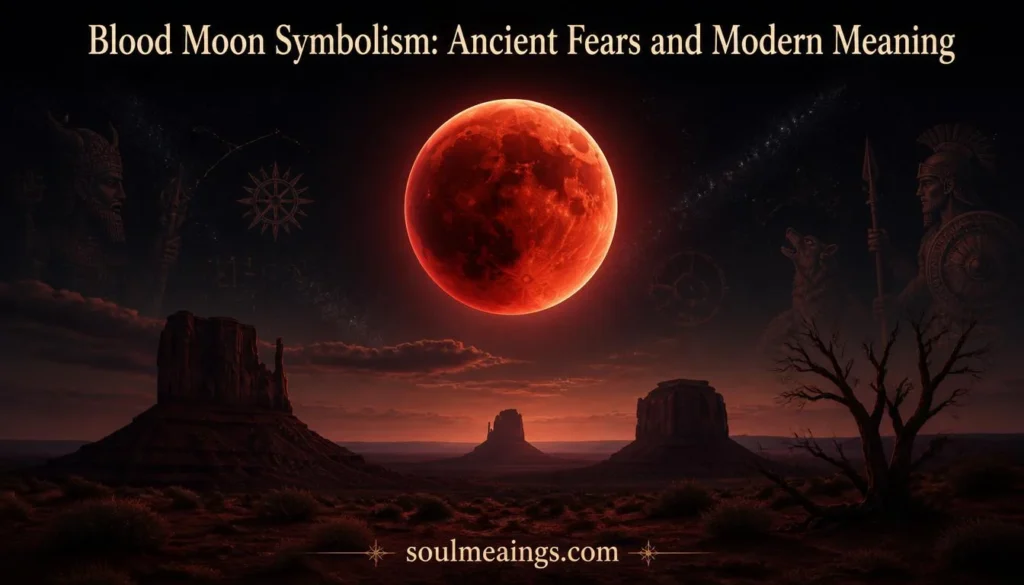
Blood Moon Symbolism: Ancient Fears and Modern Meaning connects the Blood Moon with change, reflection, and mystery and wonder.
A total lunar eclipse can make the Moon appear reddish or copper-colored as sunlight moves through Earth’s atmosphere toward the lunar surface. This unusual appearance has shaped Blood Moon symbolism across many cultures, linking it with transformation, cycles, endings, and new beginnings.
In modern American culture, people may view it as a meaningful natural event instead of only an astronomical occurrence. Its dramatic presence appears in photography, art, tattoos, spiritual discussions, and popular media, while its meaning can shift with cultural background and personal interpretation.
The first time I witnessed a Blood Moon, the world felt suspended between breath and silence. During a Haleakalā hike, the lunar-like surface seemed to glow while the Moon dimmed into a reddish ember. With dear friends nearby, I felt awe and permission to acknowledge shame, anger, guilt, and grief that had remained unnamed.
That moment felt like an astronomical event, an invitation, an unveiling, and a cosmic pause that encouraged me to explore the brilliance and shadows of existence. A comprehensive guide can connect this powerful celestial phenomena with science, history, spirituality, dreams, art, rituals, and life lessons.
For millennia, this stunning celestial phenomenon has stirred fear, wonder, and reverence. Ancient cultures imagined the crimson orb through intricate tales of gods, demons, and cosmic battles. Those myths still influence modern spiritual practices, keeping its mysteries and mythology alive while the Blood Moon inspires people today.
Quick Answer
Blood Moon symbolism usually represents transformation, emotional change, hidden truths, and powerful endings or beginnings. In the USA, it is commonly associated with spiritual awakening, astrology, and personal growth, while older traditions often linked it to omens, fear, or divine messages.
TL;DR
• Blood Moons happen during total lunar eclipses.
• The red color inspired myths and spiritual meanings worldwide.
• In the USA, it often symbolizes transformation and emotional intensity.
• Ancient cultures sometimes viewed it as a warning or cosmic sign.
• Modern media connects it with astrology, spirituality, and mystery.
• Today, many people see it as a symbol of renewal and reflection.
What Is a Blood Moon?
Understanding the Appearance
A Blood Moon occurs during a total lunar eclipse. During this event, Earth moves between the Sun and Moon. Instead of disappearing completely, the Moon turns reddish because sunlight bends through Earth’s atmosphere.
The color can range from copper-orange to dark crimson. Because the Moon looks unusual and dramatic, many cultures gave it symbolic meaning long before modern astronomy explained it.
Why the Red Color Matters
Red has powerful emotional symbolism in American culture and worldwide. It often represents danger, passion, energy, sacrifice, or life itself. When the Moon suddenly turns red, people naturally connect it with intense emotions or major events.
Common symbolic associations include:
• Transformation and personal change
• Fear of the unknown
• Spiritual awakening
• Emotional release
• Cosmic mystery
• Endings and rebirth
Blood Moon Symbolism in Ancient Cultures
Early Human Reactions
Ancient people often feared eclipses because they appeared sudden and unpredictable. Without scientific explanations, many believed supernatural forces caused the Moon to change color.
In some traditions, people thought a creature was swallowing the Moon. Others believed gods were angry or trying to send warnings.
Ancient Mythological Beliefs
Many ancient cultures created powerful stories around the Blood Moon:
• Ancient Mesopotamians linked eclipses to threats against kings
• Some Norse myths connected eclipses with cosmic wolves
• Ancient Chinese traditions blamed dragons for devouring the Moon
• The Inca associated lunar eclipses with a jaguar attack
• Some Native American traditions viewed eclipses as spiritual imbalance
Although these beliefs differed, many shared one theme: disruption. The Blood Moon symbolized moments when normal order temporarily broke apart.
Pre-Christian Symbolism
Before Christianity spread across Europe, lunar events often connected with fertility, cycles, feminine energy, and nature-based spirituality. Because the Moon controlled tides and marked time, it held sacred importance in many ancient societies.
The Blood Moon added a darker layer to this symbolism. Instead of gentle lunar energy, it represented crisis, transition, and unpredictable change.
Spiritual Meaning of the Blood Moon
A Symbol of Transformation
In modern spiritual communities, the Blood Moon is often viewed positively rather than fearfully. Many people believe it represents a period of emotional release and personal growth.
The eclipse itself symbolizes something hidden becoming visible. Because the Moon relates to emotions and intuition in many spiritual systems, the Blood Moon often represents inner truths surfacing.
Common Spiritual Interpretations
Many Americans interested in spirituality associate the Blood Moon with:
• Letting go of unhealthy patterns
• Emotional healing and reflection
• Spiritual awakening
• Closure after difficult periods
• New beginnings after endings
• Increased intuition and self-awareness
Connection With Energy and Rituals
Some people use Blood Moon nights for meditation, journaling, prayer, or symbolic rituals. While these practices vary widely, the main idea is similar: the eclipse represents a powerful emotional turning point.
Today, social media platforms often amplify these interpretations. As a result, the Blood Moon has become strongly connected with self-discovery and spiritual identity in modern American culture.
Blood Moon Meaning in Christianity
Biblical Associations
In Christianity, the Blood Moon sometimes appears in discussions about prophecy and the end times. Certain biblical passages mention the Moon turning red before major divine events.
Because of this imagery, some Christians interpret Blood Moons as spiritual warnings or signs of coming change.
Modern Interpretations in the USA
In the United States, interest in prophetic Blood Moon symbolism increased during the 2010s. Books, online videos, and religious discussions connected eclipses with global events and biblical timelines.
However, interpretations vary greatly among Christians. Some view the symbolism literally, while others see it as poetic or symbolic language.
A Symbol of Judgment or Renewal
Christian symbolism around the Blood Moon may include:
• Divine warning
• Spiritual reflection
• Repentance and renewal
• Signs of change
• Human vulnerability before God
Even among believers, opinions differ widely. Many modern Christians simply appreciate the eclipse as both a natural event and a spiritual reminder of awe and mystery.
Blood Moon Symbolism in the USA
Why Americans Are Drawn to It
In the United States, the Blood Moon blends science, spirituality, entertainment, and internet culture. Americans often enjoy symbols that feel mysterious while still allowing personal interpretation.
Because the event is visually striking, it easily spreads across news broadcasts and social media.
Modern American Associations
| Context | Meaning in the USA | Common Associations | Notes |
| Spiritual communities | Transformation | Healing, awakening | Popular online |
| Astrology culture | Emotional intensity | Life changes | Common during eclipses |
| Horror media | Fear and danger | Monsters, apocalypse | Strong in films |
| Nature appreciation | Wonder and awe | Cosmic beauty | Science and photography |
| Religious discussion | Prophecy | End times symbolism | Interpretations vary |
Influence of American Media
Movies, television, and gaming also shaped Blood Moon symbolism in the USA. The image often appears during dramatic scenes involving danger, supernatural events, or transformation.
Because of this repeated imagery, many Americans subconsciously connect the Blood Moon with suspense and emotional intensity.
Blood Moon in Mythology and Folklore
Lunar Myths Across Cultures
The Moon has always carried mythological importance. Unlike the Sun, which feels constant and stable, the Moon changes shape constantly. That made it a natural symbol for uncertainty and transformation.
The Blood Moon intensified these ideas because it temporarily altered the Moon’s familiar appearance.
Common Folklore Themes
Many legends share recurring themes:
• Cosmic battles between light and darkness
• Temporary disorder in nature
• Messages from gods or spirits
• Warnings before major change
• Cycles of death and renewal
Why These Stories Survived
These myths survived because eclipses feel emotional even today. Even with scientific knowledge, many people still experience wonder or discomfort when seeing a red Moon overhead.
That emotional reaction keeps ancient symbolism alive in modern culture.
Emotional and Psychological Meaning of the Blood Moon
Why the Symbol Feels Powerful
Psychologically, the Blood Moon combines two emotionally charged symbols: the Moon and the color red. Together, they create a strong emotional response.
The Moon often represents emotions, dreams, intuition, and the subconscious. Red commonly signals danger, passion, urgency, or life force.
Emotional Associations
People often associate the Blood Moon with feelings such as:
• Mystery and uncertainty
• Emotional intensity
• Excitement and anticipation
• Fear or vulnerability
• Reflection and introspection
• Personal transformation
The Archetype of Change
In psychology and storytelling, unusual sky events often symbolize turning points. The Blood Moon fits this pattern perfectly because it transforms something familiar into something strange.
As a result, people naturally project emotional meaning onto it.
Blood Moon Symbolism in Astrology
Lunar Eclipses and Astrology
Astrology gives lunar eclipses deep symbolic importance. In many modern American astrology communities, the Blood Moon represents accelerated emotional change.
Astrologers often describe eclipses as periods of revelation or endings.
Common Astrological Themes
Astrological Blood Moon symbolism may include:
• Sudden life changes
• Relationship shifts
• Emotional clarity
• Hidden truths emerging
• Release of old habits
• Increased intuition
Popularity on Social Media
Today, eclipse astrology spreads rapidly online. TikTok, Instagram, YouTube, and blogs often describe Blood Moons as emotionally intense periods.
While interpretations vary, the general message usually centers on change and personal evolution.
read more: 20 Symbols of Forgiveness With Meanings Around the World
Blood Moon Symbolism in Pop Culture
Horror and Fantasy Connections
Modern entertainment frequently uses the Blood Moon as a dramatic visual symbol. Films, games, and novels often place supernatural events under a red Moon.
This reinforces older symbolic connections with danger and mystery.
Common Pop Culture Uses
The Blood Moon commonly symbolizes:
• Apocalypse or disaster
• Hidden monsters or supernatural forces
• Transformation scenes
• Chaos or instability
• Emotional climax moments
From Fear to Aesthetic Symbol
Interestingly, younger audiences often treat the Blood Moon less as a fearful sign and more as an aesthetic symbol. It appears in digital art, tattoos, posters, and fashion designs because it feels visually powerful and emotionally deep.
Blood Moon Tattoos and Modern Identity
Why People Choose Blood Moon Tattoos
Blood Moon tattoos often represent personal transformation or survival after difficult experiences. Because the eclipse symbolizes change, many people connect it with major turning points in life.
Others simply appreciate its mysterious appearance.
Common Tattoo Meanings
• Emotional rebirth
• Strength after hardship
• Spiritual awakening
• Connection with nature
• Mystery and individuality
• Acceptance of change
Design Elements
Many Blood Moon tattoos include:
• Forest silhouettes
• Wolves or ravens
• Celestial symbols
• Mountains and night skies
• Crescent moons and stars
In the USA, these tattoos are especially popular among people interested in spirituality, gothic aesthetics, or nature symbolism.
Misunderstandings and Controversies Around Blood Moon Symbolism
Fear-Based Interpretations
One common misunderstanding is that Blood Moons always predict disaster. Historically, many cultures feared eclipses, but modern science explains the event naturally.
Even so, dramatic headlines sometimes encourage panic or superstition.
Internet Misinformation
Online discussions occasionally exaggerate spiritual or prophetic claims. Some videos and posts present personal interpretations as proven facts.
Because of this, it helps to separate symbolic meaning from scientific reality.
Respecting Cultural Beliefs
Different cultures interpret eclipses differently. Some traditions view them negatively, while others see them as sacred or transformative.
A respectful approach recognizes these beliefs without mocking or sensationalizing them.
How Blood Moon Symbolism Changed Over Time
From Fear to Reflection
Historically, Blood Moons often symbolized fear, danger, or divine anger. Ancient societies lacked scientific explanations, so the event felt threatening.
Today, many Americans interpret the symbol more personally and psychologically.
Modern Shifts in Meaning
Current interpretations focus more on:
• Personal growth
• Emotional healing
• Self-reflection
• Spiritual curiosity
• Cosmic wonder
Science and Symbolism Coexisting
Modern astronomy explains exactly why Blood Moons happen. However, symbolic meaning still survives because humans naturally connect emotions and stories to dramatic natural events.
Science explains the eclipse itself. Symbolism explains how people emotionally respond to it.
FAQs
What does a Blood Moon symbolize?
A Blood Moon can symbolize change, transformation, reflection, mystery, renewal, and emotional awareness. Its meaning often depends on cultural traditions and personal interpretation.
Why did ancient cultures fear the Blood Moon?
Some ancient cultures viewed the unusual red Moon as a warning or sign connected with gods, demons, and cosmic battles. These beliefs developed before people understood the science behind a total lunar eclipse.
Is a Blood Moon a sign of something bad?
Not necessarily. A Blood Moon is an astronomical event caused by Earth’s atmosphere filtering sunlight during a lunar eclipse. Symbolically, some traditions connect it with warnings, while others see it as renewal or transformation.
What does a Blood Moon mean spiritually?
Spiritually, a Blood Moon may represent an opportunity to pause, reflect, release old emotions, and recognize personal changes. Some people connect it with spirituality, rituals, dreams, and a deeper connection with nature.
What does seeing a Blood Moon mean in modern culture?
In modern culture, the Blood Moon appears in art, photography, tattoos, popular media, and spiritual discussions. People may use it as a symbol of endings, new beginnings, mystery, or emotional transformation.
Why does the Moon turn red during a lunar eclipse?
The Moon appears red because sunlight passes through Earth’s atmosphere before reaching the lunar surface. The atmosphere scatters much of the blue light while more red and orange light reaches the Moon.
Conclusion
A Blood Moon can feel mysterious because it turns something familiar into something extraordinary. Across millennia, people have connected it with fear, wonder, reverence, change, and transformation.
Today, you can appreciate its science while still finding personal meaning in its symbolism. Whether viewed through ancient myths, spirituality, art, dreams, or personal reflection, the Blood Moon remains a striking reminder that life’s cycles include both endings and new beginnings.

Isabella Taylor is a spiritual content creator who shares thoughtful insights on dreams, symbols, and self-discovery. Through her writing at SoulMeanings.com, she inspires readers to find meaning and guidance in everyday life.