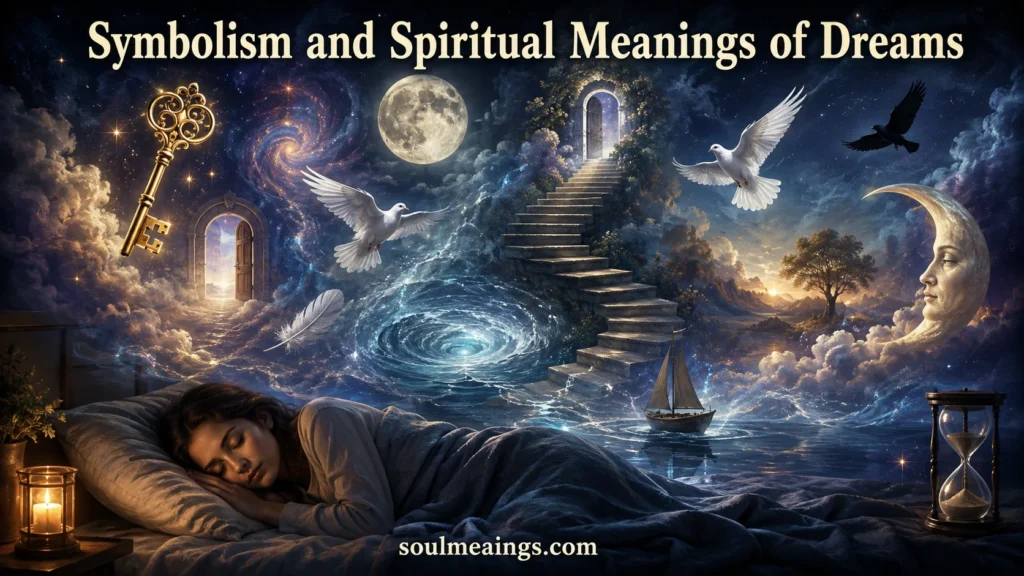
Dreams can profoundly impact life across the past and present, while Symbolism and Spiritual Meanings of Dreams offers insight, hope, and guidance. From a young age, I noticed dreams could reveal emotions, support personal growth, and sometimes offer warnings that changed how I viewed reality.
My dream about my father later felt like a premonition, as his serious illness brought fear, prayer, healing, faith, and a deeper spiritual meaning. His recovery showed me why dreams can feel powerful, yet they should be approached with care, humility, and awareness rather than treated as prophecy.
Many Christians wonder what a vivid dream means and whether God is trying to communicate, especially when a dream feels deeply spiritual or confusing. A Christian approach can combine biblical wisdom, spiritual discernment, dream analysis, and psychology while keeping faith, Jesus, and reflection.
Quick Answer
The spiritual and symbolism of dream meanings usually represent hidden emotions, personal transformation, fears, desires, or spiritual insight. In the USA, dreams are often viewed as a mix of psychology and symbolism, while many spiritual traditions also see dreams as messages from the subconscious or divine guidance.
TL;DR
• Dreams often symbolize emotions, fears, and personal growth.
• Ancient cultures treated dreams as spiritual messages.
• Americans commonly mix psychology with spiritual interpretation.
• Common symbols include water, flying, snakes, and falling.
• Social media revived modern interest in dream meanings.
• Dream symbolism changes across cultures and generations.
Overview of Dream Symbolism
Dream symbolism explores the idea that objects, actions, and people inside dreams represent deeper meanings. Instead of being random images, many believe dreams reflect emotional states or inner struggles.
In the United States, dream interpretation often blends science, spirituality, and personal reflection. Some people keep dream journals, while others search online for symbolic explanations after vivid dreams.
Common Dream Symbols
Certain dream themes appear across many cultures and generations.
• Water often symbolizes emotion and the unconscious mind.
• Flying may represent freedom, escape, or ambition.
• Teeth falling out can reflect insecurity or life changes.
• Snakes often symbolize fear, healing, or transformation.
• Houses may represent the self or personal identity.
• Death in dreams usually symbolizes endings, not literal death.
Why Dreams Feel Meaningful
Dreams often carry strong emotions. Because of this, people naturally search for meaning in them.
A dream can feel important because it connects to fears, memories, or unresolved stress. Sometimes symbols appear repeatedly during emotional periods of life.
The Ancient History of Dream Meanings
People interpreted dreams long before modern psychology existed. Ancient civilizations often believed dreams came from gods, spirits, or the universe itself.
Dream symbolism appears in ancient Egyptian writings, Greek mythology, biblical stories, and Indigenous traditions. Many early societies viewed dreams as sacred experiences.
Ancient Egyptian and Mesopotamian Beliefs
Ancient Egyptians recorded dream symbols on papyrus scrolls. Priests sometimes interpreted dreams for rulers or religious leaders.
Meanwhile, Mesopotamian cultures linked dreams to divine messages and prophecy. Dreams could influence political or military decisions.
Greek and Roman Dream Traditions
Ancient Greeks connected dreams to healing and prophecy. Temples dedicated to healing gods encouraged people to sleep and receive symbolic visions.
Later, Roman writers categorized dreams into warnings, wishes, or spiritual signs. Some symbols from those traditions still appear in modern dream interpretation.
Biblical and Religious Dream Symbolism
Dreams play major roles in religious texts.
• Dreams sometimes warned people about danger.
• Certain dreams symbolized divine guidance or wisdom.
• Prophetic dreams appeared in biblical stories.
• Spiritual visions often involved animals, stars, or journeys.
Today, many Americans still interpret dreams through spiritual or religious frameworks.
Spiritual Meaning of Dreams
Many people believe dreams connect to spiritual awareness. Even in modern America, spiritual dream interpretation remains popular.
Some view dreams as messages from the soul, ancestors, angels, or divine energy. Others see them as reflections of spiritual growth.
Dreams as Inner Guidance
Spiritual traditions often describe dreams as mirrors of the inner self.
For example, recurring dreams may signal unresolved emotional issues. Positive dreams may reflect peace, healing, or spiritual progress.
Common Spiritual Dream Themes
• Light may symbolize truth or spiritual awakening.
• Doors often represent opportunity or transition.
• Birds can symbolize freedom or spiritual messages.
• Fire may represent destruction, cleansing, or rebirth.
• Mountains often symbolize challenges and growth.
Intuition and Symbolic Messages
Many people trust emotional feelings inside dreams more than literal details. A peaceful dream can feel comforting, while a dark dream may create anxiety even without danger.
Because dreams feel personal, spiritual interpretation usually depends on individual experience rather than fixed rules.
Dream Meanings in American Culture
Dream symbolism became especially popular in the United States during the twentieth century. Psychology, spirituality, and media all shaped modern interpretations.
Today, dream analysis exists in therapy offices, online communities, podcasts, and lifestyle content.
Psychology and Modern America
American interest in dreams grew after the work of early psychologists. Dream analysis became associated with understanding hidden emotions and unconscious desires.
Many Americans now view dreams as emotional processing rather than supernatural prediction.
Pop Culture and Media Influence
Dream symbolism appears constantly in entertainment.
• Horror films use nightmares to symbolize fear.
• Fantasy stories explore dream worlds and hidden realities.
• Social media creators share symbolic dream explanations.
• Television often uses dreams for emotional storytelling.
The Rise of Online Dream Interpretation
Search engines and social platforms increased public curiosity about dream symbols. Short videos explaining dream meanings became especially popular after 2020.
However, interpretations online often oversimplify complex emotions and personal experiences.
Common Dream Symbols and Their Meanings
Certain dream symbols appear repeatedly across cultures. While meanings vary, some themes remain surprisingly consistent.
The table below shows how Americans commonly interpret dream symbols today.
| Dream Symbol | Meaning in the USA | Common Associations | Notes |
| Water | Emotional state | Stress, peace, uncertainty | Calm or stormy water changes meaning |
| Flying | Freedom or ambition | Confidence, escape | Often linked to personal success |
| Snakes | Fear or transformation | Healing, danger, change | Meanings vary greatly by culture |
| Falling | Loss of control | Anxiety, insecurity | Very common stress dream |
| Teeth | Self-image concerns | Aging, embarrassment | Popular modern interpretation |
| Doors | New opportunities | Transition, decisions | Open or locked doors matter |
Why Certain Symbols Repeat
Some dream symbols connect to universal human emotions. Falling relates to fear. Water relates to emotion. Darkness connects to uncertainty.
Because these experiences are widely shared, similar symbols appear across many cultures.
Psychological Meaning Behind Dreams
Modern psychology changed how Americans understand dreams. Instead of only spiritual signs, dreams became connected to memory, stress, and emotion.
Today, many people combine psychological and symbolic interpretations together.
Dreams and Emotional Processing
Researchers believe dreams help process emotions and experiences.
Stressful events often appear symbolically during sleep. For example, work pressure might appear as storms, endless hallways, or missed flights.
The Role of the Subconscious
Dreams may reveal feelings people ignore while awake.
• Anxiety may appear through chase dreams.
• Shame may appear through public embarrassment dreams.
• Hope may appear through flying or success dreams.
• Grief may appear through reunions or conversations.
Why Nightmares Happen
Nightmares often reflect fear, trauma, or emotional overload. However, spiritual traditions sometimes interpret nightmares as warnings or spiritual imbalance.
In modern America, mental health discussions increasingly shape how nightmares are understood.
read more: Biblical Meaning of Dreaming of Menstruation
Cross-Cultural Views of Dream Symbolism
Dream symbolism changes between cultures. Although many themes overlap, interpretations depend heavily on local beliefs and traditions.
Understanding these differences helps explain why dream meanings remain complex.
Indigenous Dream Traditions
Many Indigenous traditions view dreams as deeply spiritual experiences connected to ancestors, nature, or guidance.
Dreams may symbolize community responsibility, healing, or spiritual balance.
Asian Interpretations
In some Asian traditions, dreams connect to luck, harmony, and energy balance.
Animals, colors, and numbers often carry strong symbolic meaning.
African and Middle Eastern Symbolism
Some traditions interpret dreams as communication from ancestors or spiritual forces. Symbolic animals and journeys appear frequently in storytelling and folklore.
Today, multicultural America blends many of these traditions together.
Emotional and Psychological Associations
Dreams strongly connect to emotion. Even unusual dreams often reflect real emotional states.
Because emotions shape dream memory, symbolic interpretations often focus on feelings rather than exact events.
Dreams and Identity
Dreams sometimes reflect identity struggles or personal growth.
• Graduation dreams may symbolize adulthood.
• Lost dreams may reflect uncertainty.
• Mirror dreams may involve self-image concerns.
• Travel dreams may represent change or transition.
Dreams During Major Life Changes
People often report vivid dreams during stressful or emotional periods.
Common triggers include:
• Marriage or divorce
• Pregnancy or parenthood
• Career changes
• Moving homes
• Grief or loss
• Relationship conflict
Dream Symbolism in Modern Media and Social Platforms
Dream symbolism became highly visible online during the 2020s. Short-form content made symbolic interpretations easier to share quickly.
Today, millions of Americans consume dream-related content through apps, videos, and online communities.
Social Media Dream Trends
Creators often explain symbols in emotional or spiritual ways.
Popular topics include:
• Angel numbers in dreams
• Twin flame dream meanings
• Snake and water symbolism
• Dreams about ex-partners
• Spiritual awakening dreams
Tattoos and Artistic Expression
Dream symbols also appear in visual culture.
• Moons symbolize intuition and mystery.
• Eyes represent awareness or protection.
• Butterflies symbolize transformation.
• Clouds reflect imagination or spirituality.
Dream-inspired imagery remains popular in tattoos, bedroom decor, and digital art.
Misunderstandings and Controversies Around Dream Meanings
Dream interpretation can become confusing because meanings are rarely universal. A symbol may mean something positive to one person and negative to another.
Because of this, experts often caution against overly literal interpretations.
Dreams Are Not Always Predictions
One major misunderstanding involves prophecy. Many people fear dreams predict future disasters or death.
However, most modern interpretations focus on emotional symbolism rather than literal prediction.
Online Oversimplification
Social media sometimes reduces complex dream meanings into one-size-fits-all answers.
For example:
• Not every snake dream means betrayal.
• Falling dreams don’t always signal failure.
• Death dreams rarely predict physical death.
• Spiritual dreams may simply reflect stress or memory.
Cultural Appropriation Concerns
Some spiritual dream practices are deeply tied to Indigenous or religious traditions. Problems arise when sacred meanings become trendy entertainment without cultural understanding.
Respectful interpretation matters, especially when discussing spiritual traditions.
How Dream Meanings Have Changed Over Time
Dream interpretation evolved dramatically through history. Ancient societies treated dreams as supernatural signs, while modern cultures often connect them to psychology.
Today, many Americans combine both views together.
From Sacred Messages to Self-Reflection
Earlier cultures focused on prophecy and divine communication. In contrast, modern interpretations often emphasize emotional healing and self-awareness.
This shift reflects broader cultural changes around spirituality and mental health.
Modern Revival of Spiritual Symbolism
Interestingly, spiritual dream interpretation returned strongly during the 2020s.
Many younger Americans now blend:
• Psychology
• Astrology
• Spiritual symbolism
• Mindfulness practices
• Personal intuition
This mix created a modern symbolic language around dreams.
Spiritual Meaning of Recurring Dreams
Recurring dreams often feel especially important because they repeat over time. Many people believe repeated symbols point toward unresolved emotions or life lessons.
In the USA, recurring dreams are commonly discussed in therapy, spirituality, and online wellness spaces.
Common Recurring Dream Themes
• Being chased
• Missing important events
• Falling repeatedly
• Returning to school
• Losing personal belongings
• Being unable to speak
Why Recurring Dreams Matter
Repeated dreams may reflect unresolved stress or emotional patterns. Spiritually, some believe recurring symbols appear until a lesson is understood.
Because repetition creates emotional intensity, recurring dreams often leave strong impressions.
Frequently Asked Questions
1. What is the spiritual meaning of dreams?
Dreams may reflect emotions, personal experiences, inner thoughts, or spiritual concerns. Their meaning can vary from person to person.
2. Can dreams be messages from God?
Some Christians believe certain dreams can provide guidance, warnings, or spiritual insight. However, not every dream should be viewed as a direct message from God.
3. What does it mean when a dream comes true?
A dream that later resembles real events may feel like a premonition. It can also be understood through personal intuition, coincidence, memory, or emotional awareness.
4. How can Christians interpret dreams?
Christians can consider a dream through biblical wisdom, prayer, personal reflection, and spiritual discernment. The dream should also be considered within its wider life context.
5. Are confusing dreams spiritually meaningful?
A confusing dream may reflect stress, emotions, memories, or unresolved thoughts. It does not necessarily indicate a divine warning or supernatural event.
6. Should every vivid dream be taken seriously?
Not necessarily. A vivid dream can feel powerful without having a specific spiritual meaning. Careful reflection can help separate personal symbolism from assumptions.
Conclusion
Symbolism and Spiritual Meanings of Dreams can help us explore dreams through spiritual reflection, personal experience, emotions, and faith. Dreams may sometimes offer insight or encouragement, but their meaning is not always clear or fixed.
For Christians, a balanced approach can bring together biblical wisdom, prayer, spiritual discernment, and thoughtful reflection. Rather than fearing every dream, consider its message carefully and connect it with your faith, experiences, and walk with God.

Sophia Wilson is a spiritual content writer and researcher at SoulMeanings.com, specializing in dream meanings, symbolism, spiritual insights, and personal growth topics that help readers navigate life’s journey with greater understanding.