
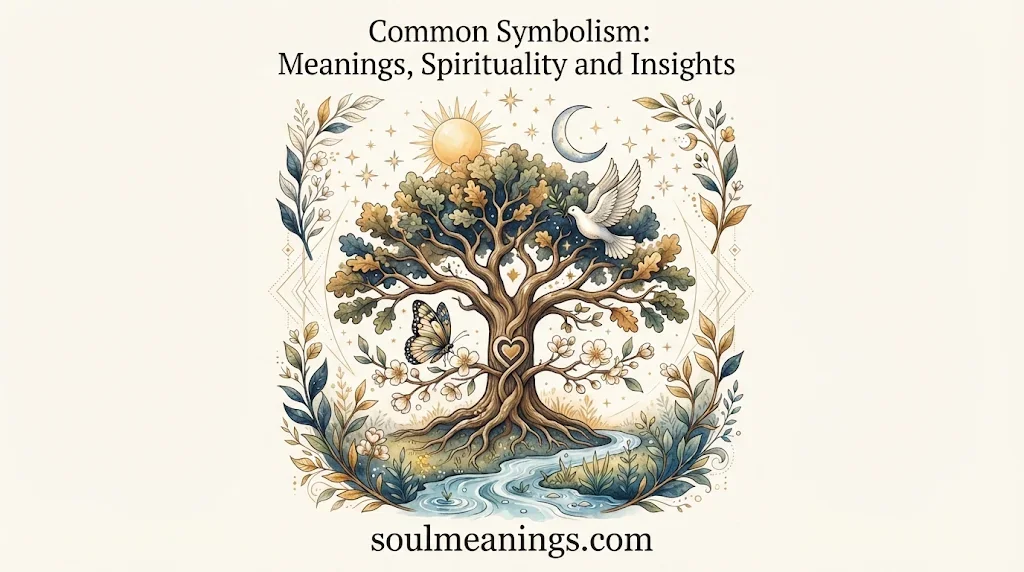
Common symbolism explains how everyday symbols express love, peace, beliefs, culture, and spirituality.
These spiritual symbols appear in nature, art, literature, and daily life, helping people communicate complex ideas through simple images. For example, the heart represents love, while the dove symbolizes peace. Popular symbols such as the Lotus, Hamsa, Tree of Life, Om, and Yin Yang carry important cultural, religious, and spiritual meanings across different traditions.
People often look for the spiritual meaning of everyday signs, including numbers, shapes, animals, and meaningful coincidences. Common examples include angel numbers, animal symbolism, nature symbolism, and dream symbols. These signs can offer comfort and spiritual guidance, but their meanings depend on personal beliefs and cultural context.
In spiritual practices such as yoga, symbols like the Lotus, Hamsa, and Tree of Life represent protection, balance, healing, and enlightenment. They also appear in jewelry, home décor, and personal spaces, reminding people of their spiritual values and beliefs.
What Is Common Symbolism?
Symbolism is the use of an object, image, color, or action to express a deeper idea. Instead of communicating through words alone, symbols make abstract feelings easier to recognize.
For example, a heart represents love, while a dove often represents peace. Similarly, a sunrise can suggest hope, renewal, and fresh beginnings.
How Symbols Communicate Meaning
Symbols work because people connect visible things with familiar experiences. A physical object can therefore represent something much bigger.
Consider these common examples:
- Heart: Love, affection, compassion, and emotional connection.
- Butterfly: Personal growth, transformation, freedom, and new beginnings.
- Dove: Peace, gentleness, hope, and spiritual connection.
- Sun: Energy, life, warmth, confidence, and renewal.
- Tree: Strength, family roots, wisdom, and long-lasting stability.
- Moon: Mystery, intuition, changing emotions, and natural cycles.
However, symbols don’t always have one fixed meaning. Their interpretation depends on personal experience, cultural background, and the situation.
Why People Use Symbols
People use symbols because images can communicate feelings quickly. They also help preserve memories, traditions, and shared beliefs.
In American life, symbolism appears everywhere. It influences clothing, architecture, national celebrations, religious spaces, entertainment, and personal expression.
Common Symbols and Their Meanings
Many familiar symbols appear across American households, communities, and popular culture. Understanding their meanings helps explain why certain images remain emotionally powerful.
Popular Symbols and Their Interpretations
| Symbol | Common meaning | Everyday association |
| Heart | Love and compassion | Relationships and Valentine’s Day |
| Butterfly | Transformation | Personal growth and tattoos |
| Dove | Peace and hope | Religious art and memorials |
| Tree | Strength and family | Family heritage and nature |
| Sun | Energy and optimism | Summer and new beginnings |
| Moon | Mystery and intuition | Nighttime and spiritual reflection |
| Star | Guidance and achievement | American identity and success |
| Anchor | Stability and security | Sailing and personal resilience |
| Key | Opportunity and discovery | New experiences and freedom |
| Circle | Unity and completeness | Community and connection |
Why Certain Symbols Become Universal
Some symbols are widely recognized because they connect with experiences shared by many people. Love, loss, growth, safety, and hope are familiar human experiences.
For example, almost everyone understands why a broken heart might represent sadness. Likewise, a growing tree can suggest patience and personal development.
Nevertheless, universal recognition doesn’t mean universal interpretation. A particular image may carry religious, historical, or political importance within one community.
Historical Origins of Symbolism
Symbolism is much older than written language. Early communities used images, patterns, objects, and natural forms to communicate important ideas.
Before modern writing systems developed, pictures helped people record experiences and express beliefs. Over time, these images became part of religious practices, cultural traditions, and artistic expression.
Ancient and Pre-Christian Symbolism
Ancient civilizations used symbols to describe nature, power, life, death, and the spiritual world.
In ancient Egypt, the ankh represented life. The scarab beetle became associated with renewal and transformation.
Ancient Greek and Roman cultures also used symbolic imagery. Their gods, animals, plants, and objects represented different human qualities and natural forces.
Some familiar examples include:
- Olive branch: Peace and reconciliation in ancient Mediterranean traditions.
- Laurel wreath: Victory, honor, and achievement in Greek and Roman culture.
- Serpent: Different ideas, including renewal, danger, wisdom, and healing.
- Sun disk: Life, divine power, and the natural order.
- Owl: Wisdom and association with Athena in ancient Greek tradition.
These meanings weren’t always identical across civilizations. However, they reveal how ancient people connected everyday objects with larger ideas.
Symbolism in Medieval and Renaissance Europe
During the Middle Ages, religious artwork became an important way to communicate spiritual stories. Churches used paintings, sculptures, stained glass, and decorative patterns.
For example, a lamb could represent innocence and Christian sacrifice. A halo suggested holiness, while a cross represented Christianity.
Later, Renaissance artists developed more detailed symbolic imagery. Flowers, clothing, animals, and architectural elements often communicated hidden themes.
As European settlers arrived in North America, many familiar European symbols entered American religious and artistic traditions.
How Symbolism Reached Modern America
American symbolism developed through many influences. European traditions, Indigenous visual cultures, African American experiences, immigrant communities, and modern popular culture all contributed.
Consequently, today’s American symbolic landscape isn’t connected to one historical source. It’s a mixture of traditions that continue to change.
What Does Symbolism Mean in American Culture?
In the United States, symbols help express national identity, personal freedom, community values, and shared history.
Some symbols represent the country itself. Others communicate ideas about family, religion, achievement, or social belonging.
American National Symbols
The American flag is among the country’s most recognizable symbols. Its stars represent the states, while its stripes represent the original thirteen colonies.
The bald eagle represents American national identity and has appeared on the Great Seal since 1782. It commonly suggests strength, freedom, and independence.
Other important national symbols include:
- Statue of Liberty: Freedom, welcome, and the promise of opportunity.
- Liberty Bell: Independence, freedom, and the struggle for equality.
- Great Seal: National authority, unity, and the country’s founding ideals.
- American rose: Beauty, tradition, and national identity.
Importantly, these symbols can mean different things to different Americans. National pride, historical reflection, protest, and remembrance can all influence how people interpret them.
Symbols in American Holidays
American celebrations provide some of the clearest examples of everyday symbolism.
During Valentine’s Day, hearts and roses represent affection. At Christmas, evergreen trees suggest enduring life, while stars often connect with religious stories and seasonal traditions.
On Independence Day, flags, stars, and fireworks express national celebration. Meanwhile, pumpkins, autumn leaves, and harvest decorations dominate Halloween and Thanksgiving displays.
These traditions demonstrate how symbols become part of ordinary family life.
Symbols in American Institutions
Symbols also help institutions communicate their purpose and values.
Schools use mascots, seals, and colors to create a shared identity. Government buildings display national emblems, while universities use crests to represent their histories.
Sports teams also use animals, colors, and graphic shapes. These images help supporters feel connected to a larger community.
Spiritual Meaning of Common Symbols
Spiritual symbolism explores the deeper meanings people attach to nature, objects, colors, and patterns.
In the United States, spiritual symbols appear in Christianity, Judaism, Buddhism, Hinduism, Indigenous traditions, and contemporary spiritual practices.
However, the meaning of a symbol depends on its tradition. An image shouldn’t automatically be treated as having the same spiritual meaning everywhere.
Nature as a Spiritual Symbol
Nature provides some of humanity’s most recognizable spiritual images.
For many people, the sun represents life and divine light. Water can represent cleansing, renewal, and emotional release.
Trees frequently symbolize growth and connection between different stages of life. Meanwhile, mountains can suggest spiritual challenges, endurance, and perspective.
These interpretations appear in religious art, literature, meditation practices, and personal reflection.
Numbers and Geometric Shapes
Numbers and shapes also carry spiritual associations.
The number three has special significance in several religious traditions. In Christianity, it connects with the Trinity.
The circle often represents unity, eternity, and wholeness. Spirals can suggest movement, development, and cycles of life.
However, spiritual interpretations of numbers and geometry vary widely. Popular modern interpretations shouldn’t be mistaken for universal religious teachings.
Cross-Cultural Spiritual Meanings
Some symbols appear in different cultures but carry distinct meanings.
- Lotus: Spiritual growth and purity in several Asian religious traditions.
- Om: A sacred sound and symbol in Hindu traditions.
- Yin and yang: Complementary forces and balance in Chinese philosophy.
- Dharma wheel: Buddhist teachings and the path toward awakening.
- Tree of life: Family connection, creation, and spiritual continuity in different traditions.
Understanding cultural context makes symbolic interpretation more respectful and accurate.
read more: Freedom Symbolism: Icons, Animals and Ancient Signs
Color Symbolism and Its Everyday Meanings
Colors influence how people interpret images and surroundings. They can suggest emotions, communicate identity, and reinforce cultural traditions.
However, color meanings aren’t universal. Personal experiences and cultural backgrounds can change how someone responds to a particular shade.
Common Color Meanings in America
Red often suggests passion, energy, courage, and urgency. It also appears prominently in American national colors and holiday decorations.
Blue frequently communicates trust, calmness, loyalty, and stability. Many American organizations use blue to suggest reliability.
White commonly represents simplicity, peace, cleanliness, and innocence. However, its meanings can differ across religious and cultural traditions.
Green is associated with nature, growth, renewal, and environmental awareness. It can also suggest prosperity in American culture.
Black can represent elegance, authority, mystery, mourning, or seriousness. Its meaning often depends on the setting.
Yellow suggests sunshine, happiness, warmth, and optimism. However, it can also communicate caution.
How Color Changes a Symbol’s Meaning
The same symbol can communicate different emotions when its colors change.
For example, a red rose often suggests passionate love. A white rose may communicate innocence, remembrance, or sincerity.
Similarly, a black butterfly might feel mysterious or represent a personal period of change. A brightly colored butterfly may suggest happiness and freedom.
Because color influences interpretation, artists and designers carefully consider their combinations.
Psychological and Emotional Meaning of Symbols
Symbols don’t only communicate cultural beliefs. They can also connect with memories, emotions, and personal experiences.
A familiar image may remind someone of a loved one, an important achievement, or a difficult period. Consequently, its meaning becomes deeply personal.
How Symbols Affect Emotions
People often respond emotionally to symbols before consciously analyzing them.
A photograph of a childhood home may create nostalgia. A sunrise might inspire optimism, while an image of a storm could suggest uncertainty.
Common emotional associations include:
- Comfort: Familiar family objects, childhood images, and protective figures.
- Hope: Rising suns, stars, open doors, and growing plants.
- Strength: Mountains, oak trees, lions, and anchors.
- Freedom: Birds, open skies, wings, and flowing water.
- Transformation: Butterflies, changing seasons, and emerging flowers.
- Remembrance: Candles, photographs, memorial flowers, and personal keepsakes.
These are common associations rather than fixed psychological rules.
Symbols and Personal Identity
People sometimes choose symbols that express their values or life experiences.
Someone who values independence might connect with an eagle. Another person may prefer a tree because it represents family history and stability.
In this way, symbolism becomes a form of personal storytelling.

Common Symbolism in Nature and Animals
Nature provides an enormous collection of symbols. Animals, plants, weather, and natural events often represent ideas people find difficult to express directly.
In American culture, these images appear in national parks, artwork, literature, home decorations, and personal tattoos.
Animal Symbolism
Animals frequently represent human qualities or natural forces.
- Eagle: Freedom, vision, courage, and national identity.
- Lion: Leadership, confidence, and strength.
- Wolf: Loyalty, independence, and social connection.
- Deer: Gentleness, sensitivity, and alertness.
- Owl: Knowledge, observation, and wisdom.
- Butterfly: Change, beauty, and personal transformation.
These meanings depend on context. For example, an owl may represent wisdom in one setting and nighttime mystery in another.
Plant and Flower Symbolism
Flowers and plants also carry recognizable associations.
Roses frequently represent love, while sunflowers suggest warmth and optimism. Oak trees communicate strength and endurance.
Evergreens are associated with lasting life and seasonal celebrations. Meanwhile, lilies appear in religious art and memorial arrangements.
Weather and Natural Elements
Natural events can also become powerful symbols.
Rain may suggest cleansing, sadness, or renewal. Fire can represent destruction, warmth, passion, or transformation.
Wind often suggests freedom and change. Mountains can represent challenges, while rivers may suggest life’s continuing journey.
Common Symbolism in Tattoos, Fashion, and Home Decor
Modern Americans frequently use symbols to express personality and important life experiences. Tattoos, clothing, jewelry, and interior design provide ways to display these meanings.
Unlike traditional religious symbols, personal designs don’t always follow established interpretations. Their meanings may come from individual memories or experiences.
Popular Symbolic Tattoos
Some popular tattoo designs include:
- Butterfly tattoos: Personal transformation, freedom, and overcoming difficulties.
- Sun and moon tattoos: Balance, opposing forces, and life’s changing cycles.
- Tree of life tattoos: Family connections, personal growth, and belonging.
- Dove tattoos: Peace, faith, remembrance, and hope.
- Anchor tattoos: Emotional stability, commitment, and perseverance.
- Arrow tattoos: Direction, determination, and moving forward.
For many people, these designs mark meaningful experiences. Others simply appreciate their visual beauty.
Symbolism in Fashion and Jewelry
Jewelry often carries symbolic meaning beyond its decorative purpose.
Heart pendants can represent romantic love or family affection. Cross necklaces may express Christian faith, while compass pendants can suggest adventure and direction.
Additionally, clothing colors and graphic designs communicate identity. Some people wear particular symbols to show cultural pride, personal beliefs, or community membership.
Symbolism in Home Decoration
Home decorations can reflect the values people want their surroundings to express.
For example, botanical artwork can create a feeling of natural calm. Family photographs preserve memories, while candles may suggest warmth, reflection, or spiritual practice.
Popular decorative themes include:
- Natural landscapes representing peace and connection.
- Circular artwork suggesting harmony and completeness.
- Birds representing freedom and openness.
- Floral patterns communicating beauty and renewal.
- Family trees celebrating heritage and relationships.
Symbolism on Social Media and in Digital Culture
Social media has changed how Americans communicate through symbols. Emojis, profile pictures, hashtags, and digital illustrations now carry meanings that once appeared mainly in physical objects.
A small image can communicate an emotion or shared experience without requiring a long explanation.
Everyday Emoji Symbolism
Common digital symbols include:
- ❤️ Red heart: Love, appreciation, and emotional support.
- 🦋 Butterfly: Beauty, transformation, and personal growth.
- 🕊️ Dove: Peace, hope, and remembrance.
- ☀️ Sun: Happiness, positivity, and fresh beginnings.
- ⭐ Star: Achievement, encouragement, and recognition.
- 🌱 Seedling: Growth, healing, and new opportunities.
However, online meanings can change quickly. A symbol may become associated with a particular trend, community, or event.
Digital Symbols and Changing Interpretations
Social media allows communities to develop their own symbolic language.
For instance, a butterfly emoji might represent personal transformation in one post. In another, it may simply decorate a message about nature.
Similarly, hearts can express friendship, romantic interest, sympathy, or general appreciation.
Context matters more than the image alone. Readers should consider the message, audience, and surrounding conversation.
Misunderstandings, Misuse, and Controversies in Symbolism
Symbols can unite people, but they can also create confusion. Their meanings sometimes change through political movements, cultural exchanges, commercial use, and historical events.
Understanding these changes helps American readers interpret symbols responsibly.
Why Symbols Can Have Different Meanings
A symbol doesn’t always communicate the same message to everyone.
A national flag may represent freedom and shared identity to one person. Another person may associate it with a painful historical experience or political disagreement.
Likewise, a religious symbol may be sacred within one tradition but unfamiliar to someone outside it.
These differences don’t automatically make one interpretation correct or incorrect. They reflect different experiences and historical perspectives.
Cultural Appropriation and Sacred Symbols
Cultural appropriation happens when elements of one culture are adopted by people outside that culture without appropriate understanding or respect.
This issue sometimes involves sacred designs, traditional clothing, ceremonial objects, and Indigenous imagery.
For example, a symbol used in a specific religious ceremony may have responsibilities or meanings beyond decoration.
Before using unfamiliar cultural imagery, consider its history and significance. Learning from members of the relevant community can prevent careless or disrespectful use.
Political and Hateful Misuse
Some symbols have been adopted by extremist movements or used to communicate discrimination.
This can complicate the meaning of images that once had broader cultural or historical uses.
For example, certain ancient symbols have been appropriated by hateful political movements. Their appearance in a modern setting may therefore require careful examination.
It’s important to distinguish traditional cultural meanings from deliberate extremist uses. Context, accompanying imagery, and the user’s stated intentions all matter.
How Symbolic Meanings Change Over Time
Symbolism isn’t frozen in history. A symbol can gain new meanings as societies develop, traditions change, and new generations reinterpret familiar images.
This is especially visible in the United States, where different cultural communities interact constantly.
From Ancient Traditions to Modern Life
Many symbols have survived for centuries because their basic ideas remain meaningful.
The tree continues to represent growth and stability. The heart remains closely connected with love, while the sun continues to suggest life and energy.
However, modern technology has introduced new ways to use these images.
A traditional symbol may now appear as a digital icon, tattoo, brand illustration, or social media graphic.
Symbols That Have Gained New Meanings
Some familiar images have developed additional interpretations.
- The butterfly increasingly appears in discussions about personal change and identity.
- The rainbow communicates natural beauty and has also become an important LGBTQ+ pride symbol.
- The raised fist has been used in different movements for solidarity and resistance.
- The peace sign remains associated with antiwar activism and broader peace movements.
- The American flag can communicate national pride, remembrance, protest, or political identity.
These examples show that symbols can carry several meanings simultaneously.
Why Older Meanings Sometimes Return
People sometimes rediscover older symbolic traditions through books, museums, family histories, and contemporary spiritual practices.
Ancient patterns may become popular in modern jewelry or home decoration. Traditional floral designs may also return through fashion.
However, revival doesn’t always mean an exact return to the past. Modern users often give older imagery new personal meanings.
How to Interpret Symbols in Everyday Life
Understanding symbolism doesn’t require specialist knowledge. A little curiosity and attention to context can reveal why certain images feel important.
Instead of assuming every symbol has one correct meaning, consider its history, appearance, and intended audience.
Five Questions to Ask
When interpreting an unfamiliar symbol, consider:
- What am I looking at? Identify its shape, colors, objects, and visual details.
- Where does it appear? Consider whether it’s religious, cultural, political, decorative, or personal.
- Who uses it? Look at the community or tradition connected with the image.
- What does its history reveal? Explore its original purpose and later interpretations.
- What might it mean today? Consider modern culture and the situation in which it appears.
Combining Historical and Personal Meaning
A symbol can have an established historical meaning and a separate personal meaning.
For example, an anchor traditionally relates to ships and maritime life. Today, someone might choose an anchor tattoo because it reminds them of a supportive family member.
Both interpretations can exist together.
The most thoughtful approach combines historical understanding with respect for personal experience.
Frequently Asked Questions
1. What is common symbolism?
Common symbolism refers to symbols, images, or objects that represent ideas, emotions, beliefs, and meanings in everyday life.
2. What are some common spiritual symbols?
Popular spiritual symbols include the Lotus, Hamsa, Om, Yin Yang, and Tree of Life.
3. What does the Lotus symbol mean spiritually?
The Lotus commonly represents purity, spiritual growth, enlightenment, and inner peace.
4. What does the Hamsa symbol represent?
The Hamsa is widely associated with protection, good fortune, and protection from negative energy.
5. What is the spiritual meaning of the Tree of Life?
The Tree of Life represents growth, strength, connection, balance, and the relationship between all living things.
6. What does the Om symbol mean?
Om is a sacred symbol in Hinduism and other Indian spiritual traditions, representing universal consciousness and spiritual connection.
7. What does the Yin Yang symbol represent?
Yin Yang represents balance between opposite but connected forces, such as light and darkness.
8. Can animals have spiritual meanings?
Yes. Many cultures associate animals with qualities such as courage, wisdom, freedom, peace, and protection.
9. What are angel numbers and their spiritual meanings?
Angel numbers are repeating number patterns, such as 111, 222, and 333, that some people interpret as spiritual messages or reminders.
10. How can I use spiritual symbols in everyday life?
You can include spiritual symbols in jewelry, home décor, artwork, meditation, or personal spaces as reminders of your values and beliefs.
Conclusion
Common symbolism helps us understand how images, numbers, animals, and objects communicate deeper meanings. From the Lotus and Hamsa to angel numbers and the Tree of Life, these symbols reflect different cultural and spiritual beliefs. Understanding their meanings can encourage self-reflection, spiritual awareness, and a stronger connection with everyday experiences. Always consider cultural context and personal beliefs when interpreting spiritual symbols.

Isabella Taylor is a spiritual content creator who shares thoughtful insights on dreams, symbols, and self-discovery. Through her writing at SoulMeanings.com, she inspires readers to find meaning and guidance in everyday life.