
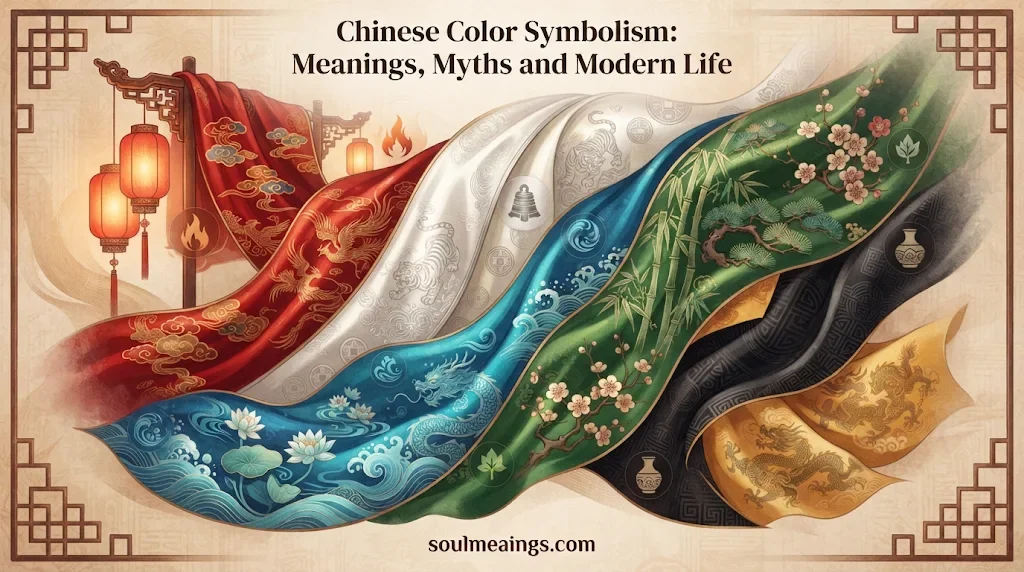
Chinese color symbolism reflects the country’s rich history, culture, customs, and traditions.
Colors carry meanings related to luck, identity, celebration, and emotion. For example, red represents joy in wedding garments, while white is associated with mourning and respect.
Black appears in traditional ink landscapes, and yellow symbolizes power and authority in historical court clothing. These meanings are shaped by Chinese dynasties, religion, rituals, literature, and social customs, rather than a simple division of lucky and unlucky colors.
Today, Chinese color meanings remain important in Lunar New Year celebrations, fashion, décor, films, and modern design. Their interpretations can vary across regions, generations, and cultural settings.
The Chinese Color Atlas helps explore these traditions through named colors, HEX values, and documented color references. It also connects traditional symbolism, seasonal meanings, material culture, and philosophical beliefs with modern visual design and color palettes. Understanding this cultural context makes it easier to appreciate how Chinese colors influence heritage, lifestyle, and global design trends.
Quick Answer
Chinese Color Symbolism: Meanings, Myths and Modern Life centers on luck, prosperity, harmony, balance, and spiritual protection. In the United States, red and gold are especially recognized as symbols of celebration and good fortune, while other colors carry meanings shaped by Chinese history, philosophy, and tradition.
TL;DR
- Red represents happiness, celebration, luck, and protection.
- Gold symbolizes wealth, prosperity, success, and honor.
- White is traditionally associated with mourning and remembrance.
- Black can represent water, wisdom, and mystery.
- Green and blue connect with nature, growth, and renewal.
- Modern Chinese color symbolism blends ancient beliefs with contemporary lifestyles.
1. What Is Chinese Color Symbolism?
Chinese color symbolism is a cultural system that connects colors with ideas, emotions, and natural forces. These associations developed through philosophy, history, traditional art, and social customs. Consequently, colors can communicate messages without using words.
For Americans, these meanings are especially visible during Lunar New Year celebrations. However, they also appear in traditional clothing, architecture, weddings, funerals, and everyday gifts.
The Main Colors and Their Meanings
Six colors frequently appear in discussions of traditional Chinese symbolism.
- Red: Happiness, celebration, protection, and good fortune.
- Gold and yellow: Wealth, authority, prosperity, and honor.
- White: Mourning, purity, simplicity, and remembrance.
- Black: Water, wisdom, depth, and mystery.
- Green: Growth, renewal, vitality, and nature.
- Blue: Calmness, nature, and, in some traditions, wood-related associations.
These meanings aren’t universal rules. Instead, they provide cultural clues that help explain traditional choices.
Why Colors Matter in Chinese Culture
Colors often express wishes for the future. For example, red decorations during Lunar New Year communicate hopes for happiness and success.
Similarly, gold-colored ornaments suggest abundance. Meanwhile, white clothing can carry associations with mourning rather than celebration.
Understanding the occasion is therefore just as important as understanding the color itself.
2. Ancient Origins of Chinese Color Symbolism
Chinese color traditions developed over thousands of years. Their roots include early cosmology, ritual practices, political systems, and observations of nature. These influences helped create a symbolic language that still shapes cultural traditions.
The Five Elements and Five Colors
One important influence is the ancient Chinese theory of the Five Phases, commonly called Wu Xing.
Rather than describing five physical elements alone, this system explains relationships between changing natural forces. It connects wood, fire, earth, metal, and water with different colors.
| Five Phases | Traditional Color | Common Symbolic Associations |
| Wood | Green or blue-green | Growth, spring, renewal |
| Fire | Red | Energy, warmth, transformation |
| Earth | Yellow | Stability, nourishment, balance |
| Metal | White | Clarity, order, refinement |
| Water | Black | Wisdom, depth, adaptability |
These associations appear in traditional philosophy, medicine, seasonal ideas, and historical discussions of the natural world.
However, different historical sources and traditions sometimes use slightly different color terms.
Ancient Cosmology and Direction
Traditional Chinese cosmology also connects colors with directions and seasons.
For example, red is associated with the south and summer in the Five Phases system. Black connects with the north and winter. Green or blue-green relates to the east and spring.
These relationships helped people understand the universe as an interconnected system.
The Role of Ancient Rituals
Colors also played important roles in ceremonies and religious practices.
Ritual clothing, offerings, decorative objects, and ceremonial spaces could communicate social rank or spiritual intention. Over time, these customs influenced artistic and everyday traditions.
Importantly, Chinese color symbolism didn’t emerge from one single belief system. It developed through many overlapping traditions.
3. What Does Red Symbolize in Chinese Culture?
Red is arguably the most recognizable color in Chinese cultural symbolism. It represents happiness, good fortune, celebration, and protection. In the United States, it’s especially visible during Lunar New Year events.
Red and Good Fortune
Red is strongly connected with positive beginnings.
People use red decorations to welcome happiness and invite good fortune. Red envelopes, known as hongbao, traditionally contain money given during celebrations.
The gesture communicates generosity and good wishes. However, the envelope’s meaning comes from the occasion and relationship, not simply its color.
Red in Ancient Myths
One famous traditional story connects red decorations with the mythical creature known as Nian.
According to popular versions, Nian frightened villagers during the New Year period. People discovered that loud noises, firecrackers, and red decorations could frighten it away.
Today, red lanterns, couplets, and decorations remain popular during Lunar New Year.
The story exists in different versions. It should be understood as traditional folklore rather than verified historical fact.
Red in American Chinese Communities
Red appears prominently in American Lunar New Year celebrations.
- Restaurants decorate entrances with red lanterns.
- Families exchange red envelopes.
- Community events feature red banners and clothing.
- Businesses display red decorations to welcome prosperity.
However, red also appears in Chinese wedding traditions. It can express happiness, celebration, and wishes for a successful marriage.
4. What Does Gold and Yellow Symbolize?
Gold and yellow have powerful associations with prosperity, authority, and prestige. Their meanings developed through imperial history, traditional philosophy, and decorative arts. Today, American audiences often encounter these colors in festive decorations and gifts.
Yellow and Imperial Power
Yellow became closely associated with imperial authority during several Chinese dynasties.
Its connection with the center and earth in traditional cosmology helped strengthen its symbolic importance. Certain yellow garments and objects became signs of royal status.
However, imperial color rules changed across different periods. Not every yellow object was reserved for emperors.
Gold and Wealth
Gold-colored objects often communicate abundance and success.
During Lunar New Year, gold frequently appears alongside red. Together, these colors express wishes for happiness and financial prosperity.
Common examples include:
- Gold-colored coins and decorative ingots.
- Golden lettering on red envelopes.
- Gold ornaments in festive displays.
- Yellow and gold accents in traditional artwork.
Modern American Associations
In the United States, gold often represents luxury, achievement, and celebration.
When paired with red, it creates a recognizable festive appearance. However, modern decorative choices don’t always preserve every historical meaning.
5. What Does White Symbolize in Chinese Culture?
White has a more complex meaning than many American readers expect. In traditional Chinese funeral customs, it is strongly associated with mourning, death, and remembrance. However, it can also suggest simplicity and purity in other settings.
White and Funeral Traditions
White clothing and white flowers have long been used in Chinese mourning practices.
White chrysanthemums are especially associated with memorials and funerals in several Chinese communities.
These customs differ from common American wedding traditions, where white often symbolizes bridal purity and celebration.
Therefore, an American visitor might misunderstand a white floral arrangement without knowing its purpose.
White and the Five Phases
White connects with metal in the Five Phases system.
Its traditional associations include autumn, the west, and qualities such as clarity and order. This philosophical meaning exists alongside its mourning associations.
White in Modern America
Chinese American families may preserve traditional mourning customs while adapting other practices to American life.
However, traditions vary between families, regions, generations, and religious backgrounds.
White should never be treated as automatically negative or unlucky.
6. What Do Black, Blue, and Green Symbolize?
Black, blue, and green connect Chinese color traditions with nature, knowledge, and changing seasons. Their meanings are less widely recognized in American popular culture. Nevertheless, they form an important part of traditional Chinese philosophy.
Black: Wisdom and Water
Black corresponds with water in the Five Phases system.
It connects with winter, the north, and the qualities of depth and hidden strength. Traditional Chinese ink painting also gives black a special artistic role.
Artists use different shades of black ink to create mountains, rivers, trees, and atmospheric effects. Therefore, black can suggest both mystery and creative expression.
However, black also carries associations with darkness and misfortune in some traditional settings. Its meaning depends heavily on context.
Blue and Green: Nature and Renewal
Traditional Chinese color language doesn’t always divide blue and green exactly as modern English does.
The character qing can describe blue-green shades, including colors found in nature. It appears in descriptions of plants, skies, and traditional materials.
Green and blue-green can suggest:
- Springtime and the return of natural life.
- Growing plants and agricultural abundance.
- Freshness, renewal, and youthful energy.
- Harmony between people and their surroundings.
Jade is another important connection. Green jade ornaments have historically represented beauty, refinement, and valued personal qualities.
Modern American Interpretations
American audiences often associate green with money and environmental awareness. Blue commonly suggests calmness, trust, and stability.
These interpretations don’t always match traditional Chinese meanings. However, both systems demonstrate how colors can communicate shared human experiences differently.
read more: Eyes Symbolism: What Eyes Mean in History and Today
7. The Five Elements and Their Spiritual Meanings
The Five Phases system provides one of the most important frameworks for understanding Chinese color symbolism. It connects colors with natural forces, seasons, directions, and cycles of change. For American readers, it offers a useful introduction to traditional Chinese views of balance.
Understanding Wu Xing
Wu Xing translates roughly as Five Phases or Five Processes.
The system describes how five forces interact and transform. It doesn’t simply claim that the physical world contains five separate substances.
Each phase has its own symbolic color and natural associations.
- Wood represents growth and the beginning of spring.
- Fire represents warmth, movement, and transformation.
- Earth represents stability and nourishment.
- Metal represents structure, refinement, and autumn.
- Water represents depth, movement, and winter.
The Two Cycles
Traditional philosophy describes two important relationships between these phases.
The generating cycle explains how one phase supports another. For example, wood fuels fire, while fire produces ash that enriches earth.
The controlling cycle describes how the phases regulate one another. Water controls fire, while metal can shape wood through tools.
These cycles illustrate balance rather than competition.
Connections With Spiritual Traditions
The Five Phases framework influenced several Chinese intellectual and spiritual traditions. Its ideas appear in traditional cosmology, Taoist thought, and other historical systems.
However, it isn’t identical to every Chinese religious belief. Buddhism, Taoism, Confucian traditions, and folk practices have distinct histories.
In modern America, people sometimes encounter Five Elements symbolism through wellness spaces, artwork, or interior design. These interpretations should be understood as cultural and philosophical influences, not universal religious rules.
8. What Do Chinese Colors Mean in American Culture?
Chinese colors have become increasingly visible throughout American public life. Lunar New Year celebrations, Chinese American communities, restaurants, museums, and cultural festivals help introduce these traditions to wider audiences.
Lunar New Year in the United States
Lunar New Year is one of the clearest examples of Chinese color symbolism in America.
Red lanterns, gold decorations, and colorful performances create a festive atmosphere. Families may also exchange red envelopes and display traditional decorations.
In cities such as San Francisco and New York, public celebrations bring these traditions into shared community spaces.
Chinese American Identity
Colors can also help express cultural heritage.
For Chinese American families, traditional decorations may connect younger generations with family memories and ancestral customs. However, individual relationships with these traditions differ.
Some families follow older practices closely. Others combine Chinese customs with American holiday traditions.
Color Meanings in Everyday American Life
The following table shows how traditional associations can appear in contemporary American settings.
| Color | Traditional Chinese Associations | Common American Context | Important Note |
| Red | Luck, happiness, protection | Lunar New Year, weddings | Context gives it meaning |
| Gold | Wealth, honor, prosperity | Gifts and celebrations | Often paired with red |
| White | Mourning, simplicity | Memorials and ceremonies | Not always celebratory |
| Black | Water, depth, wisdom | Fashion and art | Can also suggest misfortune |
| Green | Growth, renewal | Jade jewelry and decor | Associated with nature |
| Blue | Blue-green natural shades | Art and decorative design | Traditional color categories differ |
The Influence of American Media
Movies, television, advertising, and social media have helped popularize Chinese-inspired colors.
However, popular representations sometimes reduce complicated traditions to simple ideas. For example, red may become shorthand for luck, while gold becomes shorthand for money.
These interpretations aren’t necessarily wrong. They simply leave out much of the historical background.
9. Emotional and Psychological Meanings of Chinese Colors
Colors can influence how people experience a room, celebration, or personal object. Chinese traditions add cultural stories to these emotional responses. However, psychological reactions aren’t identical for everyone.
Red: Energy and Confidence
Red is visually strong and often attracts attention.
In Chinese cultural settings, it can communicate happiness, confidence, and positive expectations. In American settings, it may also suggest passion, excitement, or urgency.
A red lantern can feel welcoming. A red warning sign, however, communicates something very different.
Gold: Achievement and Abundance
Gold often creates an impression of value and importance.
Its connection with imperial history adds another layer of meaning in Chinese-inspired design. Meanwhile, American audiences may associate it with awards, luxury, and success.
White: Reflection and Remembrance
White can create a feeling of simplicity and quiet.
Its traditional mourning associations may make it especially meaningful in memorial settings. However, many Americans also connect white with weddings, peacefulness, and new beginnings.
Color and Personal Identity
People sometimes select traditional colors to communicate personal values.
- Red accessories may express celebration and cultural pride.
- Jade-green jewelry may suggest appreciation for heritage.
- Gold decorations may reflect hopes for prosperity.
- Black ink artwork may communicate simplicity and reflection.
These are possible interpretations, not fixed personality descriptions. A person’s reasons for choosing a color are always individual.
10. Chinese Color Symbolism in Tattoos, Fashion, and Home Decor
Traditional Chinese colors have found new expressions in modern American lifestyles. Tattoos, fashion, interior design, and digital artwork offer ways to explore these cultural associations. Still, thoughtful design benefits from understanding the history behind each color.
Tattoos and Personal Expression
Chinese-inspired tattoos often combine colors with recognizable cultural imagery.
For example, red may appear in dragon or phoenix designs. Gold can highlight prosperity and honor, while green can complement natural imagery.
People may choose these colors to express:
- Appreciation for Chinese heritage or artistic traditions.
- Personal hopes for strength and good fortune.
- Connections with family history.
- Interest in traditional mythology and philosophy.
However, colors alone don’t explain the complete meaning of a tattoo. The imagery and personal story matter too.
Fashion and Accessories
Red and gold remain popular choices for festive clothing.
Meanwhile, jade-green jewelry and blue-green fabrics can reflect traditional artistic influences. Black and white combinations also appear in contemporary clothing inspired by ink painting.
Modern fashion often blends historical references with personal taste.
Home Decor
Chinese-inspired interiors frequently use bold color combinations.
Red lanterns, gold accents, black furniture, and jade-colored accessories can create a distinctive atmosphere.
For American homes, these elements can provide cultural character. However, using decorations respectfully means understanding their purpose and avoiding careless placement of sacred or ceremonial objects.
Social Media and Digital Culture
Color symbolism also appears in digital communication.
During Lunar New Year, users may share red envelopes, lantern images, and gold decorations. These visuals communicate celebration even when people live far from traditional cultural centers.
However, an emoji or decorative image can’t capture every meaning attached to a cultural practice.
11. Misunderstandings, Cultural Appropriation, and Changing Meanings
Chinese color symbolism is often simplified when it enters international popular culture. This can create confusion, especially when people assume that every Chinese family follows identical traditions. A little historical context helps prevent these misunderstandings.
Common Misunderstandings
Several assumptions deserve closer attention.
- Red isn’t lucky in every situation or ceremony.
- White isn’t universally associated with sadness or death.
- Black doesn’t always represent evil or negativity.
- Yellow isn’t exclusively reserved for royalty today.
- Green and blue don’t have completely separate traditional categories.
These distinctions matter because traditional symbolism changes with context.
Cultural Appropriation and Respect
Cultural borrowing happens when people adopt elements from traditions outside their own.
This isn’t automatically disrespectful. People can appreciate Chinese art, clothing, and decorative traditions while recognizing their origins.
Problems arise when sacred practices become jokes, stereotypes, or commercial decorations without meaningful context.
For example, using funeral imagery as playful party decoration may feel disrespectful to families who recognize its traditional meaning.
Why Context Matters
A red envelope at Lunar New Year communicates generosity and good wishes. The same red envelope used during a funeral might carry a different meaning.
Similarly, white flowers can express sympathy in one setting and appreciation in another.
When uncertain, asking someone familiar with the specific family or community tradition is usually the most respectful approach.
12. How Chinese Color Symbolism Has Changed Over Time
Chinese color meanings haven’t remained frozen throughout history. Political changes, religious traditions, migration, international trade, and modern design have all influenced their use. Today, older meanings coexist with new interpretations.
From Ancient Philosophy to Imperial Traditions
Early Chinese cosmology connected colors with natural forces and directions.
Later, imperial institutions used colors to communicate authority and social position. Yellow became especially important in royal settings.
Meanwhile, red continued developing associations with celebration, happiness, and protection.
From Traditional Customs to Global Culture
Migration helped bring Chinese color traditions to the United States and other countries.
Chinese American communities preserved many customs while adapting them to new environments. Lunar New Year celebrations became important opportunities to share cultural heritage.
Museums, cultural organizations, and educational programs have also introduced these traditions to wider audiences.
What Has Changed in Modern Times?
Several developments have influenced contemporary interpretations.
- Black has become more common in everyday clothing.
- Red and gold appear in international commercial design.
- Traditional jade colors influence contemporary jewelry.
- Younger generations reinterpret older customs through digital culture.
- Chinese American families combine inherited traditions with personal preferences.
Consequently, modern Chinese color symbolism is both historical and continually evolving.
Frequently Asked Questions
1. What is Chinese color symbolism?
Chinese color symbolism refers to the cultural meanings and beliefs associated with different colors in Chinese traditions, history, and everyday life.
2. What does red symbolize in Chinese culture?
Red commonly represents luck, happiness, prosperity, celebration, and good fortune. It is especially popular during weddings and Lunar New Year.
3. What does white mean in Chinese culture?
White is traditionally associated with mourning, funerals, and loss. Its meaning differs from the positive associations it often has in Western cultures.
4. Why is yellow important in Chinese history?
Yellow was associated with imperial authority, power, and status. It appeared prominently in historical court clothing and royal settings.
5. Do Chinese color meanings change with context?
Yes. Color meanings can vary by region, generation, tradition, season, and setting. The same color may communicate different messages depending on how it is used.
6. How does Chinese color symbolism influence modern design?
Chinese color traditions influence fashion, interior décor, graphic design, celebrations, and global visual culture. Designers often use traditional color meanings to create culturally meaningful designs.
Conclusion
Chinese color symbolism reflects centuries of history, traditions, beliefs, and cultural values. From red wedding garments to white mourning robes and yellow court clothing, each color carries meanings shaped by its cultural setting. Today, these traditions continue to influence Lunar New Year celebrations, fashion, art, and modern design. Understanding these meanings helps people appreciate Chinese culture and its influence on the world.

Isabella Taylor is a spiritual content creator who shares thoughtful insights on dreams, symbols, and self-discovery. Through her writing at SoulMeanings.com, she inspires readers to find meaning and guidance in everyday life.


Pingback: Anthurium Symbolism: Love, Welcome and Tropical Energy