
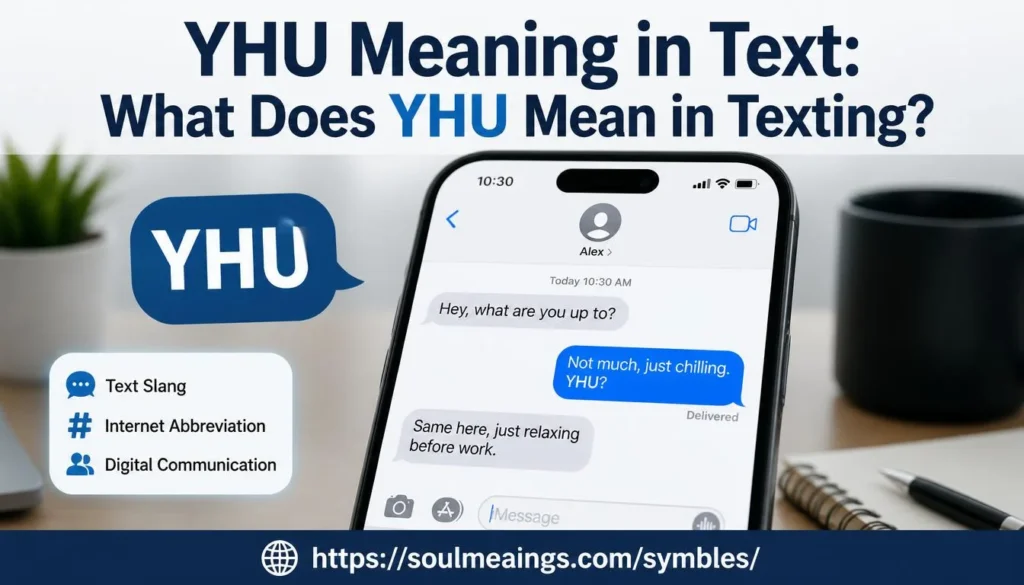
YHU Meaning in Text: What Does YHU Mean in Texting? explains how this intentional misspelling of You appears in texting, text messages, social media posts, and casual online conversations.
In the ever-evolving world of online communication, slang terms have become a staple of informal language, bringing informality, friendliness, and a playful tone to everyday interactions. The basic meaning remains you, although the spelling changes to create a more relaxed and personal style.
From my experience with online language, YHU may look confusing because its written form differs from the usual “you.” Still, its meaning, usage, and context become clearer when you consider the tone of the conversation. Its popularity has been associated especially with African American youth, where the unique slang term may reflect an online style and identity.
A useful guide is to consider social media and digital communication before interpreting its tone. The same word can sound casual, personal, or playful, depending on how it appears. Simple examples and tips can help you understand YHU naturally, including its pronunciation, change in spelling, and role in internet communication.
Quick Answer: What Does YHU Mean in Text?
YHU usually means “you” in texting and informal online communication.
It is a creative spelling rather than a traditional acronym. Unlike LOL, which represents “laughing out loud,” YHU normally doesn’t expand into three separate words. It simply replaces the standard spelling you.
For example:
- “Are yhu coming?” = “Are you coming?”
- “I miss yhu.” = “I miss you.”
- “What do yhu think?” = “What do you think?”
- “Thank yhu!” = “Thank you!”
One important detail remains: YHU doesn’t automatically reveal the sender’s feelings. The surrounding words, punctuation, relationship, and overall conversation provide much stronger clues about tone.
What Does YHU Stand For?
Technically, YHU usually doesn’t stand for anything.
That’s an important distinction because people often assume every three-letter texting expression is an acronym. YHU generally isn’t built from the first letters of three words. Instead, it is a stylized respelling of “you.”
Compare these examples:
| Texting term | Meaning | Type |
| YHU | You | Stylized spelling |
| U | You | Text shorthand |
| LOL | Laughing out loud | Acronym |
| BRB | Be right back | Acronym |
| WYD | What you doing? | Text abbreviation |
| YH | Often “yeah” or “yes” | Context-dependent shorthand |
This distinction helps explain why YHU can look strange even though its meaning is familiar.
Someone might write:
“I told yhu yesterday.”
There isn’t a hidden phrase behind YHU. The sentence simply means:
“I told you yesterday.”
Why Do People Type YHU Instead of “You”?
The obvious question is: if you already works, why change it?
The answer has more to do with style than speed.
Unlike “u,” YHU doesn’t actually save many keystrokes. Its appeal comes from how it looks and feels inside a casual message. Internet language often gives people ways to signal personality without changing the underlying meaning.
People may use YHU to:
- Make a message feel more casual.
- Match the texting style of friends.
- Add a playful or expressive touch.
- Create a recognizable personal writing style.
- Follow a spelling pattern common in their online circles.
- Make emotional messages look less formal.
- Mirror the way another person types.
For example, compare:
“I miss you.”
with:
“I miss yhu.”
The literal meaning stays the same. However, the second version has a more stylized appearance. Some writers use that difference deliberately.
YHU Meaning in Different Texting Contexts
Although YHU generally means you, its emotional tone can change considerably.
The word itself doesn’t necessarily create the tone. The rest of the sentence does most of that work.
| Example | Standard meaning | Possible tone |
| “Can yhu help me?” | Can you help me? | Casual |
| “I miss yhu.” | I miss you. | Affectionate |
| “Yhu are hilarious.” | You are hilarious. | Friendly |
| “Why yhu doing that?” | Why are you doing that? | Teasing or annoyed |
| “Yhu look amazing!” | You look amazing! | Complimentary |
| “Yhu serious?” | Are you serious? | Surprised or skeptical |
| “Thank yhu so much.” | Thank you so much. | Warm or casual |
This is why interpreting slang from one word alone can be misleading.
For instance, “I miss yhu” sounds affectionate because of the phrase “I miss.” The affectionate feeling comes from the complete message, not from YHU itself.
How YHU Is Used in Text Messages
The easiest way to understand YHU is to see it inside ordinary sentences.
YHU as “You” in Questions
YHU can replace you in questions about plans, opinions, actions, or feelings.
Examples include:
- “Yhu coming tonight?”
- “What do yhu want?”
- “Where are yhu going?”
- “Did yhu see that?”
- “What do yhu think?”
In each example, replacing YHU with you produces the intended meaning.
The grammar may also become informal because texting itself often drops words. For example, “Yhu coming?” is a casual version of “Are you coming?”
YHU in Compliments
YHU can also appear when someone addresses another person directly.
Examples:
- “Yhu look great today.”
- “Yhu really did that.”
- “Yhu always make me laugh.”
- “Nobody does it like yhu.”
Here, YHU functions exactly like the normal pronoun you.
YHU in Emotional Messages
The spelling sometimes appears in messages involving affection or strong feelings.
Examples include:
- “I miss yhu.”
- “I appreciate yhu.”
- “Proud of yhu.”
- “I was thinking about yhu.”
However, it’s worth keeping one thing straight: YHU does not automatically make a message romantic. A friend can use it just as easily as a romantic partner.
YHU Meaning on Snapchat
On Snapchat, YHU can simply mean you.
Snapchat conversations are usually informal, so stylized spellings can fit naturally into quick replies, Stories, captions, and private messages.
You might see:
“Why yhu looking at me like that 😂”
The sentence means:
“Why are you looking at me like that?”
The emoji and wording may make the message teasing. YHU itself doesn’t create the joke.
YHU Meaning on Instagram
On Instagram, YHU may appear in:
- Direct messages
- Comments
- Story replies
- Captions
- Casual conversations
For example:
“Thank yhu for the love ❤️”
Here, YHU simply means you.
Another example could be:
“Yhu really snapped with this one.”
In casual internet language, that could mean the person did something particularly well. Again, the surrounding slang supplies most of the meaning.
YHU Meaning on TikTok
TikTok’s comment culture encourages short, expressive, and highly informal language.
YHU may therefore appear alongside:
- Slang
- Emojis
- Abbreviations
- Deliberately altered spellings
- Reaction phrases
- Meme language
For example:
“Why yhu do him like that 😭”
Here, YHU means you. The crying emoji changes the emotional flavor of the comment, while the spelling simply matches the informal style.
The same pattern appears in other social-media spaces. The platform doesn’t necessarily create a new definition for YHU. Instead, the surrounding community can influence how frequently people use the spelling and what tone it carries.
YHU Meaning on WhatsApp and Messenger
YHU can also appear in private messaging apps such as WhatsApp and Messenger.
Because these platforms are built around personal conversations, people often write in whatever style feels natural to them.
For example:
“Can yhu call me later?”
means:
“Can you call me later?”
Another person might write:
“I was waiting for yhu.”
The meaning is still straightforward.
The important point is that YHU isn’t tied to one specific app. Its basic meaning remains the same across casual digital conversations.
Is YHU Flirty?
YHU can appear in a flirty message, but YHU itself isn’t a flirting signal.
This distinction matters because people sometimes try to decode someone’s feelings from one unusual spelling.
Consider these examples:
“Can yhu send me that picture?”
This could be completely ordinary.
Now compare:
“When can I see yhu again? ❤️”
That message may carry a warmer or more romantic tone because of the wording and emoji.
The difference comes from the whole message, not the three letters YHU.
A Better Way to Read the Message
If you’re wondering whether a text is flirtatious, look at the larger pattern:
- What does the person actually say?
- Do they give personal compliments?
- Do they suggest meeting?
- Do they use affectionate language?
- Does the conversation regularly have romantic undertones?
- What is the relationship between the two people?
Don’t build a whole story around one spelling choice.
YHU Meaning From a Girl or Guy
YHU doesn’t have a separate definition based on who types it.
If a girl writes:
“I miss yhu.”
YHU still means you.
If a guy writes:
“What are yhu doing?”
YHU still means you.
The sender’s gender doesn’t change the dictionary meaning of the spelling.
What can change is the context. A close friend, romantic partner, classmate, or stranger may use the same spelling while communicating very different things.
That distinction prevents a common mistake: treating a texting style as a hidden emotional message.
YHU vs. U, Yu, Ya, and Yuh
Several informal spellings can look similar. That’s where confusion starts.
| Term | Common meaning | Main difference |
| YHU | You | Stylized spelling |
| U | You | Short texting form |
| YU | You | Informal spelling |
| YA | You, in some contexts | More speech-like |
| YUH | Often “yeah” or another informal expression | Different word in many contexts |
| YOU | You | Standard English |
YHU vs. U
Both can mean you.
The main difference is style.
“Miss u.”
and
“Miss yhu.”
carry the same basic meaning, although the second has a more distinctive spelling.
YHU vs. YH
This is an easy mix-up.
In some texting contexts, YH can mean “yeah” or “yes.” YHU, by contrast, commonly represents “you.”
Compare:
“Yh, I’m coming.”
with:
“Are yhu coming?”
The first uses YH as a response. The second uses YHU as the pronoun you.
YHU vs. YUH
These spellings shouldn’t automatically be treated as identical.
YHU is commonly used as a stylized spelling of you. Yuh can have a different informal meaning, often connected with yeah, depending on context.
If you see either form, read the entire sentence before deciding what the writer meant.
Examples of YHU in Texting
Seeing real sentence patterns makes this slang much easier to recognize.
Friendly Examples
- “Yhu always make me laugh.”
- “Can yhu help me with this?”
- “I haven’t seen yhu all week.”
- “Yhu coming with us?”
These are ordinary friendly uses.
Affectionate Examples
- “I miss yhu.”
- “Proud of yhu.”
- “Thank yhu for being there.”
- “I was thinking about yhu.”
The emotion comes from the surrounding words.
Playful Examples
- “Yhu really thought that would work? 😂”
- “Look at yhu!”
- “Yhu are too much 😭.”
- “Why yhu acting like that?”
Here, punctuation and emojis can make the message more humorous or dramatic.
Flirty Examples
- “Yhu look good today.”
- “When can I see yhu?”
- “Nobody makes me smile like yhu.”
These can sound romantic, but YHU itself doesn’t make them romantic.
Serious Examples
- “Yhu need to listen.”
- “I already told yhu.”
- “Why didn’t yhu call me?”
The same spelling can appear in tense conversations. Context does the heavy lifting.
A Simple YHU Meaning Case Study
Imagine receiving this message:
“Why yhu acting brand new 😭”
Someone unfamiliar with YHU might wonder whether it represents an acronym.
Replace YHU with you:
“Why you acting brand new 😭”
Now the meaning becomes much easier to understand.
In standard English, you might write:
“Why are you acting differently?”
The texting version is shorter, looser, and more conversational.
The 😭 emoji also suggests that the sender may be joking or being dramatic. That’s a good example of why slang should be interpreted as part of the complete message rather than in isolation.
related post: TT Meaning in Text: What It Means in Chats & Social Media
Is YHU Proper English?
No. YHU is not standard English spelling.
The standard form is you.
That doesn’t mean YHU is useless. Informal language doesn’t have to follow formal writing rules to communicate effectively. Texting has developed its own conventions, and stylized spellings are part of that broader digital language.
However, context matters.
YHU Can Fit
- Personal texts
- Casual group chats
- Social-media DMs
- Informal comments
- Conversations with friends
Use “You” Instead
- School assignments
- Job applications
- Professional emails
- Business documents
- Formal complaints
- Academic writing
- Official correspondence
A simple rule works well: match the spelling to the setting.
Does YHU Have a Hidden Meaning?
Usually, no.
YHU is generally understood as a stylized form of you in casual digital communication.
Context should still come first.
For example:
“I told yhu already.”
Clearly works with you.
But if someone writes an unusual sentence that doesn’t make sense after replacing YHU with you, a typo or different intended spelling becomes possible.
That’s why context remains the safest decoder.
How to Know What YHU Means in a Specific Message
When you’re unsure, use this simple three-step test.
Replace YHU With “You”
Read the sentence again.
“Can yhu come?”
becomes:
“Can you come?”
If the sentence makes perfect sense, you’ve probably found the intended meaning.
Check the Sentence Position
Look at what comes before and after YHU.
“I miss yhu.”
Clearly points toward you.
By contrast, an expression that works better with yeah may indicate that the writer intended a similar-looking term such as yuh.
Consider the Conversation
If the person frequently uses unusual spellings, YHU may simply be part of their normal writing style.
Don’t assume every unusual spelling carries a deeper message.
When Should You Use YHU?
YHU works best when the conversation is already relaxed.
Good situations include:
- Chatting with close friends.
- Replying to casual social-media messages.
- Joining a playful group conversation.
- Matching an established texting style.
- Writing informal captions or comments.
However, standard spelling is safer when clarity matters.
If someone doesn’t understand internet slang, “you” communicates instantly. YHU requires the reader to recognize the spelling first.
Common Misunderstandings About YHU
“YHU must be an acronym.”
Not usually. It’s generally a stylized spelling of you.
“YHU always means something romantic.”
No. Friends, relatives, classmates, and romantic partners can all use it.
“YHU is always a typo.”
Not necessarily. It is often an intentional spelling choice, although a typo is possible in any individual message.
“YHU is the same as YUH.”
Not always. YHU commonly means you, while YUH can have a different informal meaning depending on context.
“YHU is shorter than you.”
Not really. It contains three letters, just like many stylized spellings. Its main purpose is usually style rather than efficiency.
YHU Meaning in Text at a Glance
| Question | Answer |
| What does YHU mean? | Usually “you” |
| Is YHU an acronym? | Usually no |
| Is YHU slang? | Yes, in informal digital communication |
| Is YHU standard English? | No |
| Can YHU be flirty? | It can appear in flirty messages |
| Does YHU itself mean flirting? | No |
| Does YHU work on social media? | Yes, in informal contexts |
| Can YHU mean something else? | Context-dependent uses exist |
| Is “you” better for formal writing? | Yes |
How Should You Respond When Someone Texts “YHU”?
In most cases, you don’t need to mention the unusual spelling at all.
If someone says:
“What are yhu doing?”
you can simply answer:
“I’m getting ready for dinner.”
If they write:
“Can yhu call me?”
you can respond:
“Sure. Give me a few minutes.”
There is no special response required for YHU.
If the entire message is unclear, ask what they mean rather than guessing. That’s especially useful when the spelling could represent another term.
Here are six simple FAQs and a concise conclusion for the YHU article.
FAQs
What does YHU mean in text?
YHU usually means “you.” It is an intentional spelling variation commonly used in casual texting, comments, and online conversations.
Is YHU a slang word?
Yes, YHU is generally treated as an online slang or informal spelling of “you.” Its purpose is often to give a message a more casual or playful feel.
Why do people write YHU instead of you?
People may use YHU to make their messages look different, relaxed, or more personal. Like many texting shortcuts, the spelling can also reflect someone’s online communication style.
Where is YHU commonly used?
You may see YHU in text messages, social media posts, comments, and other casual online conversations. Its meaning usually becomes clear from the surrounding context.
Does YHU have a different pronunciation?
Usually, YHU represents the same word and basic pronunciation as “you.” The main difference is the written spelling rather than the meaning.
Is YHU appropriate in formal writing?
Generally, it is better to use “you” in formal emails, academic work, professional documents, and official communication. YHU fits better in casual digital conversations.
Conclusion
YHU is a playful and informal spelling of “you” that appears in texting, social media, and online conversations. Although the spelling looks unusual at first, the meaning is usually simple. Understanding the surrounding context and tone can help you recognize when someone uses YHU and why they chose this unique form.

Evelyn Thomas is the voice behind SoulMeanings.com, sharing thoughtful articles on spirituality, dream interpretation, symbolism, and self-discovery to inspire meaningful living.