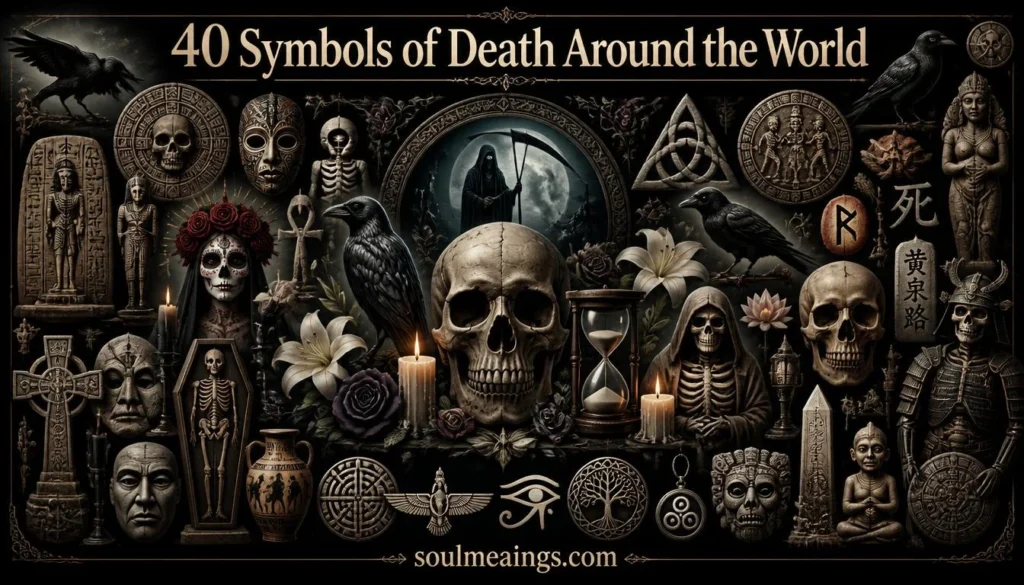
40 Symbols of Death Around the World explores how people use symbols and images to represent a mysterious force that touches all of us at some point in our lives.
Although we may not fully understand death, we are often drawn to these intriguing signs because they carry deep meaning, emotional weight, and beliefs.
When I explore death symbols, I find that looking at the grim reaper, ankh, and other common symbols can reveal a powerful story about the inevitable end. Their history also shows how people have tried to understand death through different ideas, traditions, and experiences.
Throughout history, death has been depicted in various forms through myth, religion, culture, and art. The skull symbol, skulls, tombstones, and animals like ravens, serpents, and jackals are powerful images associated with death, while flowers and colors can also symbolize death.
In different cultures, these symbols may connect death with rebirth, spiritual change, and the after-life. Spiritual and intuitive experts often consider their deeper significance, while modern culture uses them to manage emotions during grief and loss. Whether we examine 10 familiar examples or 44 death symbols, their cultural meanings can offer different ways of understanding mortality.
Quick Answer
The phrase “40 Symbols of Death Around the World” refers to the many images, animals, colors, objects, and signs cultures use to represent mortality, grief, endings, rebirth, or the afterlife. In the United States, symbols like skulls, ravens, black roses, and hourglasses often appear in memorial art, Halloween culture, tattoos, and spiritual imagery, while other cultures connect death with ancestors, renewal, or sacred transition.
TL;DR
• Death symbols often represent transition, not only endings.
• Skulls remain America’s most recognized death symbol.
• Ancient cultures shaped many modern funeral traditions.
• Animals frequently symbolize spirits or messages from beyond.
• Colors linked to death vary worldwide.
• Modern media changed how Americans view death imagery.
Overview of Death Symbolism
Why Humans Create Death Symbols
Death symbols help people express difficult emotions. Because death can feel mysterious or overwhelming, symbols offer a visual language for grief and remembrance.
In the United States, these symbols appear during funerals, holidays, memorial events, and artistic expression. Some symbols warn of danger, while others comfort mourners or honor ancestors.
Common Themes Behind Death Symbols
Across cultures, death symbols often connect to similar ideas:
• Endings and transformation
• Spiritual passage into another realm
• Mourning and remembrance
• Fear of the unknown
• Cycles of rebirth and renewal
• Human mortality and time
40 Well-Known Symbols of Death
| Symbol | Region or Tradition | Common Meaning | Modern American Association |
| Skull | Worldwide | Mortality | Tattoos, Halloween |
| Raven | Europe, Native traditions | Omens, wisdom | Gothic imagery |
| Crow | Worldwide | Transition | Horror symbolism |
| Black Rose | Western symbolism | Mourning | Romance and grief |
| Hourglass | Europe | Time running out | Memorial art |
| Candle | Worldwide | Soul and remembrance | Vigils |
| Coffin | Worldwide | Burial | Funeral symbolism |
| Skeleton | Worldwide | Human mortality | Halloween decor |
| Owl | Greece, folklore | Death or wisdom | Mystery symbolism |
| Grim Reaper | Medieval Europe | Death personified | Films and games |
| White Lily | Christianity | Funeral purity | Sympathy flowers |
| Cypress Tree | Mediterranean | Mourning | Cemetery landscaping |
Ancient Roots of Death Symbols
Early Burial Traditions
Ancient humans buried their dead with objects, tools, and jewelry. This suggests they believed death was a journey rather than a final end.
Because of this belief, symbols became important in tombs and rituals. Ancient Egyptians used scarabs and ankhs, while Greeks used coins for the afterlife journey.
Pre-Christian Symbolism
Many death symbols existed before Christianity spread across Europe and the Middle East.
• Ravens linked to battlefield spirits
• Serpents connected to rebirth cycles
• Black animals associated with mystery
• Moon imagery connected to life cycles
• Ashes symbolized purification and return
Medieval Influence
During the Middle Ages, death symbolism became darker in Europe. Plagues, wars, and famine shaped public imagination.
The “Dance of Death” art movement reminded viewers that everyone dies eventually. This idea later influenced American Gothic culture and Halloween imagery.
Skull Symbolism and Human Mortality
Why the Skull Became Universal
The skull may be the world’s most recognizable death symbol. Unlike other body parts, it remains visible long after death.
Because of that, many cultures viewed skulls as reminders of life’s temporary nature. In America today, skull imagery appears in fashion, biker culture, tattoos, and rock music.
Positive and Negative Meanings
Skulls don’t always symbolize evil. Their meaning depends on context.
• Mortality and human fragility
• Courage in dangerous situations
• Rebellion against social norms
• Honor for ancestors and the dead
• Spiritual transformation
The Skull in American Culture
Modern Americans often separate skulls from actual funerals. Instead, skulls became aesthetic symbols in entertainment and design.
For example, skulls appear in:
• Halloween decorations
• Gothic fashion
• Military insignia
• Tattoo culture
• Heavy metal artwork
Birds as Symbols of Death
Ravens and Crows
Ravens and crows appear in many death traditions because they feed on carrion. Ancient Europeans often connected them with battlefields and omens.
However, Native traditions sometimes viewed ravens as creators or spiritual messengers instead of purely negative signs.
Owls and Night Birds
Owls symbolize wisdom in some cultures but death in others. Their nighttime behavior and haunting calls created fear in folklore traditions worldwide.
In parts of the United States, superstitions still connect owl cries with bad luck or spiritual warning.
Bird Symbolism Today
Modern media strengthened the connection between dark birds and death.
• Horror films use crows for suspense
• Gothic art favors ravens
• Tattoo artists use black birds symbolically
• Social media aesthetics romanticize dark imagery
Flowers Connected to Death and Mourning
Funeral Flowers Through History
Flowers soften grief and symbolize emotional connection. Different flowers developed different funeral meanings over time.
White flowers became especially important in Christian funeral traditions because they represented purity and peace.
Common Death Flowers
• White lily — innocence and spiritual peace
• Black rose — mourning and tragic love
• Chrysanthemum — death in some Asian cultures
• Marigold — remembrance during ancestor festivals
• Poppy — sacrifice and wartime memory
American Funeral Traditions
In the United States, lilies remain the most common funeral flower. However, modern funerals increasingly use personalized floral displays that reflect the deceased’s personality.
The Grim Reaper and Personified Death
Origins of the Grim Reaper
The Grim Reaper emerged during Europe’s plague years. Massive death rates created fear, and artists imagined death as a hooded skeleton carrying a scythe.
The scythe symbolized harvesting human souls like crops.
Why Americans Recognize This Figure
The Grim Reaper became one of America’s strongest death symbols through movies, comics, television, and video games.
Today, the image appears in:
• Horror entertainment
• Halloween costumes
• Fantasy art
• Dark humor memes
• Gothic subcultures
Changing Interpretations
Some modern spiritual groups interpret the Reaper less as evil and more as a guide between worlds.
read more: Spiritual Meaning of Drinking Water in a Dream
Colors That Symbolize Death
Black in Western Culture
Black symbolizes mourning across much of Europe and North America. Funeral clothing traditions reinforced this association for centuries.
Because black absorbs light, many cultures connected it with mystery and endings.
White in Eastern Traditions
In several Asian traditions, white symbolizes death and mourning instead of black. White reflects purity, transition, and spiritual release.
This difference sometimes surprises Americans unfamiliar with global funeral customs.
Other Death-Related Colors
• Gray — emotional emptiness
• Purple — spiritual mourning
• Red — sacrifice or bloodshed
• Silver — moon, spirits, transition
• Deep blue — grief and reflection
Spiritual and Religious Death Symbols
Christian Symbolism
Christian traditions often frame death as spiritual transition rather than destruction.
Common Christian death symbols include:
• Crosses on graves
• Angels guiding souls
• Candles representing eternal light
• Doves symbolizing peace
• Empty tomb imagery
Ancient Egyptian Meanings
Ancient Egyptians viewed death as part of eternal existence. Symbols protected souls in the afterlife.
Important Egyptian symbols included:
• Ankh for eternal life
• Scarab for rebirth
• Eye imagery for protection
• Mummies preserving identity
Mexican Día de los Muertos Symbolism
Día de los Muertos traditions treat death with celebration and remembrance rather than fear alone.
Sugar skulls, candles, and marigolds honor ancestors and maintain family connection. In the United States, the holiday gained major cultural visibility in recent decades.
Psychological Meaning of Death Symbols
Why People Feel Drawn to Them
Death symbols help people process fear and uncertainty. They also create emotional meaning around memory and identity.
Some people feel empowered by confronting mortality directly through symbolic imagery.
Emotional Associations
• Mystery and the unknown
• Reflection about life’s purpose
• Fear and vulnerability
• Spiritual curiosity
• Acceptance of change
Death Symbolism and Identity
In American culture, dark symbolism sometimes signals individuality or emotional depth. Gothic aesthetics especially embrace themes of mortality and beauty together.
However, using death symbols doesn’t automatically mean someone is depressed or dangerous. Often, it reflects artistic or philosophical interest.
Death Symbols in Tattoos and Fashion
Tattoo Meanings
Death-themed tattoos became mainstream in the United States during the late twentieth century.
Popular designs include:
• Skulls with roses
• Ravens and crows
• Hourglasses
• Skeleton hands
• Memorial portraits
Fashion and Aesthetic Trends
Death imagery appears frequently in alternative fashion. Gothic and punk styles especially use dark symbols to challenge mainstream beauty standards.
Today, skull jewelry and dark floral prints appear far beyond subcultures.
Social Media Influence
Apps like Instagram and TikTok helped normalize death aesthetics among younger audiences.
Dark photography, cemetery imagery, and vintage mourning styles now circulate widely online.
Death Symbolism in American Holidays
Halloween’s Influence
Halloween heavily shaped American views of death symbols. Skeletons, ghosts, coffins, and black cats became playful seasonal decorations.
However, many Halloween traditions originally came from older Celtic beliefs about spirits and seasonal transition.
Memorial Traditions
Americans also use death symbolism respectfully during remembrance events.
• Candles at vigils
• Flags at military memorials
• Poppies for fallen soldiers
• Black clothing at funerals
• Flowers at gravesites
Media and Entertainment
American entertainment transformed death symbols into recognizable visual shortcuts for danger, mystery, or horror.
Because of film and television, even children often recognize symbols like skulls and reapers immediately.
Misunderstandings and Controversies
When Symbols Lose Original Meaning
Many people use death symbols aesthetically without knowing their history. This can disconnect symbols from their religious or cultural roots.
For example, sugar skull imagery sometimes gets commercialized without understanding its deeper memorial meaning.
Fear and Moral Panic
Certain groups historically viewed death imagery as dangerous or immoral. Gothic fashion and heavy metal culture faced criticism in the United States during the 1980s and 1990s.
However, most users viewed these symbols as artistic expression rather than harmful ideology.
Cultural Respect Matters
Using global death symbols respectfully means understanding their original context.
• Avoid mocking sacred traditions
• Learn cultural meanings first
• Separate stereotypes from history
• Recognize spiritual significance
How Death Symbolism Changed Over Time
From Sacred to Commercial
Many ancient death symbols began in religious rituals. Over time, entertainment and consumer culture reshaped them.
Skulls once appeared mainly in graves and sacred art. Today, they appear on clothing, mugs, and phone cases.
The Internet Era
Social media accelerated the spread of symbolic imagery. Dark aesthetics now move rapidly between cultures and trends.
Because of this, meanings continue evolving faster than ever before.
Renewed Interest in Mortality
Modern Americans increasingly discuss grief, mental health, and remembrance openly. As a result, death symbolism feels less hidden than in earlier generations.
FAQs
What are common symbols of death?
Common symbols include skulls, tombstones, the grim reaper, ravens, serpents, and jackals. Their meaning can change across different cultures, religions, and traditions.
Why are skulls associated with death?
Skulls often represent mortality and the inevitable end of human life. Throughout history, the skull symbol has appeared in art, religion, and culture as a reminder of death.
What does the ankh symbolize?
The ankh is an ancient Egyptian symbol commonly connected with life and eternal existence. Because it links life with the after-life, it can also appear in discussions about death and rebirth.
What animals symbolize death?
Animals such as ravens, serpents, and jackals have been linked with death in different traditions. Their cultural meanings depend on myth, religion, and local beliefs.
Do flowers and colors symbolize death?
Yes, certain flowers and colors can symbolize mourning, death, remembrance, or spiritual transition. Their significance varies greatly between different cultures and communities.
Why do people use death symbols?
People use death symbols to express grief, remembrance, spirituality, and ideas about mortality. In modern culture, these symbols can also help people manage emotions connected with grief and loss.
Conclusion
The 40 Symbols of Death Around the World show how differently people understand mortality. From the grim reaper and skulls to ravens, flowers, and the ankh, each symbol carries its own story and significance.
These symbols are not always about fear. They can represent remembrance, rebirth, spiritual change, mourning, or acceptance. Looking at them through history, religion, myth, and culture gives us a deeper understanding of how people have faced death across generations.

Evelyn Thomas is the voice behind SoulMeanings.com, sharing thoughtful articles on spirituality, dream interpretation, symbolism, and self-discovery to inspire meaningful living.