
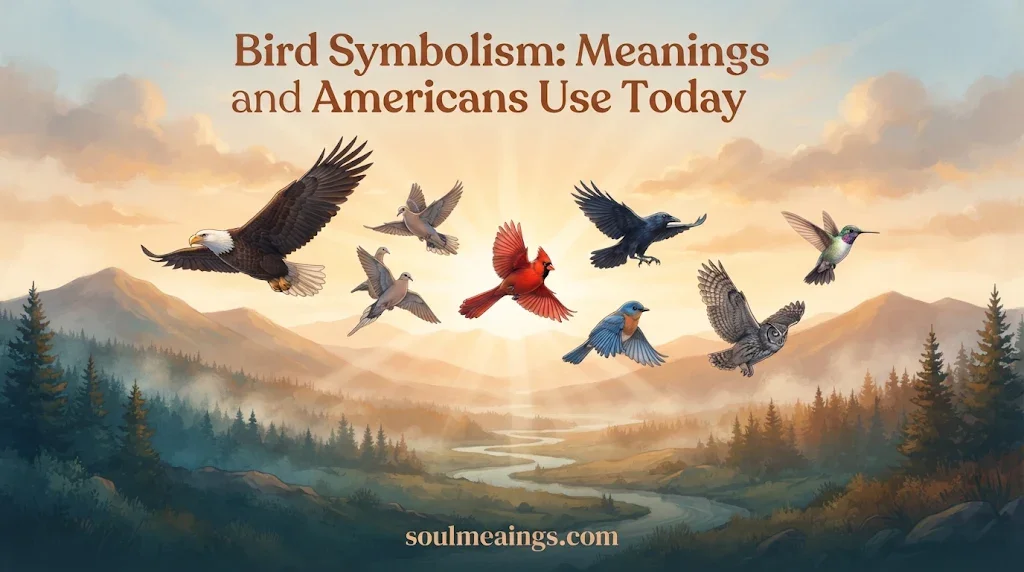
Bird symbolism has a special place in American culture, representing freedom, hope, peace, independence, and personal meaning.
Birds connect the earth and sky through their movement and flight, making them powerful symbols in everyday life. People often associate a bird sighting with personal feelings, memories, grief, or a message from a loved one. Their meanings can vary depending on the bird species, situation, and personal beliefs.
Throughout American history, bird meanings have been shaped by Native American traditions, European beliefs, religious imagery, and cultural influences. Birds appear in national flags, seals, tattoos, artwork, dreams, holiday decorations, and sports symbols. For example, the eagle represents national identity, strength, and power.
Other birds may symbolize transformation, renewal, communication, and spiritual signs. Today, modern media and personal experiences continue to influence how Americans understand bird symbolism and its connection to nature, culture, and everyday life.
Quick Answer
In American culture, bird symbolism commonly represents freedom, hope, strength, peace, and spiritual connection. Different species carry different meanings, from the bald eagle’s national identity to the dove’s association with peace and the owl’s connection with wisdom.
TL;DR
- Birds commonly symbolize freedom, transformation, hope, and spiritual connection.
- The bald eagle represents American independence, strength, and national identity.
- Doves traditionally represent peace, love, and reconciliation.
- Ancient cultures connected birds with gods, souls, and messages.
- Bird tattoos often express personal growth, independence, and remembrance.
- Modern Americans use bird imagery in art, fashion, holidays, and decor.
What Does Bird Symbolism Mean?
Bird symbolism describes the meanings people attach to birds, their behavior, appearance, and natural abilities. These meanings depend on species, cultural background, and the situation in which a bird appears. For American readers, understanding these differences helps explain why birds appear so often in national traditions and personal expression.
The Main Symbolic Meanings
Birds are commonly associated with three broad ideas: freedom, transformation, and connection.
Their ability to move between the ground and sky makes them natural symbols of independence. Also, migration and seasonal movement connect birds with change and new beginnings.
Common interpretations include:
- Freedom and independence through flight and open skies.
- Hope and renewal through seasonal migration and returning birds.
- Spiritual connection through traditional beliefs about messages from above.
- Wisdom and awareness through species such as owls.
- Love and companionship through birds that form close pairs.
However, these meanings aren’t universal rules. A raven might represent wisdom in one story and mystery in another.
Why Birds Have Such Powerful Meanings
Birds are familiar but also seem extraordinary. They sing, travel across enormous distances, build nests, and disappear into the sky.
Because of these abilities, people have used birds to express feelings that are difficult to explain directly. A flying bird can represent leaving a difficult situation behind. A returning bird can suggest hope after a challenging period.
read more: Rook Symbolism: Chess Piece, Rook Bird, Piercings and Tattoos
Historical Origins of Bird Symbolism
Bird symbolism reaches far into human history. Long before modern America existed, people used bird images in religious ceremonies, burial practices, myths, and decorative artwork. These early traditions help explain why birds still appear in spiritual and cultural discussions.
Ancient Egyptian Beliefs
In ancient Egypt, birds played important roles in religious artwork and beliefs about life after death.
The falcon was strongly associated with Horus, a major Egyptian deity connected with kingship and protection. The god was often represented with a falcon’s head.
Other birds appeared in beliefs about the soul and the afterlife. Some Egyptian traditions connected birds with the movement of souls between earthly life and the next world.
These ideas helped establish birds as symbols of protection, renewal, and spiritual movement.
Ancient Greek and Roman Traditions
Ancient Greeks and Romans often connected particular birds with their gods.
For example:
- The eagle was associated with Zeus and divine authority.
- The owl became associated with Athena and wisdom.
- The peacock was connected with Hera and beauty.
- The dove was associated with Aphrodite and love.
People also watched birds to interpret possible signs about future events. This practice was known as augury, particularly in ancient Roman religious life.
Bird movements and calls could influence decisions about public and private matters.
Early Religious Symbolism
Birds also became important images in religious traditions.
In Christianity, the dove became a major symbol of the Holy Spirit, peace, and divine presence. Biblical stories also connect birds with care, faith, and the natural world.
Over time, artists used birds in paintings, stained glass, church decorations, and religious manuscripts.
These images helped preserve older associations while giving birds new spiritual meanings.
What Do Different Birds Symbolize?
Not every bird carries the same meaning. In fact, species, colors, behavior, and cultural background can completely change an interpretation. Americans often recognize certain bird meanings through popular culture, religious traditions, and familiar wildlife.
Popular Bird Meanings
Here are some common interpretations:
| Bird | Common Symbolic Meaning | American Associations |
| Bald Eagle | Freedom, strength, authority | National identity and independence |
| Dove | Peace, love, hope | Weddings, memorials, reconciliation |
| Cardinal | Remembrance, vitality, connection | Winter traditions and personal memories |
| Owl | Wisdom, knowledge, mystery | Education, intelligence, nighttime |
| Raven | Mystery, transformation, intelligence | Folklore, literature, mystery |
| Bluebird | Happiness, optimism, hope | Joy, springtime, positive thinking |
| Hummingbird | Energy, resilience, joy | Nature, beauty, personal transformation |
| Robin | Renewal, new beginnings | Springtime and seasonal change |
| Swan | Grace, beauty, devotion | Romance, elegance, artistic expression |
| Crow | Intelligence, adaptability, mystery | Folklore and popular storytelling |
These are common interpretations rather than fixed definitions. A person’s experiences and cultural background can influence what a particular bird means to them.
Does a Bird’s Color Change Its Meaning?
Color can influence how people interpret bird symbolism.
For example, white birds are often associated with peace and purity. Red birds can suggest passion, vitality, or love.
Blue birds commonly represent calmness and happiness. Black birds may suggest mystery, change, or the unknown.
However, color meanings depend on cultural context. A black bird isn’t automatically a negative symbol, just as a white bird doesn’t always represent innocence.
Bird Symbolism in American Culture
Birds hold a special place in American history and national identity. They appear on official seals, currency, government buildings, military insignia, and public monuments. Their meanings also extend into family traditions, popular entertainment, and everyday American life.
The Bald Eagle and American Freedom
The bald eagle is perhaps the most recognizable bird symbol in the United States.
In 1782, Congress adopted the Great Seal featuring a bald eagle. The bird holds an olive branch in one talon and arrows in the other.
These objects represent two important national ideas:
- The olive branch represents peace.
- The arrows represent the country’s ability to defend itself.
The eagle became associated with strength, independence, courage, and national authority.
Its image eventually appeared throughout American public life. Today, Americans encounter it on official documents, government buildings, currency, and national decorations.
Birds and American Holidays
Birds also appear in familiar American celebrations.
The bald eagle is especially visible around Independence Day and other patriotic occasions. Meanwhile, the turkey has become closely connected with Thanksgiving.
The turkey’s place in Thanksgiving traditions is primarily historical and culinary rather than a formal national symbol. However, it also represents family gatherings, gratitude, and shared meals.
Other examples include:
- Doves appearing in peace-themed memorial ceremonies.
- Robins appearing in spring decorations and seasonal artwork.
- Cardinals appearing in winter holiday decorations.
- Eagles appearing in Fourth of July celebrations.
Birds in American Literature and Popular Culture
American writers, musicians, and filmmakers have used birds to communicate complicated emotions.
The raven, for example, became especially recognizable through Edgar Allan Poe’s famous poem, The Raven. Its dark atmosphere helped strengthen associations with grief, mystery, and the unknown.
In contrast, bluebirds frequently appear in songs and stories about happiness. Eagles commonly appear in patriotic artwork, while doves appear in messages promoting peace.
These familiar images help keep bird symbolism relevant across generations.
Spiritual Meaning of Birds
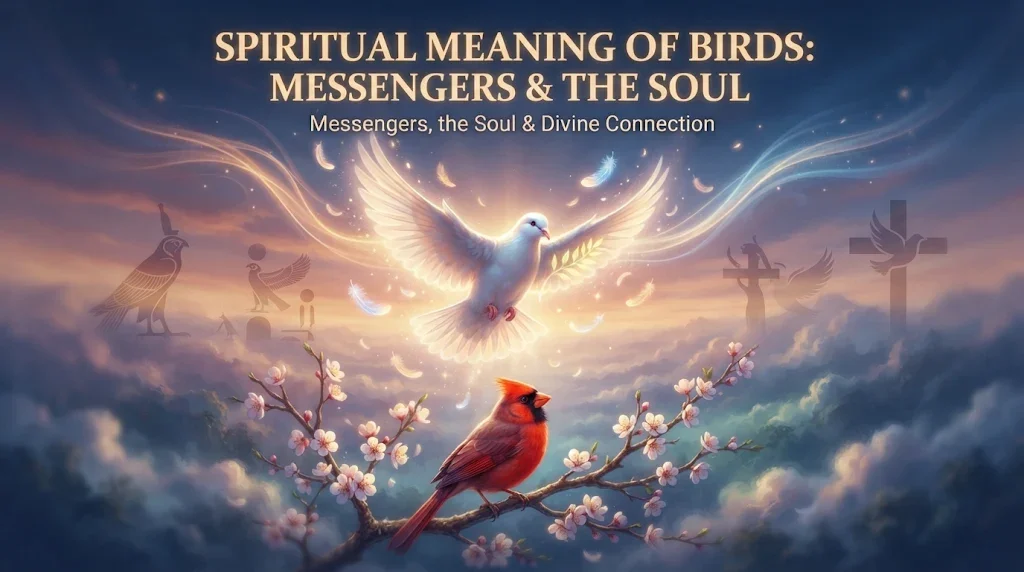
Many spiritual traditions connect birds with the soul, freedom, protection, and communication between different levels of existence. However, interpretations differ between religions and communities. American readers encounter these ideas through religious practices, family traditions, spiritual art, and personal beliefs.
Birds as Messengers
Some spiritual beliefs describe birds as messengers between the physical and spiritual worlds.
Their ability to fly makes them natural images of movement between earth and sky. In certain traditions, this movement represents communication with ancestors, divine forces, or spiritual realities.
Some people also interpret unexpected bird encounters as meaningful personal experiences.
These interpretations are matters of individual belief rather than scientifically established messages.
Birds and the Soul
Birds have appeared in many traditions connected with death and the afterlife.
In some ancient Egyptian beliefs, bird imagery represented aspects of the soul. In Christianity, the dove became associated with the Holy Spirit and divine presence.
Some contemporary Americans also connect birds with deceased loved ones. A cardinal appearing near a home, for example, may remind someone of a family member who has passed away.
This interpretation can offer emotional comfort without requiring everyone to share the same spiritual beliefs.
Cross-Cultural Bird Meanings
Bird symbolism also appears in traditions outside the United States.
In several East Asian traditions, cranes are associated with longevity, good fortune, and peace. In Japanese culture, the crane is particularly important in traditional art and folding-paper traditions.
In some Indigenous North American traditions, eagles and their feathers carry sacred significance. However, beliefs differ among individual Nations and communities.
In Hindu traditions, particular birds are associated with deities and religious stories. Garuda, for example, is a powerful divine bird-like figure connected with Vishnu.
These examples show that bird symbolism is rich and varied. It should never be reduced to one universal spiritual definition.
Emotional and Psychological Meaning of Birds
Birds often create strong emotional responses because people connect their movements and sounds with familiar human experiences. Their symbolism can reflect personal hopes, fears, memories, and ambitions. In American culture, these connections often appear in personal artwork and everyday expressions.
Freedom and Independence
A bird flying across an open sky can create a powerful image of freedom.
People often connect this image with independence, personal choice, and escaping limitations. Someone beginning a new chapter might choose a flying bird as a reminder of personal progress.
This association is especially common in American discussions about individual freedom.
Hope and Emotional Renewal
Birds returning during spring can represent the possibility of positive change.
For someone recovering from a difficult experience, a returning robin or singing bluebird may feel encouraging. The bird becomes a reminder that difficult seasons don’t last forever.
Similarly, a bird building a nest can represent security, family, and a fresh start.
Mystery and Reflection
Not all bird symbolism feels cheerful.
Ravens, crows, and owls often appear in stories involving nighttime, uncertainty, and hidden knowledge. Their unusual calls and behaviors can create a feeling of mystery.
However, these associations don’t make the birds inherently unlucky or dangerous.
For many people, they represent intelligence, observation, and the courage to explore unfamiliar ideas.
What Does It Mean When a Bird Visits You?
A bird appearing near your home, window, or garden can feel special. Some Americans interpret these encounters spiritually, while others simply appreciate the natural experience. The meaning often depends on the species, circumstances, and personal feelings involved.
Common Interpretations
People may connect a bird visit with:
- A reminder to appreciate freedom and personal independence.
- Hope during a period of change or uncertainty.
- Memories of someone important in their lives.
- A desire to reconnect with nature.
- Curiosity about a new opportunity or direction.
However, birds also visit places for practical reasons. They may be looking for food, shelter, water, nesting materials, or a safe resting place.
Does a Bird Visiting Your Window Mean Something?
A bird near a window can inspire different interpretations.
Some people view it as a reminder of an important memory or relationship. Others associate it with reflection, change, or spiritual awareness.
There is also a natural explanation. Birds may approach windows because they see reflections of trees or sky.
Therefore, a personal interpretation can be meaningful without treating every encounter as a supernatural event.
Bird Symbolism in Tattoos, Fashion, and Home Decor
Bird imagery remains popular in American personal expression. People use it to communicate values, celebrate important experiences, and create connections with nature. The meaning often depends on the chosen species and the artwork surrounding it.
Popular Bird Tattoo Meanings
Bird tattoos can represent many different life experiences.
Some people choose flying birds to express independence. Others select a particular species because it reminds them of someone they love.
Common examples include:
- Eagle tattoos representing courage, patriotism, and personal strength.
- Dove tattoos representing peace, love, and forgiveness.
- Cardinal tattoos honoring memories of deceased loved ones.
- Hummingbird tattoos expressing resilience, energy, and joy.
- Owl tattoos representing learning, wisdom, and curiosity.
- Raven tattoos expressing mystery, intelligence, and transformation.
The number of birds can also influence the design. A group of birds flying together may suggest family, community, or shared freedom.
Birds in Fashion and Jewelry
Bird designs frequently appear on necklaces, earrings, clothing, and decorative accessories.
A small feather pendant might represent freedom or a connection with nature. An eagle design may express national pride, while a dove can communicate peaceful values.
Some people also wear bird imagery simply because they enjoy the beauty of the design.
Bird-Themed Home Decor
Birds can create different moods in American homes.
Bluebirds and songbirds often appear in cheerful kitchen decorations. Eagles and other powerful birds may feature in rustic or patriotic interior designs.
Meanwhile, cranes, swans, and peacocks are popular artistic subjects for elegant decorative styles.
Bird artwork can also reflect someone’s interest in wildlife, gardening, or outdoor living.
What Different Bird Calls and Behaviors Symbolize
People sometimes attach meanings to what birds do rather than simply which species they see. Singing, nesting, migrating, and flying together all carry symbolic associations. These behaviors make bird symbolism feel closely connected with everyday experiences.
Singing Birds
Birdsong commonly represents happiness, communication, and the arrival of a new day.
A singing bird outside a window may remind someone of hope or emotional renewal. In literature, birdsong often creates a peaceful atmosphere.
However, birds also sing for practical reasons, including territory and attracting mates.
Birds Flying Together
A flock of birds can represent cooperation, unity, and belonging.
This image appears in artwork about family, friendship, and community. It can also suggest shared goals and collective strength.
In contrast, a single bird flying alone may represent independence or self-discovery.
Nesting Birds
Nesting birds commonly symbolize family, protection, and stability.
Their careful construction of nests can remind people of creating a safe home. For many Americans, this symbolism connects with family traditions and the desire to build a secure future.
Misunderstandings and Controversies in Bird Symbolism
Bird symbolism can become confusing when people treat cultural interpretations as universal truths. Some meanings also carry historical or political associations that require additional context. Understanding these differences helps Americans appreciate bird imagery without making unfair assumptions.
Are Black Birds Bad Omens?
No. Black birds aren’t universally considered bad omens.
Ravens and crows sometimes appear in Western folklore as symbols of death, mystery, or difficult change. However, other traditions recognize their intelligence, adaptability, and spiritual importance.
Their dark feathers don’t make them naturally evil or unlucky.
Are Birds Always Symbols of Freedom?
Not necessarily.
Although flying birds commonly represent independence, birds in cages can represent restriction, loneliness, or lost opportunities.
In some artwork, a caged bird also represents the desire to escape an unfair situation.
Therefore, the setting can completely change the meaning.
Respecting Indigenous Bird Traditions
Some bird symbols, especially eagle feathers, carry sacred importance within particular Indigenous communities.
These traditions shouldn’t be treated as interchangeable or reduced to decorative trends. Eagle feathers can have important ceremonial and spiritual roles.
People interested in using these images should learn about their cultural background and avoid presenting sacred objects as generic fashion accessories.
National Pride and Political Imagery
The bald eagle is widely recognized as a symbol of the United States.
However, its appearance in political artwork doesn’t mean every use communicates the same political message. It may represent patriotism, government authority, military service, or national identity.
Context matters more than the image alone.
How Bird Symbolism Has Changed Over Time
Bird meanings have evolved as societies, religions, and cultural values have changed. Some ancient interpretations remain recognizable, while others have taken on modern meanings. In the United States, these changes reflect the country’s history and growing interest in wildlife conservation.
From Ancient Spiritual Beliefs to Modern Culture
Ancient civilizations often connected birds with gods, souls, and divine messages.
Later religious artwork developed additional meanings involving peace, hope, and spiritual protection. During the formation of the United States, the bald eagle became a powerful national emblem.
Today, bird imagery appears in personal tattoos, social media posts, environmental campaigns, and decorative artwork.
The central ideas of freedom and transformation remain familiar, even as their uses change.
The Eagle as a Symbol of Conservation
The bald eagle’s history also reveals an important shift in American symbolism.
During the twentieth century, hunting, habitat loss, and pesticide exposure contributed to serious population declines. Conservation protections and environmental changes later helped the species recover.
Its comeback became a powerful symbol of environmental responsibility and collective action.
In 2024, the bald eagle was officially designated the national bird of the United States, strengthening a symbolic role it had held since 1782.
This development shows how national symbols can evolve while retaining their historical meaning.
Birds in the Digital Age
Social media has introduced new ways to share bird symbolism.
People post bird photographs, use bird illustrations in profile pictures, and share messages about freedom or personal transformation.
Some also discuss unusual bird encounters as meaningful moments in their lives.
Meanwhile, wildlife photography and birdwatching communities have helped people develop a stronger appreciation for actual bird species.
Today, symbolism and environmental awareness often exist side by side.
Frequently Asked Questions
1. What does bird symbolism mean?
Bird symbolism refers to the meanings people connect with birds, including freedom, hope, peace, love, and spiritual messages.
2. What do birds symbolize in American culture?
In American culture, birds often represent freedom, independence, national identity, peace, and personal beliefs.
3. What does it mean when a bird visits you?
Some people interpret a bird visit as a sign of hope, change, good luck, or a spiritual message. Its meaning depends on personal beliefs.
4. What does a bird symbolize spiritually?
Spiritually, birds are often associated with freedom, transformation, faith, communication, and connections between earth and sky.
5. What does an eagle symbolize in America?
The eagle represents strength, power, courage, freedom, and American national identity.
6. Do different bird species have different meanings?
Yes. Different bird species carry different symbolic meanings depending on cultural traditions, history, and personal interpretation.
7. What does a bird symbolize in dreams?
Birds in dreams may represent freedom, new opportunities, personal growth, hope, or a desire for change.
8. Why are birds associated with freedom?
Birds can fly across open skies without the physical boundaries experienced by humans, making them common symbols of independence and freedom.
9. Can birds symbolize a loved one who has passed away?
Some people associate bird sightings with memories of loved ones, comfort, and spiritual connections. These interpretations are personal beliefs rather than scientifically proven messages.
10. Why is bird symbolism still important today?
Bird symbolism remains important through art, tattoos, national symbols, religious traditions, modern media, and personal experiences.
Conclusion
Bird symbolism continues to influence American culture through history, traditions, art, and everyday experiences. From the eagle representing national freedom to a small bird reminding someone of hope or a loved one, different birds carry personal and cultural meanings. Although interpretations vary across cultures and beliefs, birds remain powerful symbols of freedom, peace, transformation, and connection to nature.

Sophia Wilson is a spiritual content writer and researcher at SoulMeanings.com, specializing in dream meanings, symbolism, spiritual insights, and personal growth topics that help readers navigate life’s journey with greater understanding.


Pingback: Swallows Symbolism: Meaning in the U.S. and Beyond